Films · Developmental Neuroscience
The Gate, and the Race Reopened
Read the transcript of “The Gate, and the Race Reopened”
Film transcript: The Gate, and the Race Reopened
The axon has been chosen. What keeps dendrite proteins from wandering into it? The first few tens of micrometres of the axon form the axon initial segment. Under its membrane sits a dense coat, built on a scaffold called ankyrin G. Ankyrin G binds beta-IV spectrin, which links it to rings of actin under the membrane. Through its ANK repeats, it also binds sodium channels, KCNQ2/3 potassium channels and neurofascin-186. The initial segment has two jobs. The first is electrical. A high density of sodium channels, among other features, gives it a low threshold. So in many neurons, this is where the action potential starts. In 1999, Bettina Winckler, Paul Forscher and Ira Mellman tested whether the membrane itself is divided there.
They attached small beads to membrane proteins, and dragged them with a laser trap. the cell body and dendrites the beads moved freely. At the initial segment they were held back. The hold depended on actin. How the barrier works is still argued. Now test the scaffold. Lower ankyrin G after the initial segment has formed. The axon is already chosen. What happens to the initial segment? And does MAP2, the dendrite protein, stay out of the axon?
In 2008, Kristian Hedstrom, Yasuhiro Ogawa and Matthew Rasband did this. The initial segment fell apart. MAP2 spread into the axon. Near the cell body, the axon began to look like a dendrite, with dendritic spines. Farther out, it kept axonal proteins. So identity has to be actively held. Near the cell body, the initial segment holds it. Farther out, something else does, not yet identified. In 2008, Frank Bradke's laboratory, with Susana Gomis-Rüth and Corette Wierenga, made the mature neuron's cut. When the stump was shorter than 35 micrometres, a dendrite became the axon. Longer stumps regrew. The authors linked this to stable microtubules in the distal axon.
They did not test the initial segment. So a young neuron's cut reopens the race easily. A mature neuron's cut reopens it only when almost the whole axon is removed. One caution: this was all in a dish. In the brain, the race may be tilted or skipped. In the developing cortex, the trailing process of a migrating neuron often becomes its axon. One pathway is clearly required there: the kinase LKB1, and the SAD kinases it activates. Cortical neurons lacking LKB1, or both SAD kinases, fail to form axons. An axon is won in a race, then held. Loosen the hold, and the axon can lose features. Cut almost all of it away, and the race reopens.
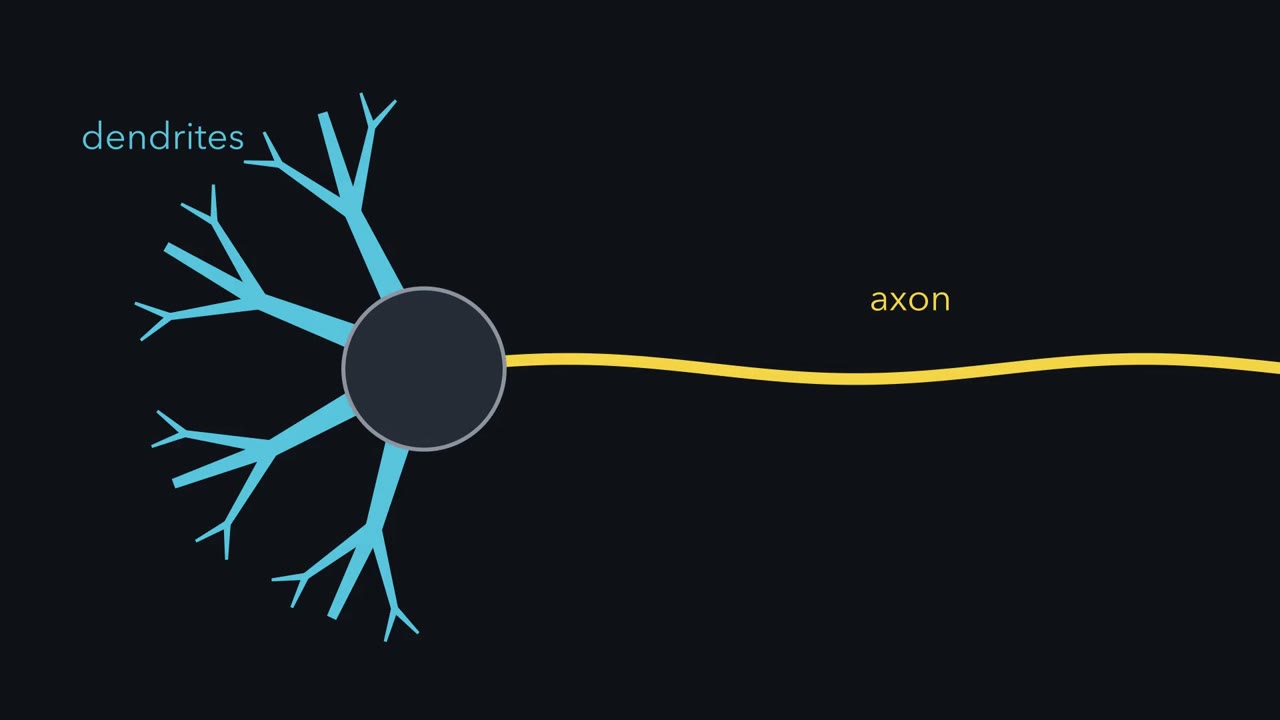
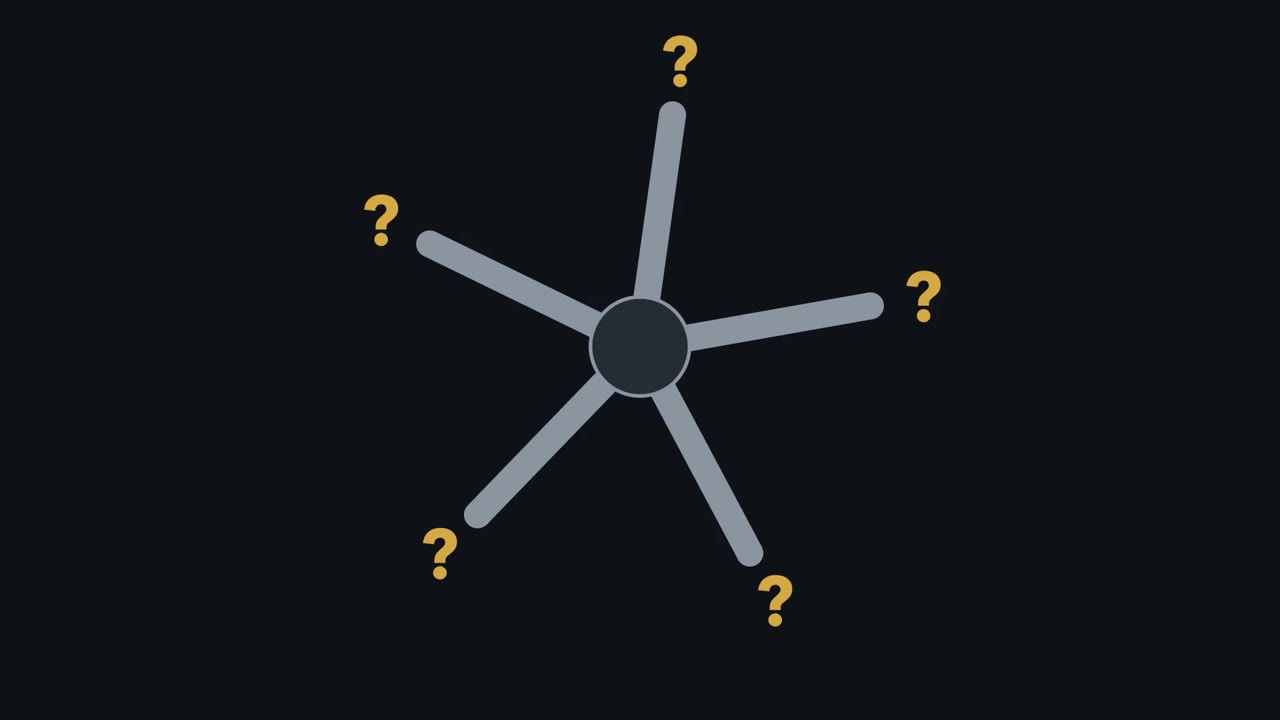
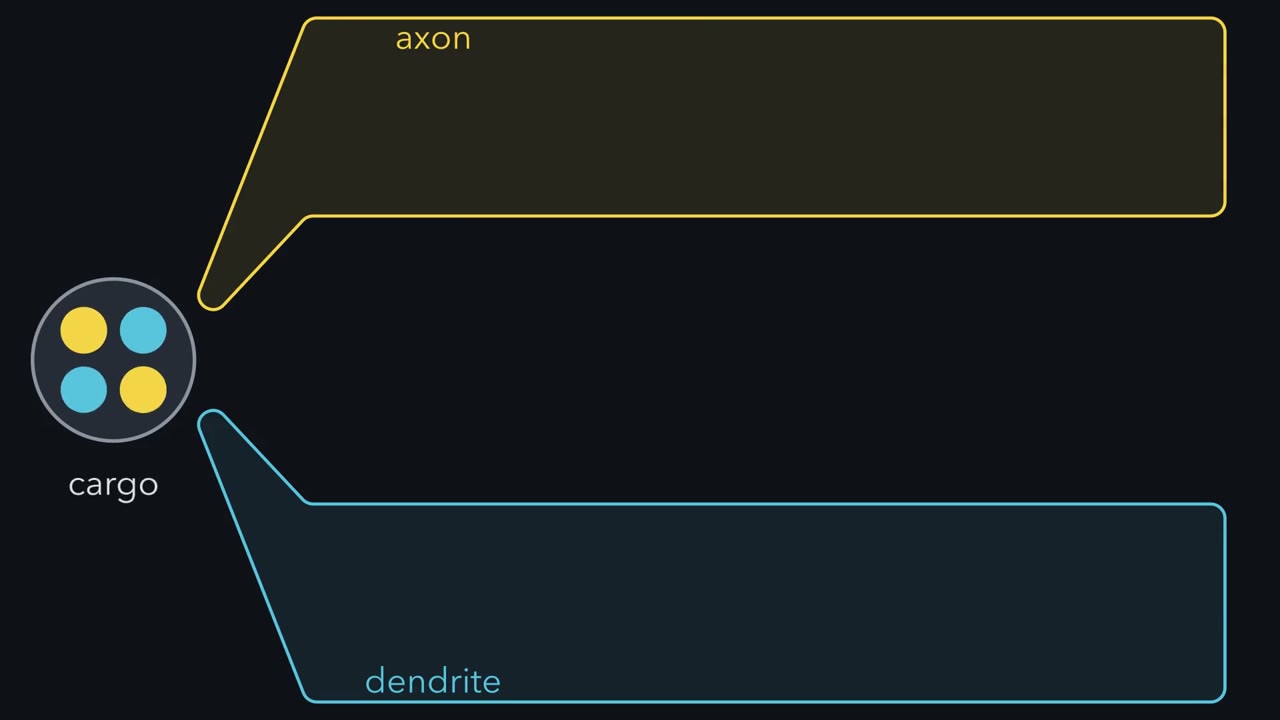
A neuron takes in signals on dendrites and sends them out along one axon. Cut that axon close to the cell body in a dish and one of its dendrites can become a new axon. How does a neuron choose its axon, and keep it?
Continue in the lesson: One Axon, Many Dendrites: Neuronal Polarity →
3:25 · Free, with captions and a transcript. The lesson has the full text, the questions and the sources.
More films from this lesson
How this film was made. Narration: an AI narrator voice (Kokoro, af_heart) reading narration written from this lesson's text. Animation: AI-generated in code (Manim) by Claude, a schematic with no drawn molecular structures. Captions come from the narration script. See something wrong? Report it.