Films · Developmental Neuroscience
Marked in the Yolk Sac
Read the transcript of “Marked in the Yolk Sac”
Film transcript: Marked in the Yolk Sac
How do you prove where a cell was born, when a stain shows only its shape? Mark a progenitor, then look for the mark later in everything it made. That is fate mapping. The modern version uses an enzyme called Cre. It cuts and rejoins DNA at two short sequences called loxP sites. In a reporter mouse, Cre removes a stop sequence between the sites. The reporter turns on, and every descendant inherits it. Make Cre from a gene the progenitor uses. In the line used for microglia, one dose of tamoxifen lets it act for about a day. In 2010, Florent Ginhoux, Miriam Merad and colleagues did this in mice. The Cre was driven by Runx1. A pulse at embryonic day 7.5 marked early progenitors.
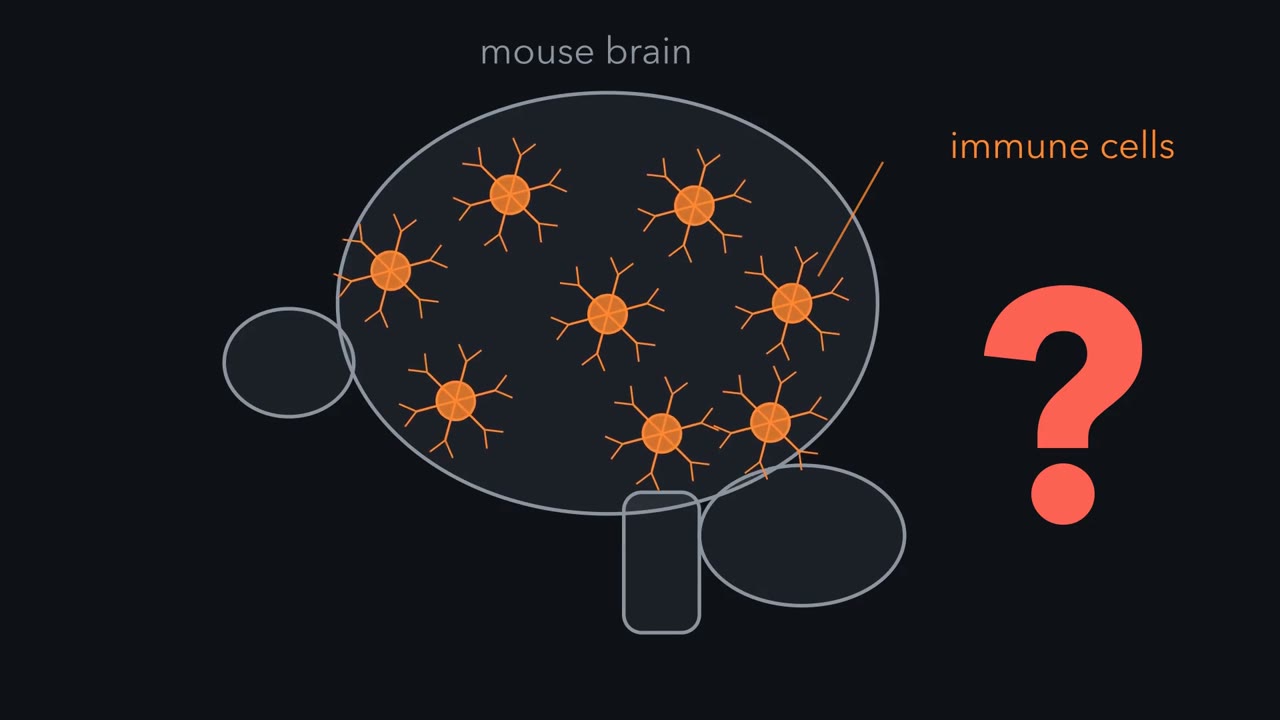
Later, about a third of yolk-sac macrophages carried the mark. Call the yolk-sac labeling 30 percent. Suppose very few blood-making cells are marked, say 2 percent. What share of adult microglia should be marked? Try all from the yolk sac, half, or all from blood.
Each cell carries the mark or not. If all sources expand alike, the marked share mirrors the mix. All from the yolk sac predicts about 30 percent. Half and half, about 16. All blood, about 2. In adults, about a third of microglia carried the mark. Very few blood cells did. That is the top bar. Later pulses marked blood, but few microglia.
Read alone, a third sounds like a minority. Read against a source labeled at a third, it means most. The reading depends on the source. If the adult count is 30 percent and the true source were 40 percent labeled, about three quarters came from the yolk sac. So the right word is most, and possibly all. The data cannot give an exact number. Embryos lacking Ncx1, which the heart needs to beat, still made yolk-sac macrophages. But they had no brain microglia. So the progenitors travel in through the early circulation. Microglia also need the receptor CSF1R. Mice without it have few or none. In healthy adult mice, microglia renew themselves. Blood monocytes do not replace them.
So read a fate map against its source. In mice, most microglia were born in the yolk sac.
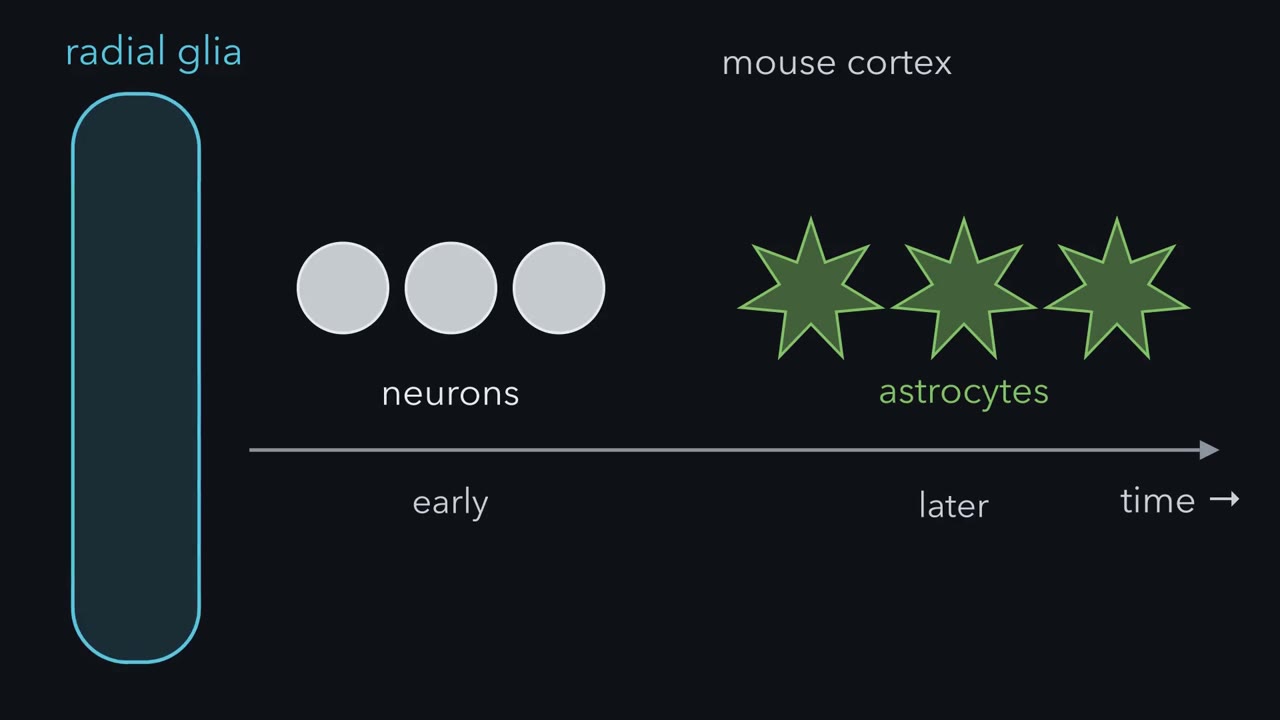
Astrocytes and oligodendrocytes come mostly from the same pool of radial glia that made the neurons, yet the brain's own immune cells were born outside the embryo, in the yolk sac.
Continue in the lesson: Where Glia Come From →
2:41 · Free, with captions and a transcript. The lesson has the full text, the questions and the sources.
More films from this lesson
How this film was made. Narration: an AI narrator voice (Kokoro, af_heart) reading narration written from this lesson's text. Animation: AI-generated in code (Manim) by Claude, a schematic with no drawn molecular structures. Captions come from the narration script. See something wrong? Report it.