Films · Developmental Neuroscience
Tracks That Point Two Ways
Read the transcript of “Tracks That Point Two Ways”
Film transcript: Tracks That Point Two Ways
Once an axon is chosen, how does cargo know which branch to go into? Microtubules link choosing the axon to holding it. A microtubule has a fast-growing plus end and a slower minus end. Motor proteins read that direction. Most kinesins walk toward plus ends. Dynein walks toward minus ends. Picture a plus-end-out track. Its plus end points away from the cell body. On that track, kinesin walks outward. Dynein walks home, toward the cell body. On a minus-end-out track, it is the reverse. So which way do the tracks point in a real neuron? In 1988, Peter Baas and colleagues used hook decoration on cultured rat hippocampal neurons. Extra tubulin adds curved sheets to each microtubule's wall.
In cross section, the hooks curve one way or the other. The curve shows which way that microtubule points. In the axon, nearly all microtubules point their plus ends away from the cell body. In dendrites the orientation is mixed. A large fraction point each way. So which motor can carry cargo outward into a dendrite, but hardly ever into the axon?
Dynein. It can carry cargo outward only on minus-end-out tracks. Vertebrate dendrites have many of those tracks. The axon has almost none. Kinesin can walk outward in both, since both have plus-end-out tracks. But a kinesin that prefers stable, plus-end-out microtubules can be steered into the axon. So the way the tracks point limits which motors can carry cargo outward into a process. That gives the neuron a sorting rule. The uniform plus-end-out array may form as the axon forms. If so, the tracks may help choose the axon, as well as keep it. Flies differ. Their dendrites are mostly minus-end-out. So the details depend on the animal. But in both, axon and dendrites offer different tracks.
Different tracks, different motors, different cargo. The tracks may be part of the hold. Next, the gate at the start of the axon.
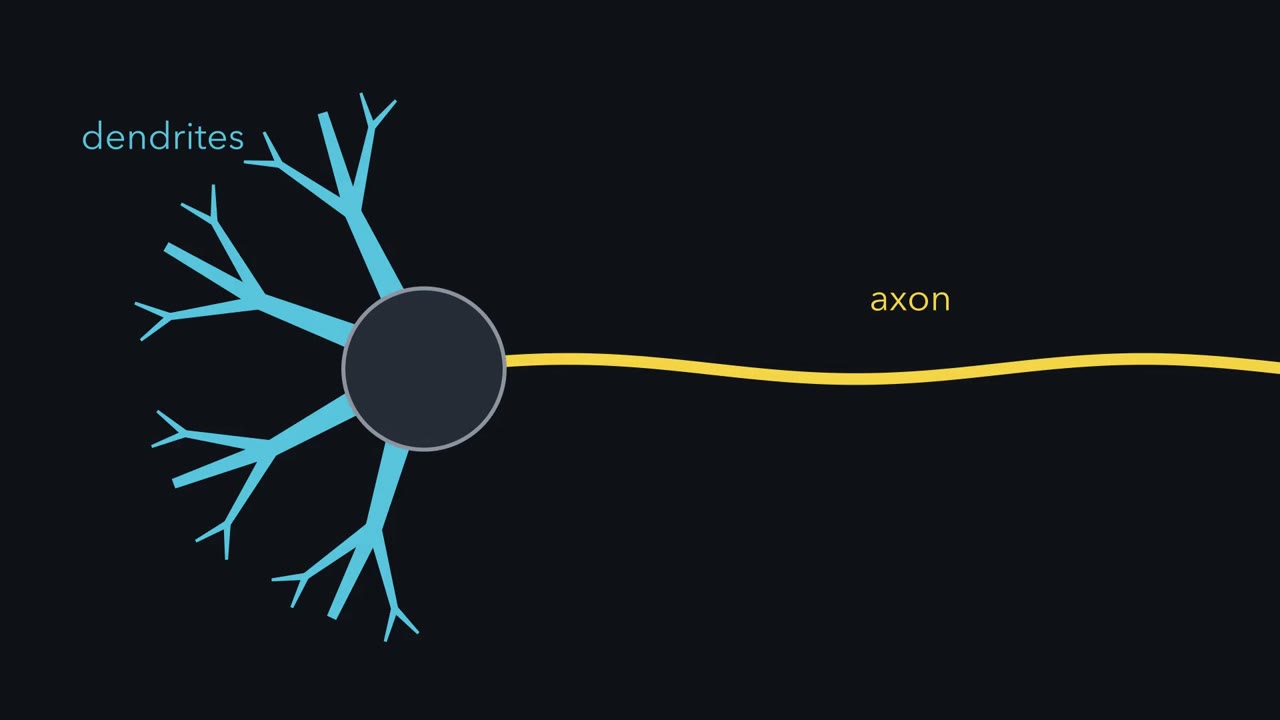
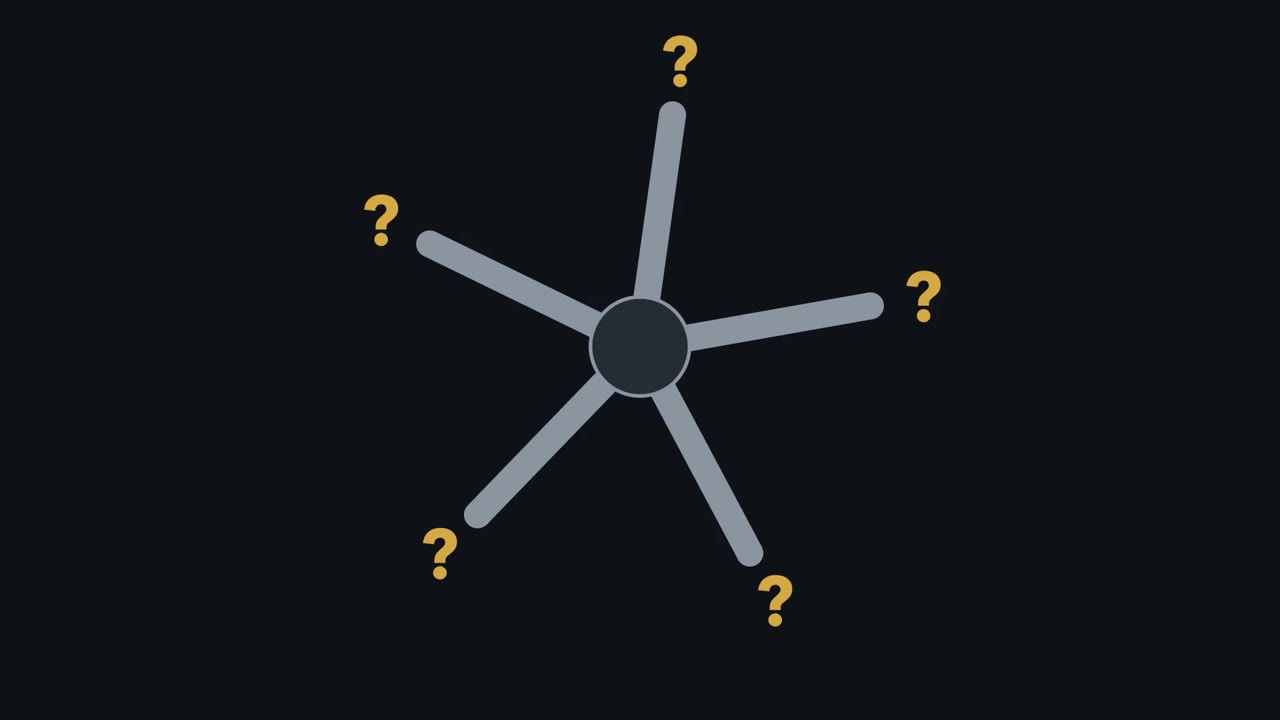
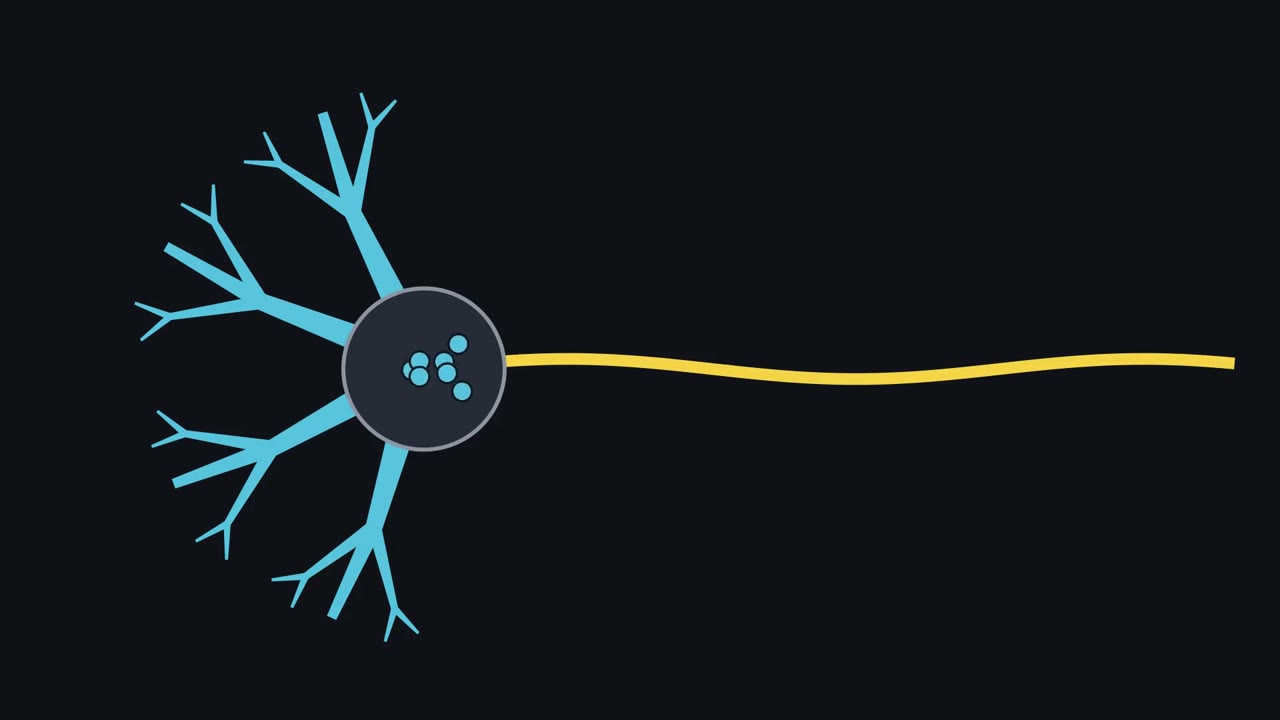
A neuron takes in signals on dendrites and sends them out along one axon. Cut that axon close to the cell body in a dish and one of its dendrites can become a new axon. How does a neuron choose its axon, and keep it?
Continue in the lesson: One Axon, Many Dendrites: Neuronal Polarity →
2:34 · Free, with captions and a transcript. The lesson has the full text, the questions and the sources.
More films from this lesson
How this film was made. Narration: an AI narrator voice (Kokoro, af_heart) reading narration written from this lesson's text. Animation: AI-generated in code (Manim) by Claude, a schematic with no drawn molecular structures. Captions come from the narration script. See something wrong? Report it.