Films · Developmental Neuroscience
A Small Difference, a Turn
Read the transcript of “A Small Difference, a Turn”
Film transcript: A Small Difference, a Turn
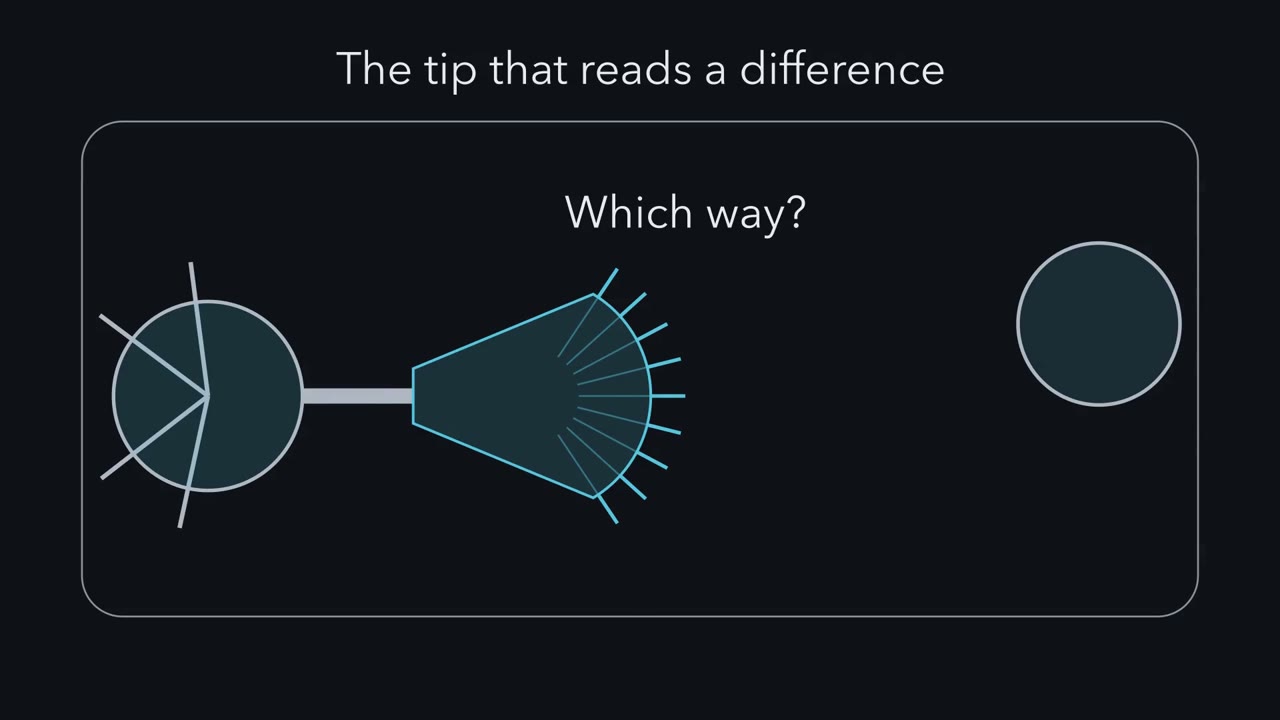
How does a cue only five to ten percent stronger on one side turn a whole axon? In 1979, Gundersen and Barrett placed a pipette releasing nerve growth factor near chick sensory axons. Within about twenty minutes, the growth cones turned toward the pipette.
One growth cone wanders. So the evidence is the spread of turning angles across many cones. In a control dish with a uniform bath of cue, the spread centres on zero. Now apply the rule to each side. In one common picture, an attractant lets the near side gain more. It may add actin faster there, ease the backward flow, or engage more clutch. A repellent does the reverse.
The gaining side puts out more filopodia and sheets. The fan shifts that way. Microtubules from the centre enter the gaining side more often, and stay longer. Behind them the fan narrows, and that stretch becomes axon shaft, pointing the new way. Signalling inside the cell can enlarge the small difference. Repeated biased growth then adds up to a turn.
So stabilize the microtubules on one side, with no cue at all. Which way does the growth cone turn? Toward the drug. Buck and Zheng found this in frog spinal neurons. The near side protruded first, and the turn needed actin. Microtubules can start a turn by working through actin. Break microtubules down on one side, with a high enough dose, and the cone turns away.
Last question. Does the tip need its cell body to decide? In 2001, Campbell and Holt cut frog retinal axons, leaving growth cones with no cell body. The isolated tips still turned in gradients of guidance cues. their assay, turning needed protein made from messenger RNA already at the tip. Not every cue needs new protein. Chick sensory growth cones turned toward nerve growth factor without it.
So the tip can decide on its own, at least in a dish. Carry the rule. A turn sticks where microtubules move in and build axon, and they can start it too. The cues that make the sides differ, netrins, slits, semaphorins and ephrins, come next.
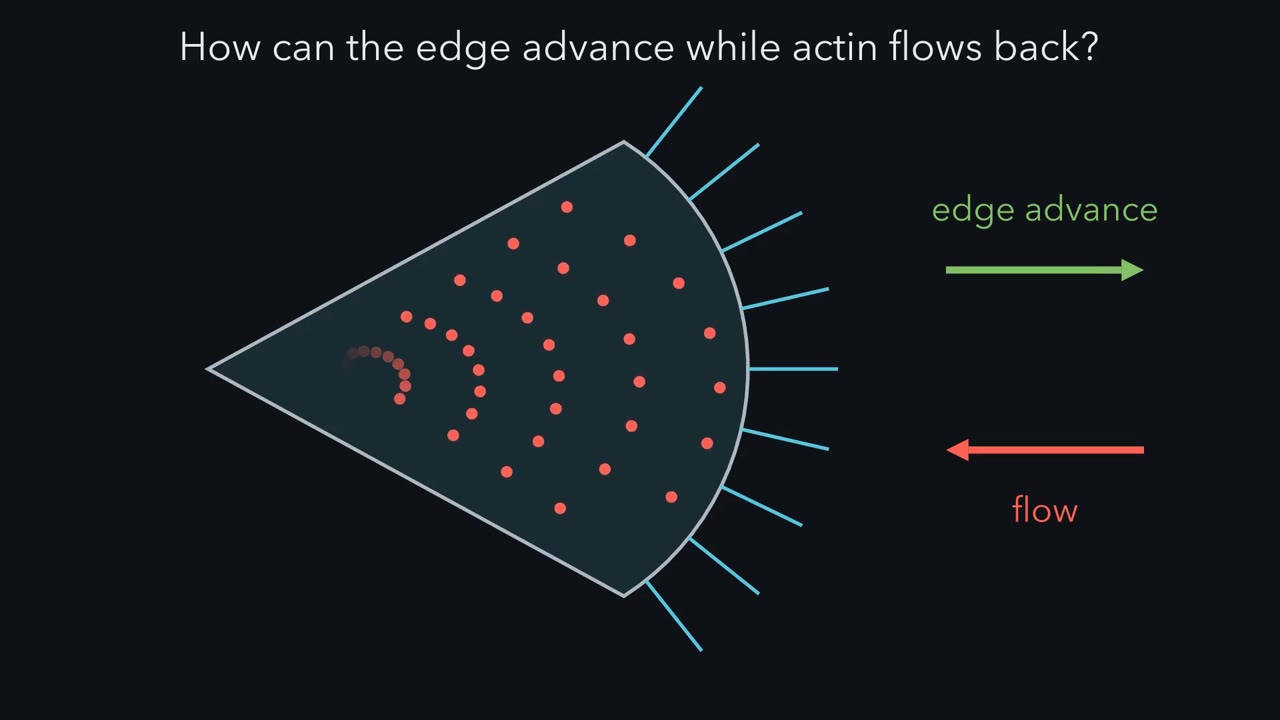
Actin at the front of a growth cone often streams backward even while the tip moves forward, and in the standard assay it turns toward a cue only 5 to 10% stronger on one side. How?
Continue in the lesson: The Growth Cone: The Tip That Steers the Axon →
2:58 · Free, with captions and a transcript. The lesson has the full text, the questions and the sources.
More films from this lesson
How this film was made. Narration: an AI narrator voice (Kokoro, af_heart) reading narration written from this lesson's text. Animation: AI-generated in code (Manim) by Claude, a schematic with no drawn molecular structures. Captions come from the narration script. See something wrong? Report it.