Films · Developmental Neuroscience
A Lamp at the Front
Read the transcript of “A Lamp at the Front”
Film transcript: A Lamp at the Front
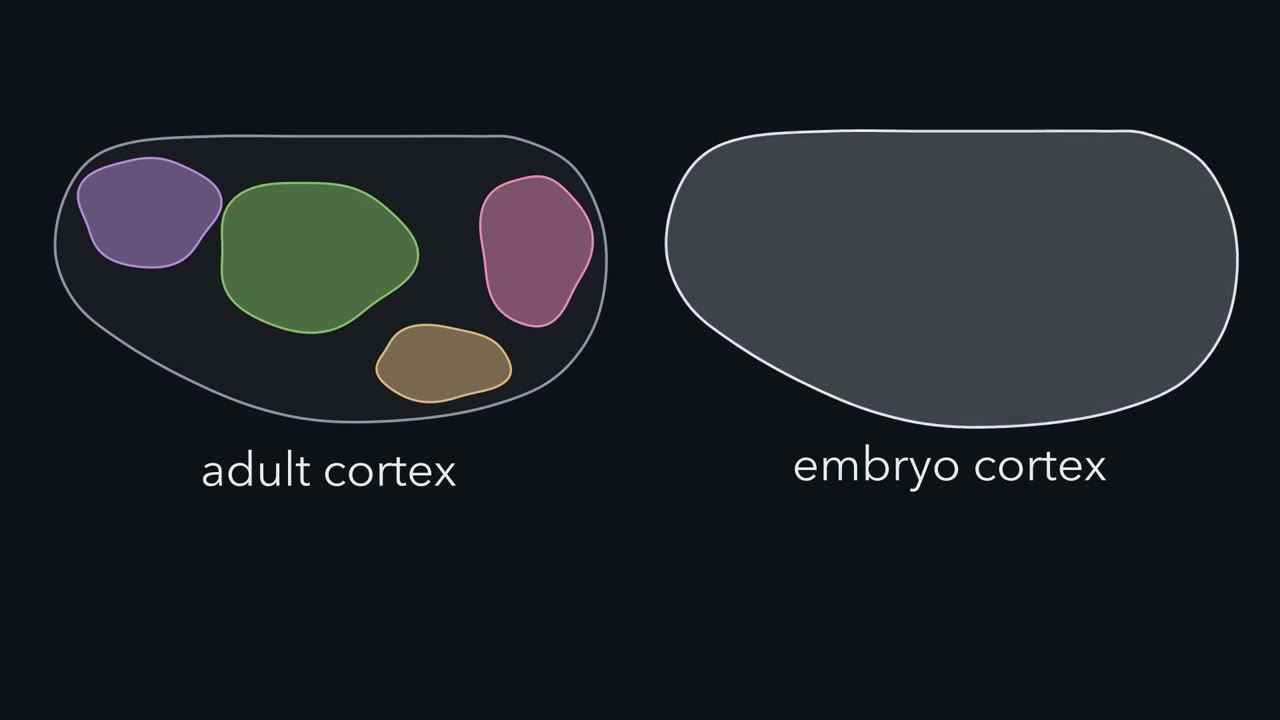
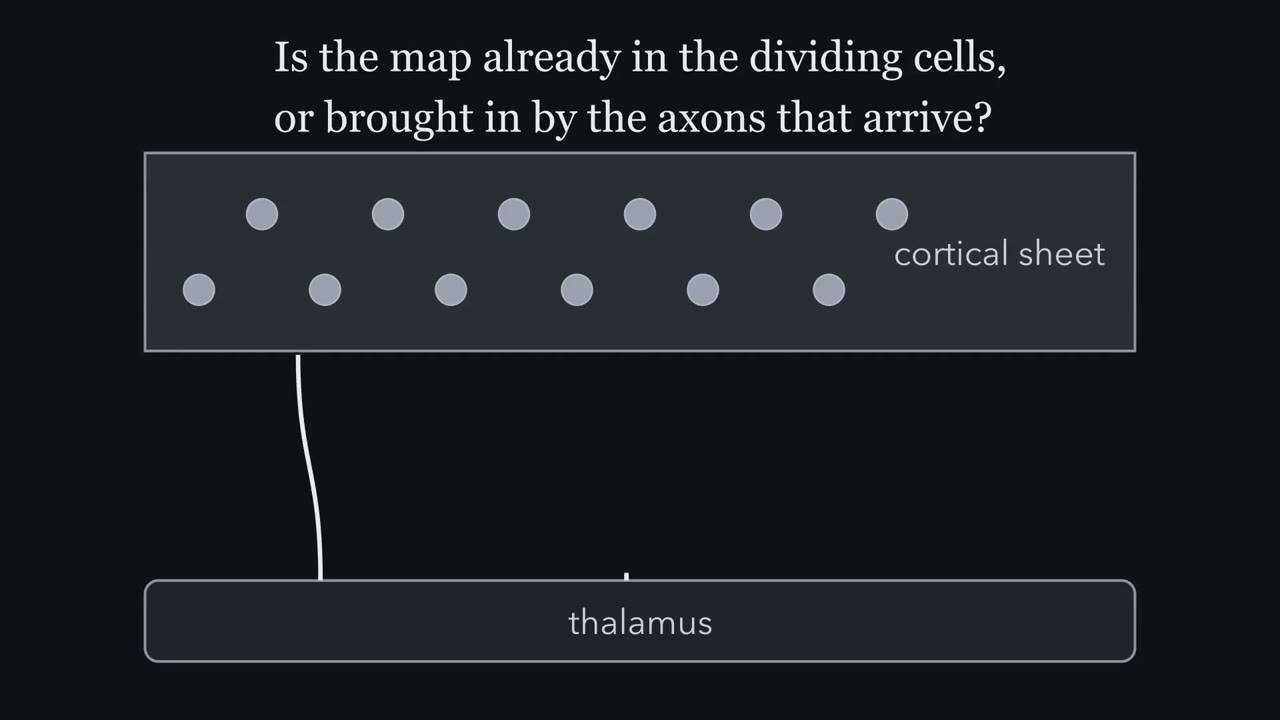
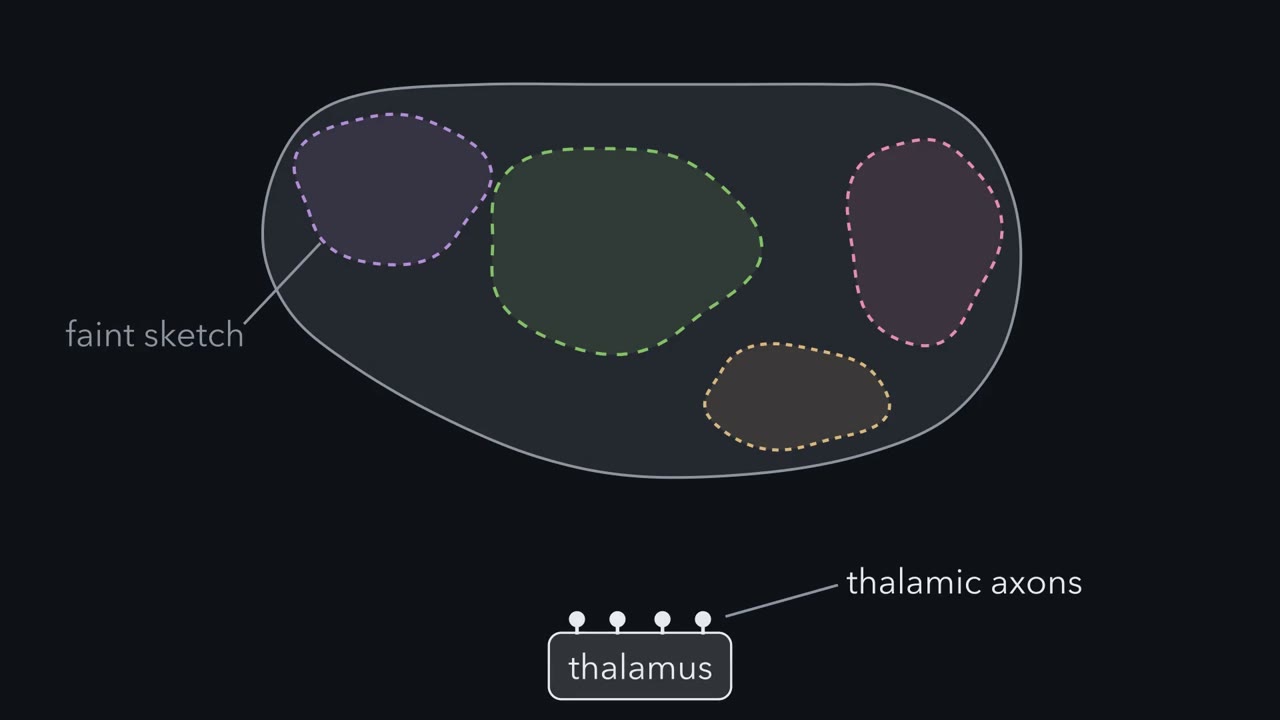
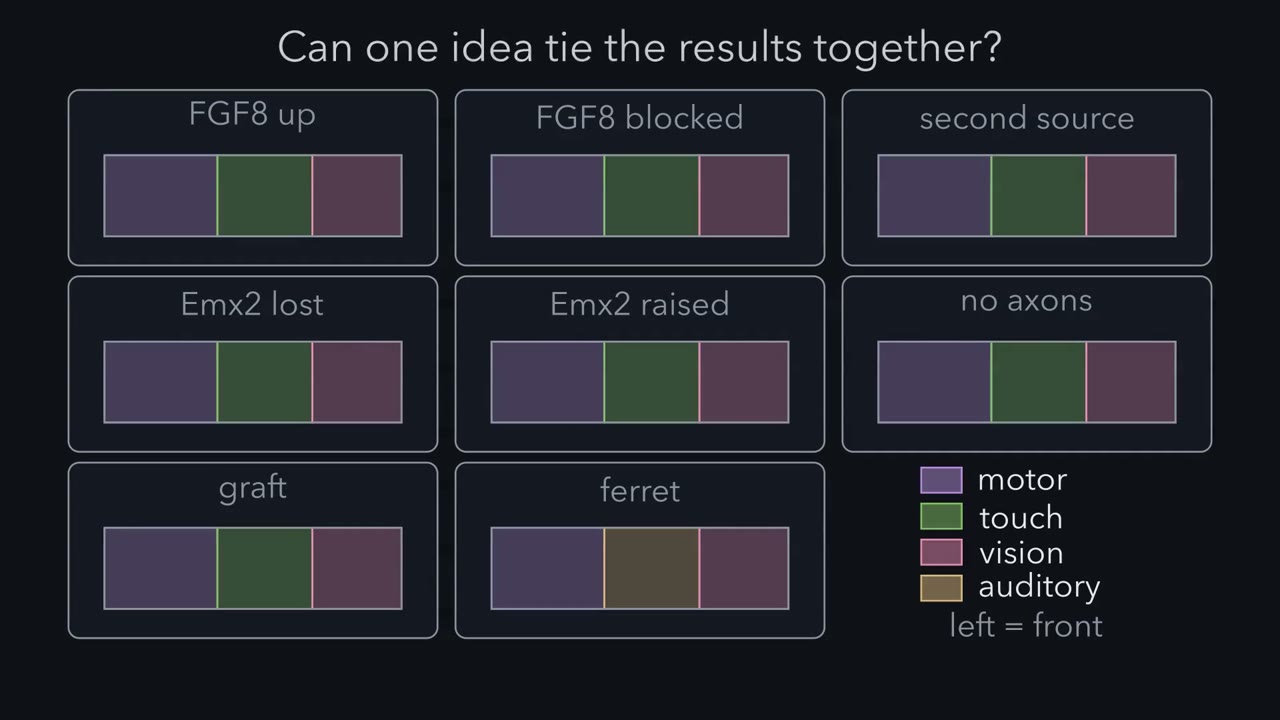
Can one signal at the edge of the sheet decide where a border falls? A gradient across the sheet needs a source of position. Part of it comes from signalling centres at the edges of the sheet. The cortical hem, at the medial edge, releases Wnt and BMP proteins. At the front is a source of a growth factor, FGF8. Necessary: remove or block it, and look for the loss or shift of what it controls. Sufficient: add it, or add more of it, and look for a structure induced, enlarged or moved. In 2001, Tomomi Fukuchi-Shimogori and Elizabeth Grove ran both kinds of test on FGF signalling. They used electroporation. Brief electric pulses drive injected DNA into progenitors at a chosen spot.
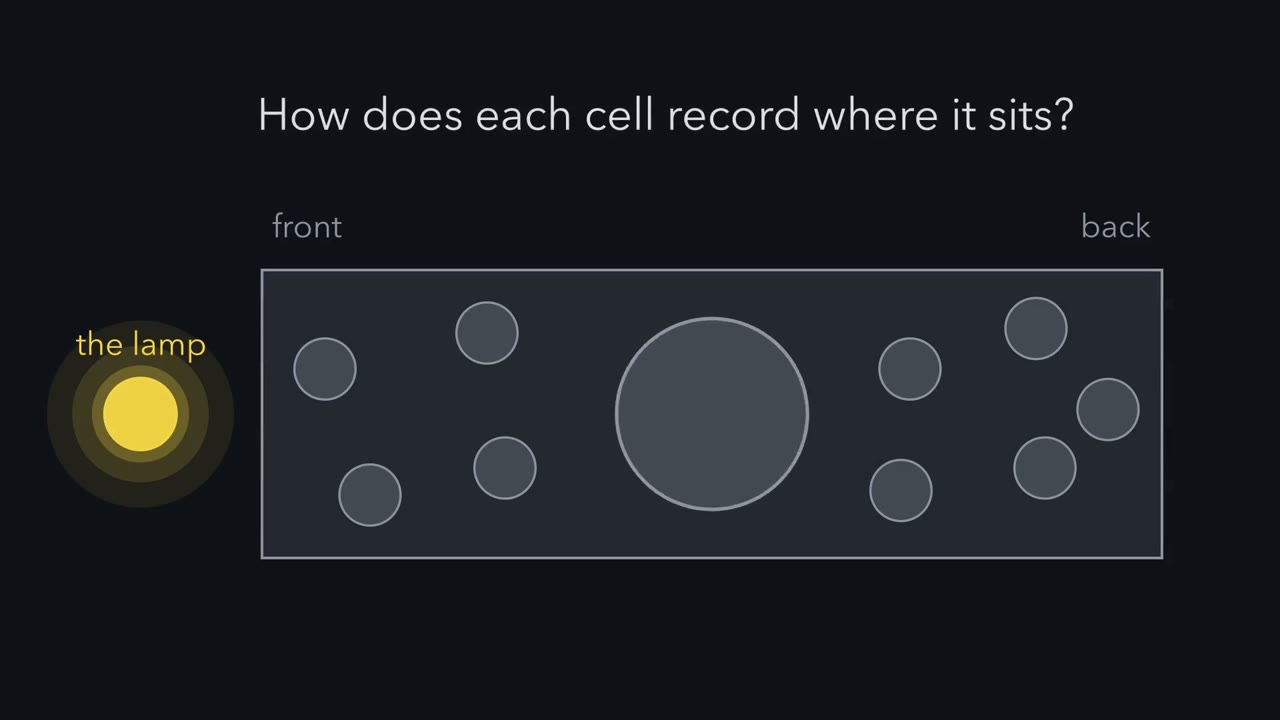
Their readout was the barrel field, one cluster of cells for each large whisker. Picture FGF8 as a lamp at the front of a room. Cells judge how far forward they sit by how bright it is. Turn the lamp up. Add extra FGF8 at the front. Which way should the barrel field move?
Toward the back. Cells read themselves as farther forward, so each border falls farther back. That is what they found. Later work showed FGF8 can act directly on cells at a distance. Cells also respond through the gradients it helps set. Now block the lamp. They used a soluble receptor fragment that binds FGF8, and probably related FGFs. Where does the field go?
Toward the front. More FGF8 moves it back. Less FGF signalling moves it forward. Opposite shifts mark a signal allocating territory. One more test. Put a new lamp at the back, far from the first. What should happen? Near the new lamp, cells read a high level, as if they sat near the front. Part of the pattern repeats there. They found a partial second barrel field, behind the normal one. How far does a border move? A simple model helps. Its numbers are illustrative. Let the level fall by the same fraction over each step back. The decay length is the step that leaves a little over a third. Double the lamp, keeping the decay length and thresholds fixed.
Every border on the sheet moves back by the same distance. That distance is about seven tenths of a decay length. Halve the lamp, and each border moves forward by the same amount. A border pushed past the edge is lost. The equal steps belong to the exponential shape. A straight-line ramp gives unequal steps.
What survives both shapes is the direction, and a graded response to dose. The takeaway: graded signals help place the areas. In our working model, change the dose and the borders slide.
Add one secreted protein to the back of a mouse embryo's cortex and a second, partial whisker map can appear there.
Continue in the lesson: Mapping the Cortex: Areas and Arealization →
3:32 · Free, with captions and a transcript. The lesson has the full text, the questions and the sources.
More films from this lesson
How this film was made. Narration: an AI narrator voice (Kokoro, af_heart) reading narration written from this lesson's text. Animation: AI-generated in code (Manim) by Claude, a schematic with no drawn molecular structures. Captions come from the narration script. See something wrong? Report it.