Films · Developmental Neuroscience
Mammals Mute Robo, and Also Clear It
Read the transcript of “Mammals Mute Robo, and Also Clear It”
Film transcript: Mammals Mute Robo, and Also Clear It
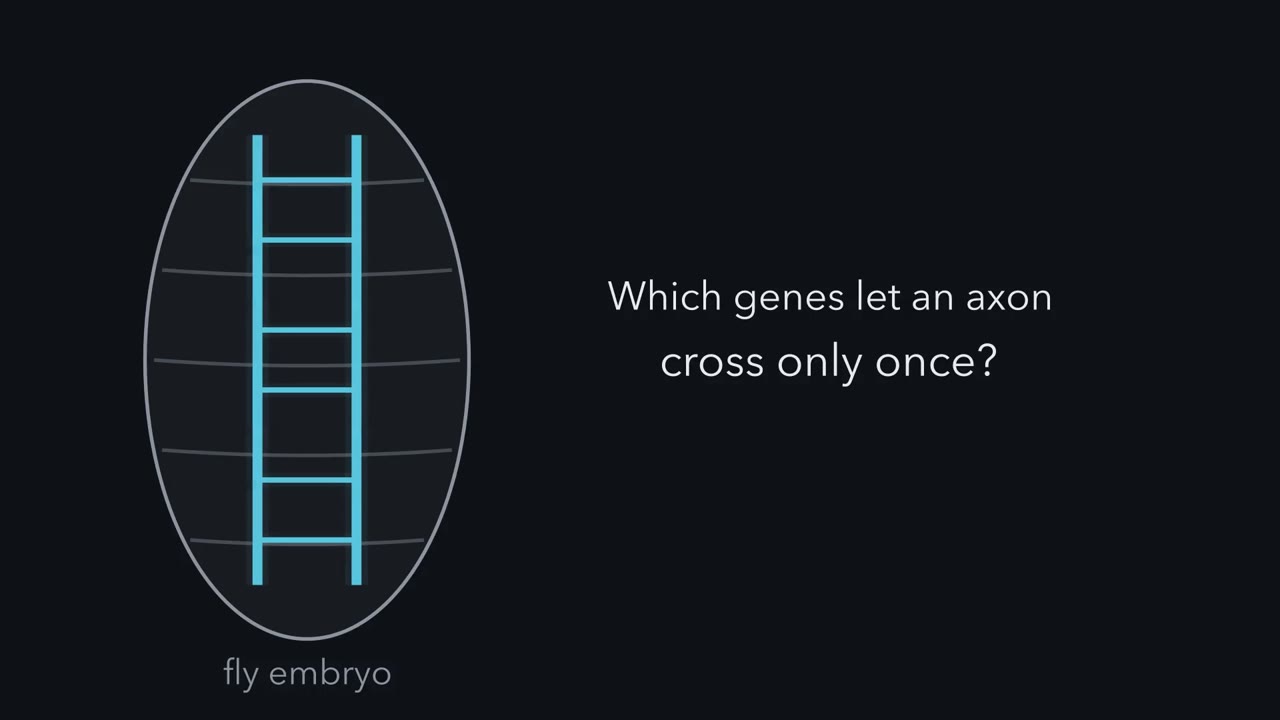
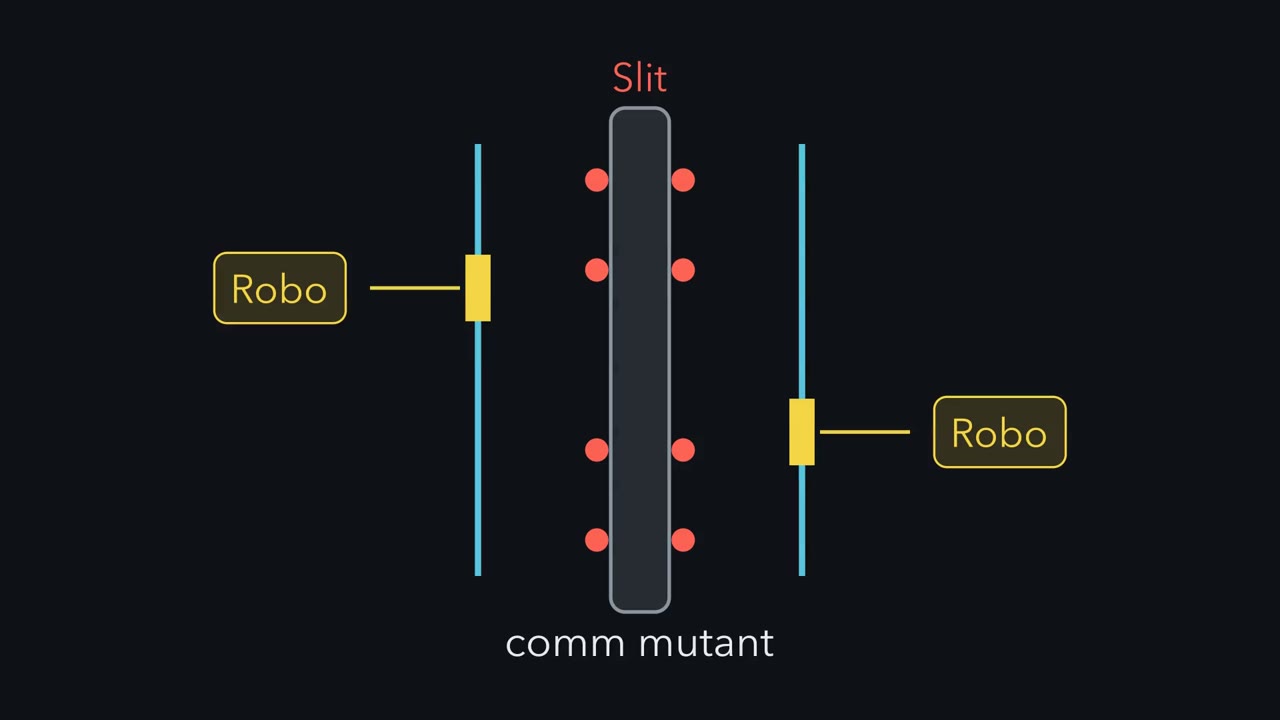
Comm has been found only in some insects. So how does a mammalian axon stay deaf until it crosses? The fly has one slit gene. Mice have three, and two conventional Robo receptors, Robo1 and Robo2. Earlier work found that mice lacking Slit1 and Slit2 had no defect in commissural axon guidance. In 2004, researchers removed all three. Use the three questions. What should the axons do?
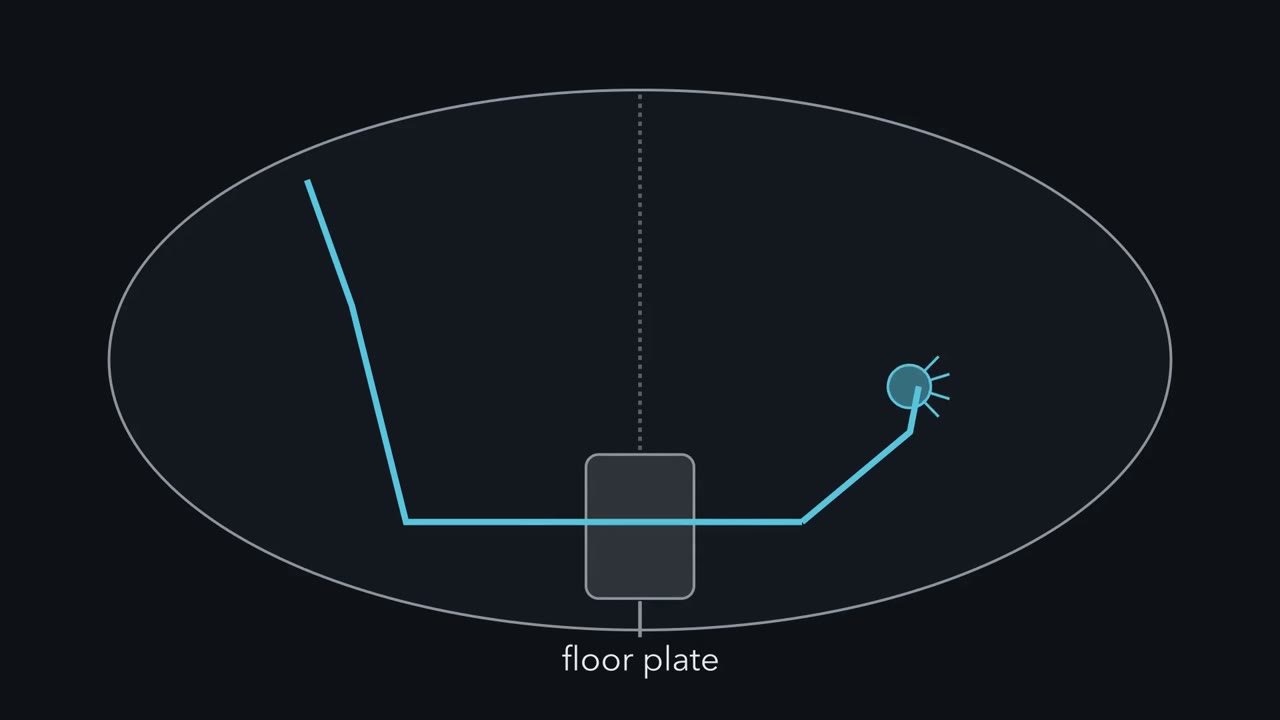
With no Slit, there is no Slit push, though other cues remain. The axons still reach the midline, drawn by netrin. Many stalled in the floor plate. Others crossed and then turned back. Next, a culture experiment. Zou and colleagues grew pieces of embryonic rat spinal cord, called explants, in a gel. Dorsal explants gave axons that had not yet crossed. Explants that kept the floor plate gave axons that had crossed. Each kind sat beside cells releasing Slit2. Which axons should Slit affect?
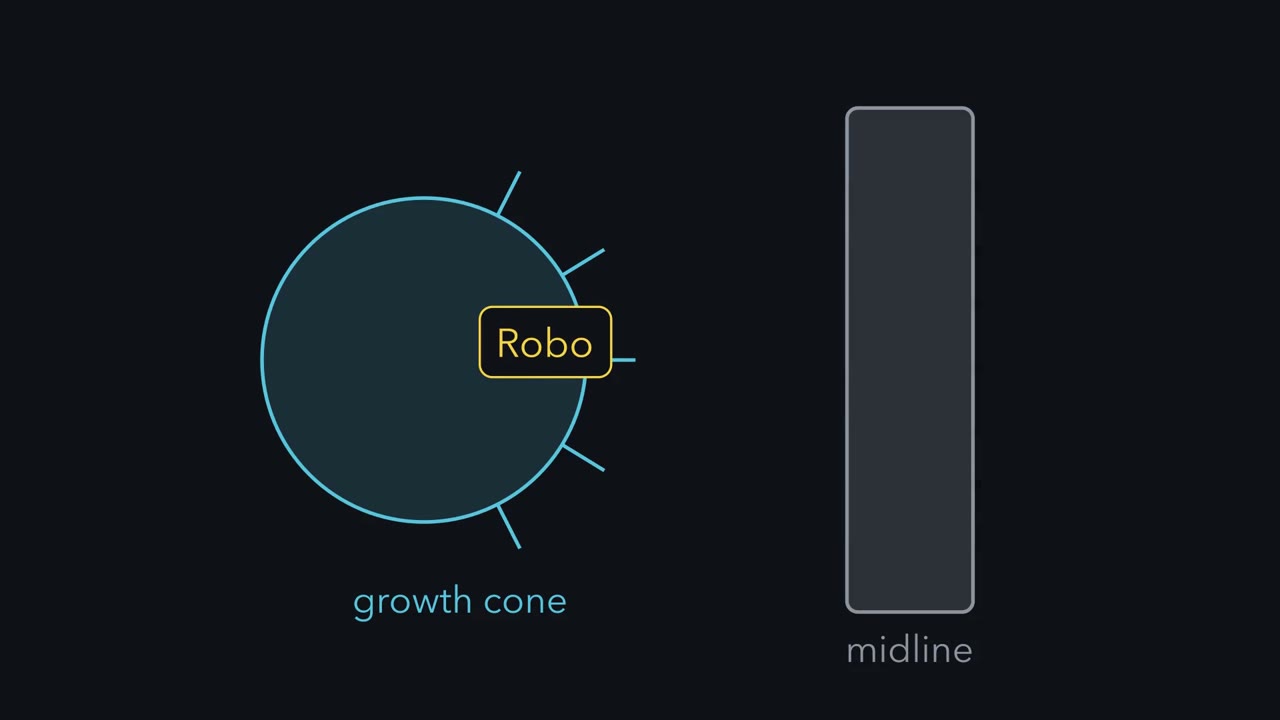
Slit2 held back the growth of axons that had crossed. Axons that had not crossed were not held back. These were different axons, not one axon before and after. Still, crossing goes with a change in the response to Slit. So what keeps a mammalian axon deaf before it crosses? An unusual member of the Robo family, called Robo3. In 2004, it was found on commissural axons before they cross. Remove Robo3 from a mouse. Slit is present. Robo1 and Robo2 are still made. Predict.
Almost no commissural axons cross. They approach the floor plate and turn away. They hear Slit too early. That resembles the fly comm mutant. But Robo3 does not clear Robo1 and Robo2 from the surface. It blunts their response while they stay in the membrane. Comm lowers Robo1 by sorting, and in at least one other way. Robo3 mutes it. Mammals also clear some Robo1. Proteins called Ndfip1 and Ndfip2 send it to be degraded before crossing. Two splice forms of Robo3 matter here. In mouse, the form present before crossing disappears afterwards. A second form appears on crossed axons and helps keep them from recrossing. Mammalian Robo3 has a second job too.
It works with the netrin receptor DCC and strengthens netrin attraction. The same gene matters in people. Mutations in human Robo3 cause horizontal gaze palsy with progressive scoliosis. In patients, motor and sensory pathways that normally cross in the brainstem appear uncrossed. The takeaway: mammals both mute their Robo receptors and clear some of them, until the axon has crossed.
An axon is pulled toward the midline, crosses it, and then treats it as forbidden ground. What changed?
Continue in the lesson: Crossing the Midline Once: Slit, Robo and Comm →
3:29 · Free, with captions and a transcript. The lesson has the full text, the questions and the sources.
More films from this lesson
How this film was made. Narration: an AI narrator voice (Kokoro, af_heart) reading narration written from this lesson's text. Animation: AI-generated in code (Manim) by Claude, a schematic with no drawn molecular structures. Captions come from the narration script. See something wrong? Report it.