Films · Developmental Neuroscience
Naming the Signal
Read the transcript of “Naming the Signal”
Film transcript: Naming the Signal
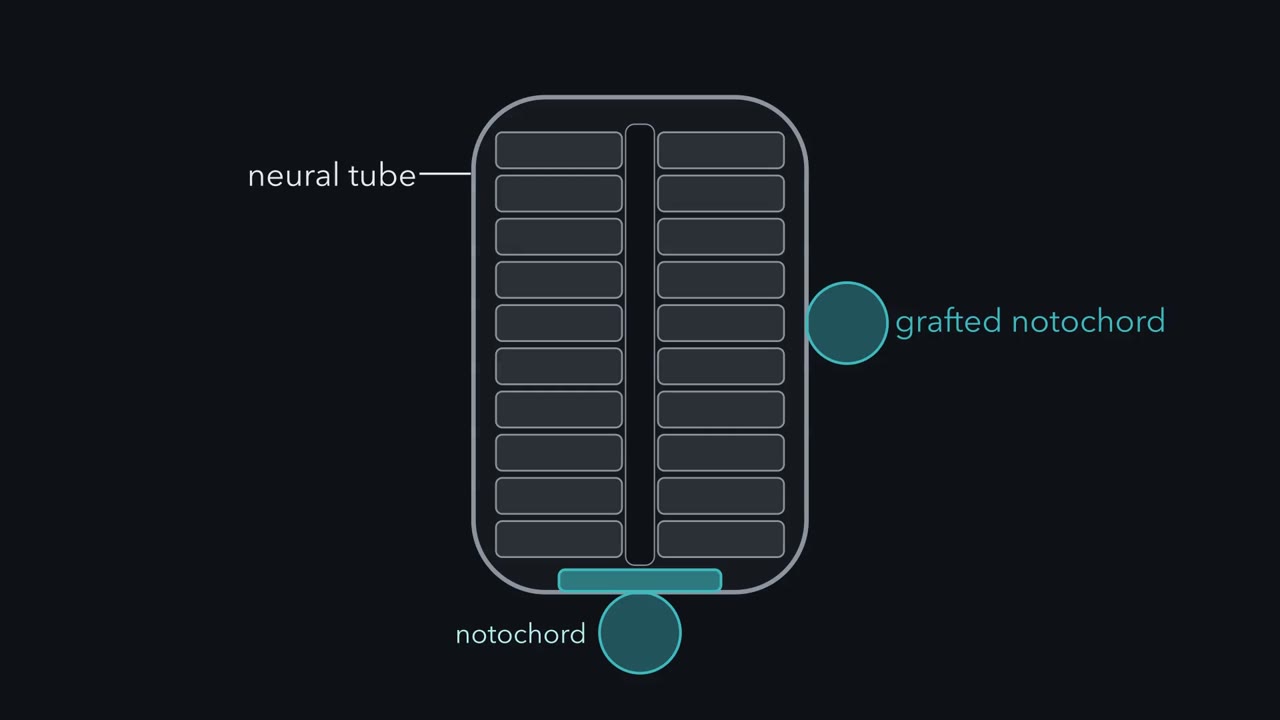
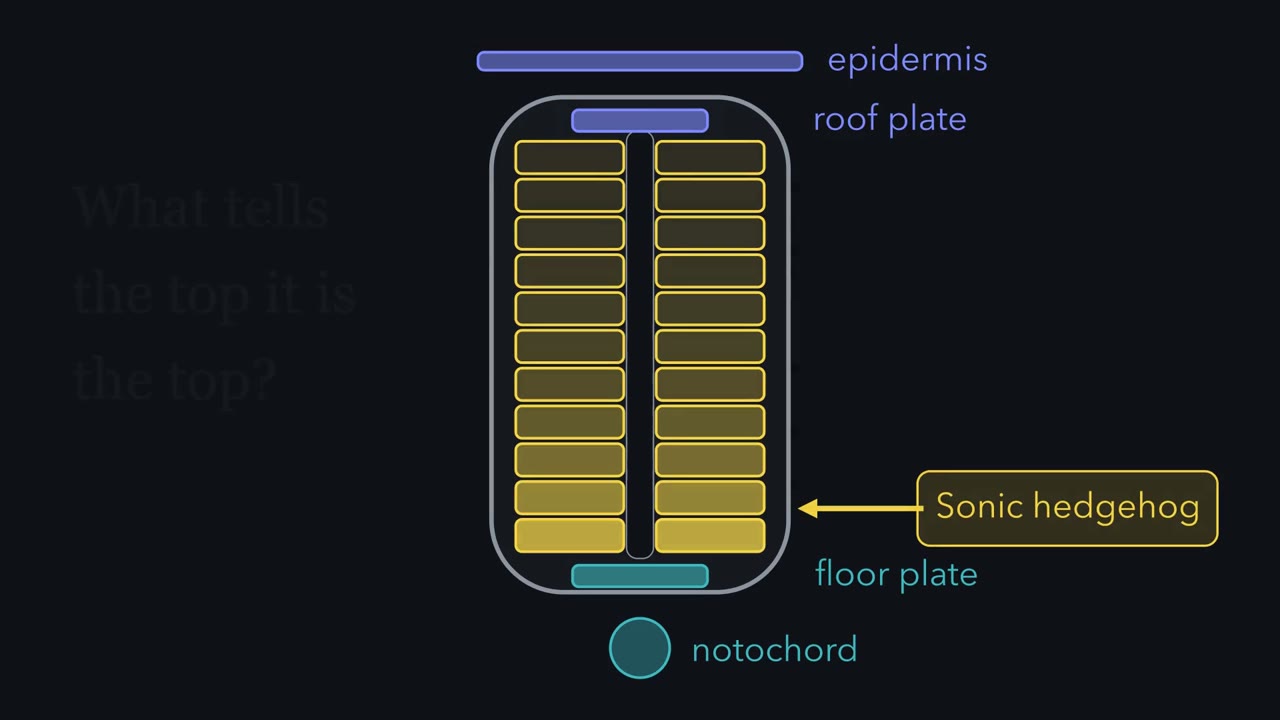
Something passes from the notochord into the neural tube. What is it, and how does a cell receive it? The signal got a name in December 1993. Three papers appeared in one issue of the journal Cell. They described vertebrate relatives of hedgehog, a fly gene for a secreted signal. One paper was in mouse, one in zebrafish, one in chick. The gene, Sonic hedgehog, was expressed in notochord and floor plate, the tissues the grafts had pointed to. In the mouse paper, forcing the gene on where it is normally absent switched on floor-plate genes. Next, Thomas Jessell's laboratory put the protein back into a dish. An explant is a small piece of tissue grown in a dish.
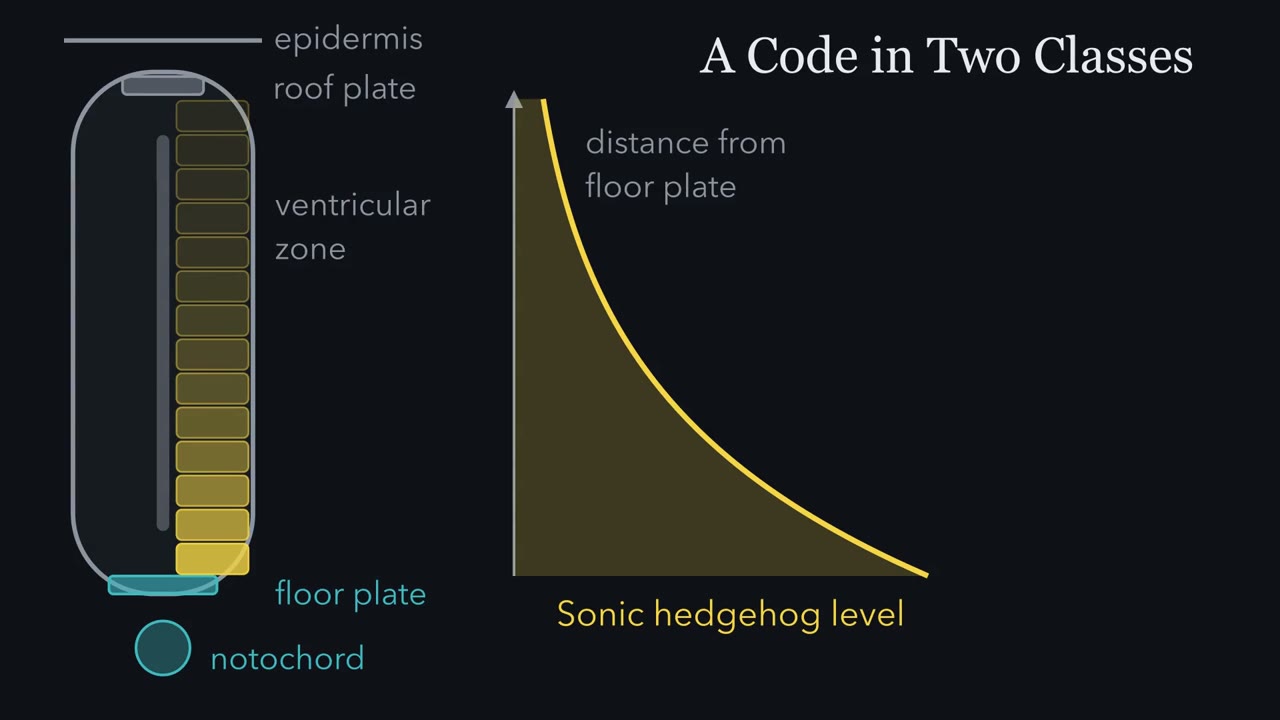
In 1995, Henk Roelink and colleagues gave explants the purified signaling fragment of the protein. At the higher concentrations tested, explants made floor-plate markers. Lower ones gave motor neuron markers. One protein, at different doses, gave different ventral fates. How does a cell receive it? Think of a brake. The receptor, Patched, is the brake. On its own, it holds a second membrane protein, Smoothened, switched off. Sonic hedgehog binds Patched and lifts the brake. Smoothened is freed, and the pathway turns on. What changes is a family of transcription factors called the Gli proteins. Without the signal, Gli3 above all is cut into a short repressor.
That step depends on the primary cilium. With the signal, less repressor is made, and full-length Gli acts as an activator. In this model, a progenitor reads the balance of activator against repressor. One tool switches the pathway off. Cyclopamine, an alkaloid from a plant, blocks Smoothened. Necessity came from a knockout, a mouse with a gene deliberately disrupted. Mice lacking Sonic hedgehog have no floor plate. They lack most ventral cell types of the neural tube. Now a sharper test. Suppose Sonic hedgehog's main job is to stop Gli3 repressor from forming. Predict. In a mouse lacking Sonic hedgehog, what should removing Gli3 as well do to its ventral cells?
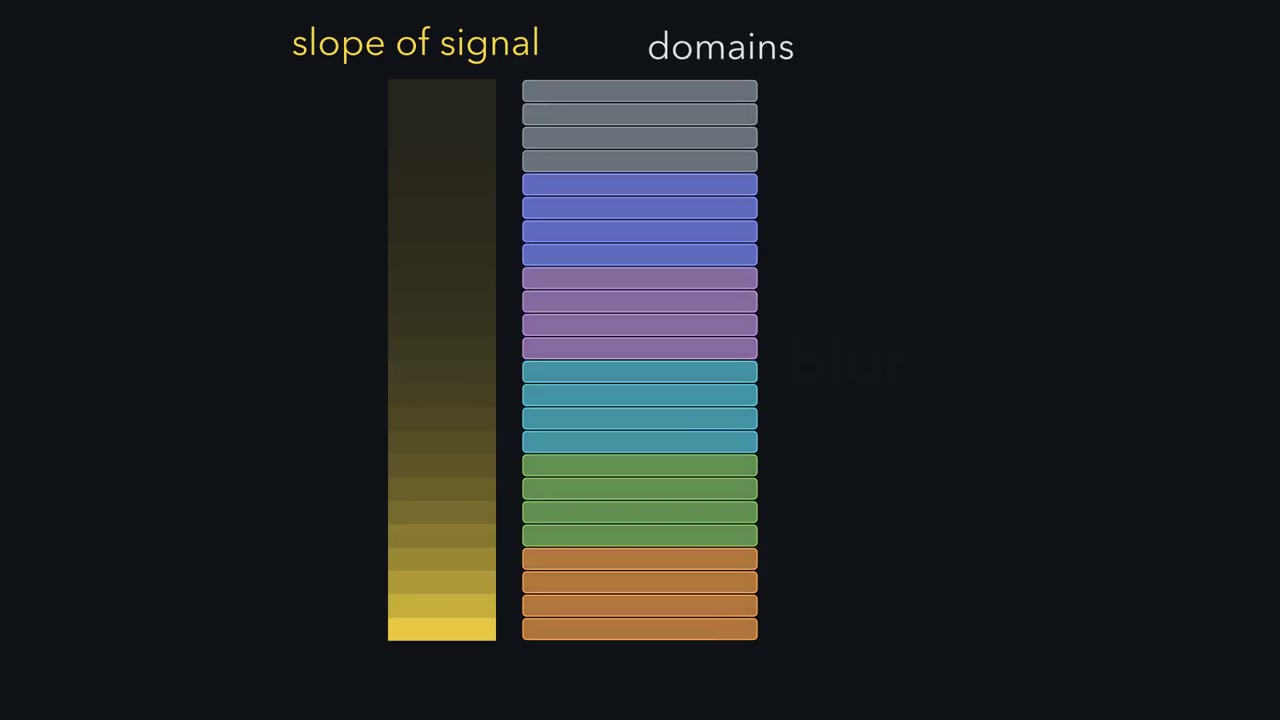
Removing Gli3 restores motor neurons and several ventral interneuron classes. Removing Gli3 did part of Sonic hedgehog's job. That is a double-mutant rescue. A rescue shows that two genes interact, not how. Here, the known pathway supplies the how. So much of what Sonic hedgehog does in the spinal cord is to block Gli3 repressor. The takeaway: the signal is Sonic hedgehog, read through a brake. Next, how does an amount become an address?
Graft a second notochord beside a chick neural tube, and the tube grows a second floor.
Continue in the lesson: Ventral to Dorsal: Sonic Hedgehog and BMP in the Neural Tube →
3:13 · Free, with captions and a transcript. The lesson has the full text, the questions and the sources.
More films from this lesson

How this film was made. Narration: an AI narrator voice (Kokoro, af_heart) reading narration written from this lesson's text. Animation: AI-generated in code (Manim) by Claude, a schematic with no drawn molecular structures. Captions come from the narration script. See something wrong? Report it.