Films · Developmental Neuroscience
One Cell Across the Wall
Read the transcript of “One Cell Across the Wall”
Film transcript: One Cell Across the Wall
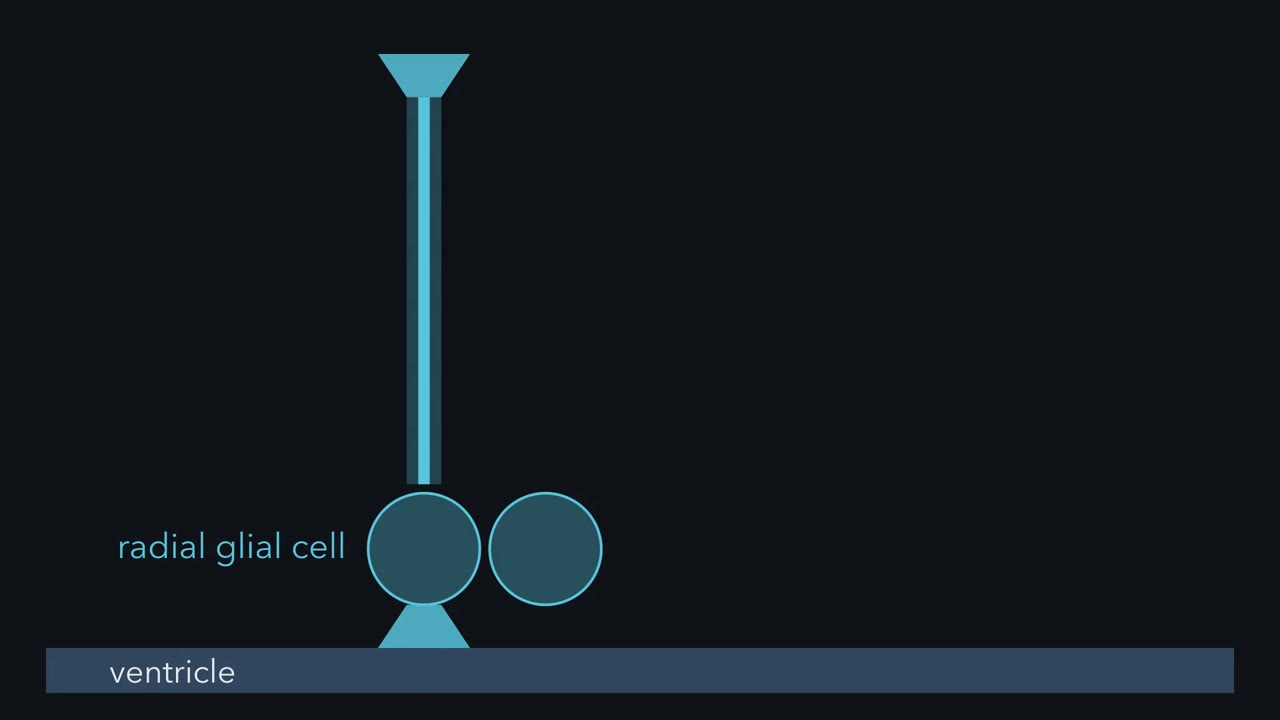
Where do the neurons of the cerebral cortex come from? In rodents, most come from one kind of cell. Here is a slice through the wall of the embryonic mouse cortex. The ventricle, a fluid-filled space, is at the bottom. The surface facing the ventricle is apical. The outer surface, under the pia, is basal. Beside the ventricle lies the ventricular zone, where progenitors live. A progenitor is a cell that still divides. Just outside it is the subventricular zone. Farther out, young neurons cross the intermediate zone to reach the cortical plate. Now light up one cell. It spans the whole wall. An apical foot sits on the ventricle. A long fibre ends in a basal foot under the pia.
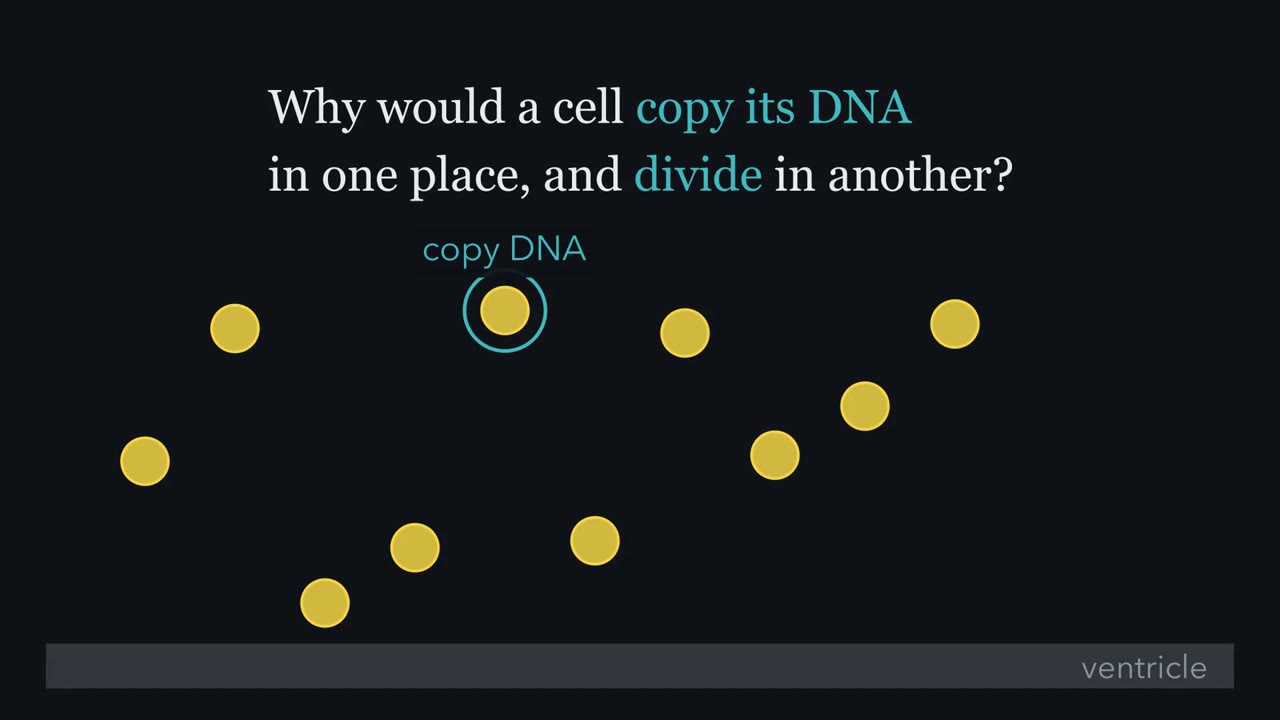
Early on, cells like this are neuroepithelial cells. As neurogenesis begins, in mouse around embryonic days 10 to 12, they become radial glia. They keep the long shape. And they switch on proteins associated with glia. Look where cells divide. Most cells caught in mitosis sit against the ventricle. Cells copying their DNA sit farther out. Two words will matter. A stem cell renews itself and makes more than one kind of cell. Radial glia, as a population, meet both conditions. An asymmetric division keeps one radial glial cell. Some single lineages later make glia as well as neurons. And potential is not fate. Potential is what a cell can make alone in a dish.
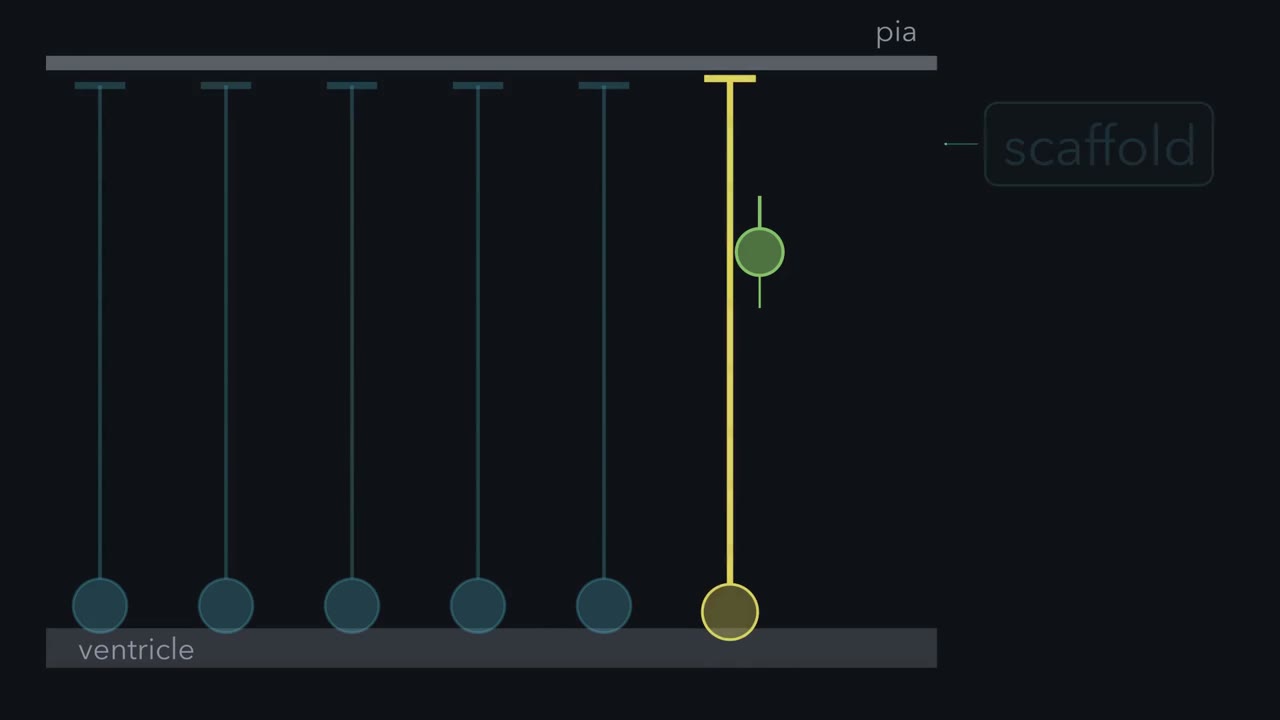
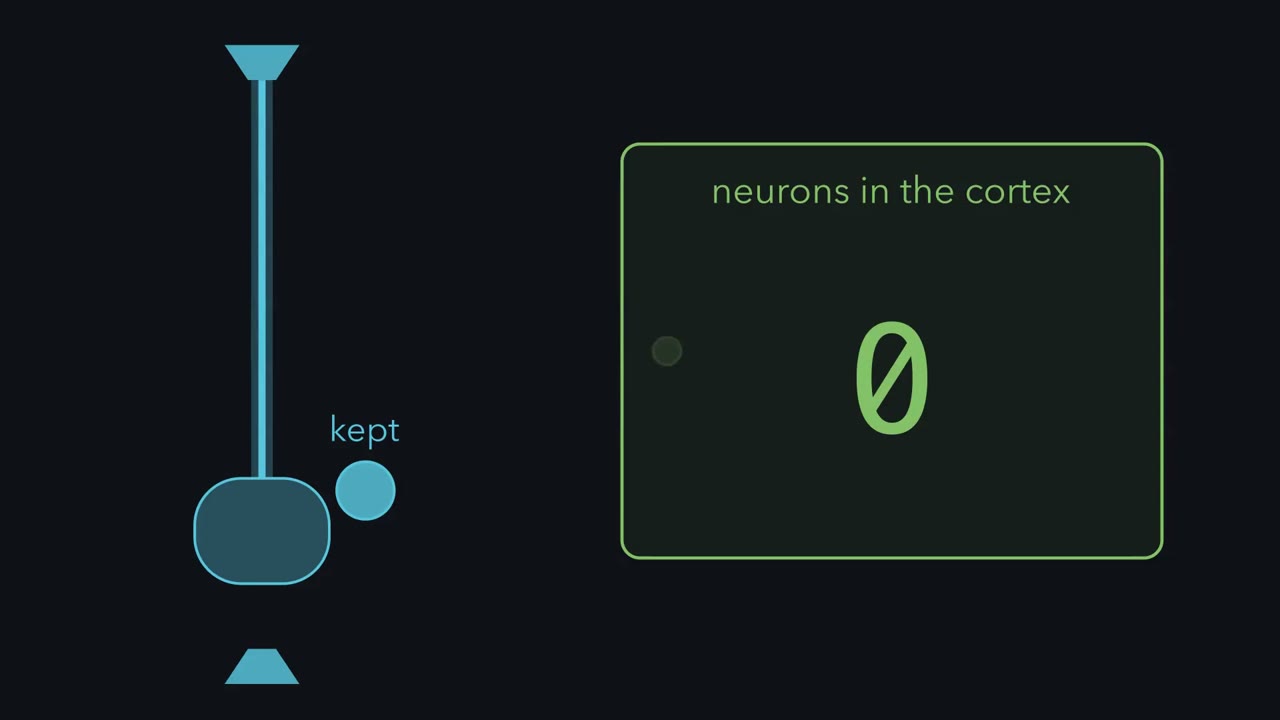
Fate is what it does make in the embryo. Now the first puzzle. In fetal monkey cortex, young neurons climb radial glial fibres. Is the scaffold also the source of the neurons? The second puzzle. Why does a progenitor copy its DNA out in the ventricular zone, then come back to the ventricle to divide? Here is the idea to carry through. A radial glial cell is a stem cell anchored at the ventricle. Each time it divides, it decides how many daughters stay radial glia. Keep two, and its radial glial line doubles. Keep one, and the line holds steady while it makes neurons. Keep none, and its radial glial line ends. A daughter that leaves is spent as a stem cell.
It becomes a neuron, or an intermediate progenitor that usually makes two. Count those choices round by round, and you can see how the number of neurons depends on them. This is a counting model, for projection neurons of rodent dorsal cortex. Outer radial glia, common in primates, renew themselves without the anchor. And the rule counts. It does not explain what makes a daughter stay or leave. So hold on to one picture. One long cell across the wall, spending its divisions one choice at a time.
In rodents, radial glia, long seen as mere scaffolding, make most cortical neurons. Why does such a progenitor copy its DNA in one place and divide in another?
Continue in the lesson: The Ventricular Zone: Radial Glia as Stem Cells →
3:12 · Free, with captions and a transcript. The lesson has the full text, the questions and the sources.
More films from this lesson
How this film was made. Narration: an AI narrator voice (Kokoro, af_heart) reading narration written from this lesson's text. Animation: AI-generated in code (Manim) by Claude, a schematic with no drawn molecular structures. Captions come from the narration script. See something wrong? Report it.