Your Own Skin: The Slow Stroke
Read the transcript of “Your Own Skin: The Slow Stroke”
Film transcript: Your Own Skin: The Slow Stroke
A soft brush strokes your forearm. Does some nerve fibre care how fast it moves? Mouse genetics cannot be done in people. So human touch classes rest on another method, microneurography. A fine tungsten electrode goes through the skin into a nerve, in a conscious person. It records single afferents. Recordings from the hand sorted human afferents into four classes, by firing. The ending is never seen. Hairy skin adds another class. Slow, unmyelinated afferents that respond to gentle deformation. These are the C-tactile afferents, physiologically similar to mouse C-LTMRs. The brush strokes from very slow to fast. Which speed drives a C-tactile afferent hardest?
Not the fastest. C-tactile firing rises, then falls: an inverted U. It peaks in the slow-stroke range. Pleasantness ratings correlated with that firing. Fast myelinated Aβ afferents behaved differently. Their firing kept rising with speed. Reviews conclude that these afferents support gentle, affective touch, the social side of touch. But not every affective touch relies on them. And affective touch need not be pleasant. The human C-tactile ending is still unknown. The mouse hair map cannot be transplanted onto human hair. So the idea carries over. Each class is most sensitive to its own part of a touch. The nervous system reads the pattern.
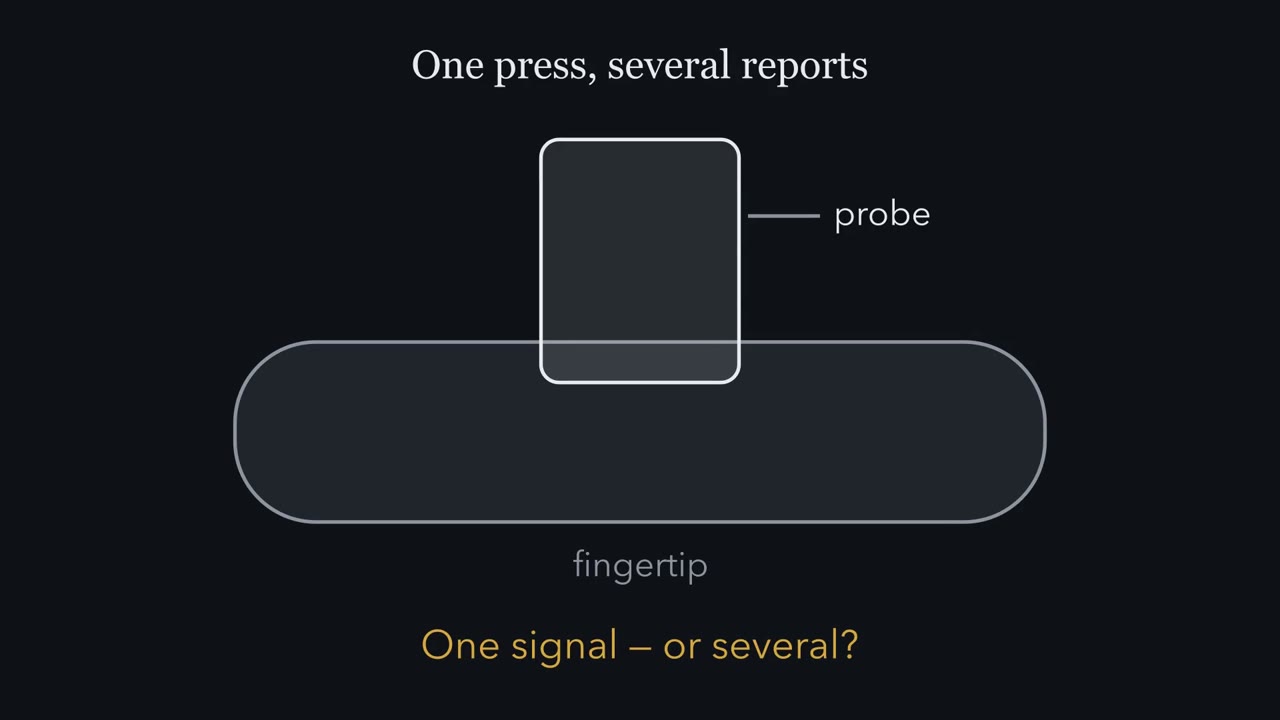
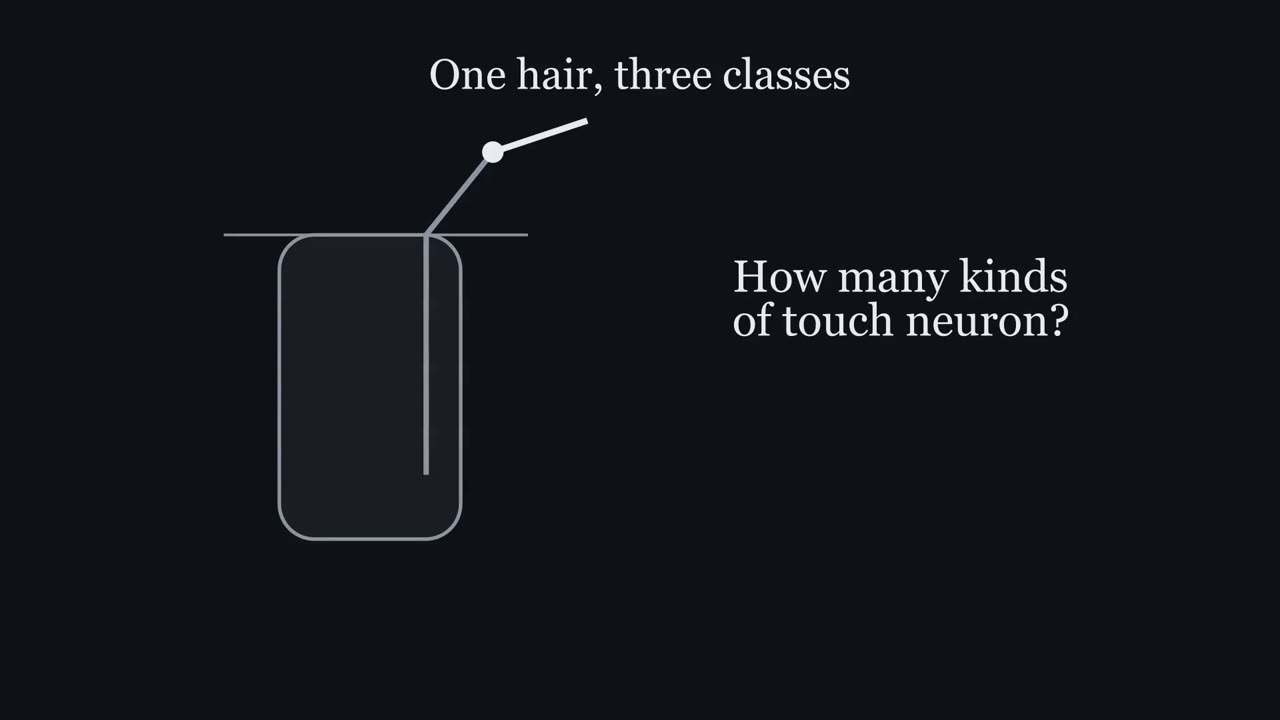
A light stroke on your skin is not one signal. Different kinds of touch neuron are most sensitive to different parts of it: the motion, the steady press, the vibration, the slow stroke. On a mouse's back, three of these kinds can even share a single hair. Why build a sense that way?
Continue in the lesson: The Low-Threshold Mechanoreceptors: One Touch, Several Signals →
1:51 · Free, with captions and a transcript. The lesson has the full text, the questions and the sources.
More films from this lesson
How this film was made. Narration: an AI narrator voice (Kokoro, af_heart) reading narration written from this lesson's text. Animation: AI-generated in code (Manim) by Claude, a schematic with no drawn molecular structures. Captions come from the narration script. See something wrong? Report it.