How an Artery Learned to Relax
Read the transcript of “How an Artery Learned to Relax”
Film transcript: How an Artery Learned to Relax
What relaxes an artery? In 1980, Robert Furchgott and John Zawadzki mounted rings of rabbit aorta in an organ bath. Some rings kept their endothelium, the single layer of cells that lines the vessel. In others, it had been rubbed off. They added acetylcholine. It relaxed the intact rings but not the rubbed ones. So the lining was sending something to the muscle beneath it. That something lasted only seconds. In 1986, Furchgott proposed that it is the gas nitric oxide, NO. Ignarro independently proposed the same. Acetylcholine binds a GPCR on the endothelial cell, and calcium rises. Calcium, bound to calmodulin, switches on nitric oxide synthase.
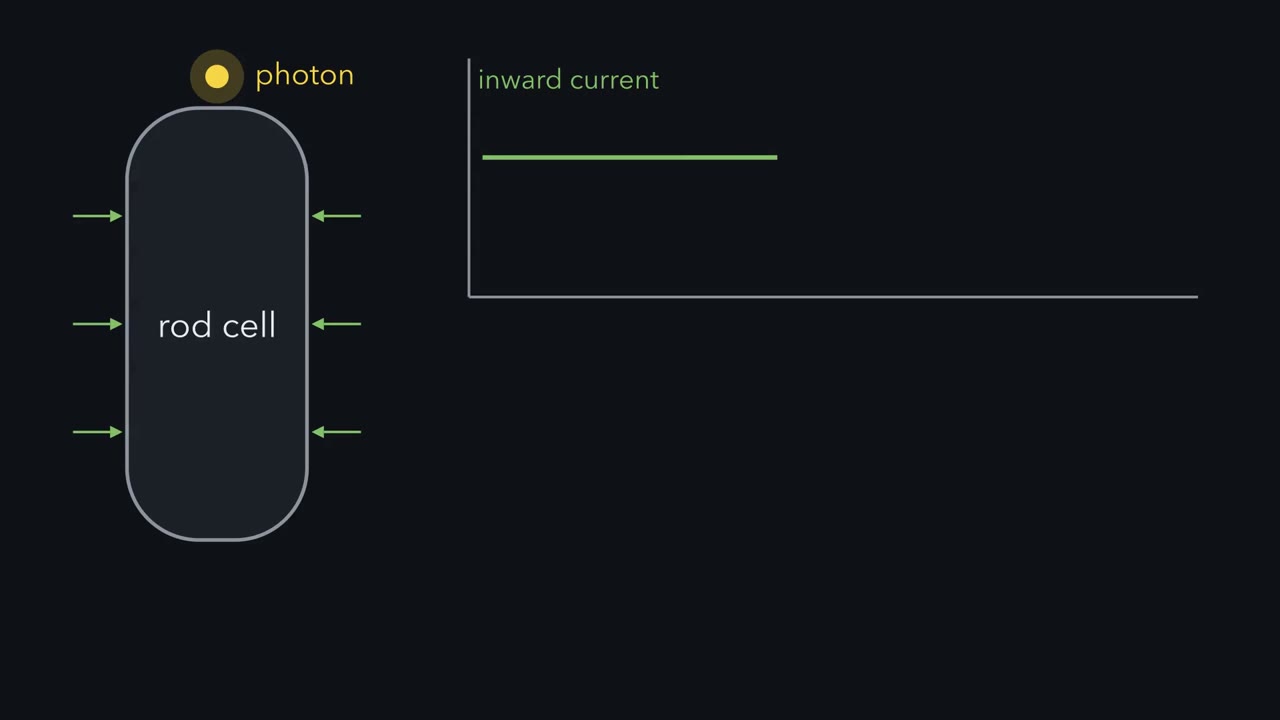
It makes NO from the amino acid arginine. NO is small and uncharged, so it crosses membranes freely. It cannot be aimed, and it reacts away within seconds. So only near neighbors receive it. In the muscle cell, NO binds the iron of a heme group in soluble guanylyl cyclase. It changes shape and makes cGMP from GTP. The cGMP switches on protein kinase G. The muscle relaxes, and the vessel widens. A phosphodiesterase, PDE5, ends the signal. Outside the eye, cGMP carries its signal by rising.
Your rods report light by turning a current down. Why would a sense run backwards?
Continue in the lesson: Sensing the World: Vision, Smell, Nitric Oxide and cGMP →
1:47 · Free, with captions and a transcript. The lesson has the full text, the questions and the sources.
More films from this lesson
How this film was made. Narration: an AI narrator voice (ElevenLabs, Sarah) reading narration written from this lesson's text. Animation: AI-generated in code (Manim) by Claude, a schematic with no drawn molecular structures. Captions come from the narration script. See something wrong? Report it.