Films · Developmental Neuroscience
Take the Machinery Away
Read the transcript of “Take the Machinery Away”
Film transcript: Take the Machinery Away
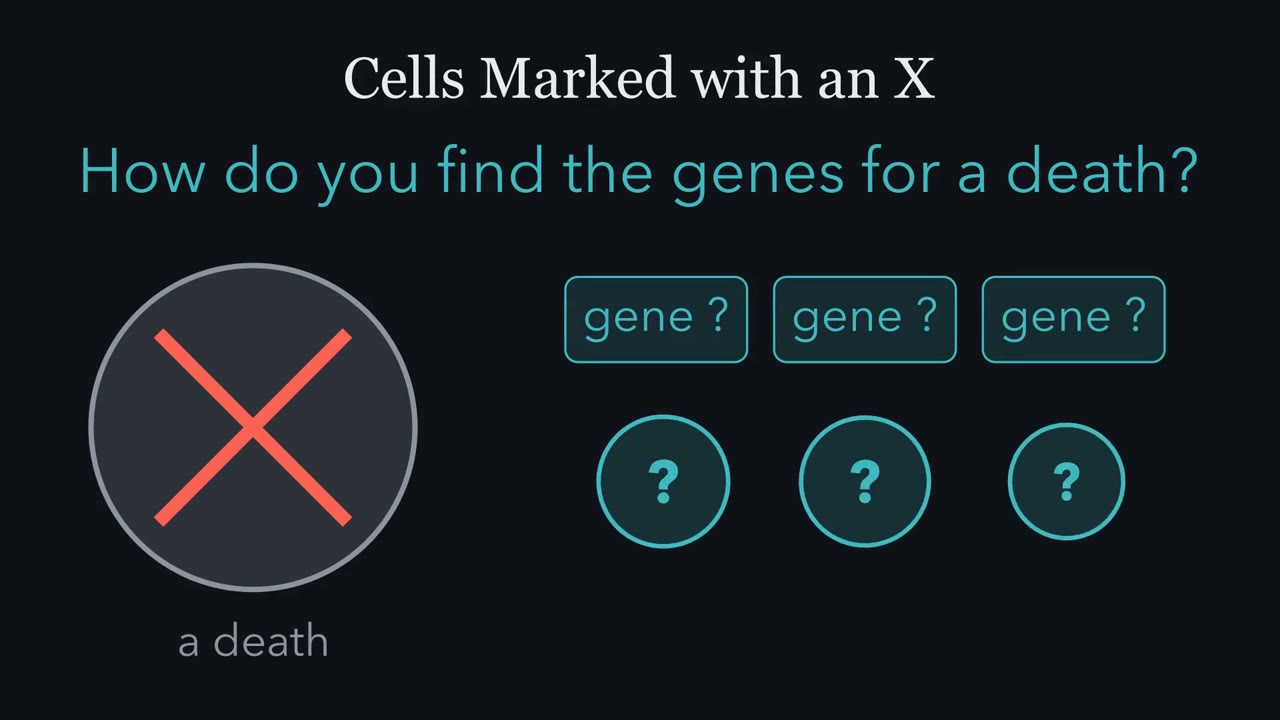
Culture shows how the program runs. What happens in a whole animal when you delete its parts? Delete caspase-3, or caspase-9, from a mouse. Do the spinal and peripheral neurons that normally die survive? No. Oppenheim's group counted them. The same number died as in normal mice. But the deaths came later, and they did not look apoptotic. Chromatin condensation was absent or reduced. The cytoplasm filled with vacuoles. So deleting a caspase changes how these neurons die. Now delete Bax instead. In many neuron populations, naturally occurring death was largely eliminated. Bax deletion does not rescue every developing neuron. But where neurons depend on Bax, deleting it stops the death.
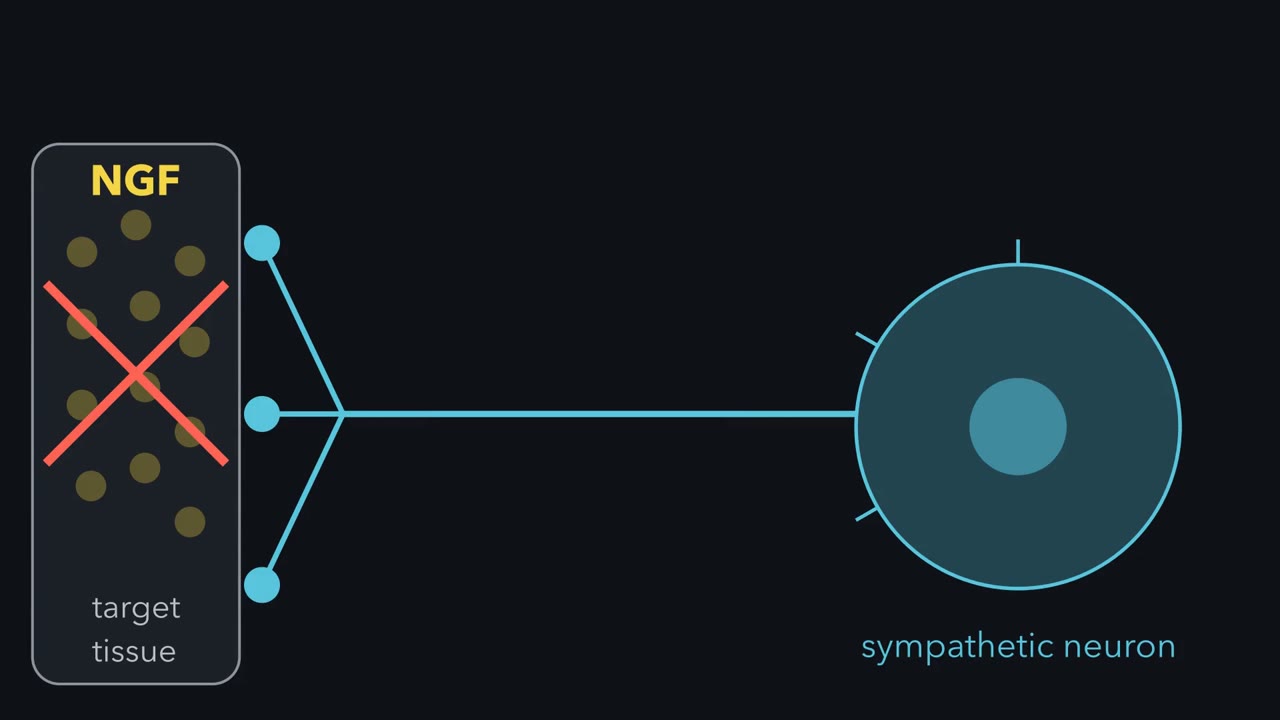
In those populations, caspases decide how. Bax decides whether. The saved neurons were not normal. In the spinal nerve roots and the facial nerve, myelinated axon counts rose by about 30 to 55 percent. Many extra axons were very small. Extra spinal motor neurons began to innervate their targets. Then a subset shrank, and lost contact. A neuron saved from death may survive as a smaller cell. That fits too little target support. Mice lacking NGF lose their sympathetic neurons. So you cannot ask what else NGF does for them. In mice lacking both NGF and Bax, the sympathetic neurons survive. If NGF did nothing but keep neurons alive, what would their innervation of organs look like?
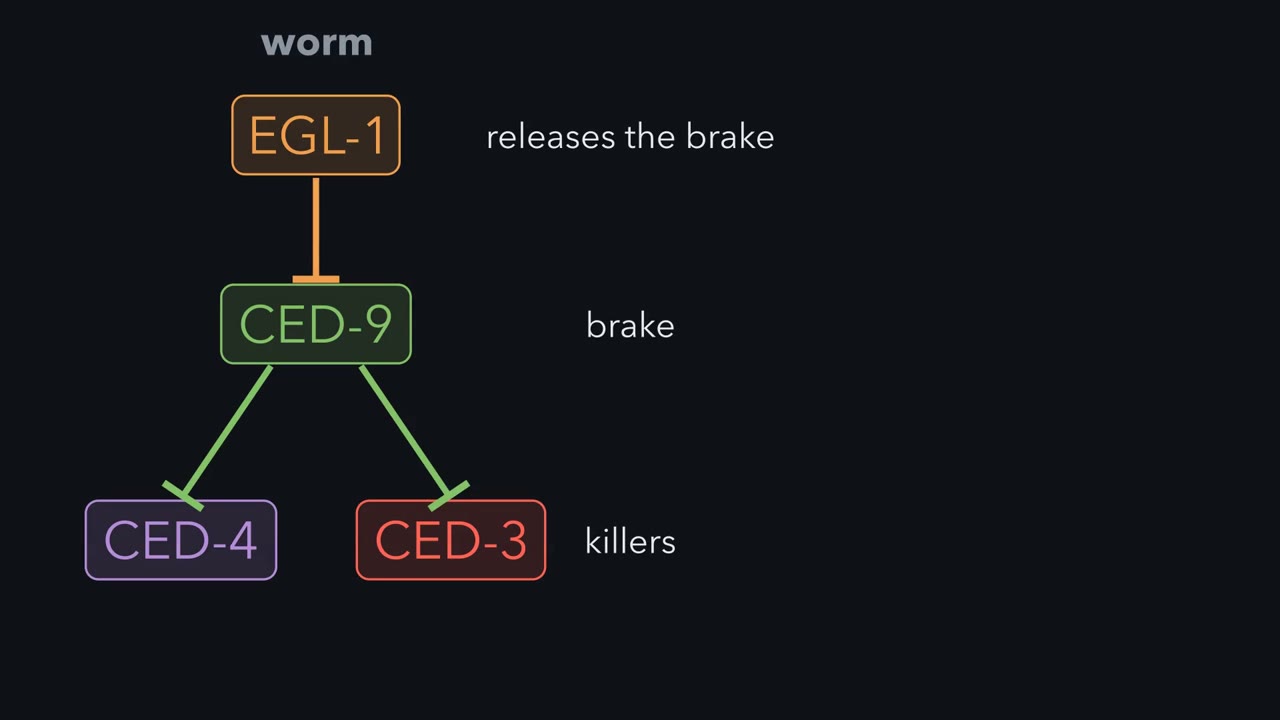
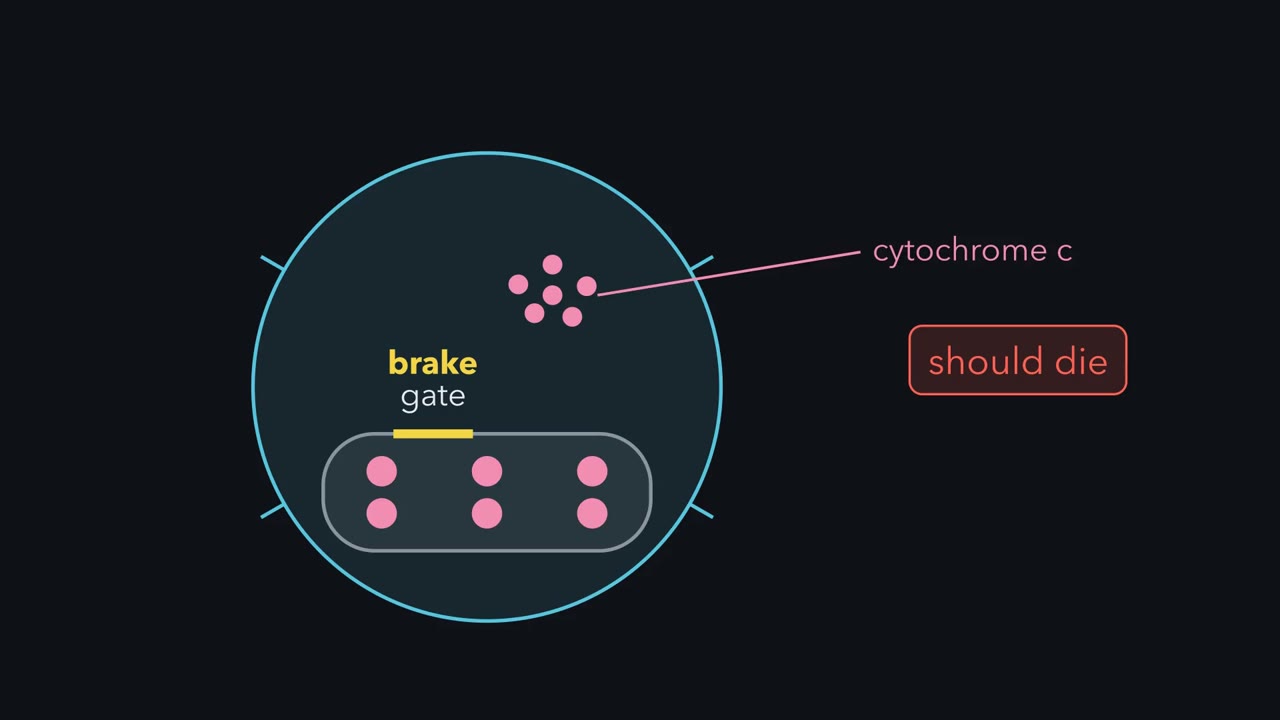
It would look like the innervation in mice lacking only Bax. It did not. The axons failed to fully innervate many targets, and the failure differed by organ. The salivary glands had none, or almost none. The heart was greatly reduced. The trachea was normal. So NGF is needed for axons to grow into many targets, as well as for survival. Here is the general logic. Delete the death machinery, and look at what is still wrong once dying is no longer an option. The deleted gene may have other jobs too, so read such results with care. The killers are already built; a survival signal keeps brakes on them. Brake one is the gate at the mitochondrion. NGF loss opens it through new gene expression.
Brake two is on the caspases, and deprivation lifts it without new protein. The neuron dies by apoptosis only when both brakes are off. Which neurons get enough NGF in the first place is a question about targets, and about competition.
Stop a starving neuron from making new proteins, and it lives longer. Why?
Continue in the lesson: The Death Machinery in Neurons →
3:14 · Free, with captions and a transcript. The lesson has the full text, the questions and the sources.
More films from this lesson
How this film was made. Narration: an AI narrator voice (Kokoro, af_heart) reading narration written from this lesson's text. Animation: AI-generated in code (Manim) by Claude, a schematic with no drawn molecular structures. Captions come from the narration script. See something wrong? Report it.