A Blind Mouse That Knows It Is Day
Read the transcript of “A Blind Mouse That Knows It Is Day”
Film transcript: A Blind Mouse That Knows It Is Day
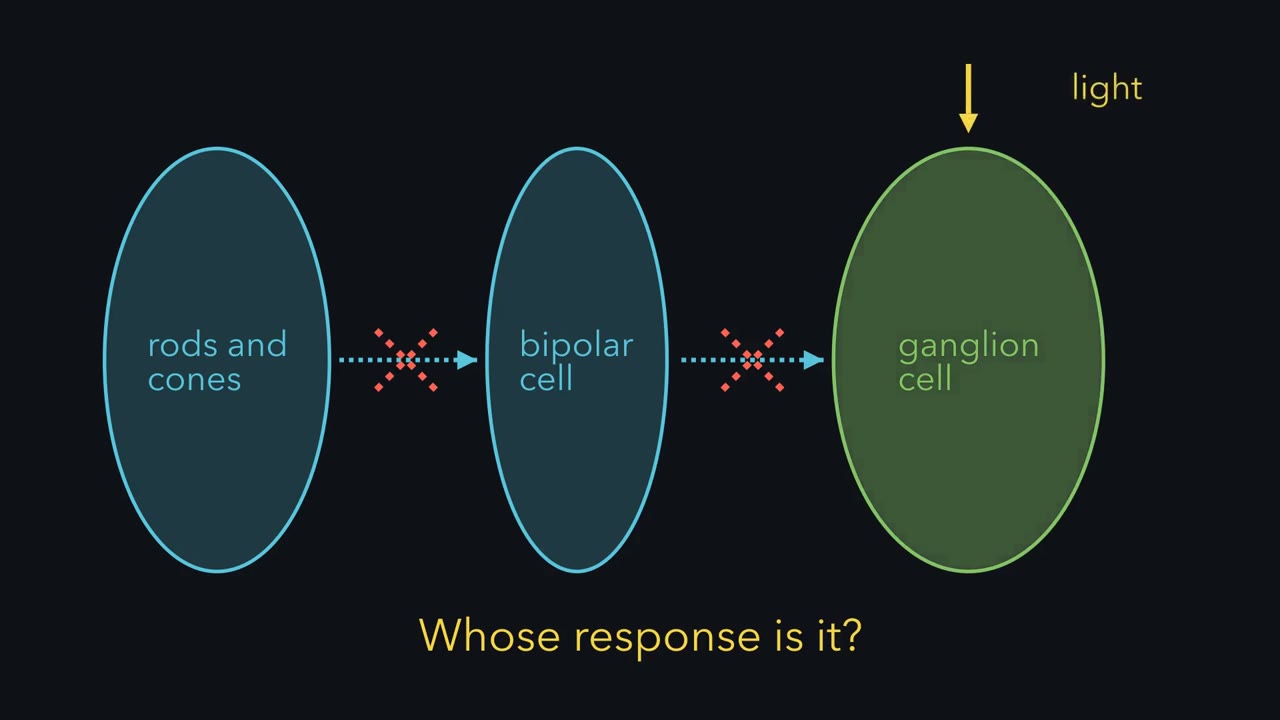
Take a mouse with no working rods and no working cones. Can it still tell day from night? Normally, rods and cones catch the light. Bipolar cells pass their signals on to ganglion cells. Ganglion cells are the retina's output neurons. Their axons carry its signals to the brain. In 1999, two papers studied mice that lack both rods and cones. How do you see a clock in a mouse? Watch its running wheel. A mouse is nocturnal, so it runs in the dark. Each line of the record is one day. Stack the days. If running starts at the same time each day, near lights-off, the clock looks locked to the light cycle. In these rodless, coneless mice, light still shifted the timing of their daily running.
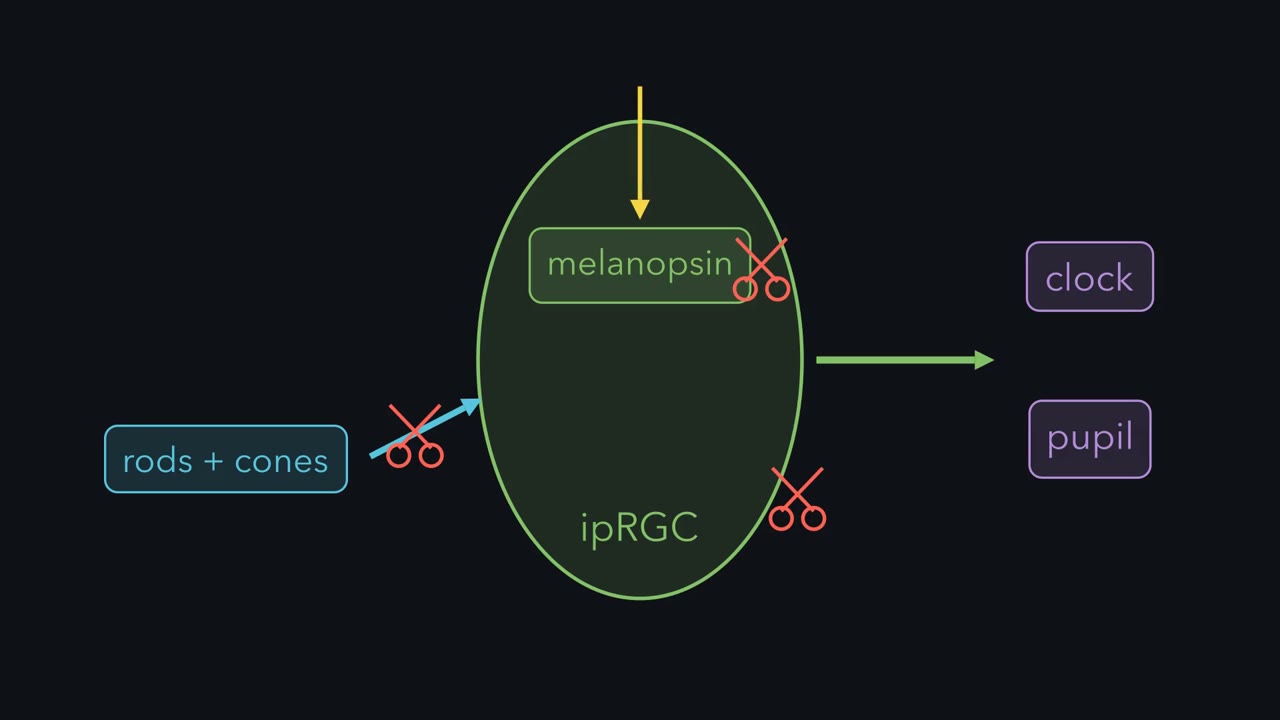
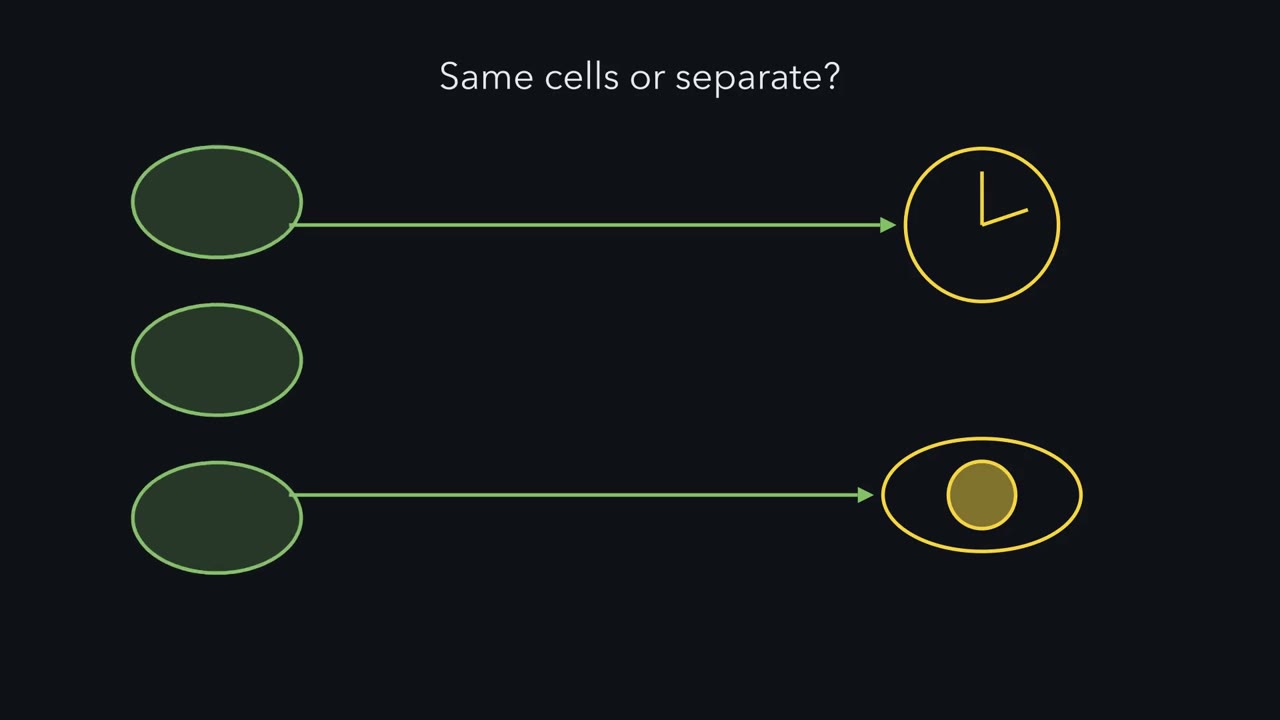
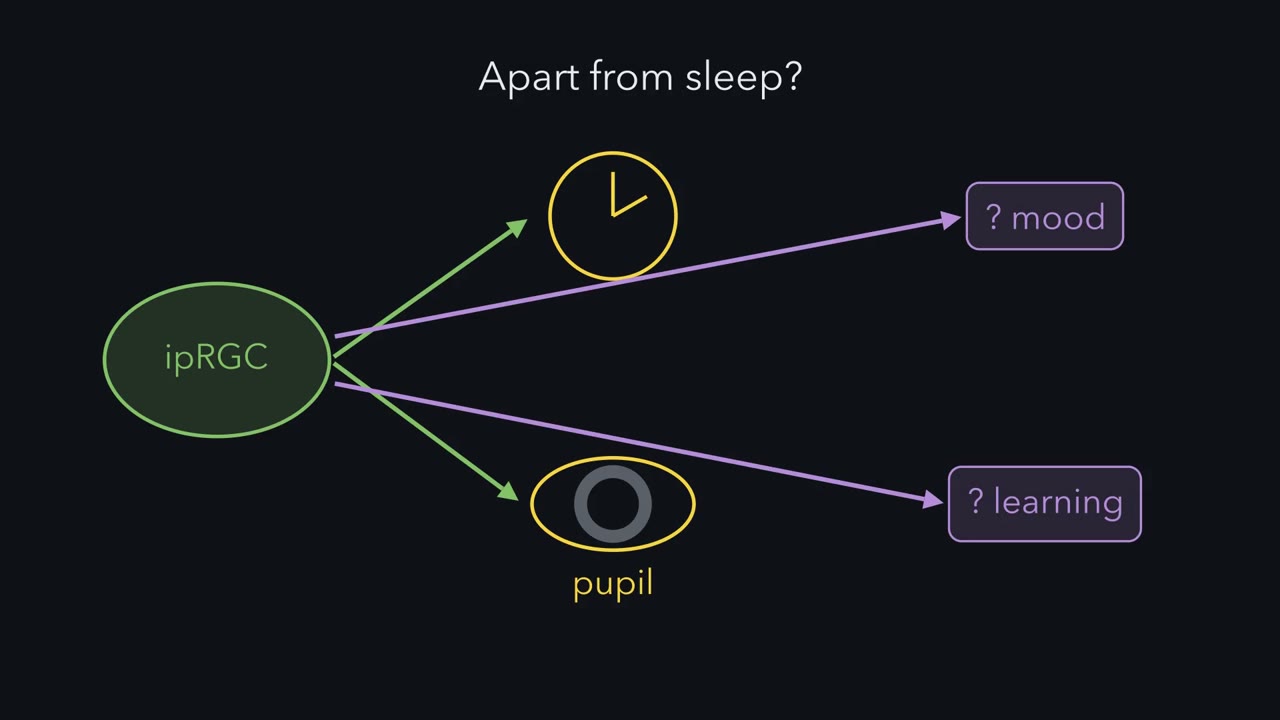
Light still suppressed melatonin from their pineal gland. Work on the pupil followed two years later. So something in the eye, other than rods and cones, was still measuring light. Responses like these use light without forming an image. They are called non-image-forming. Two are best established. The first is setting the body clock. The second is narrowing the pupil. The brain's master clock is the suprachiasmatic nucleus, or SCN. Light reaching it keeps the clock aligned with day and night. That is called photoentrainment. The pupil reflex is driven from the olivary pretectal nucleus. Which cells were measuring the light? In these mice, the answer was a small set of retinal ganglion cells.
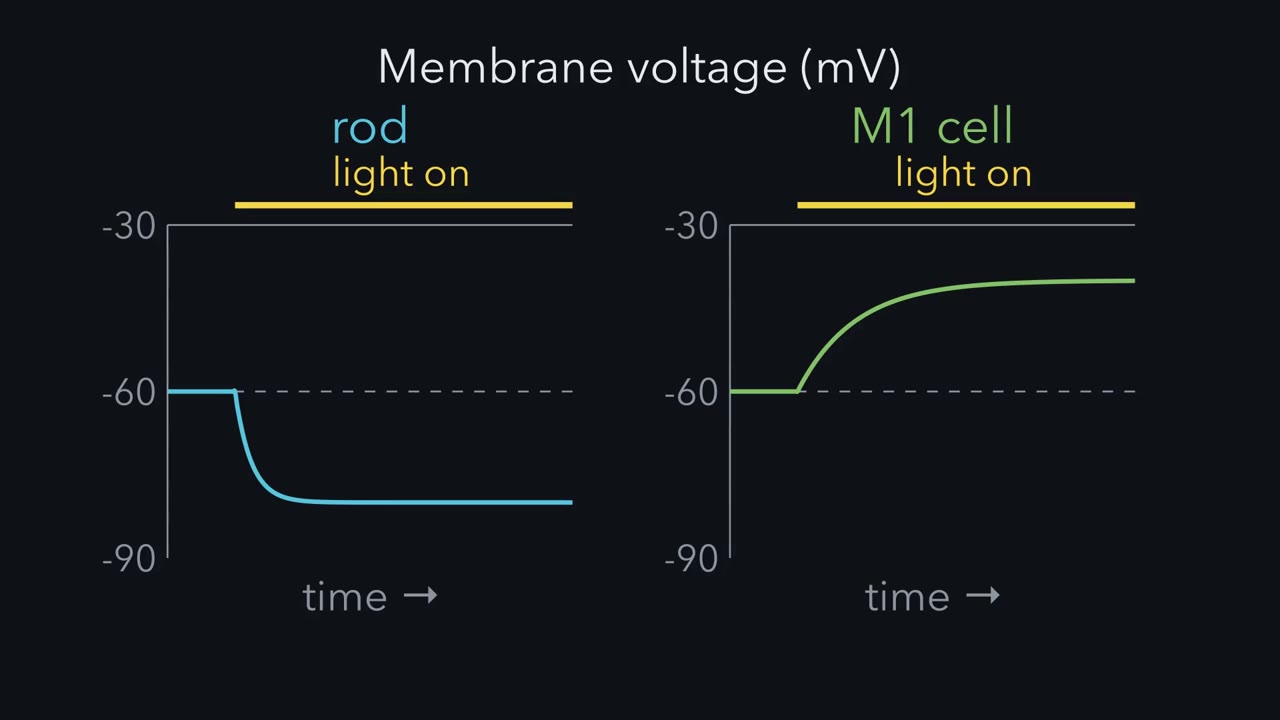
They are called intrinsically photosensitive retinal ganglion cells. For short, ipRGCs. Each makes its own light response with a pigment called melanopsin. It also relays signals from rods and cones. In mice, these cells are the main route by which light reaches the clock and the pupil. Three questions come next. What does the cells' own light response look like? How does light become a voltage inside them? And how do we know the clock and pupil depend on them? Hold one picture in mind. Two light signals arrive at one cell, and leave by one exit.
A mouse with no working rods or cones still sets its body clock to the day and still narrows its pupils in bright light. Which cells are measuring the light?
Continue in the lesson: Melanopsin Cells: Light for the Clock and the Pupil →
2:29 · Free, with captions and a transcript. The lesson has the full text, the questions and the sources.
More films from this lesson
How this film was made. Narration: an AI narrator voice (Kokoro, af_heart) reading narration written from this lesson's text. Animation: AI-generated in code (Manim) by Claude, a schematic with no drawn molecular structures. Captions come from the narration script. See something wrong? Report it.