Films · Developmental Neuroscience
Engine and Clutch
Read the transcript of “Engine and Clutch”
Film transcript: Engine and Clutch
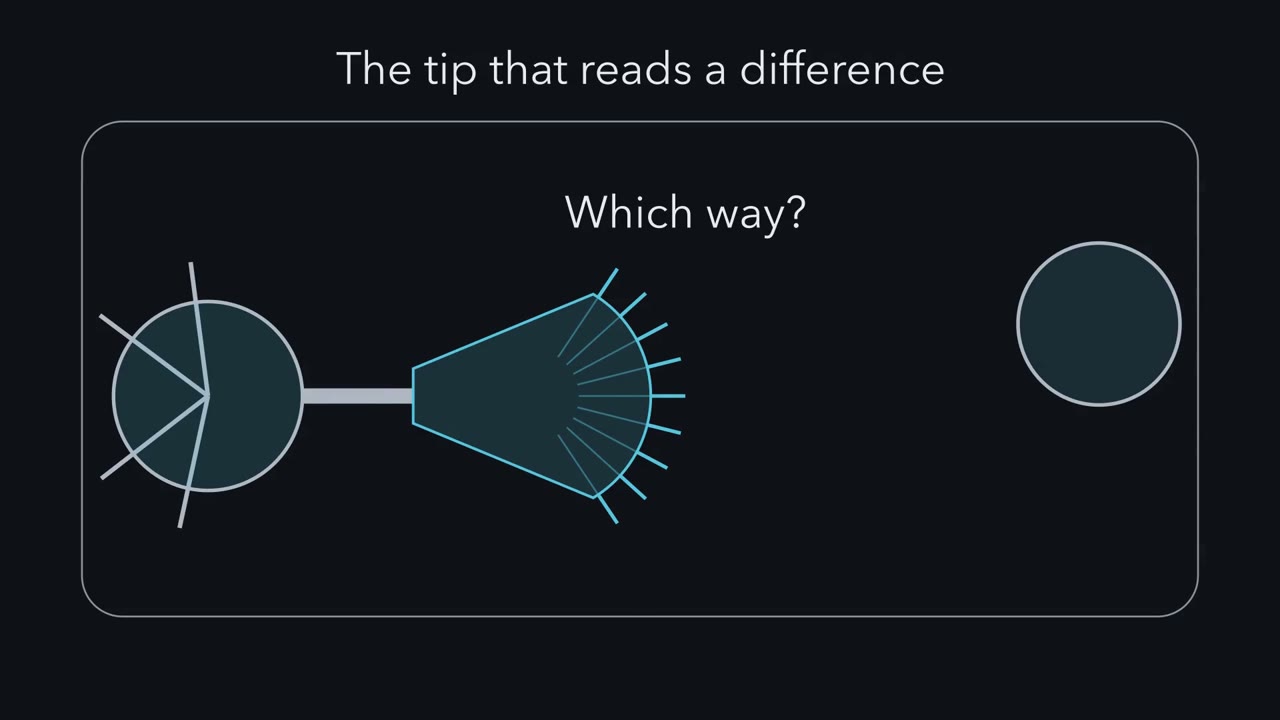
How can the edge of a growth cone move forward while its actin network streams backward? Look inside the fan. New actin joins the filaments at the front edge. Myosin II pulls the network back toward the centre. Its own assembly pushes it back too. Near the centre, the filaments are taken apart. This backward movement is called retrograde flow. In 1988, Paul Forscher and Stephen Smith filmed this in a sea slug with giant, flat growth cones. They added cytochalasin, a drug that stops actin adding at the front edge. Addition at the front stops. What happens to the actin just behind the edge?
An empty band opens at the front and widens. The rest of the network keeps moving back. So the flow was there all along. Addition at the front had been hiding it. Then the microtubules push forward into the emptied band. The actin had been holding them back.
So why does the edge ever advance? In 1988, Tim Mitchison and Marc Kirschner proposed a clutch. Think of the actin network as a running engine, and the ground as the road. If actin is added and carried back at the same rate, the engine runs, and the edge goes nowhere. Adhesion molecules can link the network to the ground. Then the clutch engages, and the backward flow slows. If building stays the same, it now pushes the edge forward.
Put it as bookkeeping. Advance equals actin added at the edge, minus actin carried back. Suter and colleagues made the grip themselves. They held a bead coated with an adhesion molecule against the edge. Behind the bead, the backward flow slowed.
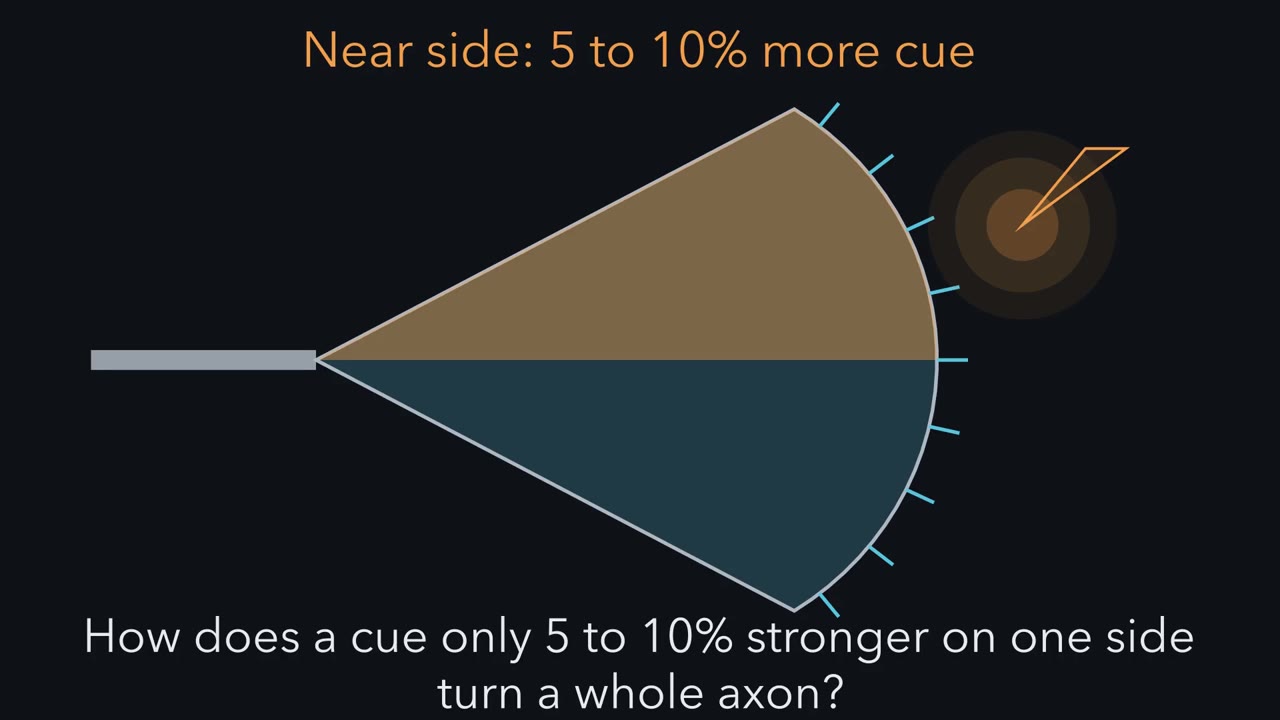
With illustrative numbers, flow falls from three and a half to half a micrometre a minute. Building stays the same, so the edge moves seven times faster. Now make the grip, or the building, unequal across the two sides of the cone.
Carry one idea. Grip can speed the edge just by holding back the flow, with no faster building.
Actin at the front of a growth cone often streams backward even while the tip moves forward, and in the standard assay it turns toward a cue only 5 to 10% stronger on one side. How?
Continue in the lesson: The Growth Cone: The Tip That Steers the Axon →
2:38 · Free, with captions and a transcript. The lesson has the full text, the questions and the sources.
More films from this lesson
How this film was made. Narration: an AI narrator voice (Kokoro, af_heart) reading narration written from this lesson's text. Animation: AI-generated in code (Manim) by Claude, a schematic with no drawn molecular structures. Captions come from the narration script. See something wrong? Report it.