Films · Developmental Neuroscience
Why Sharing Fails
Read the transcript of “Why Sharing Fails”
Film transcript: Why Sharing Fails
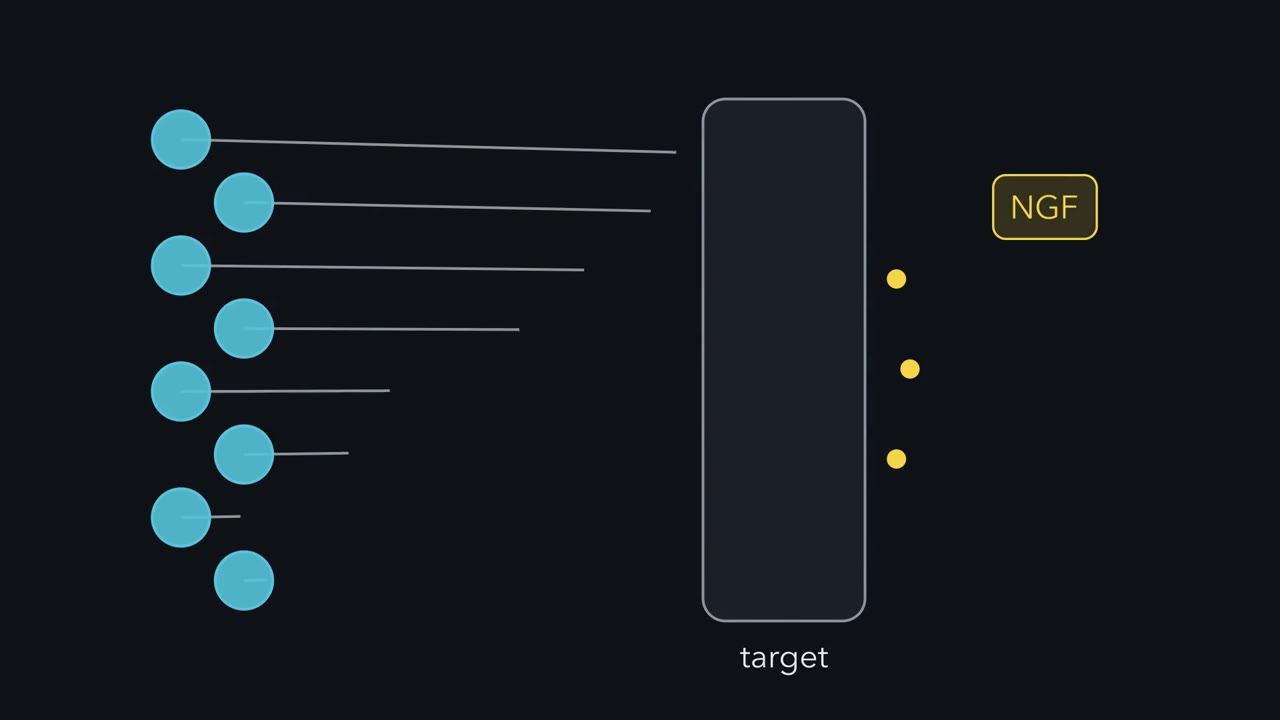
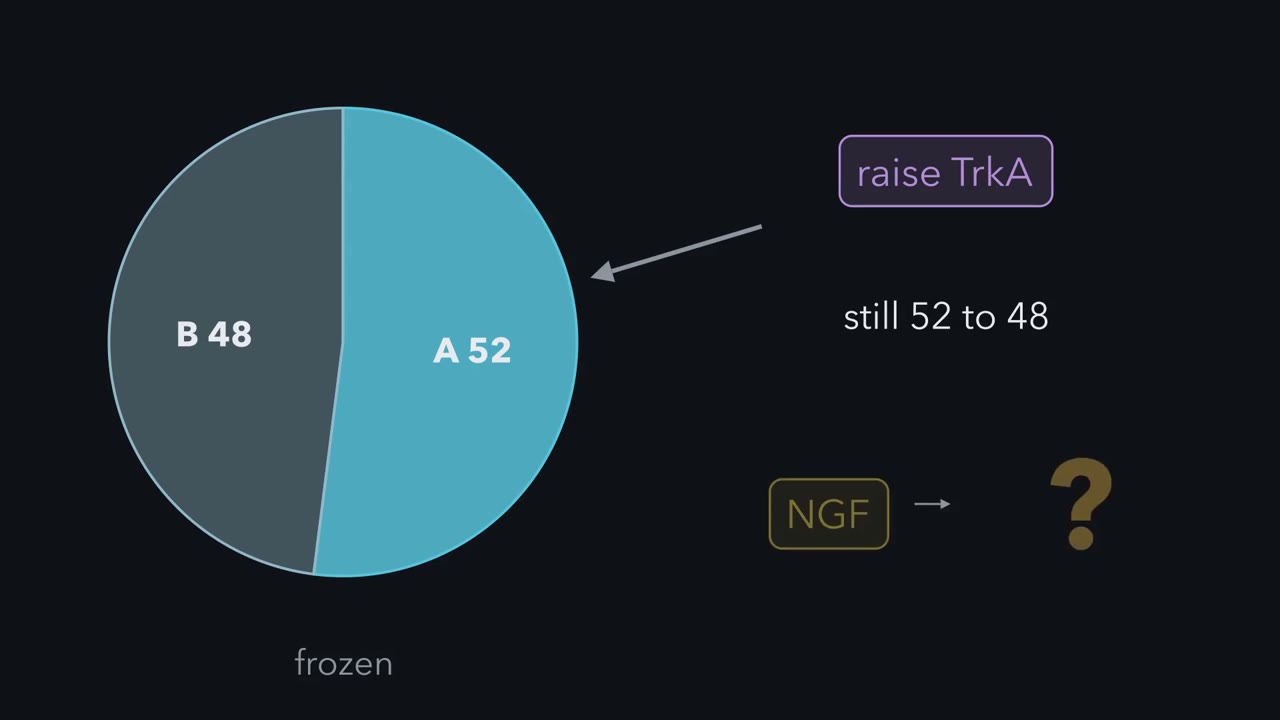
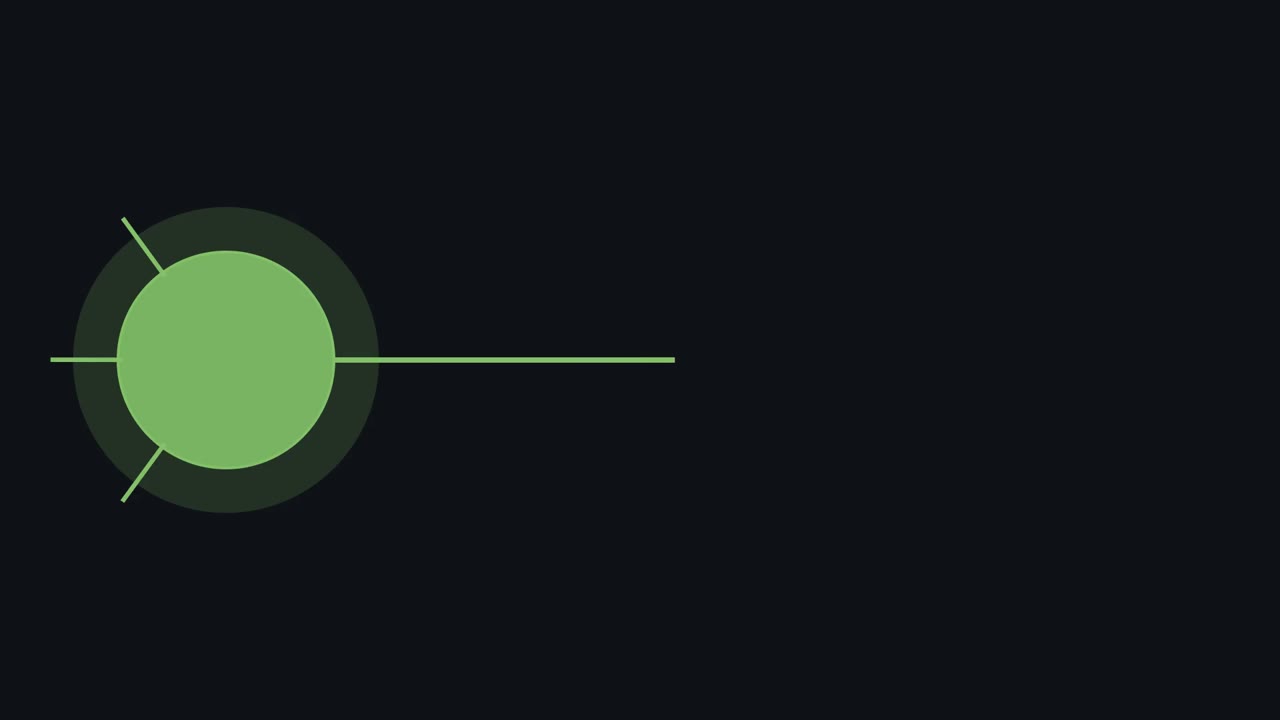
Two neurons share one target. One starts with a tiny lead. Does the lead grow, shrink, or stay put? Neuron A carries a little more TrkA, the receptor that binds NGF. TrkA is a receptor tyrosine kinase. More receptor means the neuron catches more of the supply. By chance, A catches 52 percent of the NGF. Neuron B catches the rest. Now add feedback on receptor level. Each neuron makes TrkA in proportion to the NGF it catches. And each neuron's catch is simply proportional to its TrkA. Both neurons now make more receptor. But B grows by the same fraction as A. After many rounds, what share does neuron A hold?
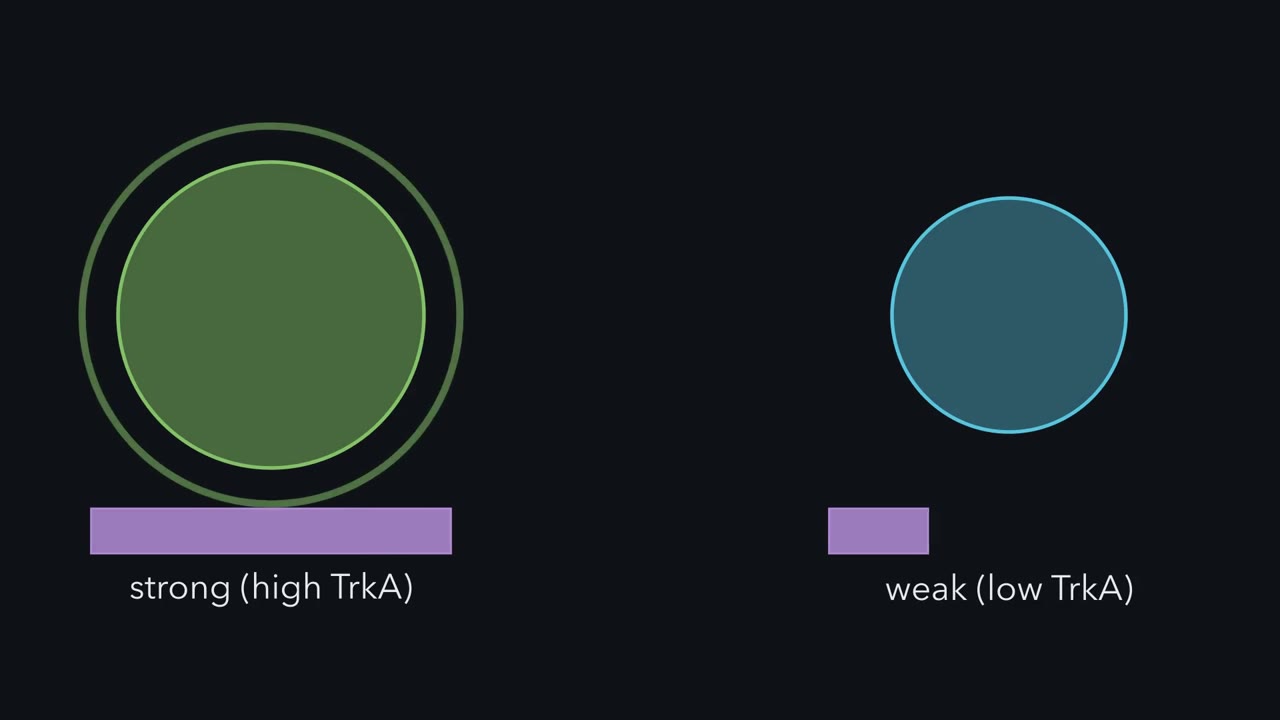
Still 52 Proportional sharing keeps the ratio fixed, round after round. Each neuron's gain is a fixed fraction of what it already has. Add some steady basal synthesis of TrkA. Both neurons get the same top-up, so the shares drift back toward even. So in this setup, feedback on receptor level alone does not make a winner. Now let NGF do two things at once. It raises TrkA, so the neuron catches more. It also lengthens each signal, so every caught molecule counts for longer. For simple arithmetic, assume each signal lasts in proportion to the catch. And TrkA is made in proportion to the signal. Then each round squares the ratio of A to B.
Watch A's share climb, round after round, until it holds almost all of it. The lead feeds itself. That is positive feedback, the loop you met in signaling circuits. Here is the condition it needs. A lead can grow only when the reward rises faster than the lead.
What about arriving first? Arriving first may well give a neuron its small lead. Arrival order alone cannot explain how a small lead grows while the supply keeps coming. And the target keeps releasing NGF throughout the death period, not just at first. The simulation in the lesson splits its neurons another way. Its TrkA response to each neuron's share is switch-like. Takeaway. For identical neurons with proportional sharing and no basal synthesis, a lead stays frozen. To grow, the reward has to rise faster than the lead.
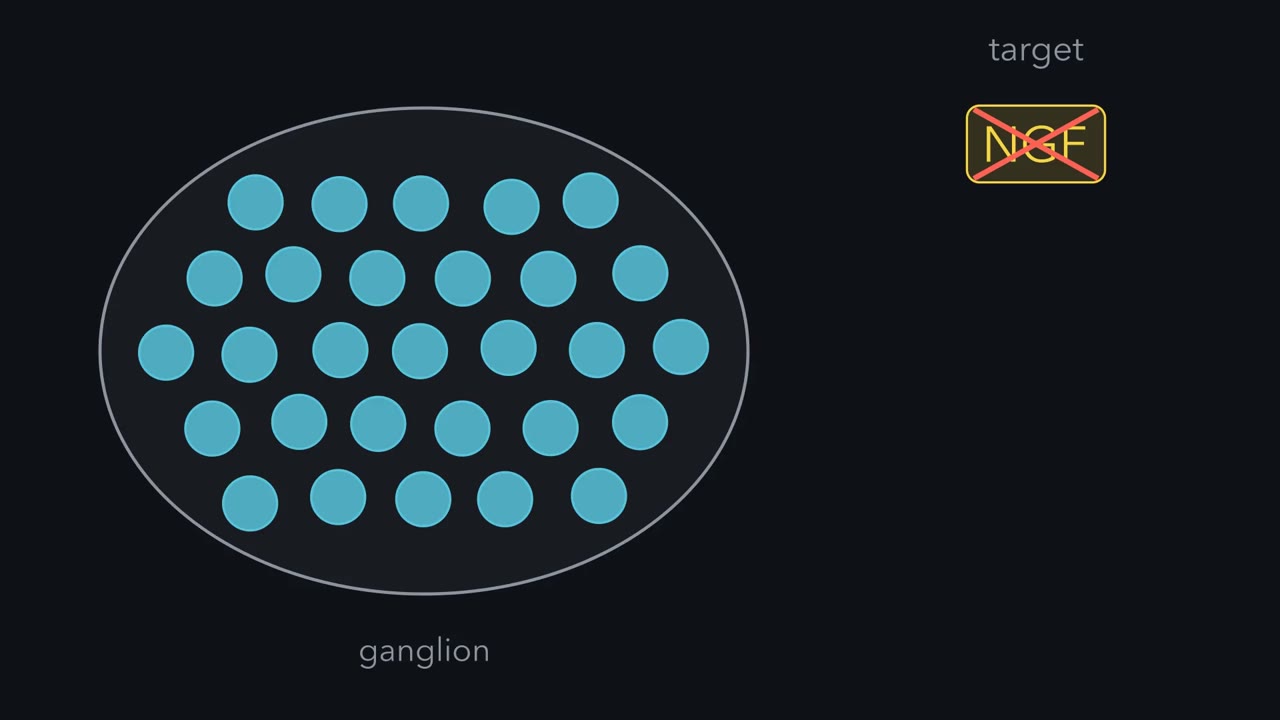
If the target makes too little NGF for every neuron, which neurons get to live?
Continue in the lesson: Competition: How Neurons Win a Target →
2:58 · Free, with captions and a transcript. The lesson has the full text, the questions and the sources.
More films from this lesson
How this film was made. Narration: an AI narrator voice (Kokoro, af_heart) reading narration written from this lesson's text. Animation: AI-generated in code (Manim) by Claude, a schematic with no drawn molecular structures. Captions come from the narration script. See something wrong? Report it.