What the Cortex Adds
Read the transcript of “What the Cortex Adds”
Film transcript: What the Cortex Adds
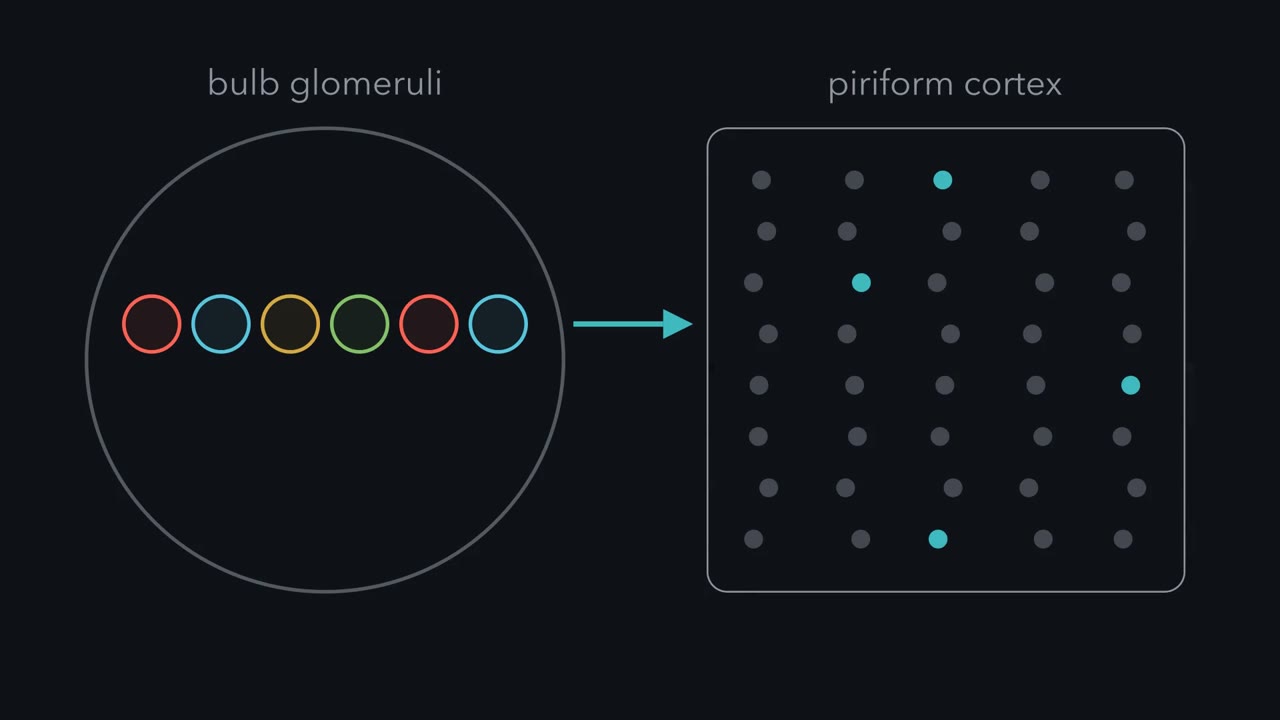
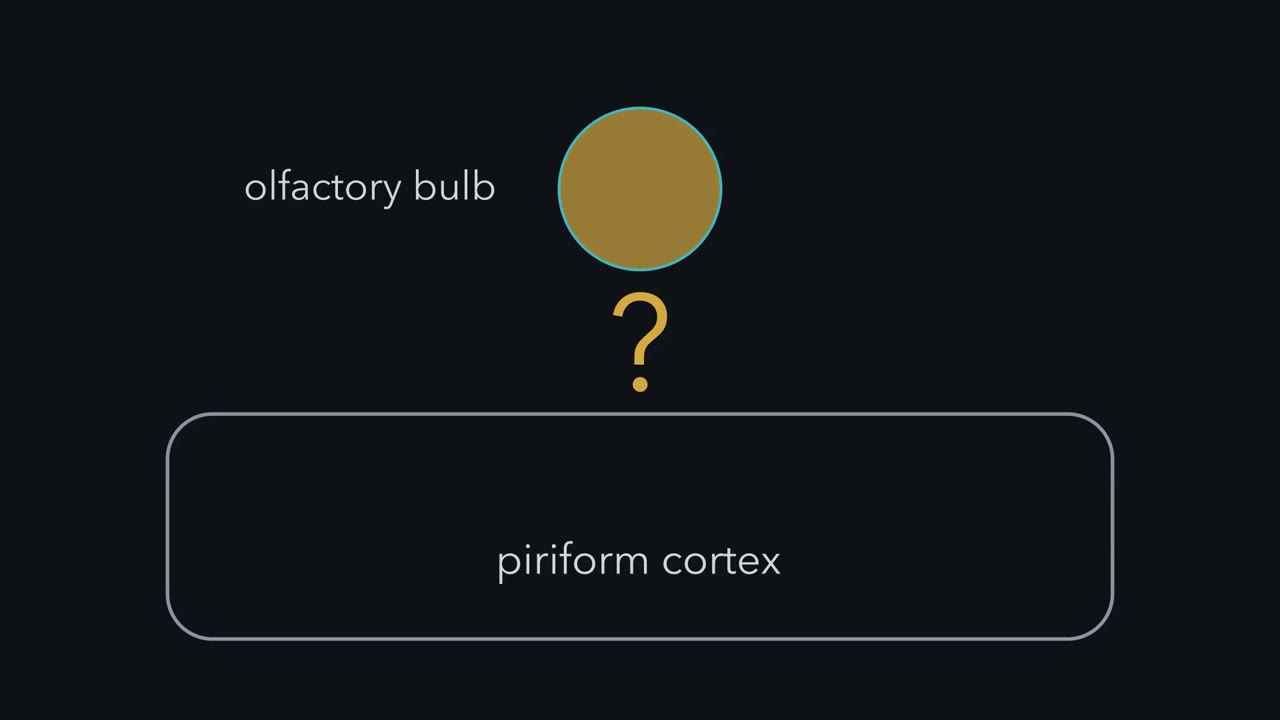
Does piriform cortex just scatter its input, or does it add something of its own? Pashkovski and colleagues imaged two things in mice, with the same panel of odours for the comparison. First, bulb axon boutons inside piriform cortex. These are the terminals of mitral and tufted cells, the cortex's input. Second, piriform neurons in layer 2/3, the cortex's output. The mice breathed at a controlled sniff rate. Pause and predict. If piriform followed our simple random model, how should related odours compare between boutons and cortex?
By that model, the cortex should largely keep the bulb's relationships. Related odours should be less alike than in the input, not more. The first half held. In boutons and in cortex, related odours gave more similar patterns than unrelated ones. The scattered cortex kept the chemistry. The second half did not hold. Piriform neurons clustered related odours more tightly than their own input did. Made-up numbers on screen show the direction. The cortex value sits above the input value. The authors also fed their bouton data through a random-wiring model. It kept the order, but made the patterns less alike. So something in the cortex added structure that the random model did not give.
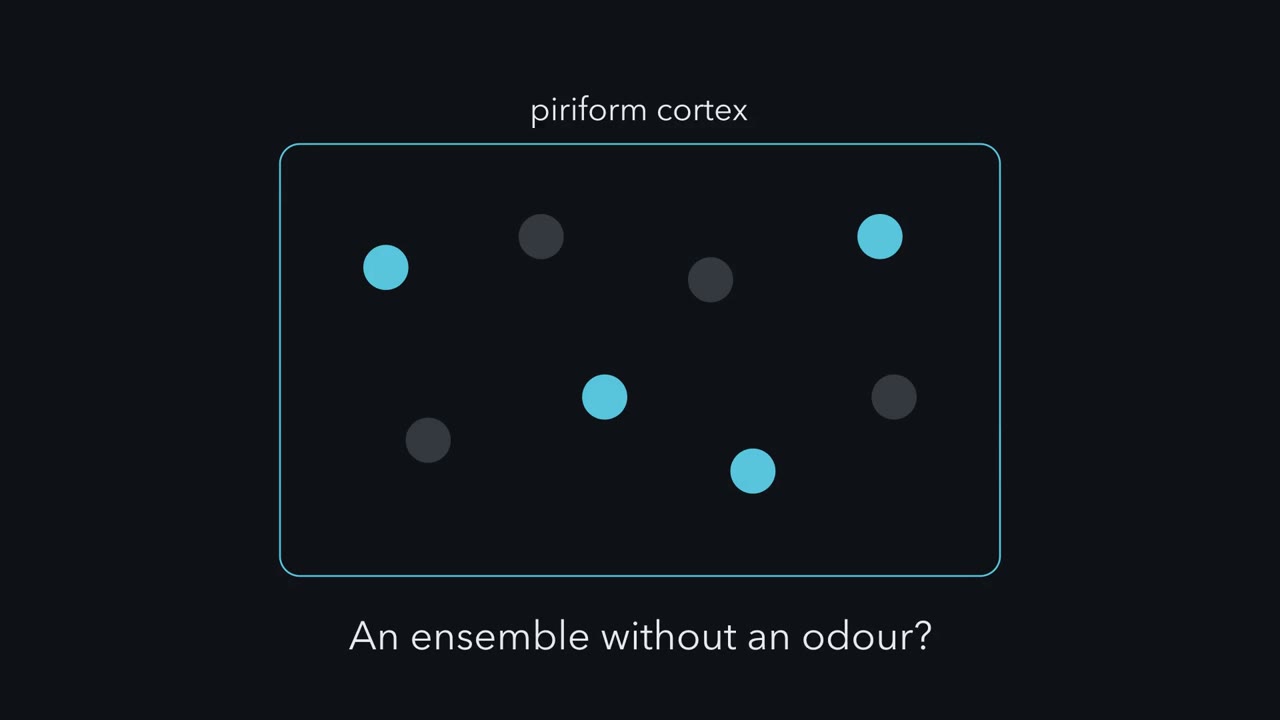
This is a different kind of map. A spatial map puts similar odours in nearby places. A representational geometry gives similar odours similar population patterns, wherever the cells sit. Piriform cortex has the second without the first. What could add the structure? Piriform pyramidal cells, its main excitatory neurons, are linked to each other by association fibres. These are recurrent connections within the cortex. Reviews treat them as a place where experience is stored. Strengthening synapses among neurons that are active together is thought to bind a scattered ensemble into a familiar odour. Then the whole ensemble could respond even when part of the input is missing.
This is pattern completion. Pashkovski's team tested the network directly. A genetic tool blocked transmitter release from excitatory piriform neurons. Their bulb input still arrived, so they still responded. But they excited their neighbours, including inhibitory cells, much less. Pause and predict. With the network weakened, what should happen to the cortex's odour relationships?
Its odour relationships became more like the bulb's. Responses did not simply weaken. Tuning broadened and correlations rose overall, yet the pattern moved toward the bulb's. One caveat. Piriform also sends feedback to the bulb, and connects to other olfactory areas. So piriform network activity is needed for the change. It is not shown that local connections alone produce it. The cortex keeps the bulb's chemistry, then reshapes it with its own network.
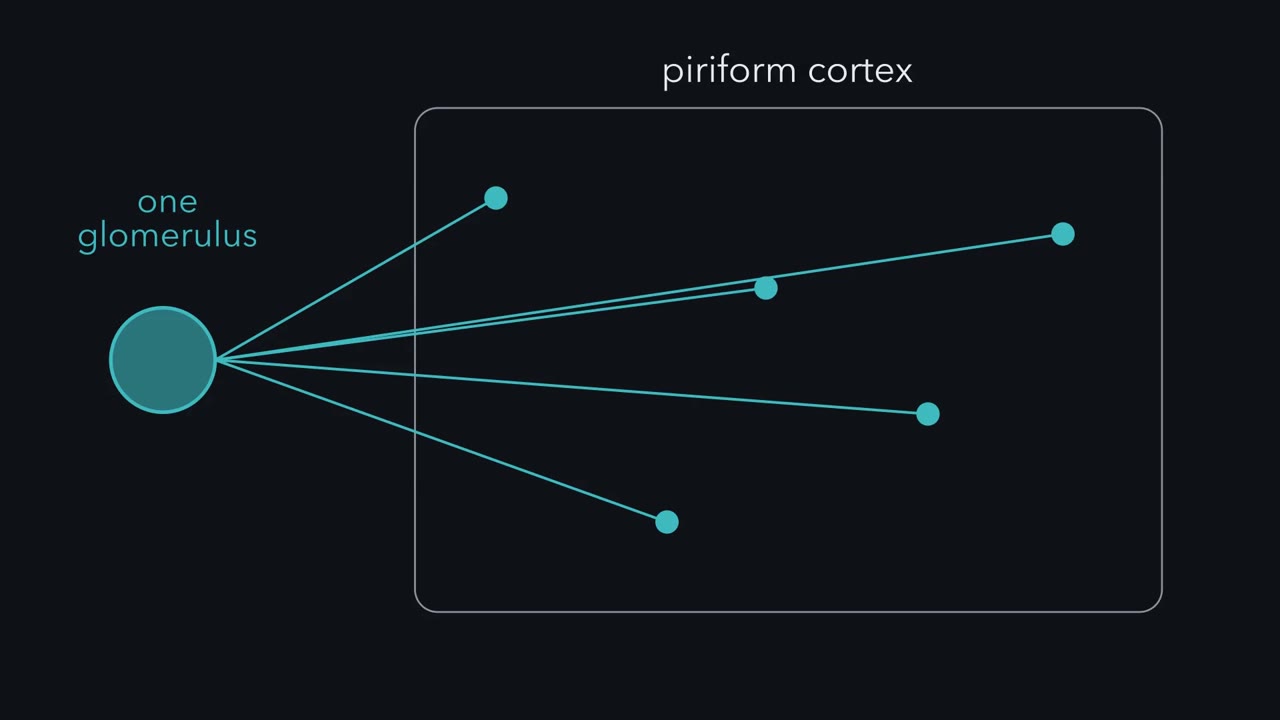
The bulb hands piriform cortex a tidy map of receptor identity, and the cortex scatters it. How can a scattered pattern still carry which odours are alike, and come to mean something?
Continue in the lesson: From Glomeruli to Piriform Cortex →
3:37 · Free, with captions and a transcript. The lesson has the full text, the questions and the sources.
More films from this lesson
How this film was made. Narration: an AI narrator voice (Kokoro, af_heart) reading narration written from this lesson's text. Animation: AI-generated in code (Manim) by Claude, a schematic with no drawn molecular structures. Captions come from the narration script. See something wrong? Report it.