A Coat, a Reader, and a Cut
Read the transcript of “A Coat, a Reader, and a Cut”
Film transcript: A Coat, a Reader, and a Cut
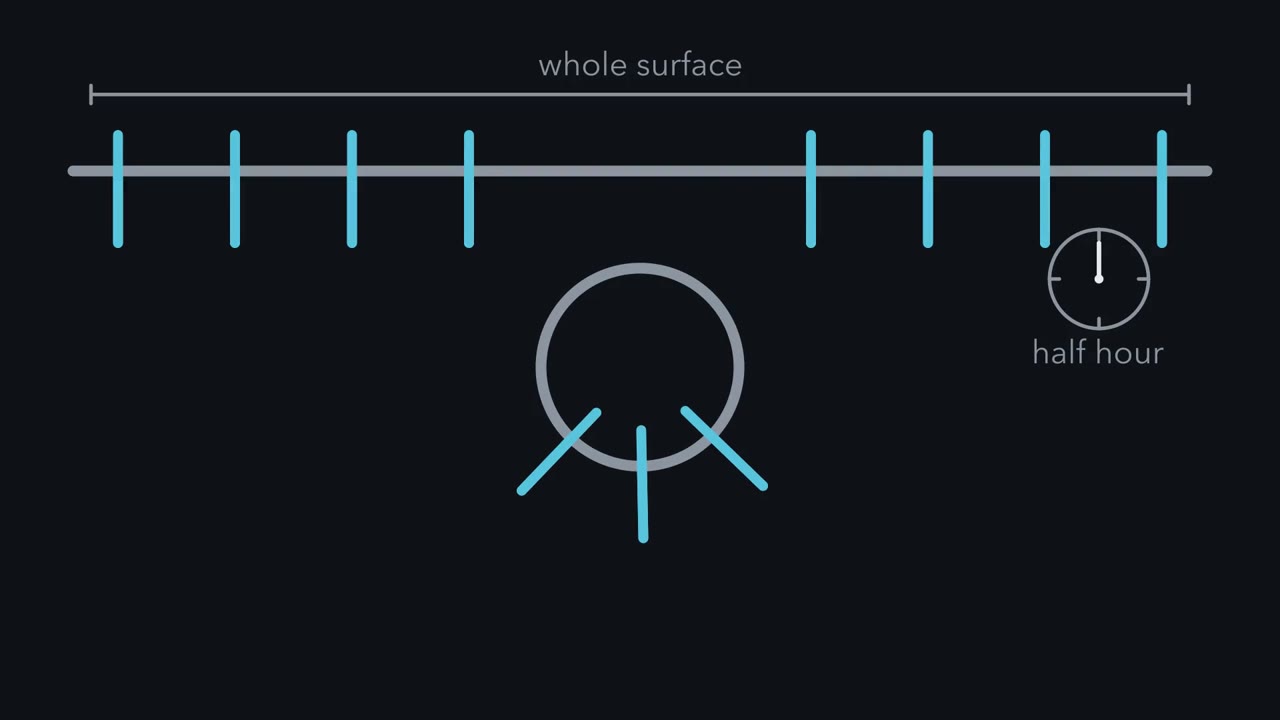
Clathrin is a protein shaped like a three-legged pinwheel. Many copies lock together into a curved cage on the inner face of the membrane. Yet clathrin touches neither the membrane nor the cargo. So what does? Adaptor proteins do. The main adaptor at the plasma membrane is AP2. It holds the lipid PIP2, a short sequence in a receptor tail, and clathrin. So a receptor enters a pit because its tail carries a sequence that an adaptor can read. Brown and Goldstein met the proof in a patient known as J.D. This patient's LDL receptors could bind LDL. But they stayed scattered over the surface instead of gathering in pits, and the cells could not take LDL in.
The fault was later traced to one tyrosine in the receptor's tail, replaced by cysteine. A pit deepens until it hangs from the surface by a thin neck. Dynamin, a large GTPase, assembles into a collar around the neck. When it hydrolyzes GTP, the neck is cut. The coat is then stripped off, and the bare vesicle can fuse with its target.
When a receptor is pulled into the cell, does its signal end, or does it move somewhere new?
Continue in the lesson: Endocytosis and Signaling Endosomes →
1:29 · Free, with captions and a transcript. The lesson has the full text, the questions and the sources.
More films from this lesson
How this film was made. Narration: an AI narrator voice (ElevenLabs, Sarah) reading narration written from this lesson's text. Animation: AI-generated in code (Manim) by Claude, a schematic with no drawn molecular structures. Captions come from the narration script. See something wrong? Report it.