Films · Developmental Neuroscience
Block It, Tilt It
Read the transcript of “Block It, Tilt It”
Film transcript: Block It, Tilt It
What happens when you take activity away? And what happens when you make the two eyes unequal? In 1988, Carla Shatz and Michael Stryker asked the first question in fetal cats. Pumps infused tetrodotoxin into the brain for two weeks. It blocks sodium channels, so it stops action potentials. Predict. With spikes blocked, do the two eyes' projections separate?
They did not. The two projections stayed mixed. Did the drug reach one eye's axons, or both? Both, and likely the thalamic cells as well. So the result shows that spikes are needed. It cannot show that the eyes compete by their activity. Removing a signal shows that it is needed. It cannot show whether the signal's pattern tells the wiring what to do. To show that a signal instructs, change where it is. Here, that means making the eyes unequal. In young ferrets, the drug epibatidine was injected into one eye, disrupting its waves. The other eye kept normal waves. Predict. Which eye wins territory in the thalamus?
The active eye. In 1998, Anna Penn, Carla Shatz and colleagues reported it. The active eye's projection expanded into the other's territory, and the treated eye's shrank. David Stellwagen and Shatz then made waves more frequent, with drugs that raise cyclic AMP. When one eye was made more active, its layer was larger. Predict. Now make waves more frequent in both eyes. What happens to the layers?
Neither changes. The layers were normal in size, which fits the idea that the eyes divide a shared target. Territory follows the difference between the eyes, not the total. One caveat. These drugs change wave frequency and pattern, not only the number of spikes. Takeaway: blocking activity shows it is needed. Tilting it shows that relative activity between the eyes shifts the territory.
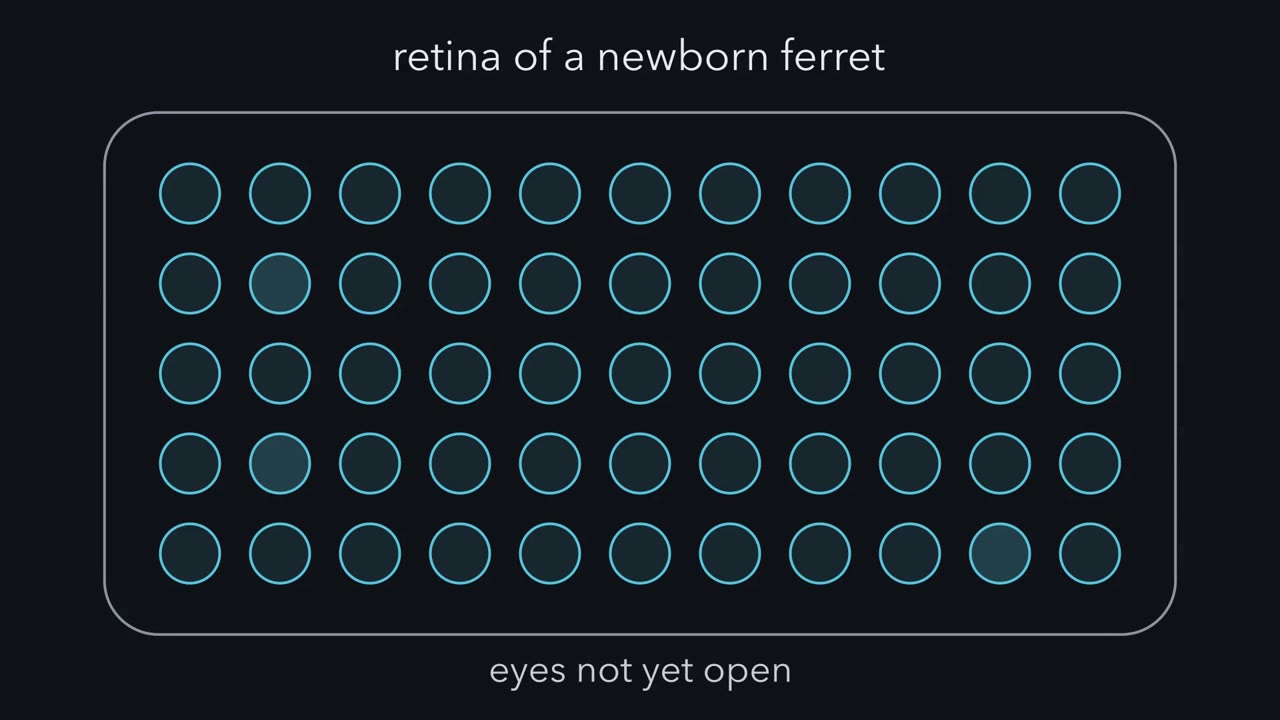
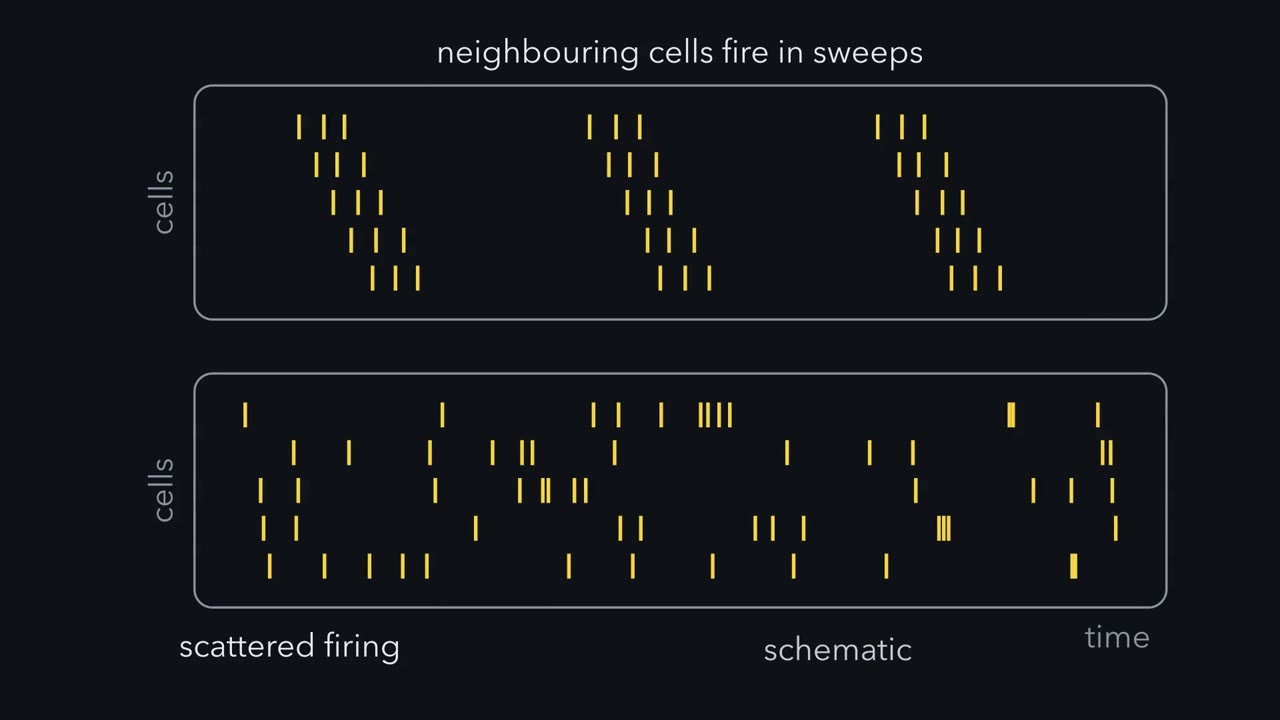
Weeks before vision begins, the retina already fires in waves. What are they for?
Continue in the lesson: Activity Before Experience: Spontaneous Retinal Waves →
2:35 · Free, with captions and a transcript. The lesson has the full text, the questions and the sources.
More films from this lesson
How this film was made. Narration: an AI narrator voice (Kokoro, af_heart) reading narration written from this lesson's text. Animation: AI-generated in code (Manim) by Claude, a schematic with no drawn molecular structures. Captions come from the narration script. See something wrong? Report it.