Three Questions, Not One
Read the transcript of “Three Questions, Not One”
Film transcript: Three Questions, Not One
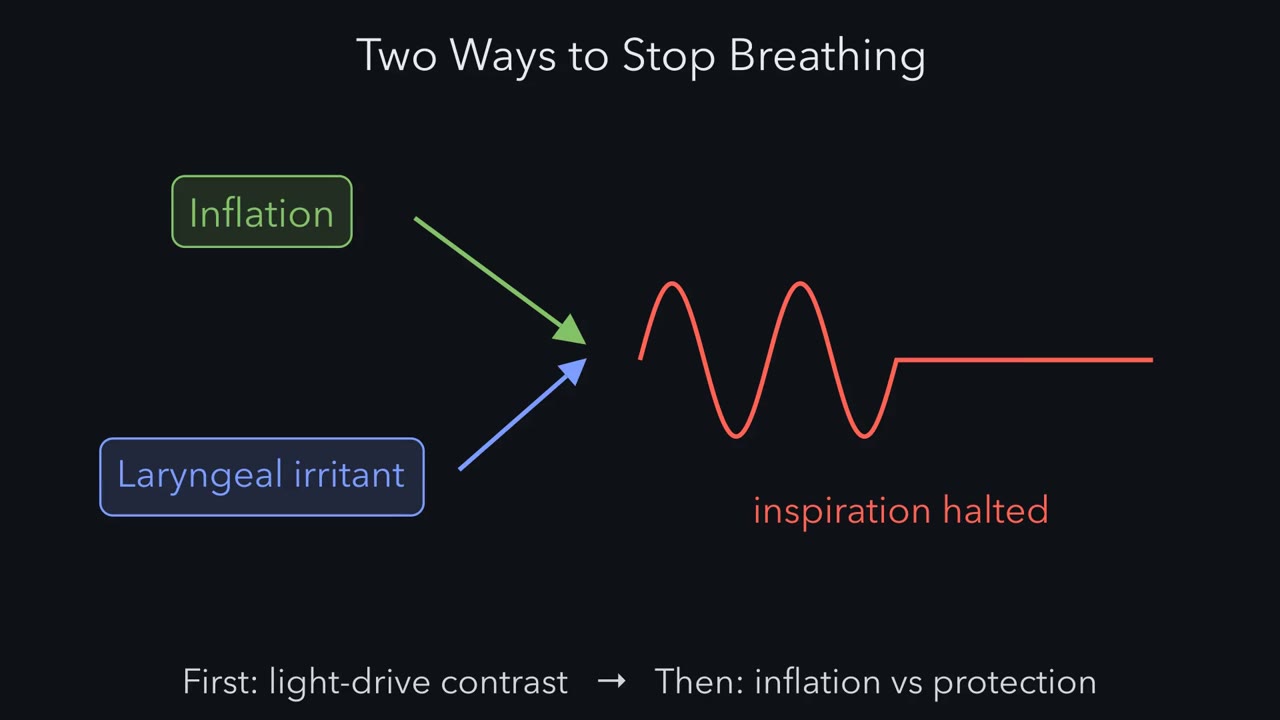
The vagus looks like one grey cable, running from the body up to the brainstem. Does it carry one message, or many? A sensory fibre that carries signals from the body toward the brain is called an afferent. The sense of the body's own internal state is interoception. Lung volume, blood pressure, how full the gut is. Here is the result that starts the lesson. Light on one set of vagal afferents stops an anaesthetized mouse breathing. Light on another set, in the same nerve, makes it breathe fast and shallow. Opposite outputs, from two subsets of one nerve. That is a reason to look for separate lines. Here are three questions to ask of any population.
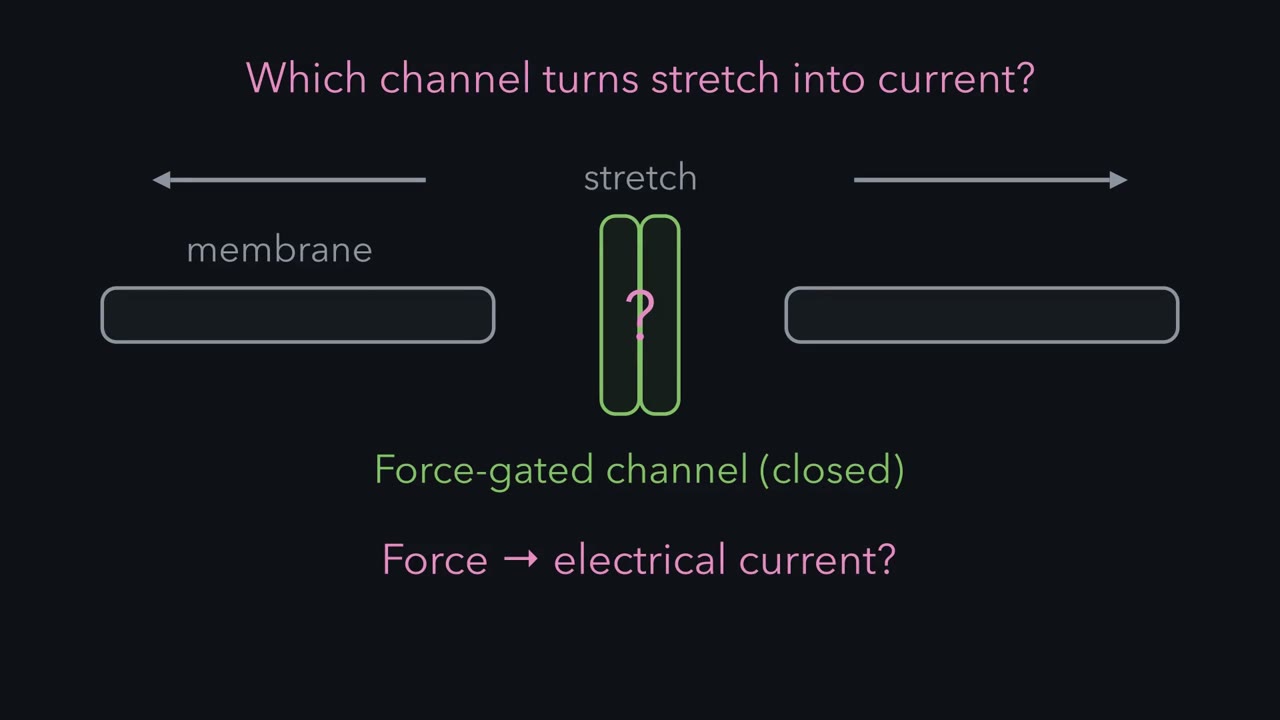
First, what stimulus do the cells answer? Second, what turns that stimulus into electrical current? Third, what changes when you drive or remove the cells? Driving a population tests sufficiency. Removing it and seeing the output fail tests necessity. Each question needs its own evidence. Some stay open for years. An answer to one does not by itself answer another.
How do researchers get hold of these cells? With a genetic label, usually a Cre line. A label is a handle on a population. On its own it answers none of the three questions. Its name may identify a receptor or channel those cells express. Labelling alone does not establish the natural stimulus, the protein's causal role in transduction, or the output.
One worked case. Afferents labelled by GPR65 answer food arriving in the intestine. Driving the same cells with light suppressed stomach contractions in an anaesthetized mouse. This looks like a satiety line. In an awake mouse, what should driving them do to how much it eats?
In the assays tested, driving them did not measurably change feeding. One population, three answers. Yes to the stimulus, yes to one output, no to another. Every answer holds only for the organ, age, assay and anaesthetic state measured. Hold three questions in mind. Stimulus, channel, output. A handle alone answers none of them.
Light on one set of vagal sensory axons stops an anaesthetized mouse breathing, and light on another set makes it breathe fast and shallow. What does each set report, and how would you know?
Continue in the lesson: Vagal Sensory Neurons: The Body Reports to the Brain →
2:46 · Free, with captions and a transcript. The lesson has the full text, the questions and the sources.
More films from this lesson
How this film was made. Narration: an AI narrator voice (Kokoro, af_heart) reading narration written from this lesson's text. Animation: AI-generated in code (Manim) by Claude, a schematic with no drawn molecular structures. Captions come from the narration script. See something wrong? Report it.