Reading a Patch
Read the transcript of “Reading a Patch”
Film transcript: Reading a Patch
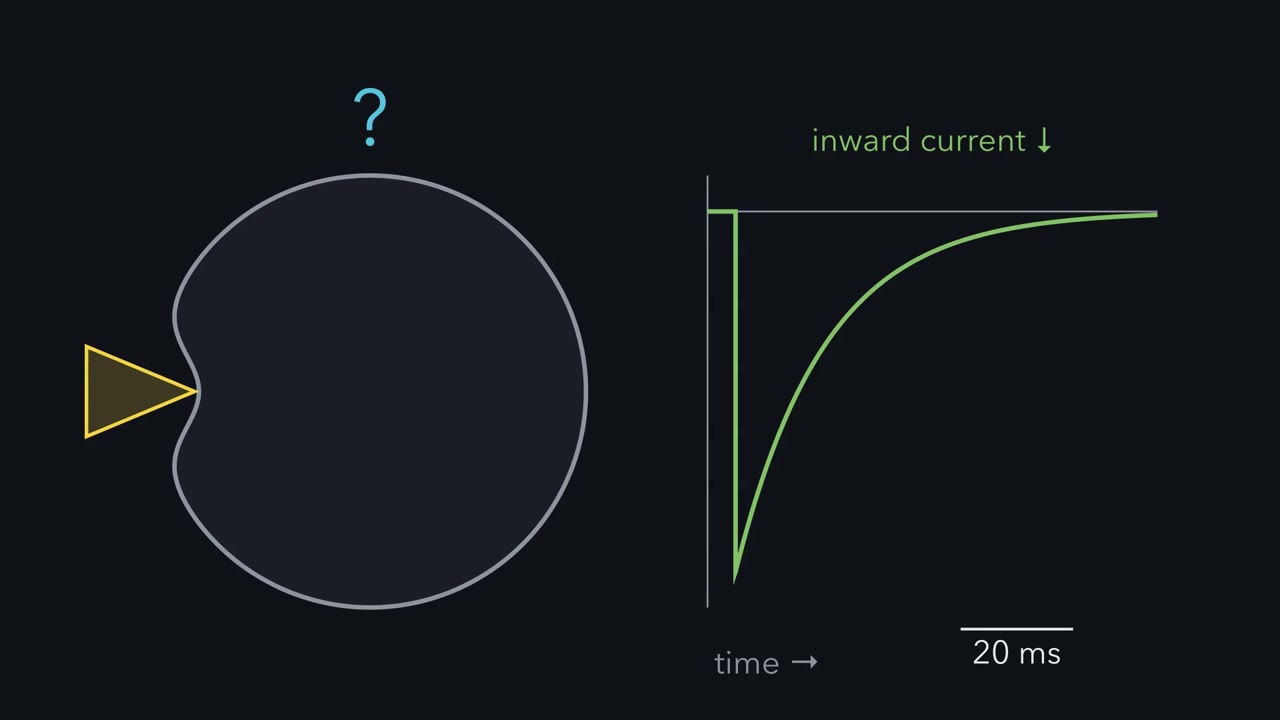
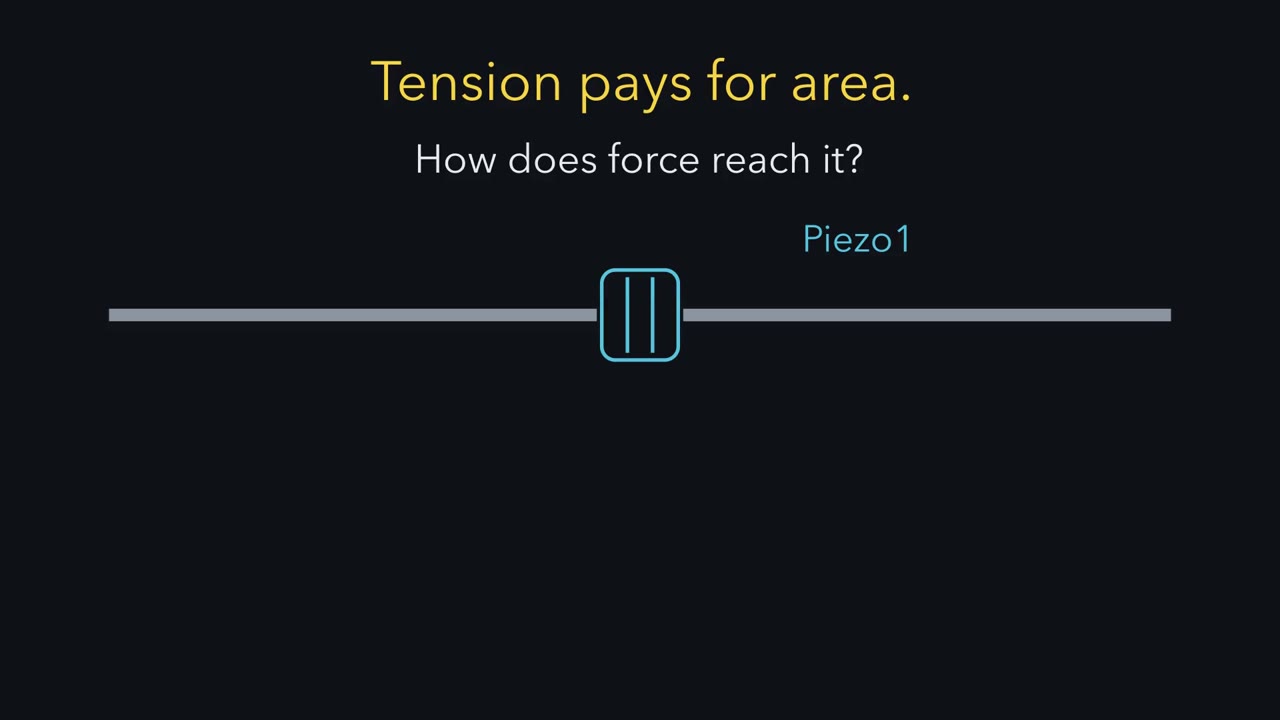
A patch recording gives a curve of current against tension. Can you read an area out of it? Lewis and Grandl expressed mouse Piezo1 in a human cell line. They recorded cell-attached patches. In a cell-attached patch, the pipette seals onto an intact cell. It records the channels in the membrane under its tip. They pressurized the patch and imaged it at the same time. So the patch radius was measured, not assumed. For a patch shaped like part of a sphere, pressure becomes tension. Tension equals the radius of curvature times the pressure difference, divided by two. Take an illustrative patch. A radius of two micrometres, under two thousand pascals.
These are invented round numbers. The tension comes out at two millinewtons per metre. Now the fit from the paper. A half-activation tension of two point seven millinewtons per metre. A slope factor of zero point eight. At two millinewtons per metre, the fit predicts about twenty-nine percent of the plateau current.
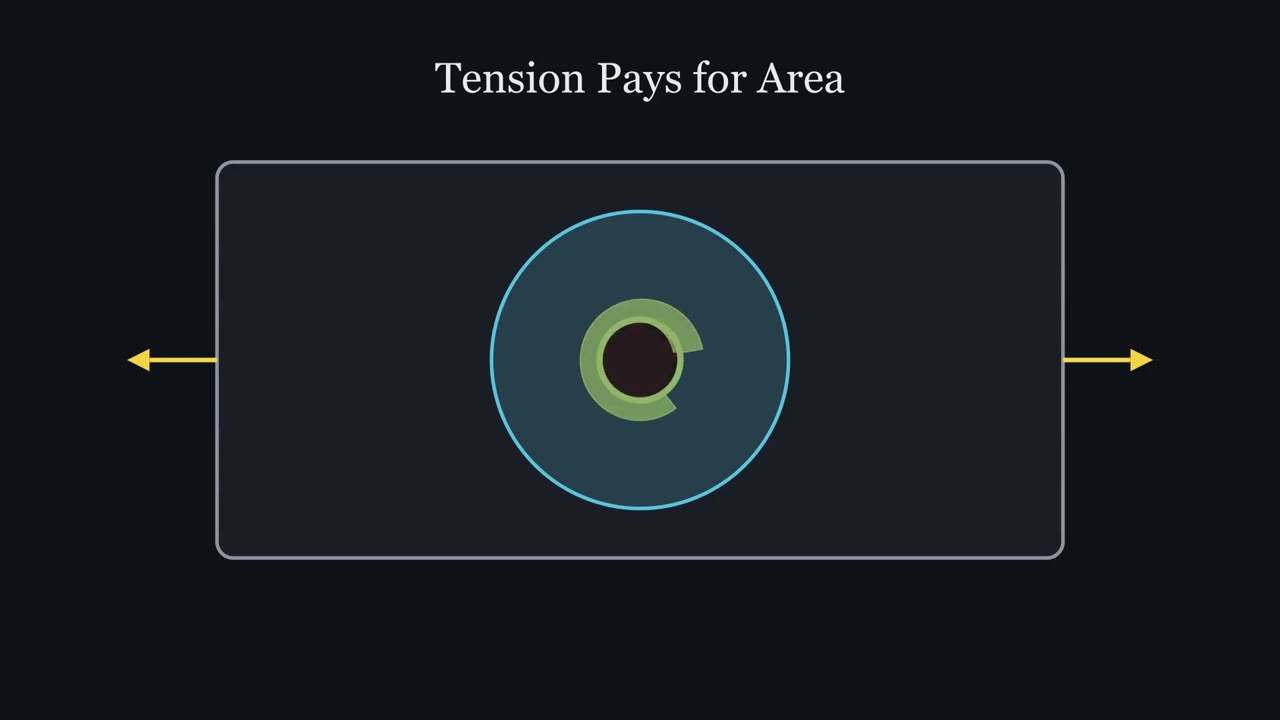
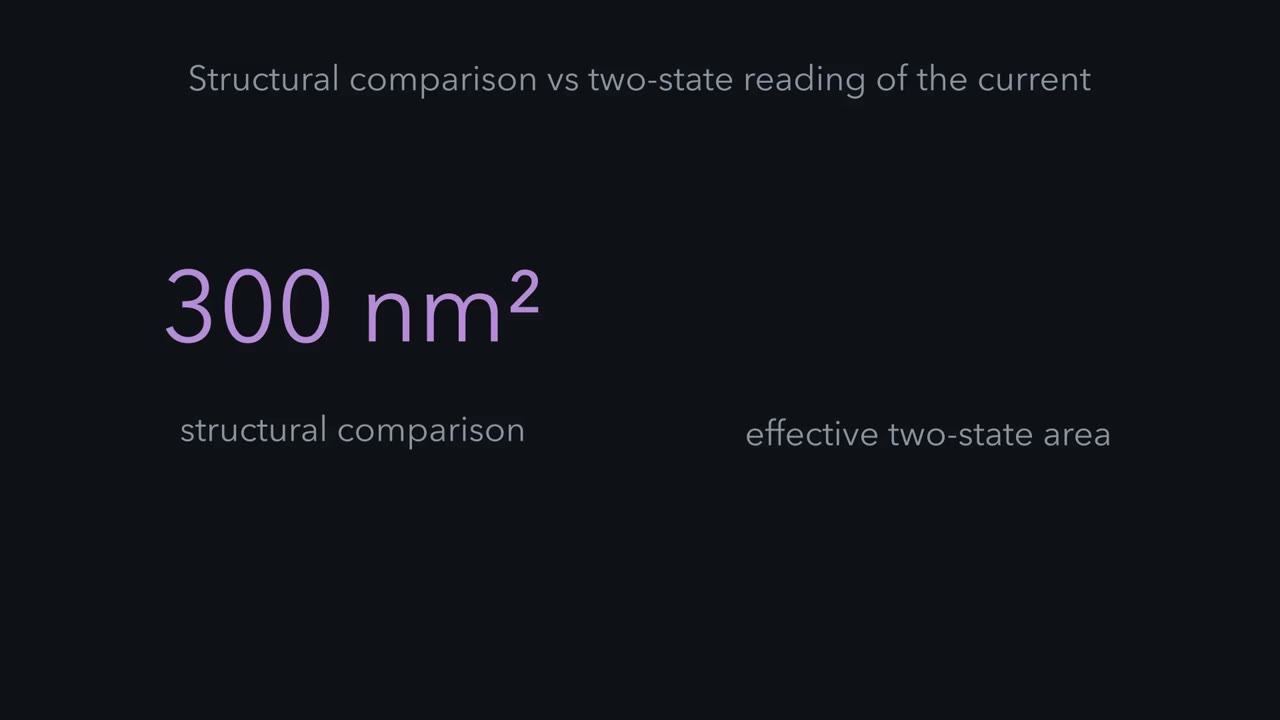
This fit also hides an area. You know how the slope factor relates to area. Can you find it? Read it as a two-state switch, and run the fit backwards. The effective area comes out at about five square nanometres. Under the same reading, the effective resting preference for closed is about three point four times thermal energy. It comes from both fitted numbers, not from an independent measurement. An underestimated area alone does not tell us whether the true energy is underestimated. An independent route agrees in order. Calibrated against a bacterial channel, human Piezo1 gave six to twenty square nanometres. Both estimates assume each channel is a simple two-state switch.
Hold on to that assumption. Two cautions. This is a normalized current, for mouse Piezo1 in a human cell line, at room temperature. It is not a fraction of neurons doing anything. protocol matters. In a separate protocol, a five-second prepulse lowered the half-activation tension, from two point two to one point four. The authors' reading: the prepulse relieves resting tension. Channels it had inactivated recover, so less added tension is needed. Do not mix the two protocols. The shift is the finding: the channel's sensitivity depends on the tension it was already under. Read as a two-state switch, the slope factor implies an area.
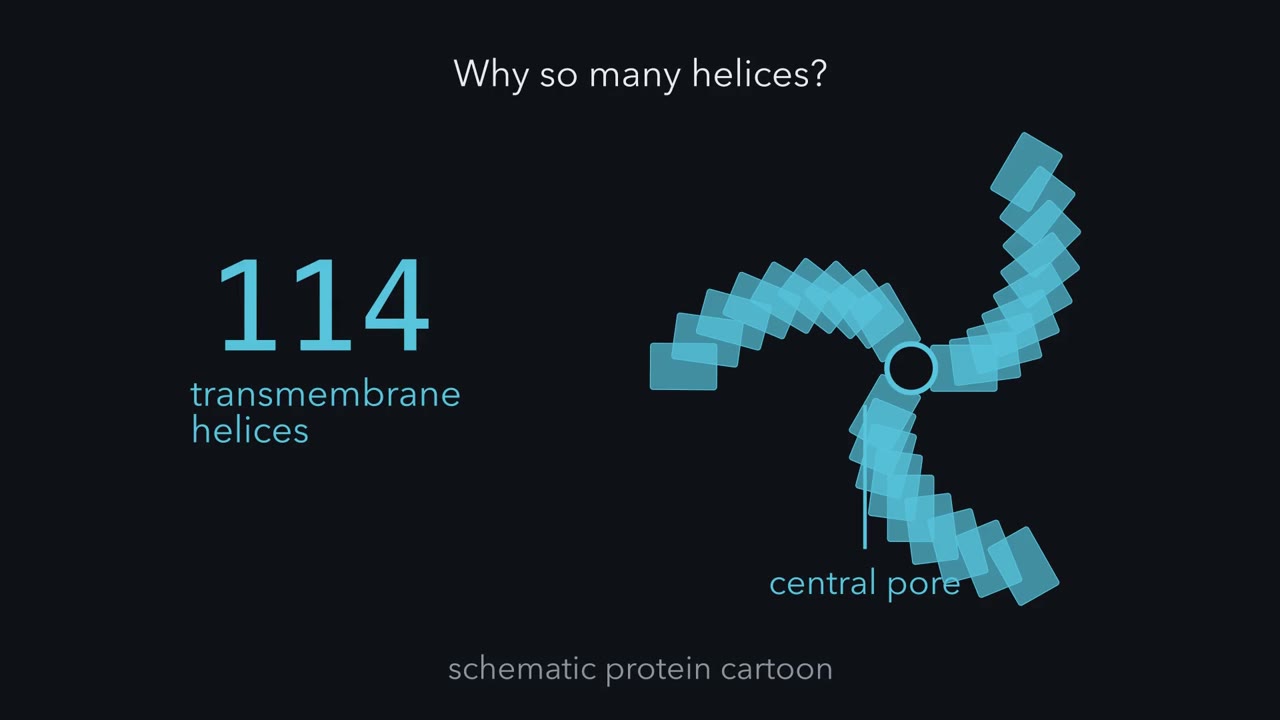
Mouse PIEZO2 threads 114 transmembrane helices through the membrane to build one ion channel, and its pore sits at the centre. Why would a channel need so much protein around one pore?
Continue in the lesson: Piezo Channels and the Physics of Force →
2:53 · Free, with captions and a transcript. The lesson has the full text, the questions and the sources.
More films from this lesson
How this film was made. Narration: an AI narrator voice (Kokoro, af_heart) reading narration written from this lesson's text. Animation: AI-generated in code (Manim) by Claude, a schematic with no drawn molecular structures. Captions come from the narration script. See something wrong? Report it.