Films · Developmental Neuroscience
Six Days at Four Weeks
Read the transcript of “Six Days at Four Weeks”
Film transcript: Six Days at Four Weeks
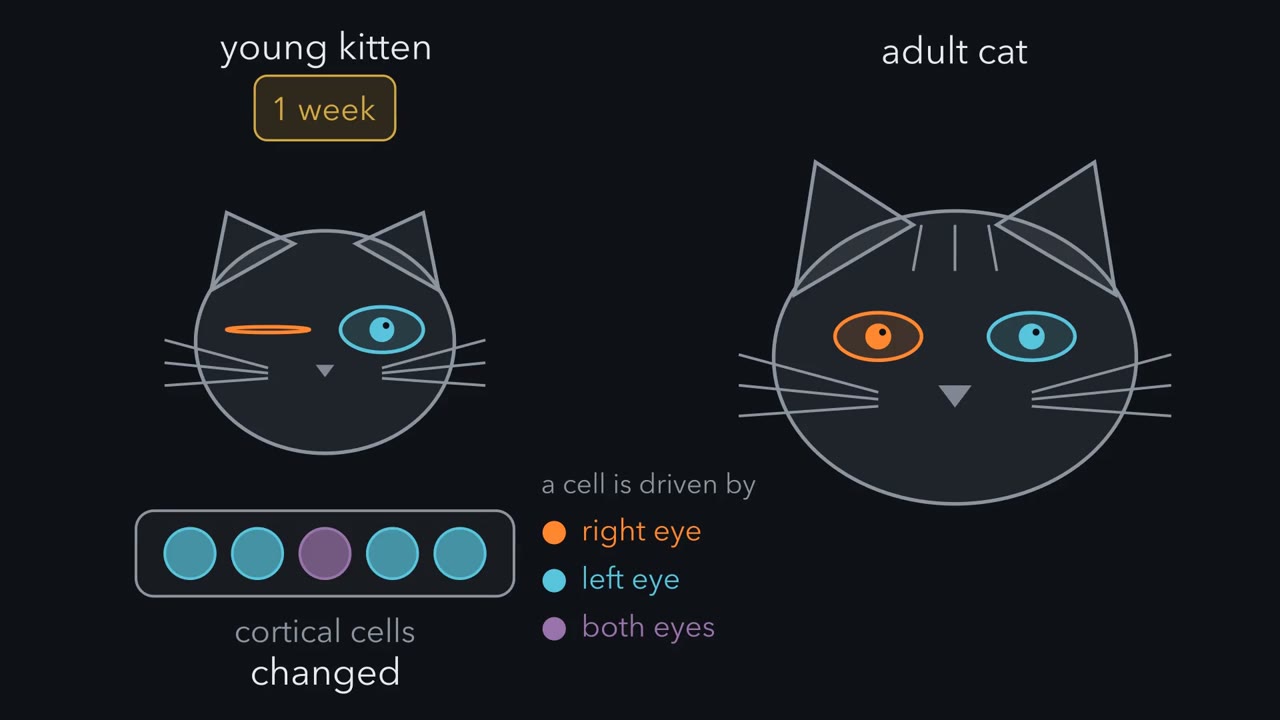
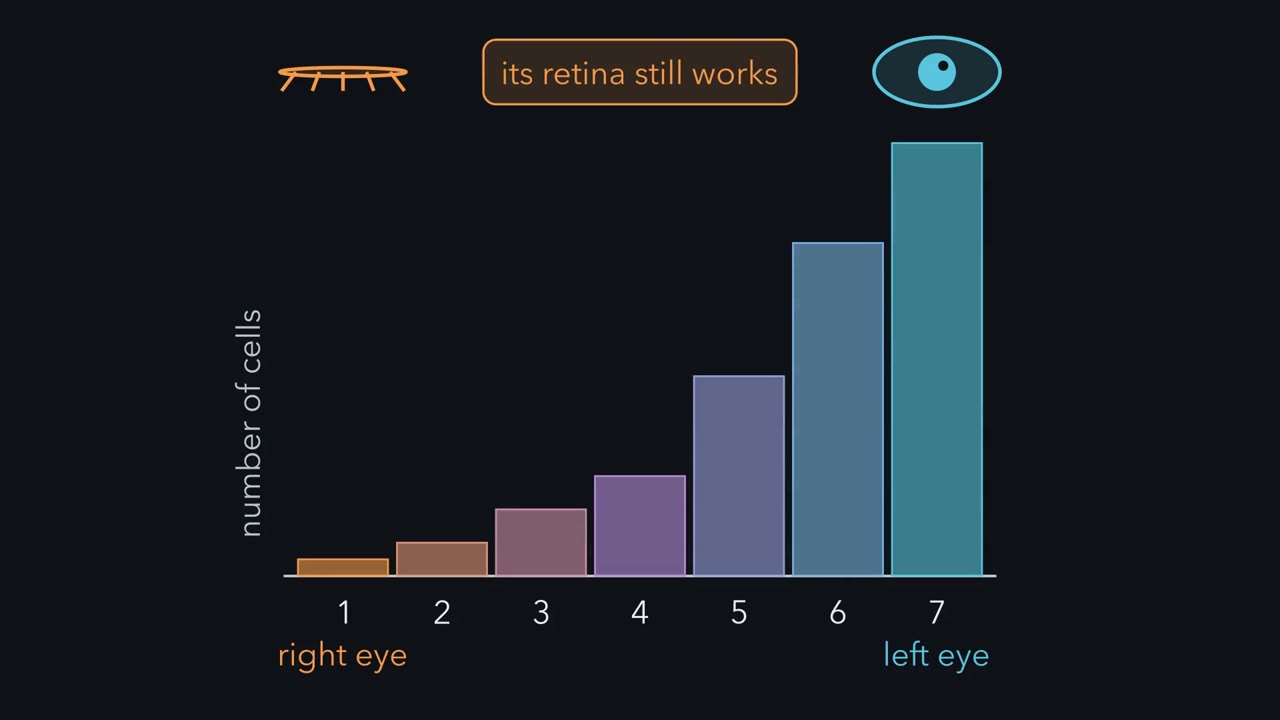
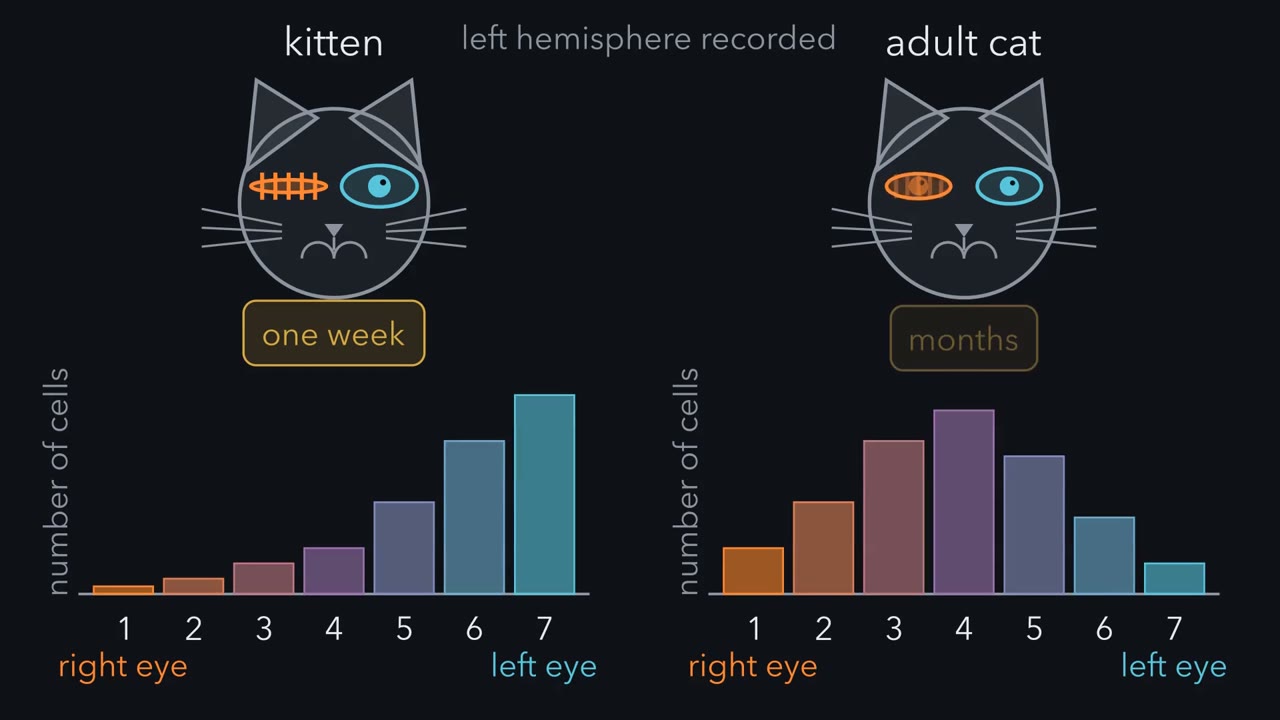
If you sew one eye shut, what happens to the cortical cells it used to drive? In 1963, Wiesel and Hubel reported what happens when a kitten grows up with one eye closed. They sutured the lids of one eye at or near birth. They recorded after about three months of closure. Very few cortical cells could be driven by the closed eye. Yet its retina still responded. So did its LGN cells, though those serving the closed eye looked smaller. So the eye was not broken. What changed was in the brain. An adult cat with one eye closed for months showed no such change. In 1970 they asked when. They closed one eye in kittens of different ages, for different lengths of time.
Predict. That closure from birth lasted months, so it spanned many ages. Compare brief closures begun at different ages. Is there one switch-off point, or a rise and a fall? A rise and a fall. In kittens, susceptibility began around the start of the fourth week. It stayed high until somewhere between six and eight weeks. Then it declined through the third month. So a closure from birth lasting 3 months overlaps those weeks, which fits its large effect.
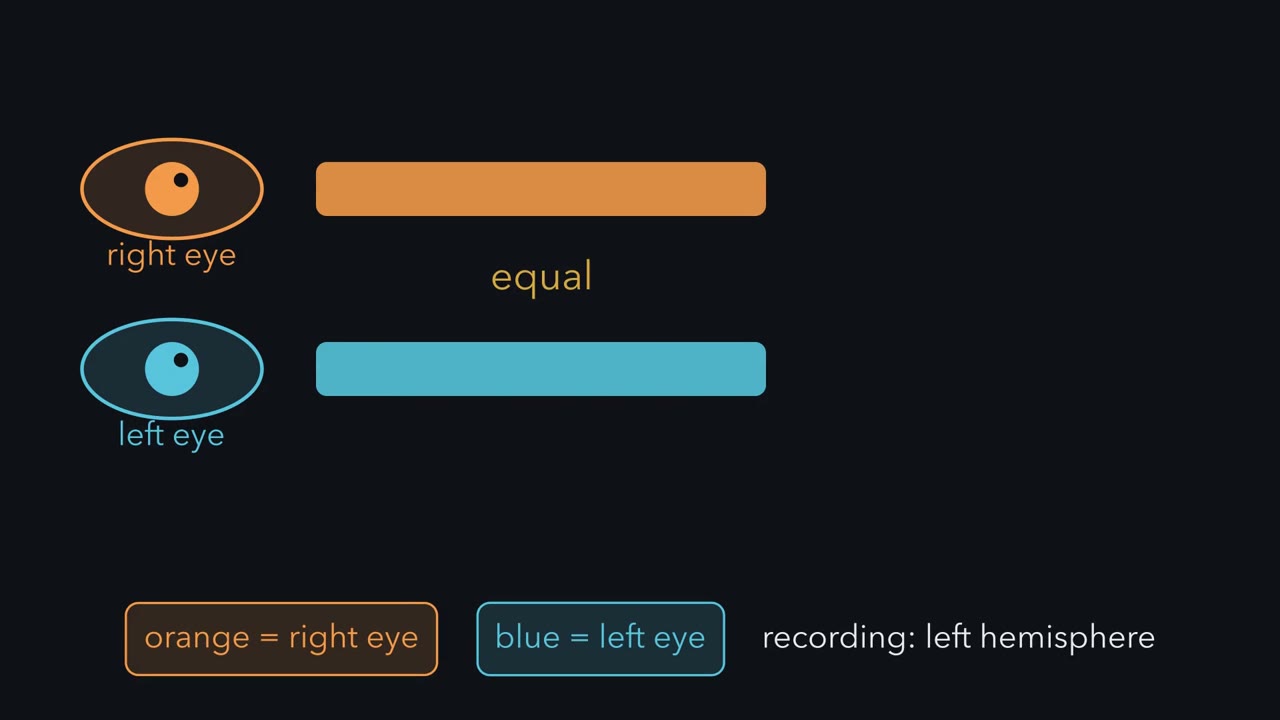
At the peak, the effect was fast. Some kittens had the right eye closed for only 6 days, in the fourth or fifth week. Recording in the left hemisphere, the closed right eye is the group 1 side. The number of cells it could drive fell to a fraction of normal. Most of the histogram moved toward group 7, the open eye. Six days of unequal vision had been enough. The anatomy follows. Hubel, Wiesel and Simon LeVay closed one eye in infant macaque monkeys. Later they traced the stripes in layer 4C. The open eye's stripes had widened, and the closed eye's had narrowed. In kittens, single thalamic axons serving a deprived eye were later seen to lose branches within about a week.
So a closure in this window changes the territory each eye's axons hold, not only how cells respond. Takeaway: in the young, a few days of unequal vision move the balance. In the adult, months do not. That leaves a question. Did the closed eye lose because it was unused, or because the other eye was not?
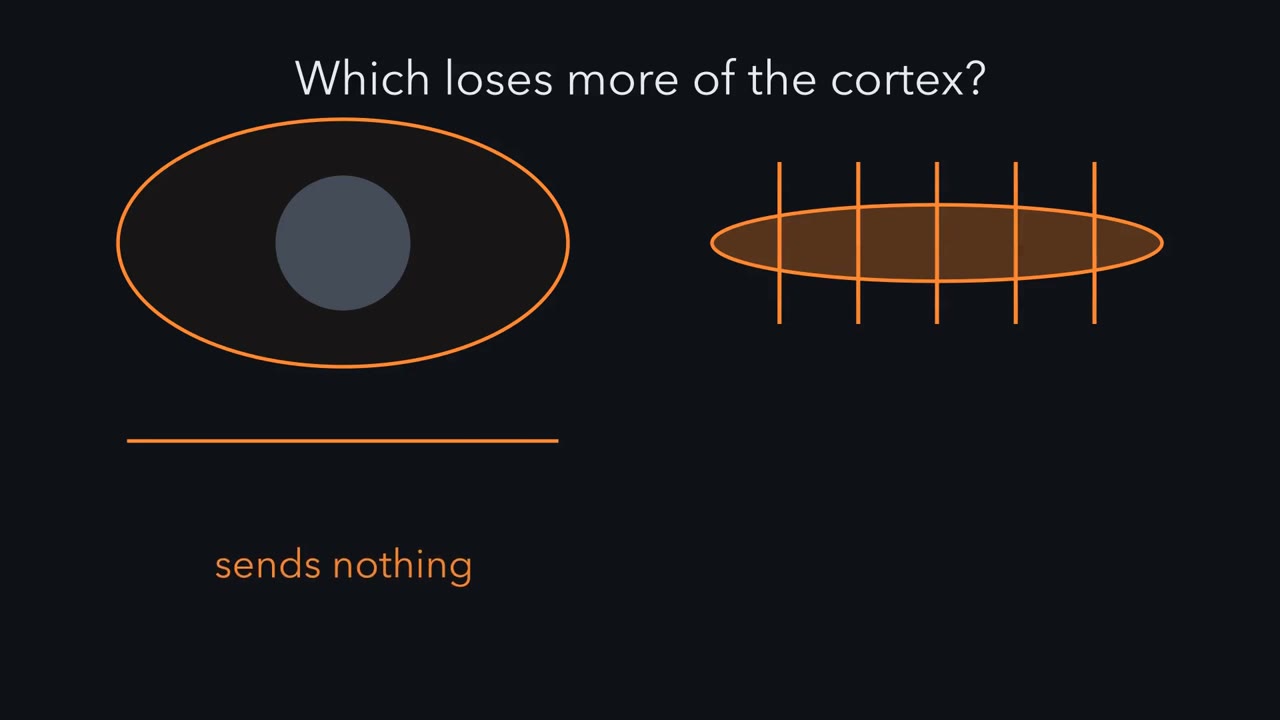
Why does closing one eye of a kitten for a week rewire its cortex, when closing both eyes shifts the balance much less?
Continue in the lesson: Ocular Dominance and the Critical Period →
2:47 · Free, with captions and a transcript. The lesson has the full text, the questions and the sources.
More films from this lesson
How this film was made. Narration: an AI narrator voice (Kokoro, af_heart) reading narration written from this lesson's text. Animation: AI-generated in code (Manim) by Claude, a schematic with no drawn molecular structures. Captions come from the narration script. See something wrong? Report it.