Films · Developmental Neuroscience
Permissive or Instructive
Read the transcript of “Permissive or Instructive”
Film transcript: Permissive or Instructive
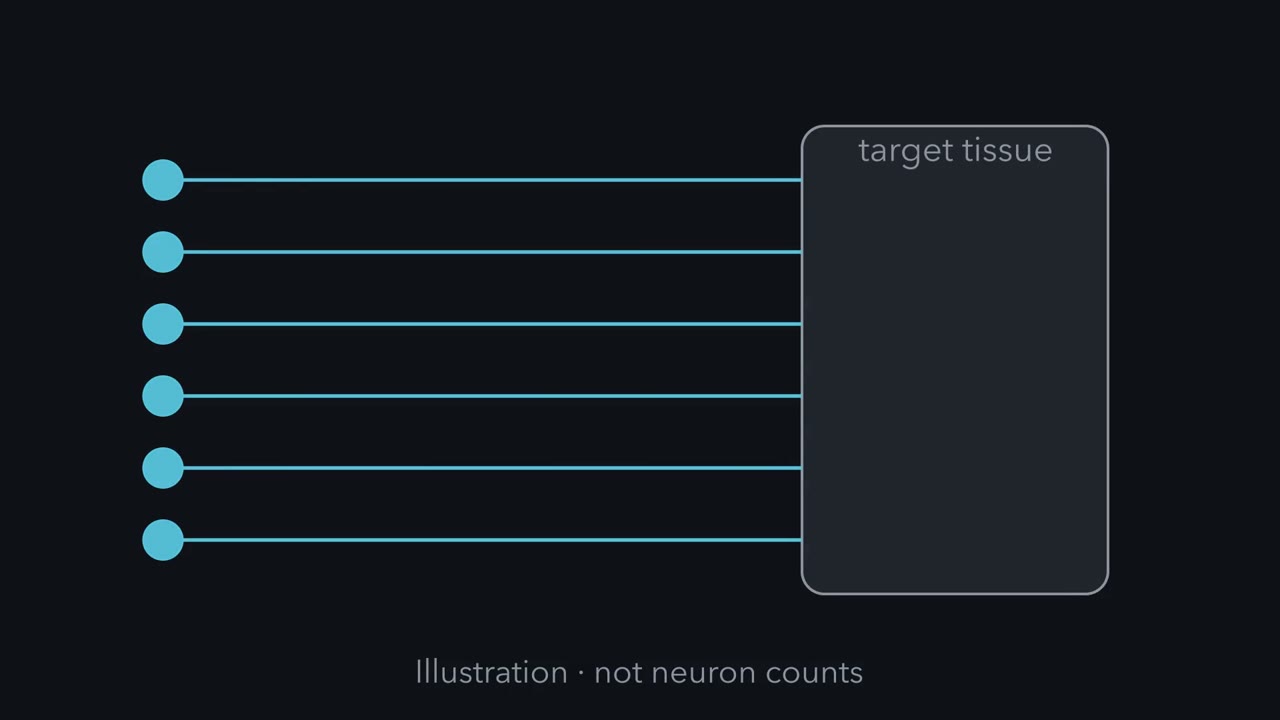
NGF keeps neurons alive. Does it also choose where their axons go? A permissive signal allows an outcome that something else chooses. An instructive signal chooses the outcome itself. Fuel lets a car go anywhere. The driver picks where. Fuel is permissive. The driver is instructive. Removing a signal and restoring its normal pattern cannot tell the two apart. It only shows the signal is needed. Instead, keep the signal present, but change where or when it is delivered. Then ask whether the pattern still forms. If the pattern stays put, something else reads position, and the signal was permissive. If the pattern follows the delivery, it is instructive.
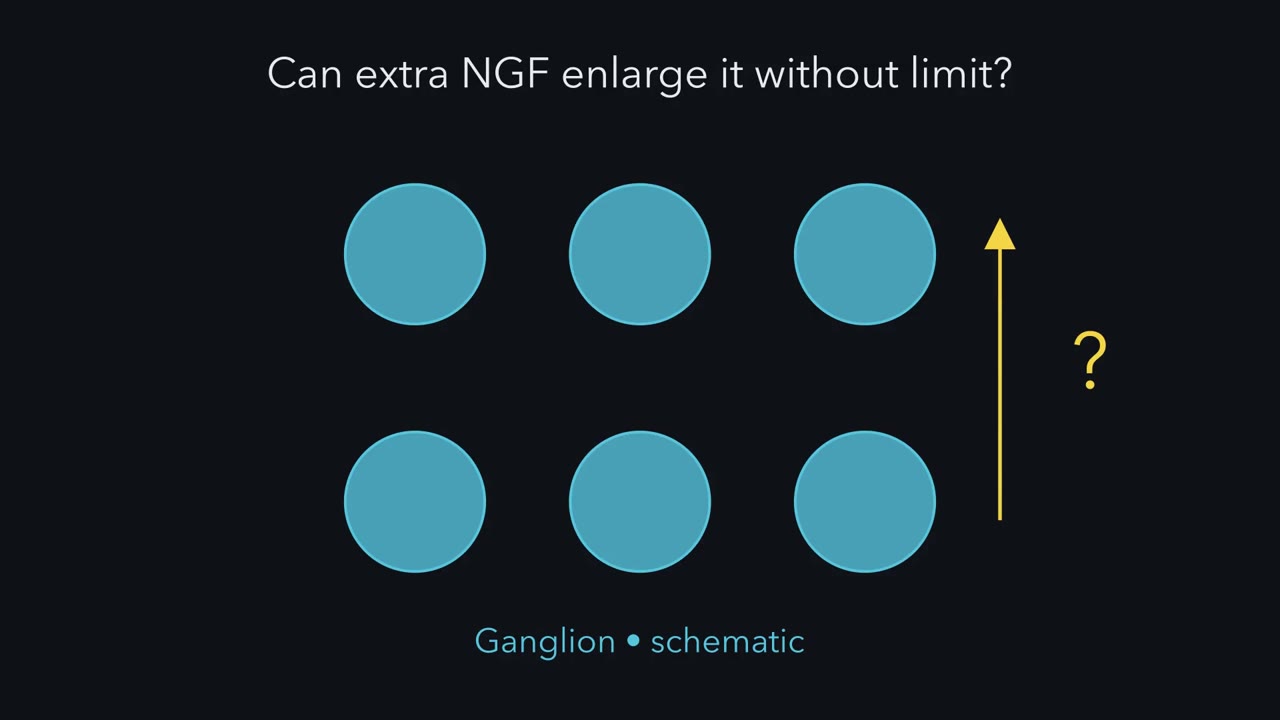
In 1989, Edwards and colleagues directed NGF to the pancreatic islets of otherwise normal mice. Islets are small clusters of hormone-making cells scattered through the pancreas. Predict. Where do the sympathetic fibres go?
Innervation of the islets rose sharply. The surrounding tissue gained no matching rise. The pattern followed the delivery. In 1993, Hoyle and colleagues ran the converse test. Their mice had sympathetic neurons that made NGF themselves. Now NGF was made by the neurons too, not only by the target. Axons still reached their tissues. But inside them, they branched sparsely. Making NGF in the islets of these mice restored islet innervation. So, in the sympathetic targets tested, NGF is permissive for reaching a target. It is instructive for how densely, and where, axons innervate within it. Here the fuel analogy breaks. One more test. In mice lacking both NGF and Bax, sympathetic neurons survive.
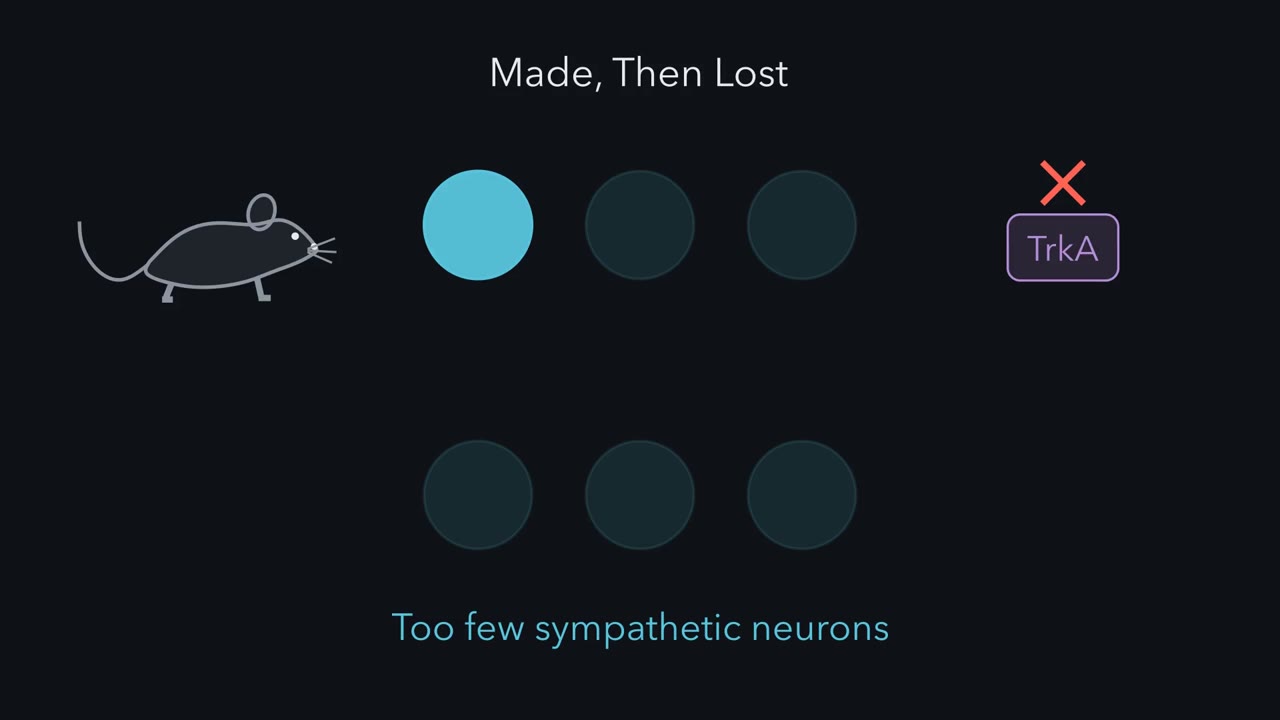
With death blocked, any defect left is not about survival. They fail to innervate many of their targets. Put the lesson together. The target is needed. Adding NGF saves neurons. Removing it, by antibody or by gene, kills them. The TrkA mutant shows the neurons were made, then lost. Acting as a survival factor, NGF cannot raise survivors above the number made. NGF keeps already specified neurons alive, and types differ in that need. Where it is supplied helps decide which connections stay. How some neurons come to win is the subject of the lesson on competition for targets. Takeaway: for survival, NGF is permissive. Within a target, it also instructs where axons branch.
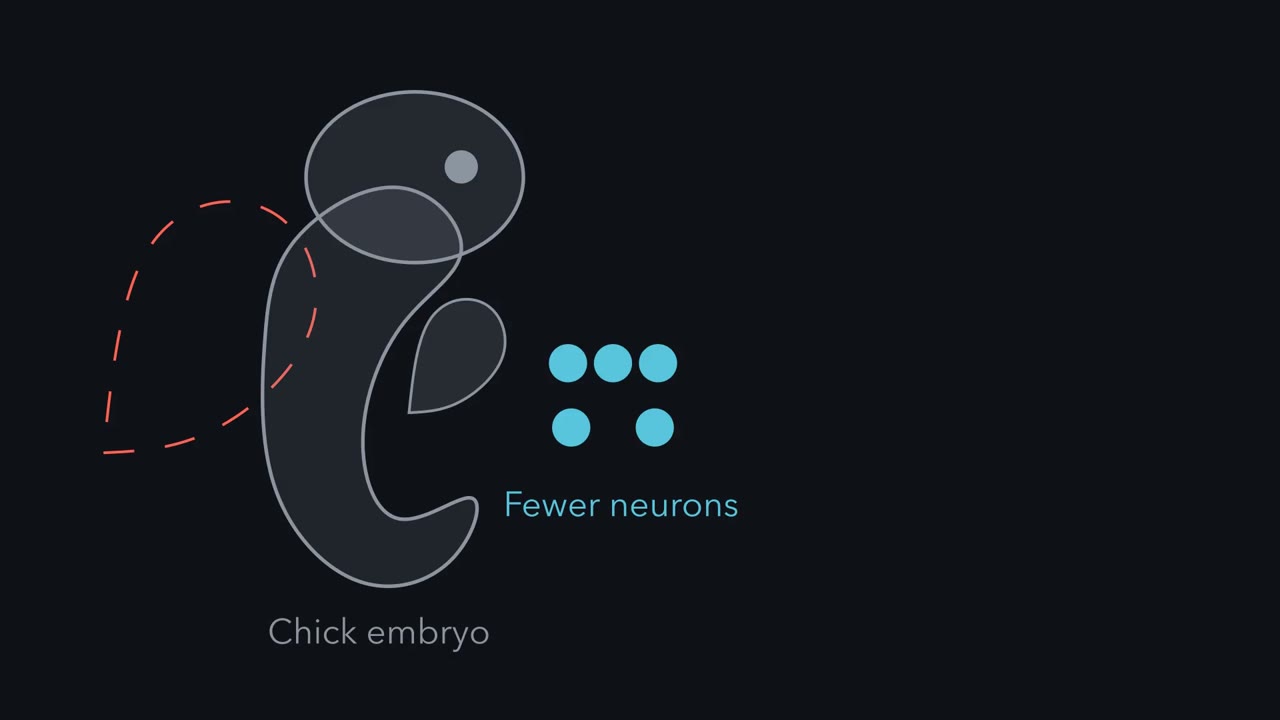
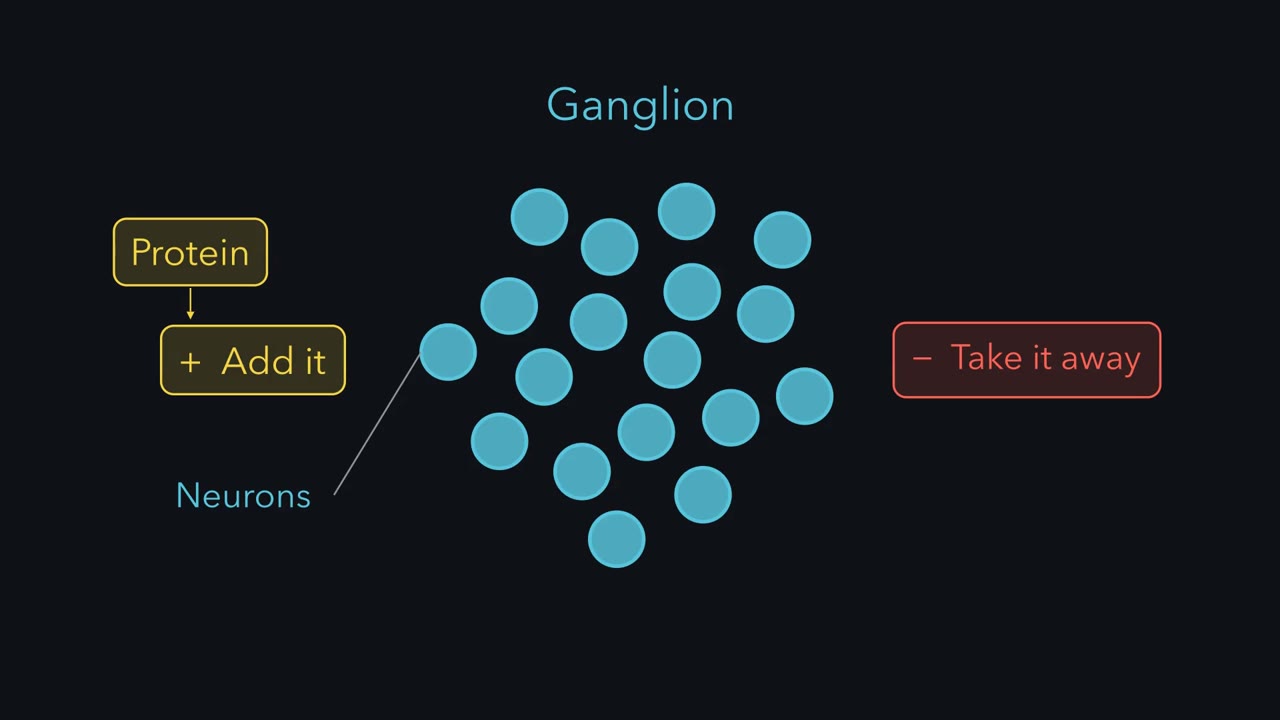
Neutralize one protein in a newborn mouse and its sympathetic ganglia waste away. Neurons compete for a limiting amount of target-derived factor, and the amount limits how many live. Does NGF decide how many neurons there are?
Continue in the lesson: The Neurotrophic Hypothesis Tested →
3:07 · Free, with captions and a transcript. The lesson has the full text, the questions and the sources.
More films from this lesson
How this film was made. Narration: an AI narrator voice (Kokoro, af_heart) reading narration written from this lesson's text. Animation: AI-generated in code (Manim) by Claude, a schematic with no drawn molecular structures. Captions come from the narration script. See something wrong? Report it.