Films · Developmental Neuroscience
The Tip That Reads a Difference
Read the transcript of “The Tip That Reads a Difference”
Film transcript: The Tip That Reads a Difference
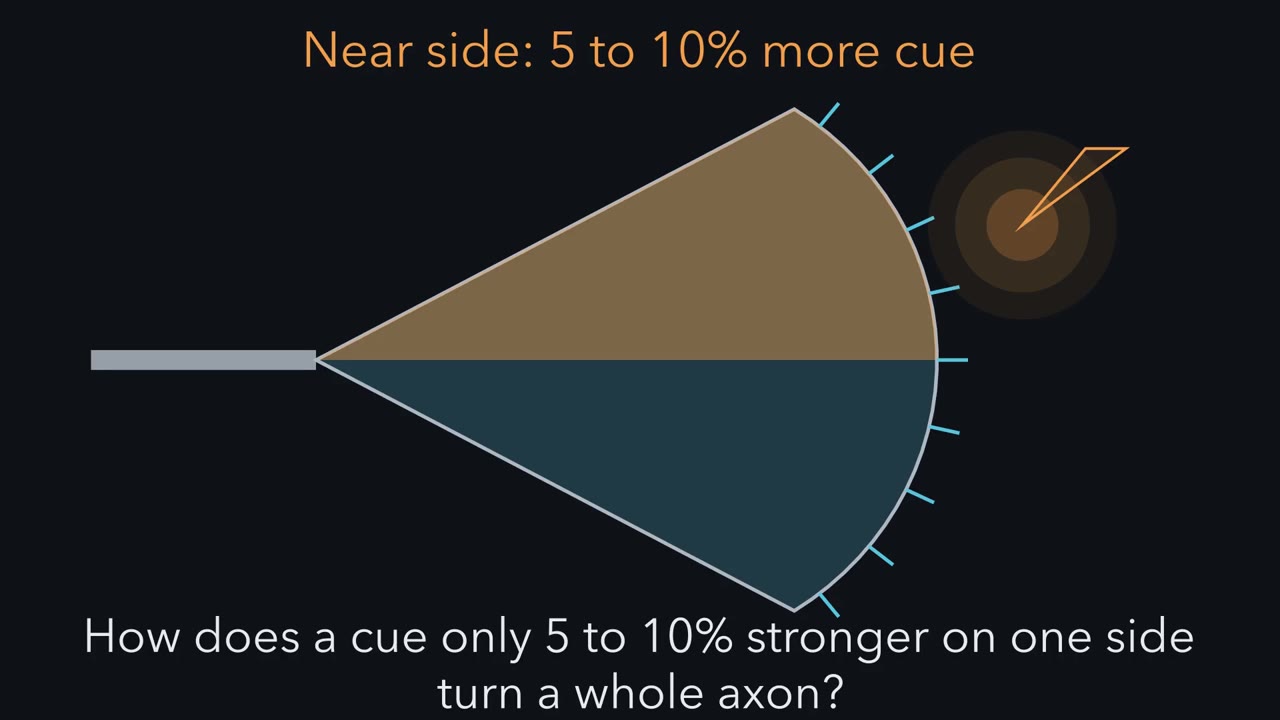
How does the tip of a growing axon know which way to turn? An axon is the long fibre a nerve cell sends out to reach its partner. At its end is a flat, moving fan called the growth cone. Microtubules fill the centre of the fan. Actin fills its edge, in thin spikes and flat sheets. The spikes are filopodia. They are feelers and feet at once, sampling the ground and gripping it. Molecules outside the cell, called guidance cues, attract or repel the growth cone. In a classic test, a fine pipette releases a cue beside a living growth cone. The cue thins with distance. So the near side meets a little more than the far side. How much more? In the standard assay, only about five to ten percent.
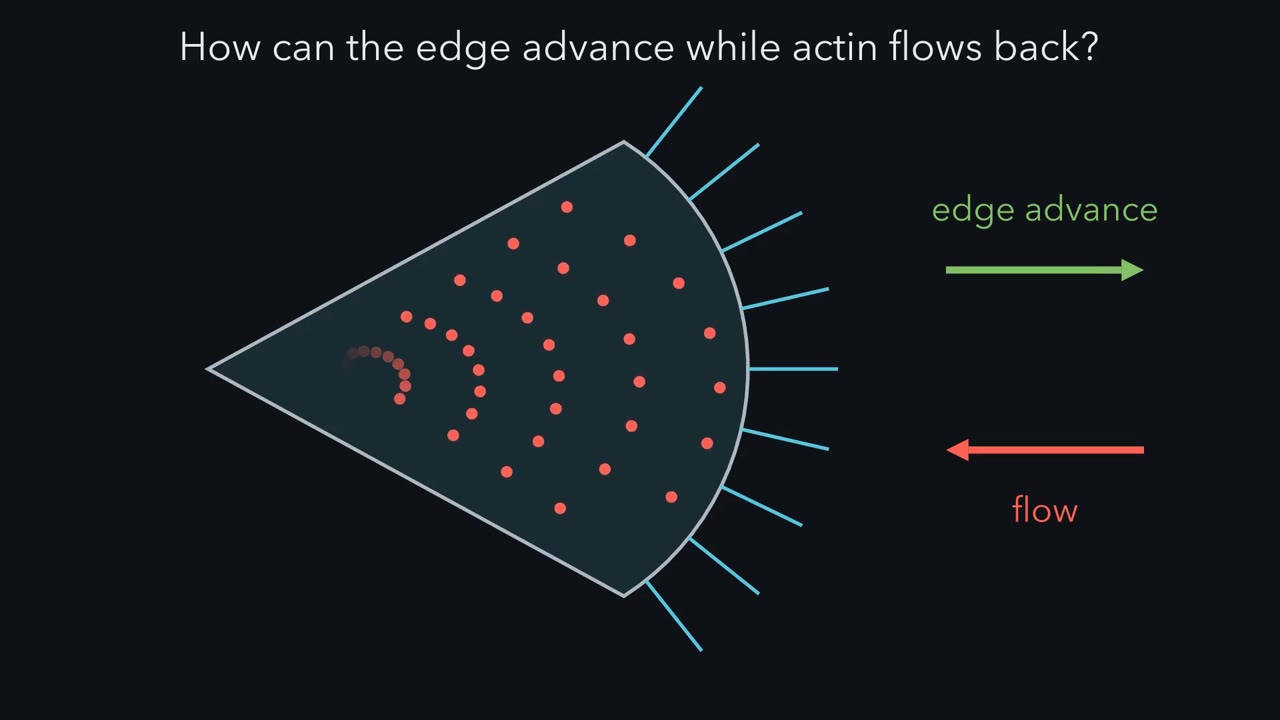
Now flood the whole dish with ten times more cue. Do growth cones turn harder? No. Across many cones there is no net turn. There is more cue, but no difference between the sides. So the difference across the width gives the direction. The overall amount changes how strongly cones respond. Here is the rule, for a growth cone on a flat surface in a dish. The edge moves forward by the actin added there, minus the actin that slides back. Grip on the ground, the clutch, holds back part of that slide. A turn sticks where microtubules move in and build new axon. Microtubules can also start the turn themselves. Three questions follow. How can a tip move forward while much of its actin streams backward?
How does so small a difference become a turn of the whole axon? And can the tip make that decision on its own? Carry one idea. A cue gives a direction by making the two sides of the growth cone differ.
Actin at the front of a growth cone often streams backward even while the tip moves forward, and in the standard assay it turns toward a cue only 5 to 10% stronger on one side. How?
Continue in the lesson: The Growth Cone: The Tip That Steers the Axon →
2:12 · Free, with captions and a transcript. The lesson has the full text, the questions and the sources.
More films from this lesson
How this film was made. Narration: an AI narrator voice (Kokoro, af_heart) reading narration written from this lesson's text. Animation: AI-generated in code (Manim) by Claude, a schematic with no drawn molecular structures. Captions come from the narration script. See something wrong? Report it.