One Extract, Two Hidden Factors
Read the transcript of “One Extract, Two Hidden Factors”
Film transcript: One Extract, Two Hidden Factors
Cohen injected newborn mice every day with a crude extract of male mouse salivary gland. A crude extract is a mixture, not a single purified protein. He expected a particular result. The sympathetic ganglia should be enlarged. And they were. But the mice did something else as well. They opened their eyelids about seven days after birth. The usual age is 12 to 14 days. Their teeth also came through early. That did not fit. Neither of these was expected. Purified nerve growth factor, given alone, did none of that. So the crude extract must have carried a second protein, with its own activity. This one acts on skin, so it was named epidermal growth factor.
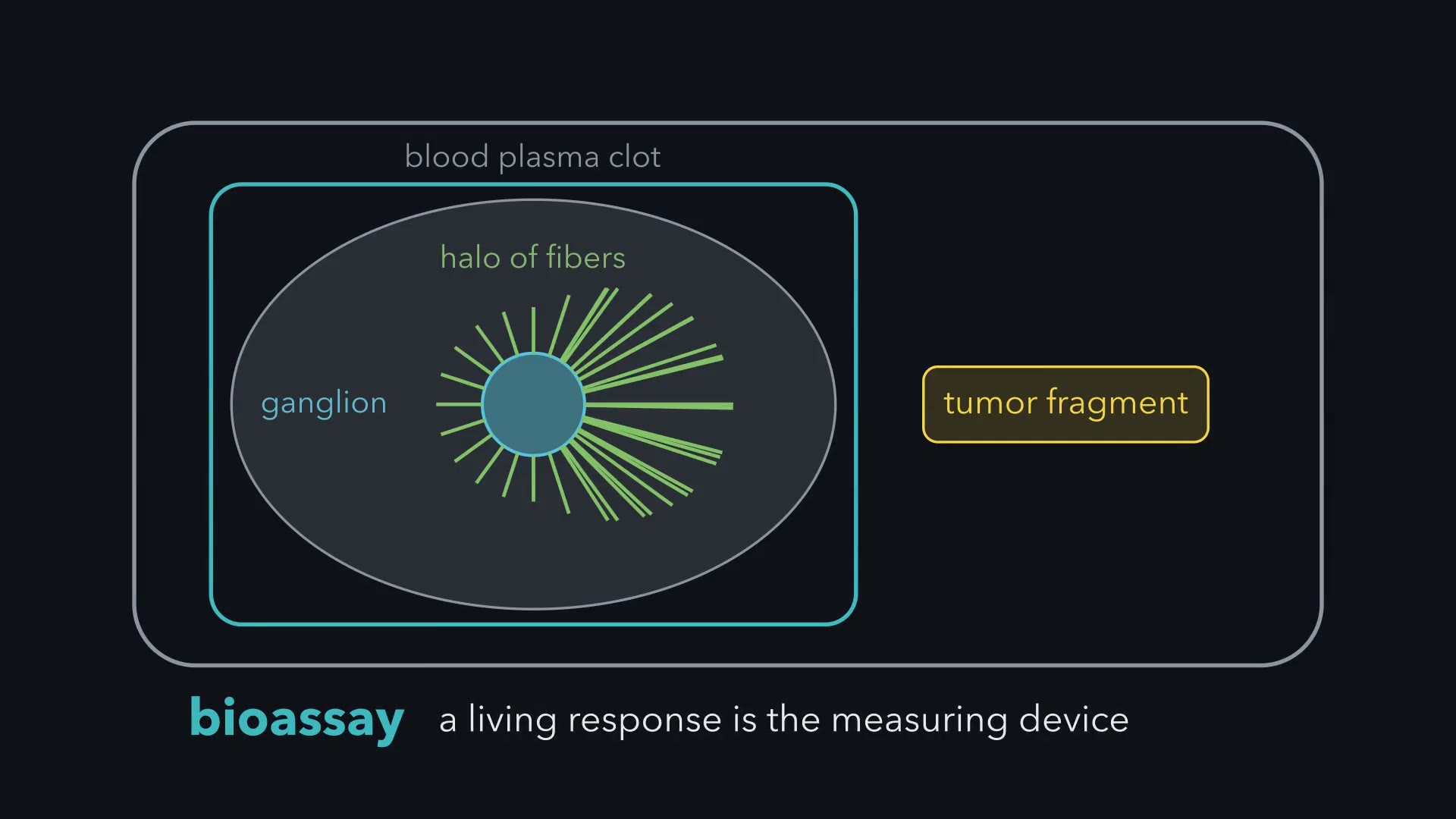
One extract, two proteins, two activities. The halo assay counted nerve fibers, and only nerve fibers. It could not show eyelids or teeth, so it was blind to epidermal growth factor. A whole newborn mouse responds to everything in a crude extract. When you start from a mixture, the assay you choose decides which molecule you find.
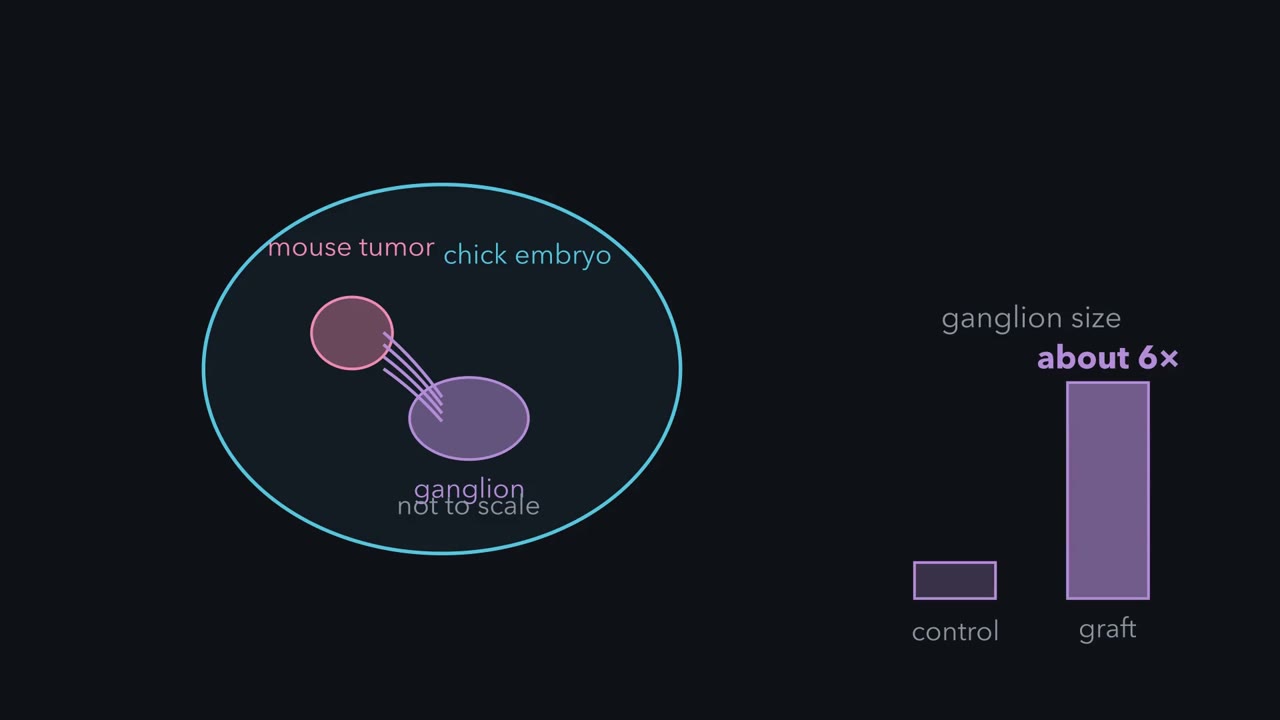
A mouse tumor that never touched a chick embryo's nerves made its ganglia swell. What was it releasing, and why do neurons depend on a signal from their targets?
Continue in the lesson: Finding a Signal: NGF, EGF and the Bioassay →
1:30 · Free, with captions and a transcript. The lesson has the full text, the questions and the sources.
More films from this lesson
How this film was made. Narration: an AI narrator voice (Gemini, Charon) reading narration written from this lesson's text. Animation: AI-generated in code (Manim) by Claude, a schematic with no drawn molecular structures. Captions come from the narration script. See something wrong? Report it.