Films · Developmental Neuroscience
One Border, Many Destinations
Read the transcript of “One Border, Many Destinations”
Film transcript: One Border, Many Destinations
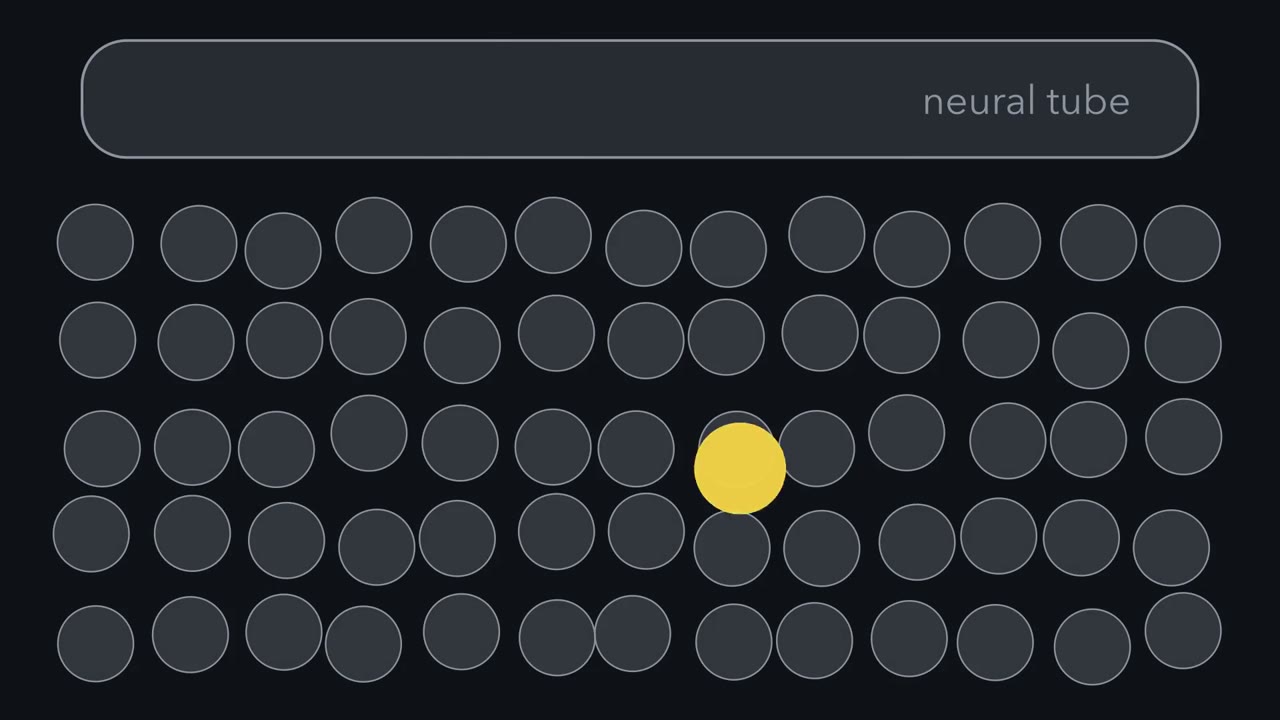
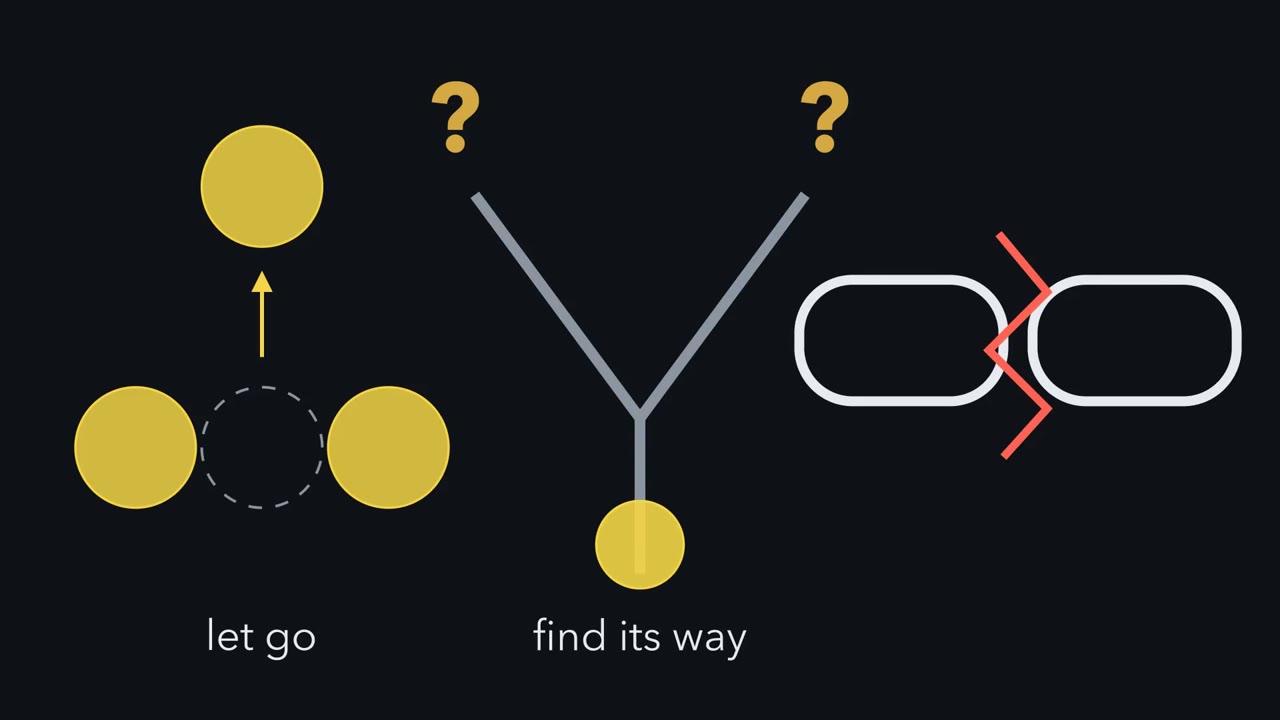
Hearing loss, a white forelock, and a stretch of gut with no nerve cells. Why would one gene cause all three? Some patients have Hirschsprung disease and Waardenburg syndrome together, from one mutant gene. Hold that puzzle. Early on, the ectoderm splits into neural plate and future skin. The neural crest forms at the border between them. When the plate rolls up into the neural tube, the border cells end up along its top. In the chick trunk, they then let go of their neighbours, break through the basement membrane, and crawl away. In the mouse head, many leave before the folds have closed. This change, from a cell in a sheet to a free cell, is an epithelial-to-mesenchymal transition, What they become differs along the body.
Cranial crest makes cartilage and bone of the face and much of the skull. Vagal and sacral crest make the neurons and glia of the gut wall. Trunk crest makes sensory and sympathetic neurons, adrenal medulla, Schwann cells and melanocytes, the pigment cells. Here is the one idea to carry through. One border, many destinations. Where along the body a crest population starts biases what it can become. The signals on its route, and where it stops, help decide which fates appear. This holds for populations. Some single cells are already biased before they leave. Many tissues share that start, and many need the same genes. So one failed gene can strike tissues that look unrelated.
Predict. If gut neurons and pigment cells share a start, what could one broken gene do? It could fail both lineages at once, if both need that gene. Chapter three names the genes. The takeaway. The start biases the options, and the journey helps choose.
Why can one mutation leave a child with part of the colon without gut neurons, a white forelock and deafness?
Continue in the lesson: The Neural Crest: Cells That Leave Home →
2:11 · Free, with captions and a transcript. The lesson has the full text, the questions and the sources.
More films from this lesson
How this film was made. Narration: an AI narrator voice (Kokoro, af_heart) reading narration written from this lesson's text. Animation: AI-generated in code (Manim) by Claude, a schematic with no drawn molecular structures. Captions come from the narration script. See something wrong? Report it.