Three Channels and the Availability Budget
Read the transcript of “Three Channels and the Availability Budget”
Film transcript: Three Channels and the Availability Budget
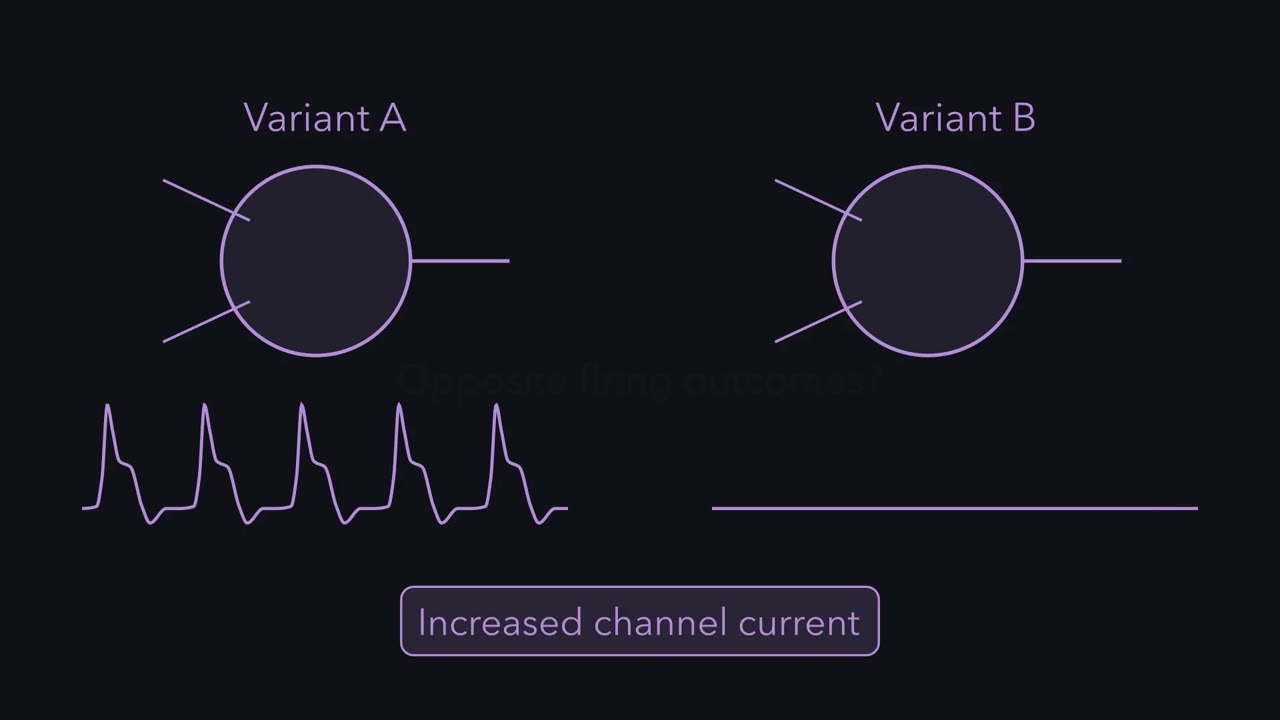
Three sodium channels sit in a nociceptor. Which of them builds the spike? Nociceptor spikes draw on three channels concentrated in these neurons. Two of them are Nav1.7 and Nav1.8. The third is Nav1.9. The last two are tetrodotoxin resistant. That is how their currents are isolated in a recording. Those two carry pore residues that weaken the toxin's grip, so the toxin leaves them conducting. and a V1 .7 and N, a V1 .8 contribute to the spike itself. Nav1.9 mainly sets the resting potential and subthreshold excitability. Keep two kinds of current apart. A transient current rises and then inactivates within milliseconds. A persistent current stays appreciable while the membrane sits still.
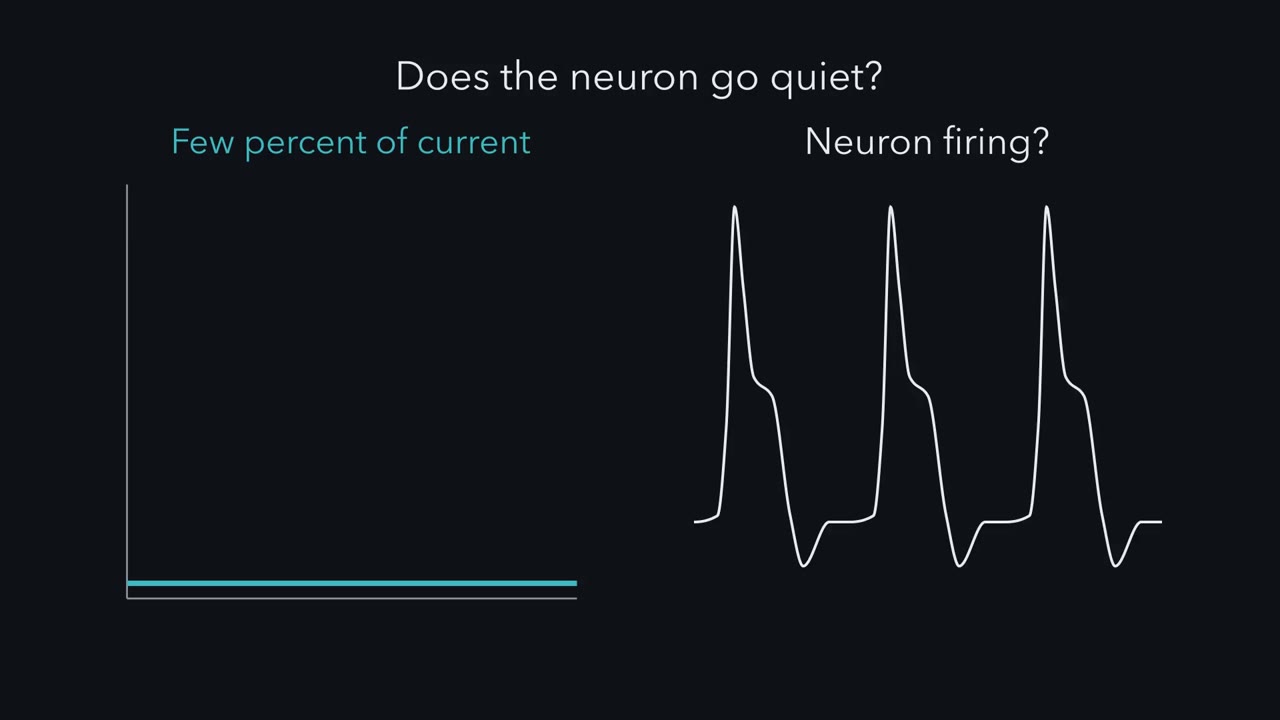
Its inactivation is slow or incomplete, not absent. Nav1.9 supplies a persistent current. Its slow gating suits a role at rest rather than in the upstroke. Now the quantity this lesson turns on. Availability is the fraction of sodium channels not already inactivated. Channels sitting in the inactivated state cannot open when the membrane depolarizes. Availability depends on the voltage the membrane has been resting at. Hold one voltage long enough and availability settles on this curve. The curve has a half-inactivation voltage and a slope factor. For Nav1.7-like channels the slope is about seven millivolts. Other subtypes, especially Nav1.8, need their own measured curves.
The curve runs downhill. The more depolarized the rest, the fewer channels are left to open. Two nociceptors carry the same channels. One rests low, one rests high. Which has more available? The low one. About two-thirds of those channels are available, against about one-fifth. Now give each neuron the same small depolarization, and hold it there. The low one keeps about three-quarters of its availability. The high one keeps about half. It was already low on the curve, so the same step costs it proportionally more. Those midpoints are illustrative. For a real neuron the midpoint is a measurement, not an assumption. So depolarization does two opposite things at once.
It closes the gap to threshold, and it costs availability. That is the order to ask in. What happened to the channel, then to rest and availability, then to firing. Treat availability as a budget, but a reversible one. Channels recover from inactivation when the membrane goes negative again. The budget shows what a step costs, not whether the neuron fires.
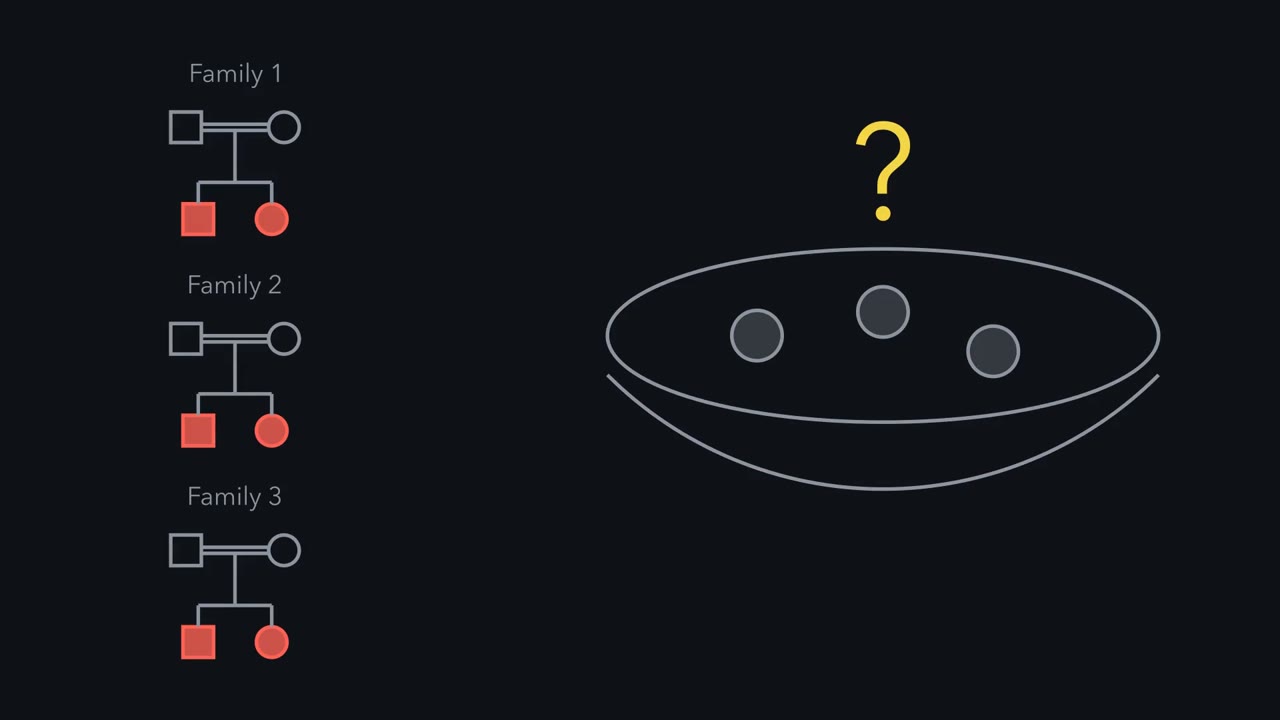
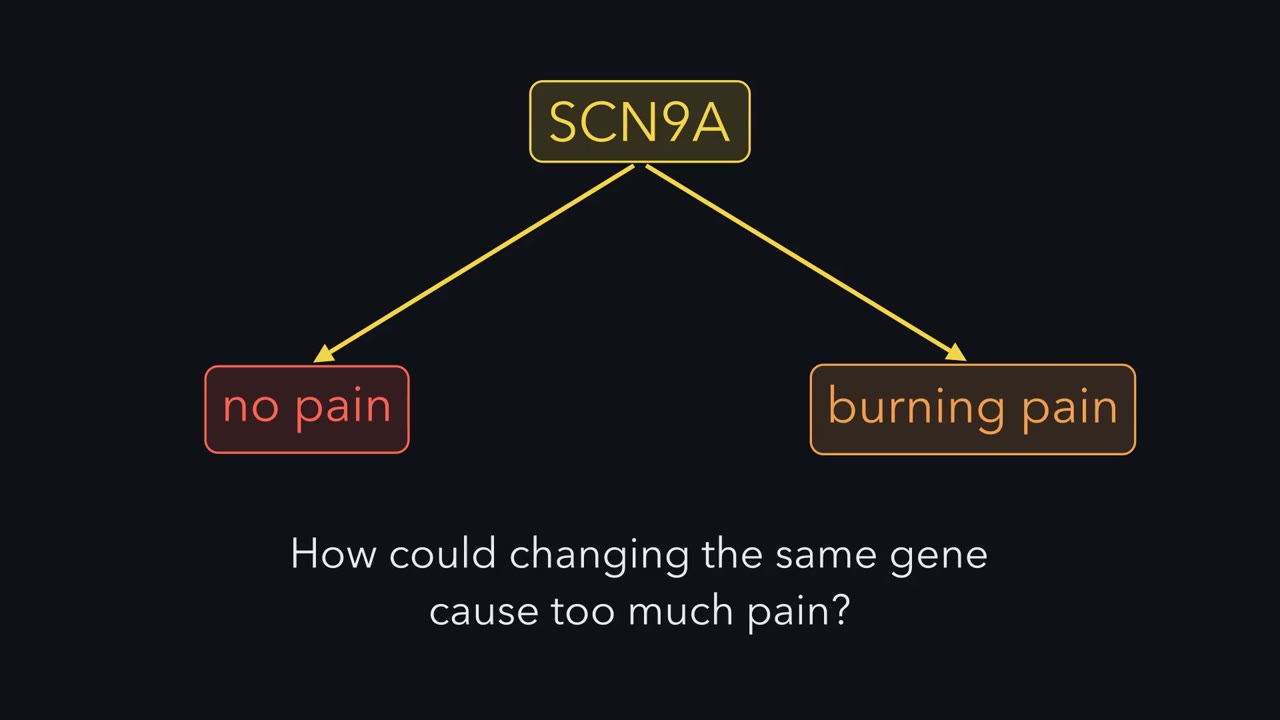
Three families in which nobody could feel pain pointed to one sodium channel. Twenty years later, the drug that reached patients blocks a different one.
Continue in the lesson: Nociceptors and the Sodium Channels of Pain →
3:14 · Free, with captions and a transcript. The lesson has the full text, the questions and the sources.
More films from this lesson
How this film was made. Narration: an AI narrator voice (Kokoro, af_heart) reading narration written from this lesson's text. Animation: AI-generated in code (Manim) by Claude, a schematic with no drawn molecular structures. Captions come from the narration script. See something wrong? Report it.