Films · Developmental Neuroscience
Equal Cells, One Winner
Read the transcript of “Equal Cells, One Winner”
Film transcript: Equal Cells, One Winner
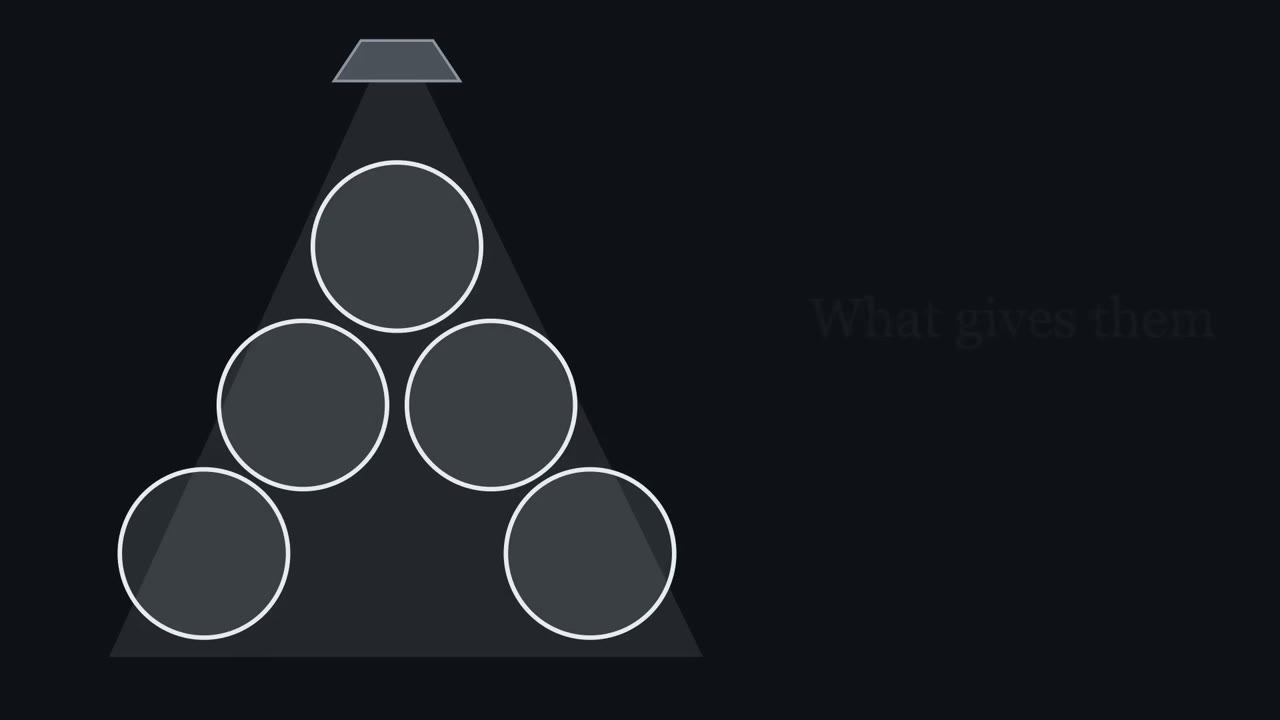
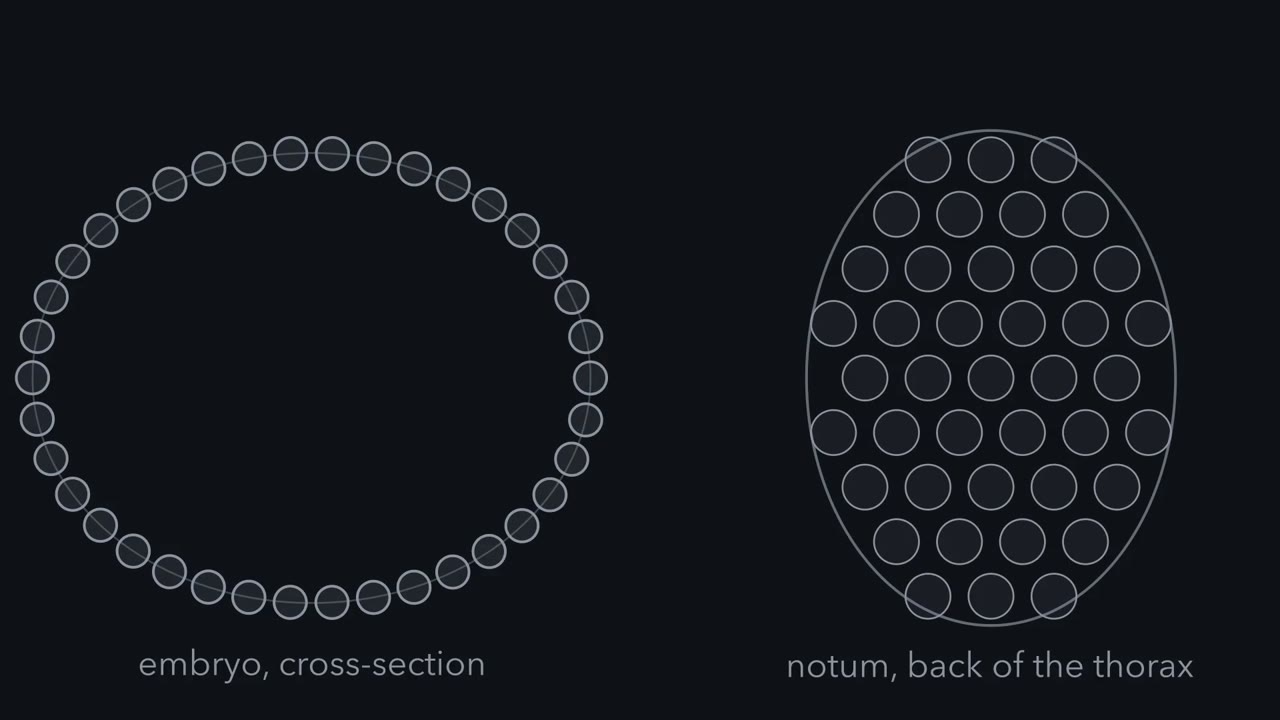
A small group of cells are all equal. Every one could become a nerve cell. Why does only one? In the fly embryo, the cells that will make the nervous system sit in small groups. Every cell in a group can become a neural precursor. Yet usually only one does. If the cells start equal, something must break the tie. The answer comes in two steps. First, proneural genes make a group of cells able to become neural. Then the cells signal to each other through Notch, and one wins. Keep three maps in mind. On the embryo's underside, one cell from each cluster moves inward as a neuroblast. A neuroblast is a neural stem cell of the fly embryo. The rest of the cluster becomes epidermis, the skin.
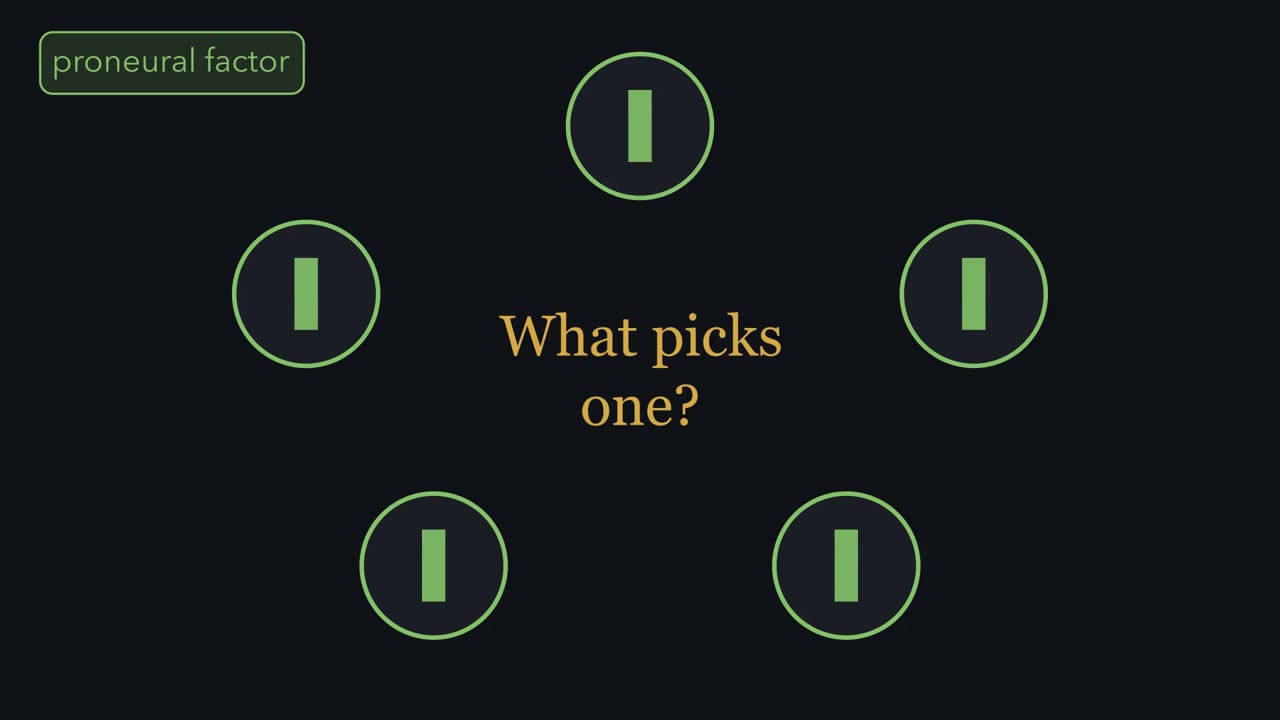
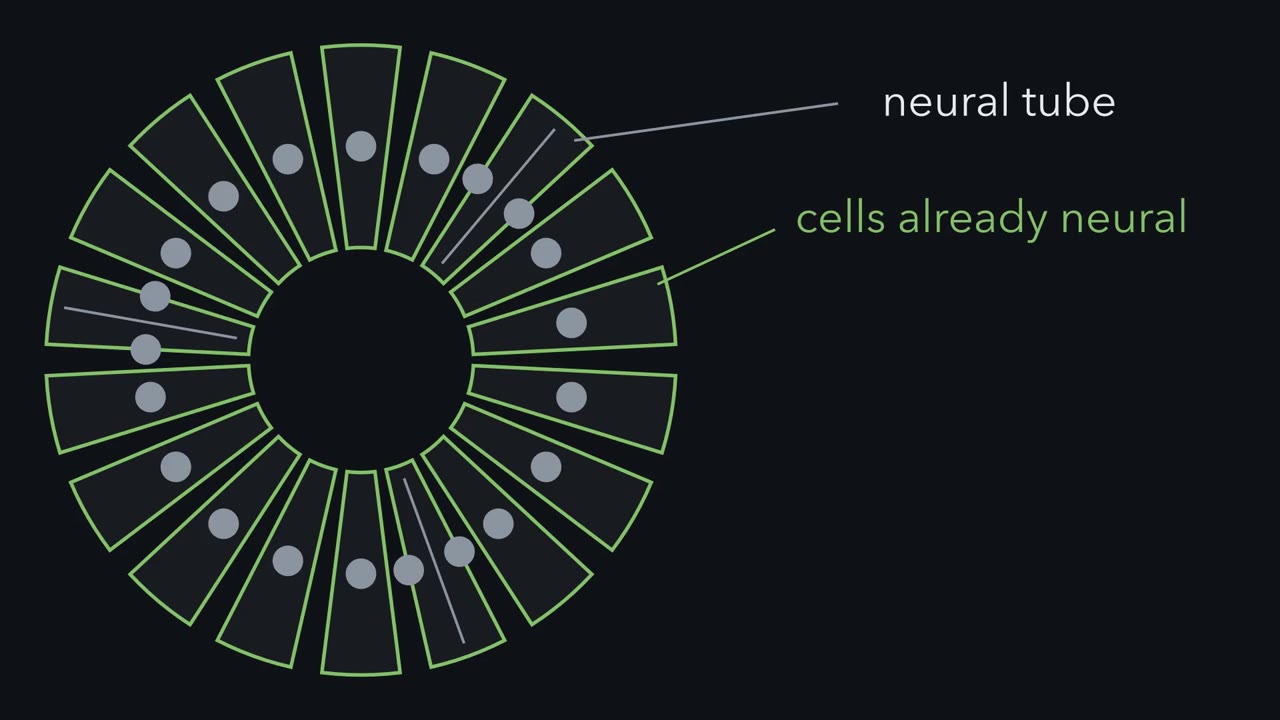
On the notum, the back of the fly's thorax, small clusters make the large bristles. Each gives one sensory organ precursor That cell builds one bristle and its neuron. The rest become epidermis. Small bristles come from broader stripes. The third map is the vertebrate neural tube. There, the cells are already neural. Now step one. A proneural gene first comes on in a whole cluster. Think of it as a casting call. In 1993, Mar Ruiz-Gómez and Alain Ghysen followed the proneural gene achaete in staged fly embryos. It came on first in clusters of a few cells. Later, one cell in each cluster held much more achaete RNA. That cell became the neural progenitor.
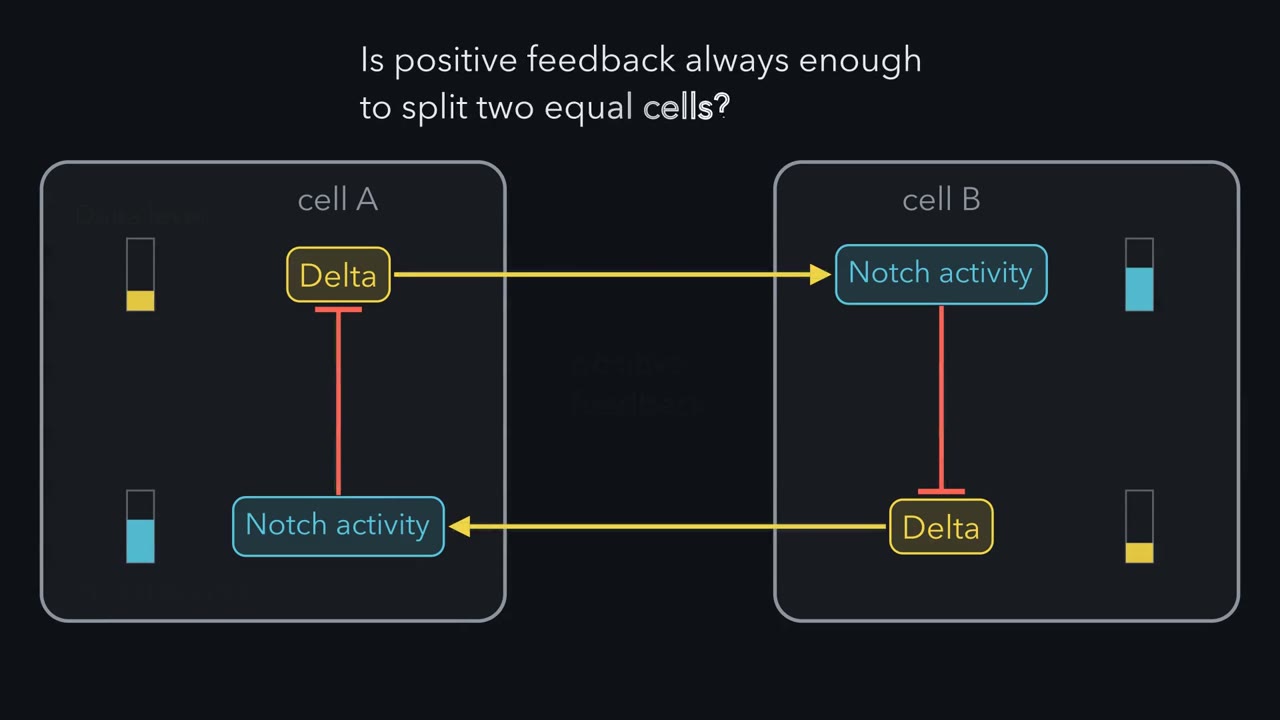
They called the first state competent, and the second determined. Predict. Take Notch away from the embryo. What happens to the clusters? The clusters still form in their normal places. But high achaete is no longer limited to one cell. So Notch does not place the clusters. It narrows them. Placing and picking are separate events. That leaves three puzzles. Who may become neural? Who does? And does the logic carry over to vertebrates? Here is the idea to carry. In the fly, proneural factors say which cells may become neural. Notch says which one does.
Every cell in the cluster could become the neuron. Why does only one?
Continue in the lesson: Proneural Genes and Lateral Inhibition →
2:37 · Free, with captions and a transcript. The lesson has the full text, the questions and the sources.
More films from this lesson
How this film was made. Narration: an AI narrator voice (Kokoro, af_heart) reading narration written from this lesson's text. Animation: AI-generated in code (Manim) by Claude, a schematic with no drawn molecular structures. Captions come from the narration script. See something wrong? Report it.