Films · Developmental Neuroscience
The Tube Gains a Second Floor
Read the transcript of “The Tube Gains a Second Floor”
Film transcript: The Tube Gains a Second Floor
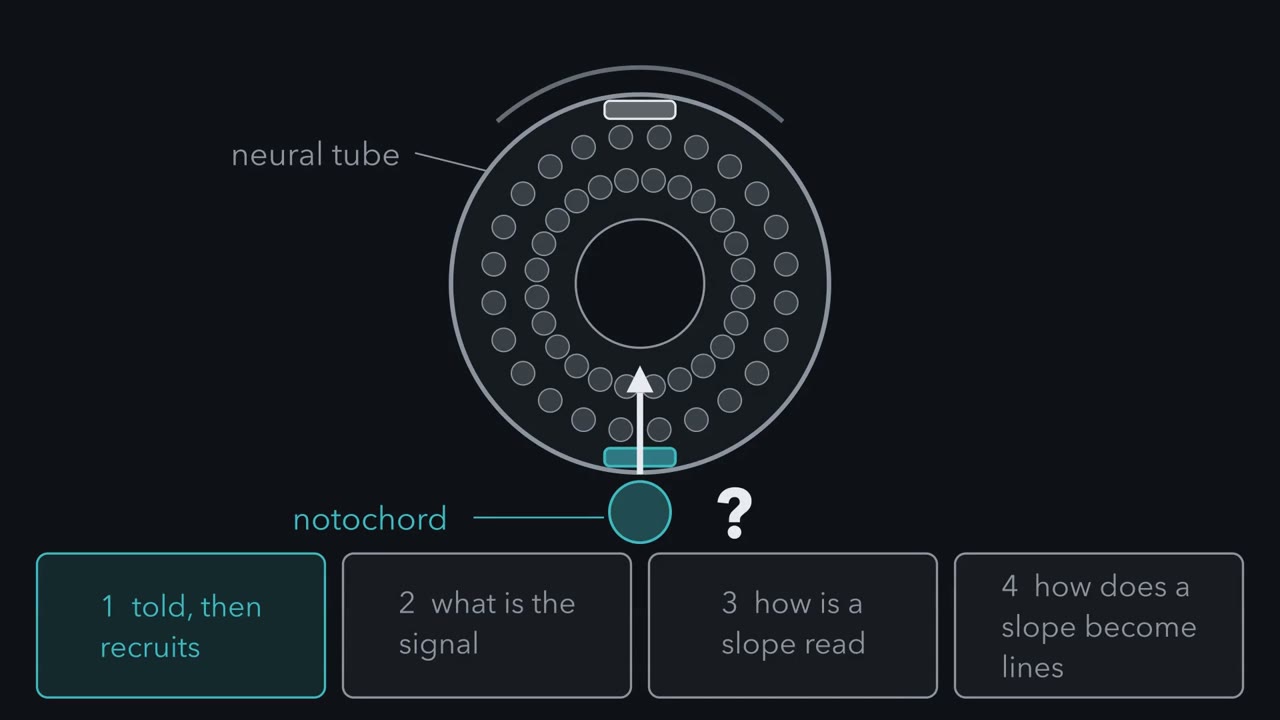
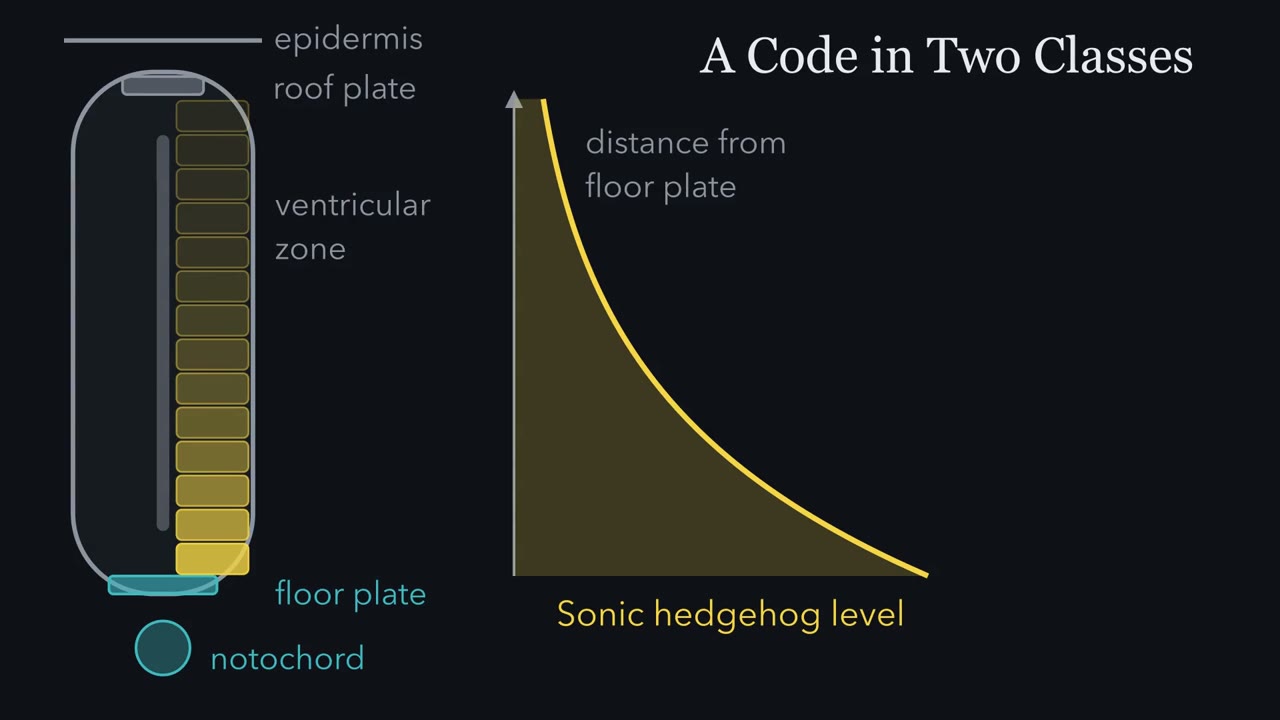
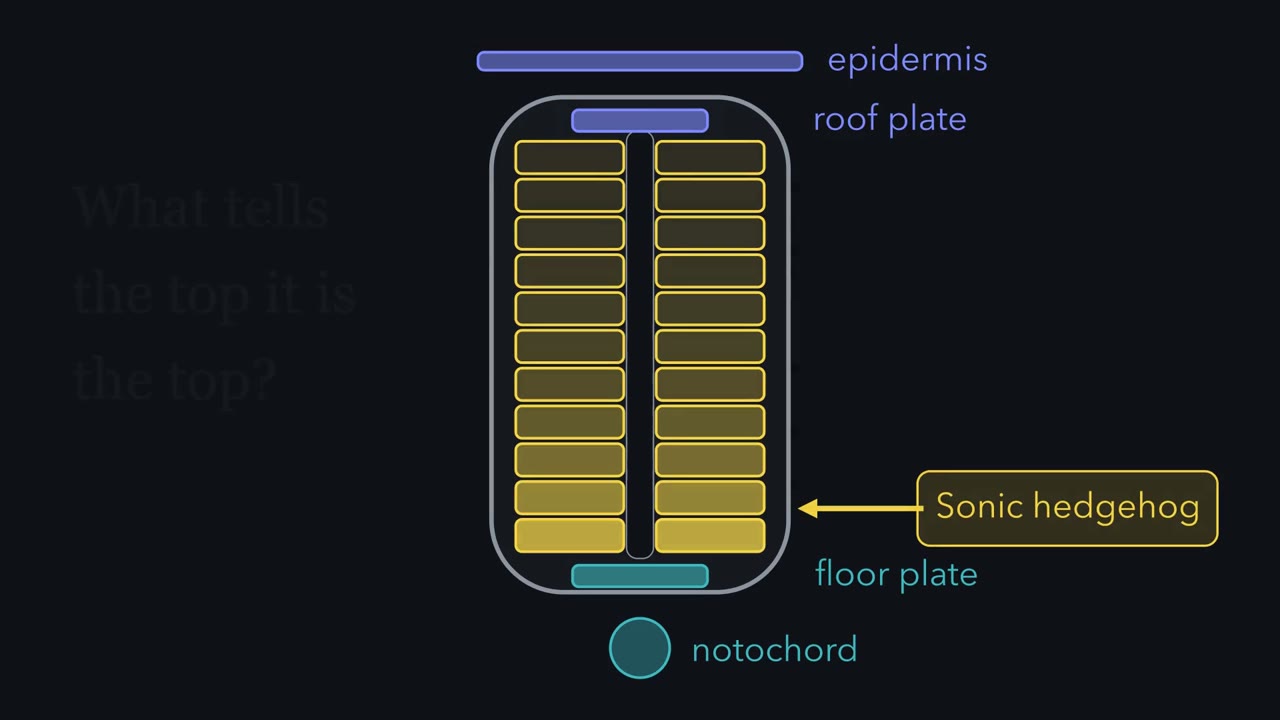
Graft a second notochord against the side of a chick neural tube. The neural cells beside it start to behave like floor plate. The tube gains a second bottom. So how does a cell in the wall know how far it sits from the bottom? Its neighbours tell it. A cell's position is written in how much signal it receives from below and above. Start with the map. The neural tube rolls up from the neural plate and becomes the brain and spinal cord. Under the tube runs the notochord, a rod of mesoderm, the embryo's middle cell layer. The tube's bottom strip is the floor plate, a narrow line of specialized cells. Its top strip is the roof plate. The epidermis, the non-neural ectoderm, ends up over the top of the tube.
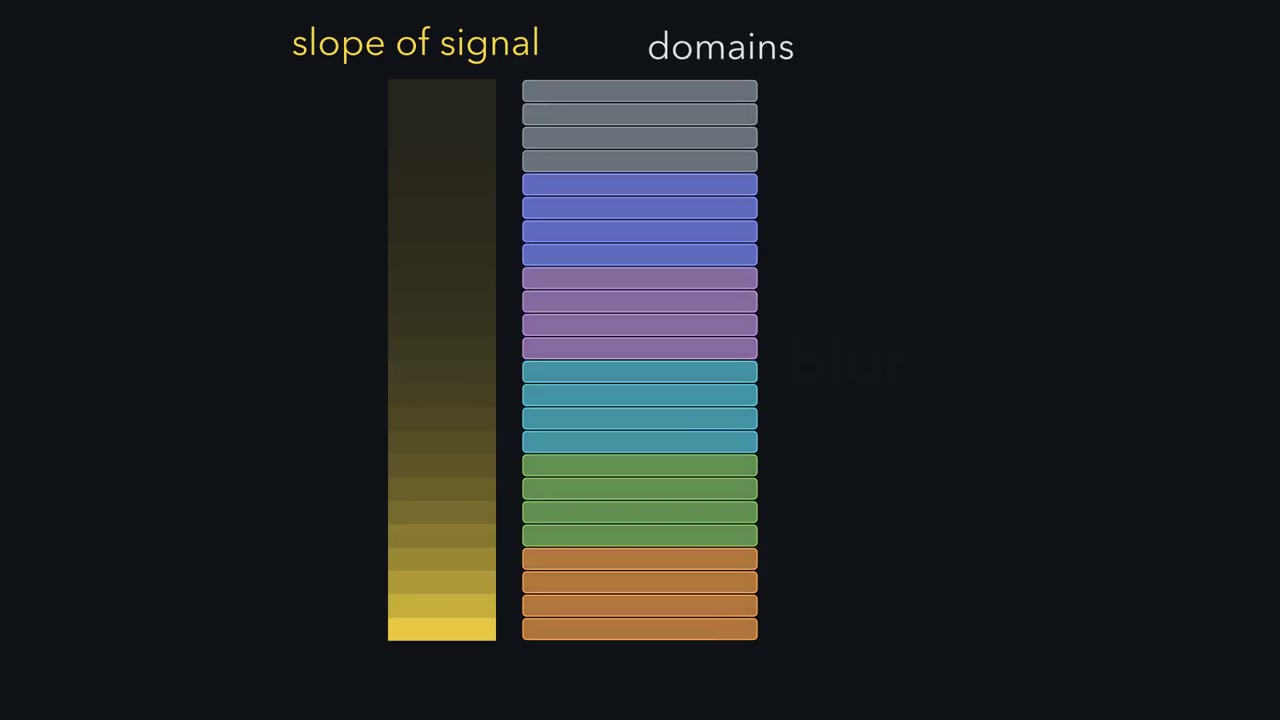
In the wall between floor and roof, dividing cells called progenitors line the central canal. They will make motor neurons near the bottom, and relay neurons for body sensation near the top. The ventral half of the wall will hold five stripes of progenitors, called domains. Each makes one class of neuron. The map raises four puzzles. Who marks the bottom? What is the signal? How is a slope read? How does a slope become lines? Start with the first. Notochord and floor plate touch and share features. Is that a shared history, or an instruction? In 1990, Marysia Placzek, with Thomas Jessell, Jane Dodd and colleagues, ran the test in chick embryos.
A notochord grafted beside the side wall gave the nearby neural cells floor-plate properties. Now the reverse. Predict: what happens at the midline if you remove the normal notochord early? Floor-plate properties failed to appear at the midline. The graft shows the notochord is sufficient. It is enough to give floor-plate properties in a new place. The removal shows it is necessary. Without it, the normal floor plate does not form. Then the floor plate passes the message on. In culture, floor plate induced floor-plate markers, just as notochord did. The signals acted by contact. In this homeogenetic induction, an induced tissue recruits its neighbours to the same identity.
Keep one idea in view through every chapter. The neighbours supply a slope. The progenitors draw the lines. The takeaway: in these assays, the bottom of the tube is told, and once told, it recruits. Something passes from the notochord. What is it?
Graft a second notochord beside a chick neural tube, and the tube grows a second floor.
Continue in the lesson: Ventral to Dorsal: Sonic Hedgehog and BMP in the Neural Tube →
2:55 · Free, with captions and a transcript. The lesson has the full text, the questions and the sources.
More films from this lesson

How this film was made. Narration: an AI narrator voice (Kokoro, af_heart) reading narration written from this lesson's text. Animation: AI-generated in code (Manim) by Claude, a schematic with no drawn molecular structures. Captions come from the narration script. See something wrong? Report it.