Rods First, Then Cones
Read the transcript of “Rods First, Then Cones”
Film transcript: Rods First, Then Cones
A new question. What happens when the photoreceptors themselves die? In typical retinitis pigmentosa, the faulty gene is often not expressed in cones. Predict. If the faulty gene is not expressed in cones, should the cones be spared?
No. They die too, typically after most of the rods around them have gone. Patients typically lose night vision first, then peripheral vision. Central vision goes later, when cones fail. So cones depend in some way on rods. And cones carry daylight, colour and sharp central vision. Why cones die is not settled. One candidate is lost support from rods. Rods make a rod-derived cone viability factor, called RdCVF. In chicken cone cultures and a mouse model, RdCVF binds basigin-1. Basigin one associates with a glucose transporter, and cone glucose entry rises. Cone starvation and oxidative damage are other candidates. Can vision be rescued? Gene therapy has begun to improve vision in specific genetic forms.
One trial added a working RPE65 gene. It was randomized and open-label, with masked grading of a mobility test. At one year, treated participants did better than controls, by 1.6 light levels. A later study delivered editing machinery for CEP290 inside the eye. It had no randomized or sham control, only the untreated fellow eye. It recorded no dose-limiting toxic effects during follow-up, and signs of possible benefit. The fellow eye shares the person and the testing days. But practice, expectation and fluctuation cannot be fully separated from treatment. The takeaway. The design limits the claim. The randomized trial supports a benefit on its mobility test.
A small single arm supports observed safety and a preliminary signal.
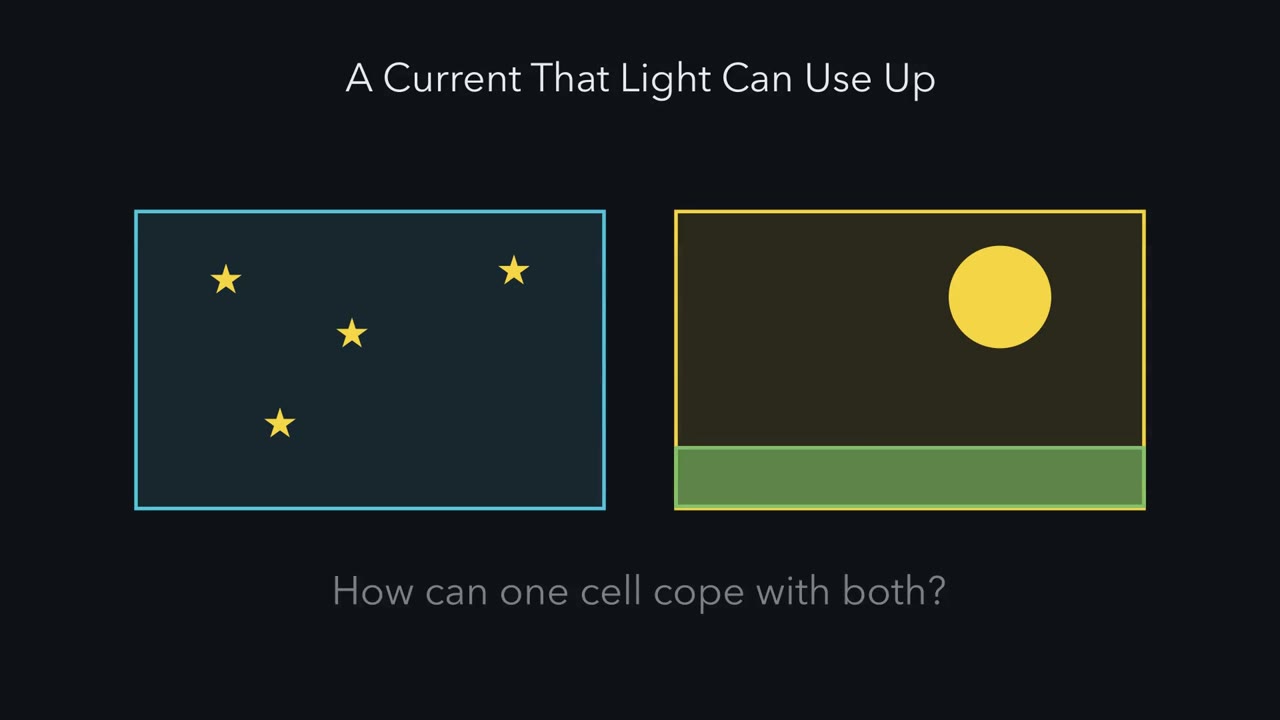
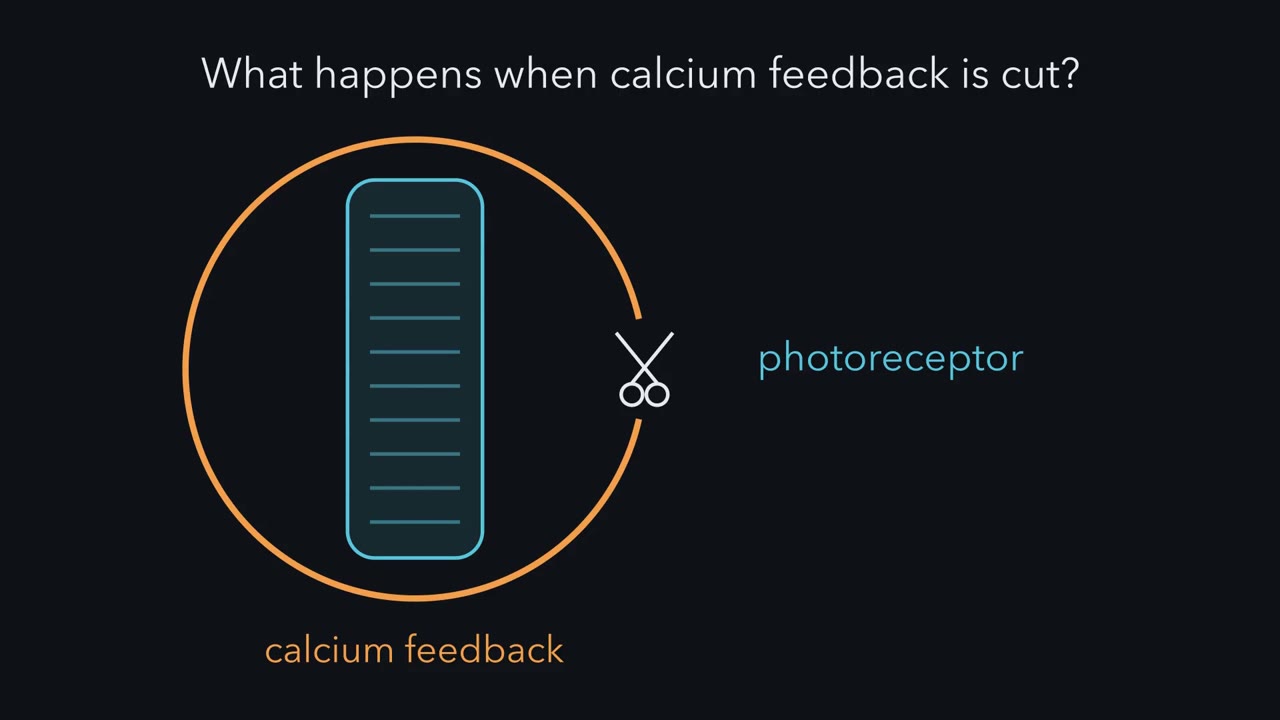
Delete the GCAPs, proteins that turn a rod's gain down, and its response to a single photon becomes about five times larger. Yet cones lacking the GCAPs and recoverin lose sensitivity more steeply than normal cones as a steady background brightens. How can removing gain control make a cell adapt worse in the light?
Continue in the lesson: Calcium Feedback Sets Photoreceptor Gain, and When Photoreceptors Die →
2:25 · Free, with captions and a transcript. The lesson has the full text, the questions and the sources.
More films from this lesson
How this film was made. Narration: an AI narrator voice (Kokoro, af_heart) reading narration written from this lesson's text. Animation: AI-generated in code (Manim) by Claude, a schematic with no drawn molecular structures. Captions come from the narration script. See something wrong? Report it.