What the Bulb Sends
Read the transcript of “What the Bulb Sends”
Film transcript: What the Bulb Sends
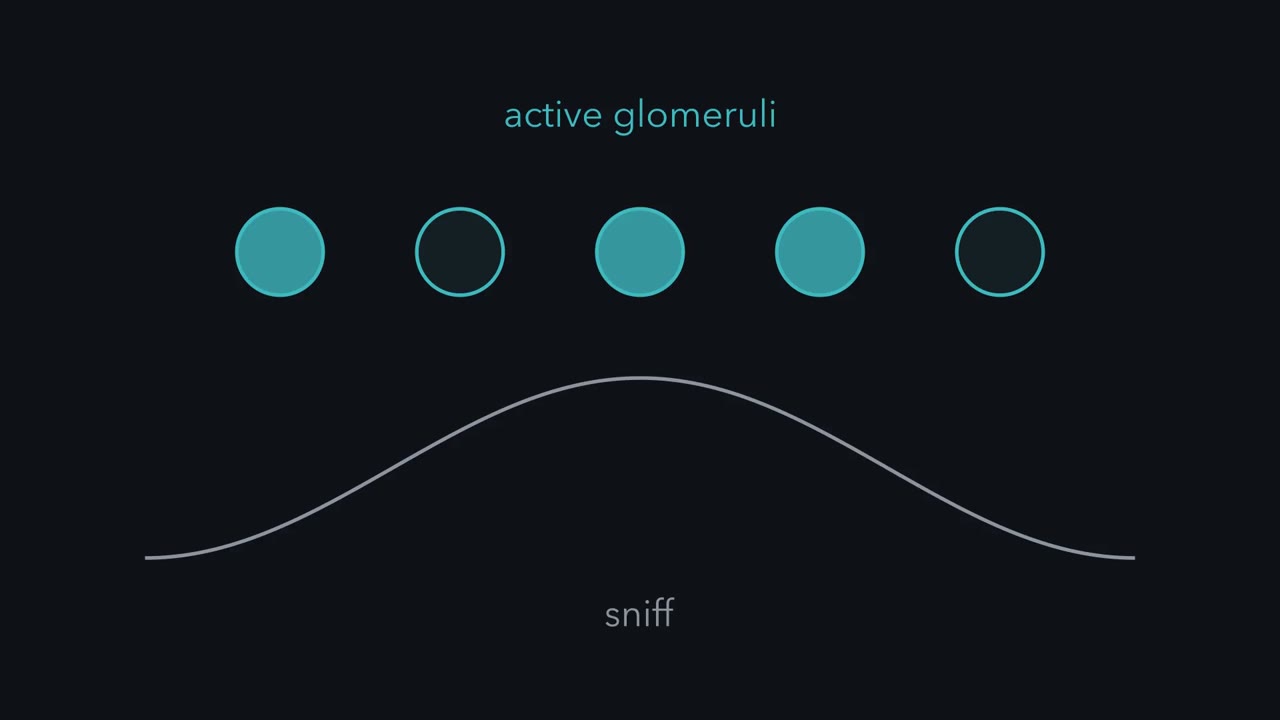
Your nose hands the brain an orderly map, and the cortex scatters it. So what does the cortex keep? A smell starts with molecules binding receptors in the nose. Each receptor neuron makes one type of receptor. Neurons of one type send their axons to the same small knot of synapses in the bulb. That knot is a glomerulus. In mice, each receptor type usually has two glomeruli in each bulb. An odour binds some receptor types and not others. So it activates a set of glomeruli. Here is a question. Raise the concentration of the same odour. Do the same glomeruli light, or more of them?
Usually more. Higher concentrations often recruit extra glomeruli, though this can level off. So the set is characteristic at a given concentration. The layout is a map of receptor identity. Where glomerulus sits tells you which receptor feeds it. The layout is only coarsely related to chemistry. So it is not a fine chemical map. Mitral and tufted cells carry the pattern out. Each sends one main dendrite into one glomerulus. Cells that send their dendrites into the same glomerulus are called sister cells. They share one input. Inhibitory interneurons sit around them. Periglomerular cells work in the glomerular layer. Granule cells have no axons.
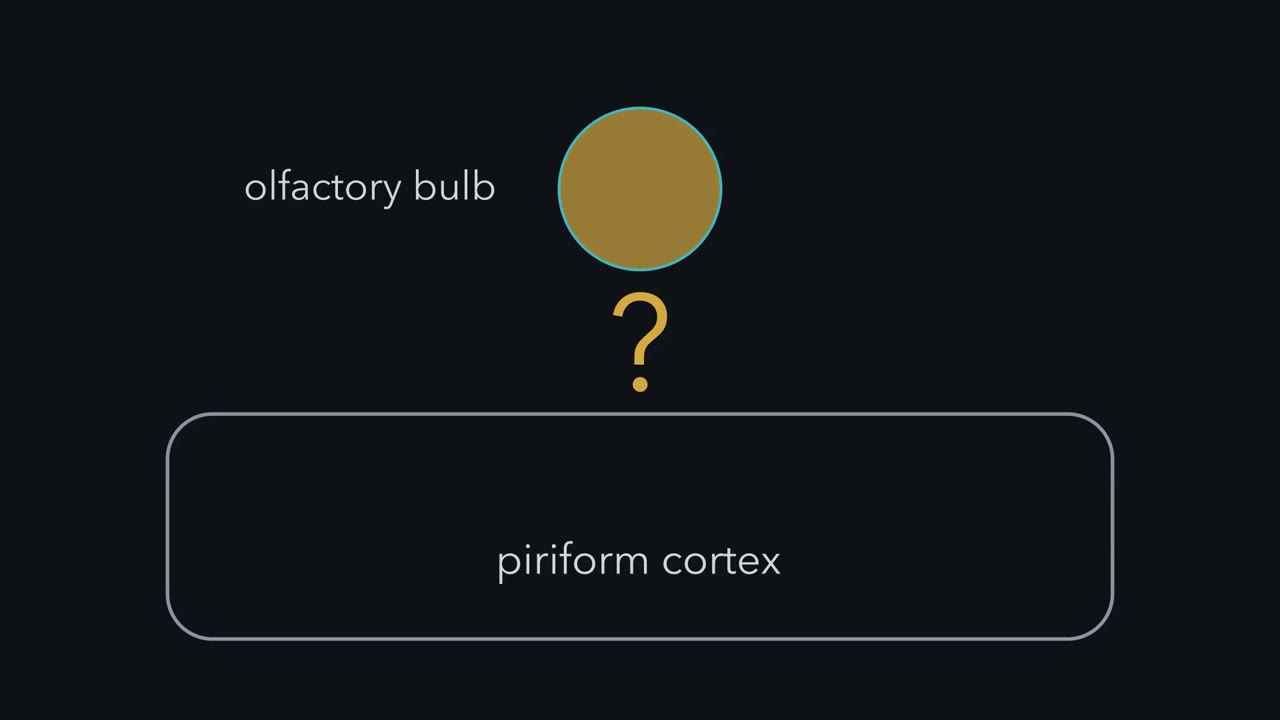
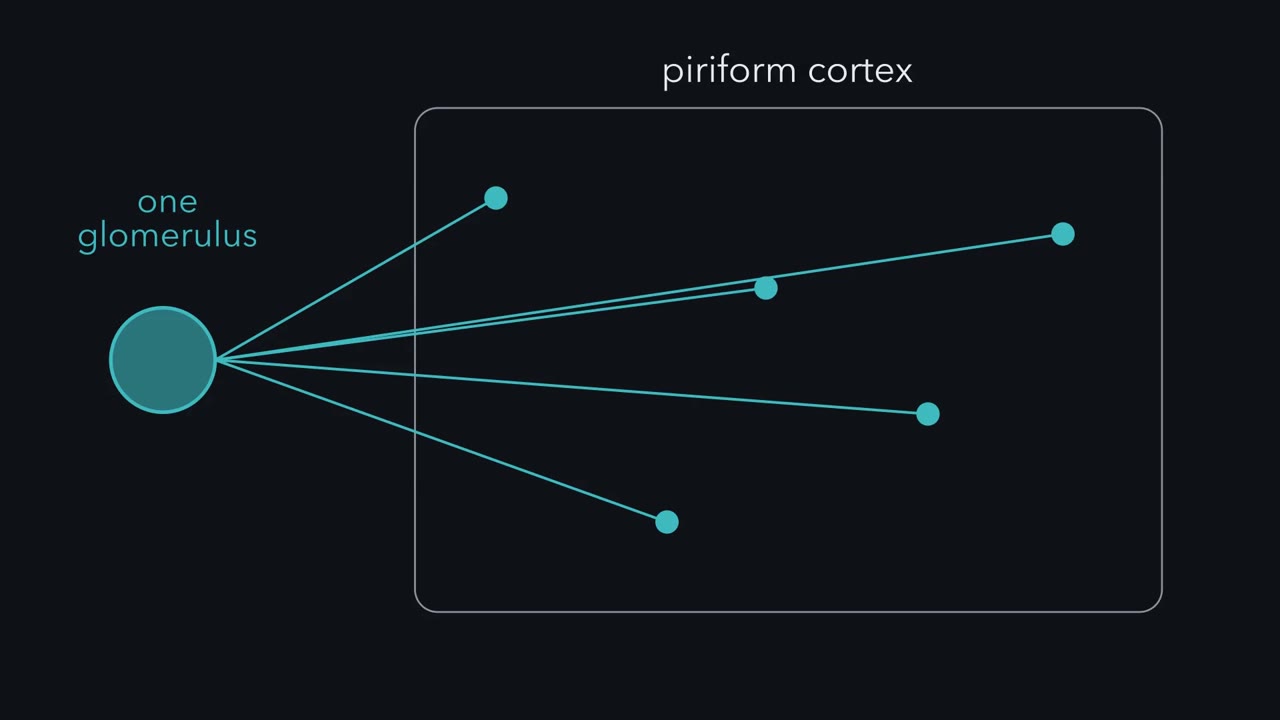
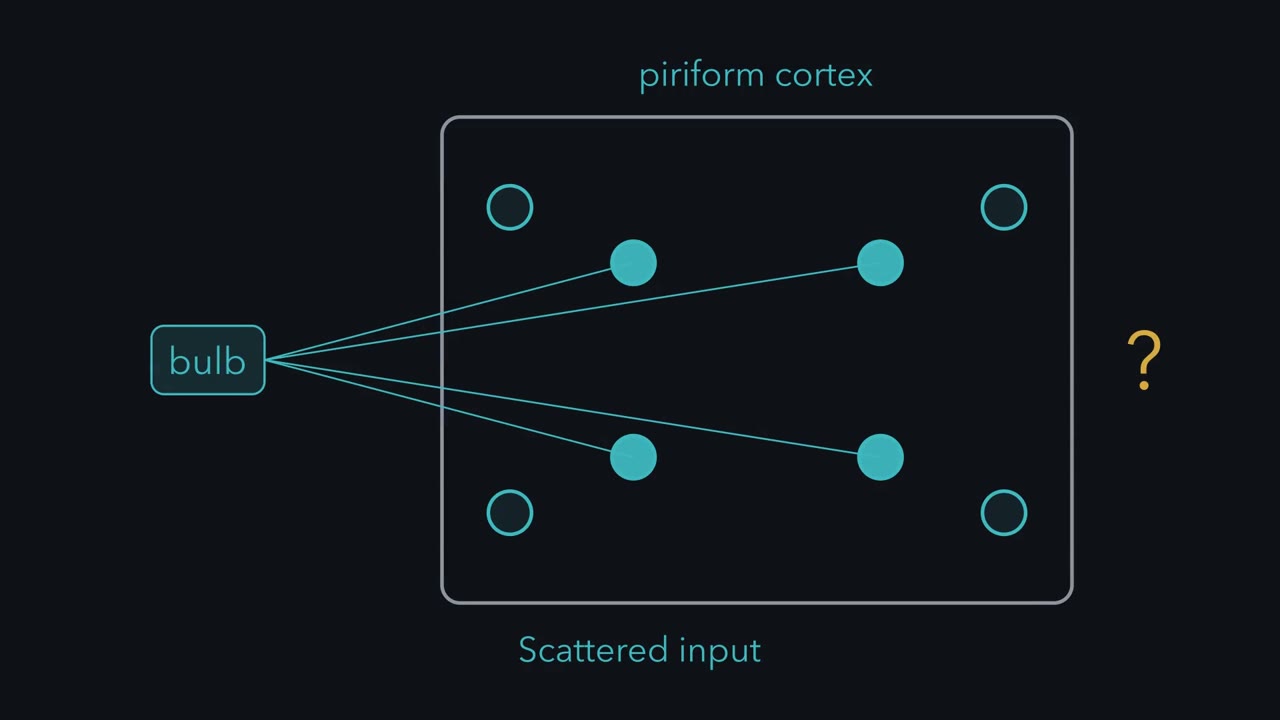
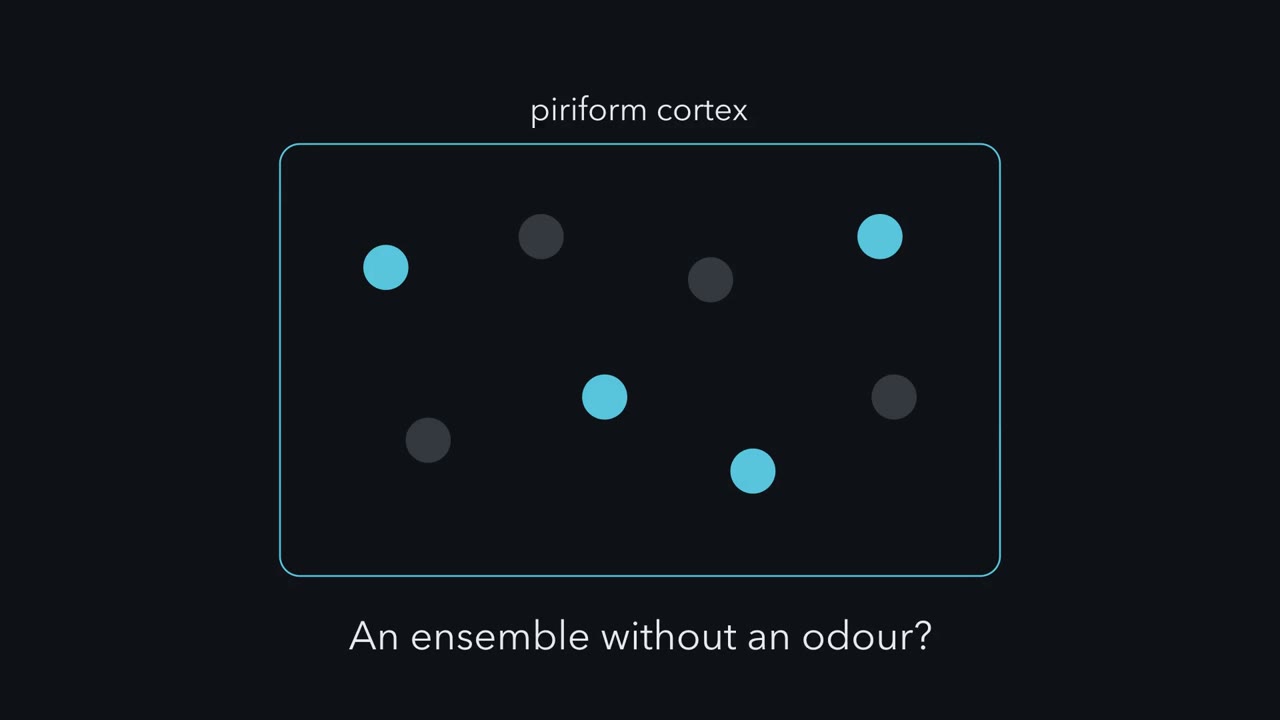
Mitral and tufted axons run on to piriform cortex, the main olfactory area of the cortex. There is no relay in the thalamus. There the tidy map seems to vanish. One odour switches on neurons scattered across the cortex. That raises four puzzles. Does the output of one glomerulus stay together in the cortex? If it spreads out, how can the cortex still carry which odours are chemically alike? Can a scattered pattern acquire learned meaning? And does an odour's pattern stay put from week to week? One idea answers the second puzzle. Where a piriform neuron sits tells you little about which odours excite it. In our simple model, its glomerular inputs and its threshold decide its response.
Real tuning also depends on input strengths, timing and the cortex's own network. Each neuron gets input from several scattered glomeruli. It fires only when enough are active together. So the more glomeruli two odours share, the more neurons they share, wherever those neurons sit. With sparse responses, random wiring like this keeps the order of similarity on average. But related odours come out less alike than in the bulb. Anything tighter is not explained by this model. The cortex's own network and experience are the candidates. So the bulb sends a map of which receptors are active. The rest of this story is what the cortex keeps of it.
The bulb hands piriform cortex a tidy map of receptor identity, and the cortex scatters it. How can a scattered pattern still carry which odours are alike, and come to mean something?
Continue in the lesson: From Glomeruli to Piriform Cortex →
3:21 · Free, with captions and a transcript. The lesson has the full text, the questions and the sources.
More films from this lesson
How this film was made. Narration: an AI narrator voice (Kokoro, af_heart) reading narration written from this lesson's text. Animation: AI-generated in code (Manim) by Claude, a schematic with no drawn molecular structures. Captions come from the narration script. See something wrong? Report it.