Strong Nav1.8 Block, Still Firing
Read the transcript of “Strong Nav1.8 Block, Still Firing”
Film transcript: Strong Nav1.8 Block, Still Firing
A drug leaves only a few percent of a channel's current. Does the neuron go quiet? Nav1.7 was the obvious target, and the compound tested here has not delivered. One selective blocker was far more potent on half-inactivated channels than on resting ones. Nearly a thousandfold, produced by voltage alone. That is state dependence of block. It is not selectivity between channel subtypes. In the summarized pharmacology the compound was only elevenfold selective over another subtype. In a trial in painful diabetic neuropathy it did not significantly improve weekly average pain. The healthy-volunteer study's authors proposed insufficient dose and inadequate access to the central nervous system.
Those are candidate causes. Nav1.8 went differently. Suzetrigine binds a site away from the pore and stabilizes the closed state. It was highly selective across the human subtypes tested in a recombinant panel. Selectivity in a recombinant panel is not tissue selectivity in a patient. Two surgical trials, after abdominoplasty and after bunionectomy, summed each patient's pain relief over 48 hours. Suzetrigine beat placebo in both. Neither trial demonstrated superiority over the opioid comparator. A failed superiority test is not equivalence, and one trial's comparator analysis ran the other way. Approval in the United States followed in January 2025, for moderate-to-severe acute pain in adults.
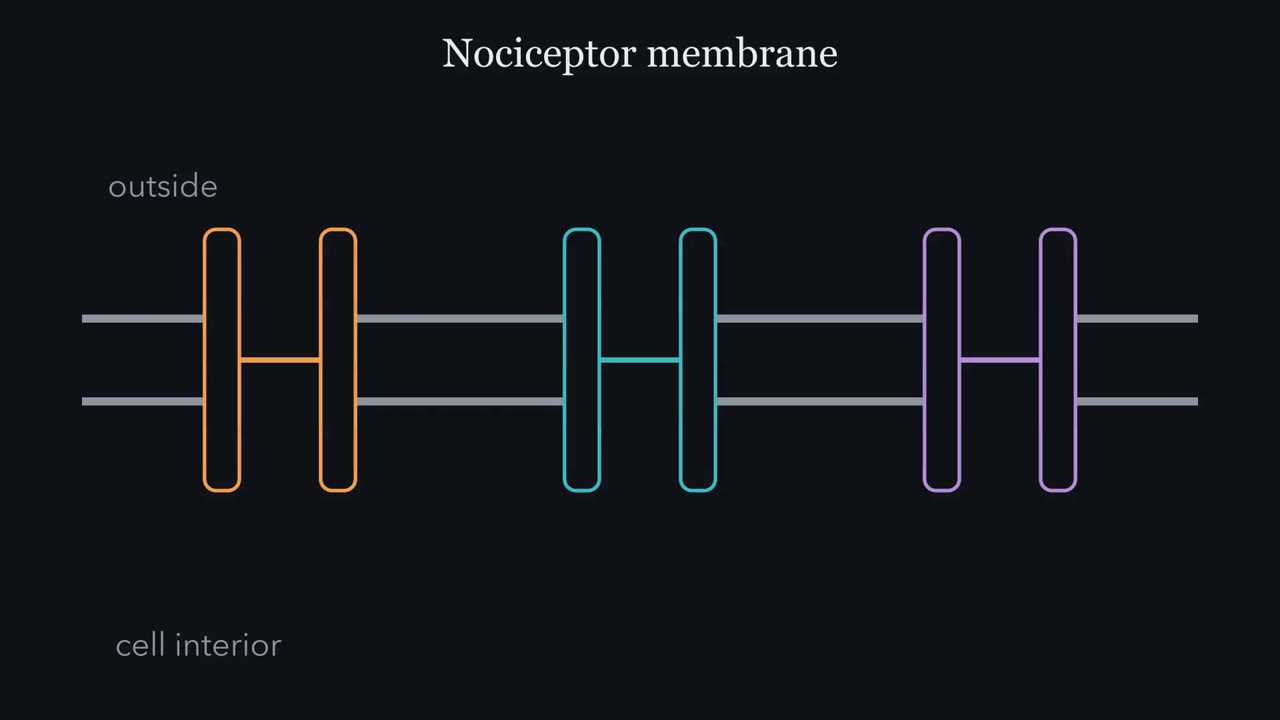
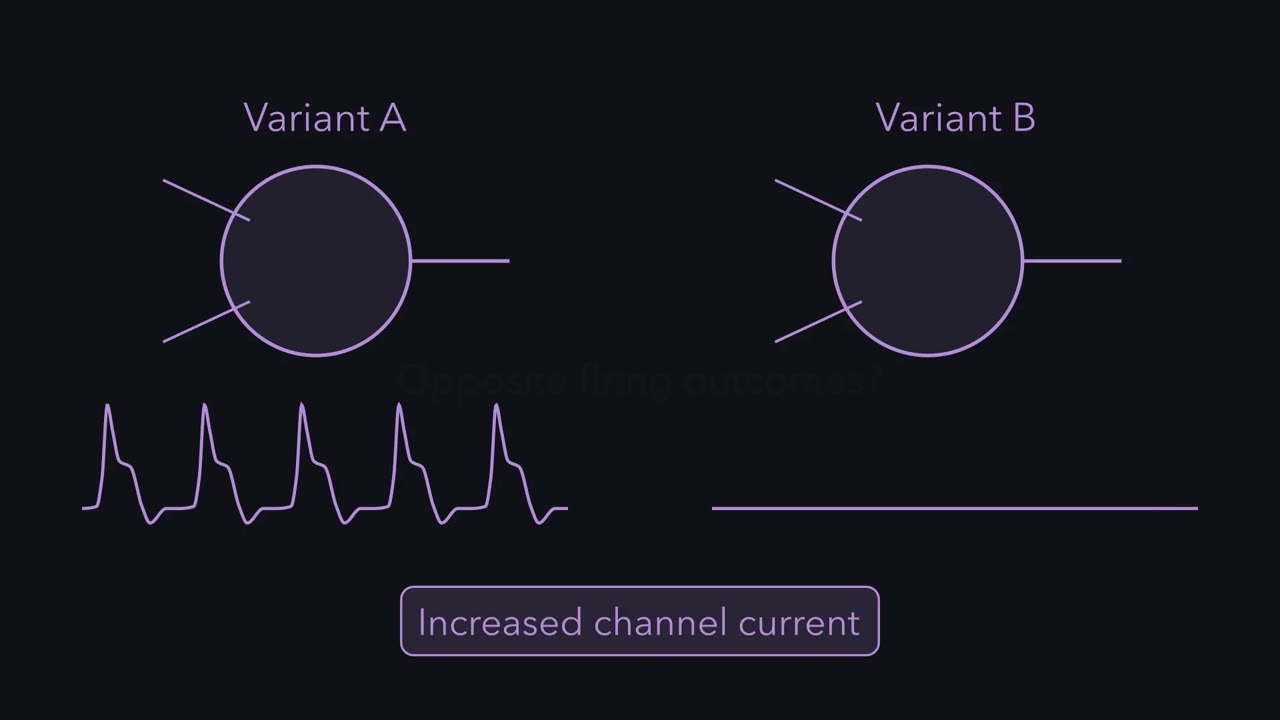
The two drug results came from different pain conditions. They are not a comparison of targets. Now the channel itself. A one-to-one model was fitted to the recombinant current at body temperature. The temperature of the rig changes that fitted number by more than fivefold. At a bath leaving only a few percent of that recombinant current, what does a human neuron do?
Generally, it keeps firing. During depolarizing current injection, most tested neurons kept firing repetitively. Firing was generally reduced, but not eliminated. The peak and the shoulder came down. Threshold and the initial upstroke were largely spared. The voltage-clamp analysis suggested two reasons. In many of these neurons the Nav1.8 current is very large. Near-complete block still leaves nanoampere-level current. And the other channel, Nav1.7, dominates the initial spikes in these recordings. So a channel-current calculation is not neuronal silence. And it is certainly not a dose.
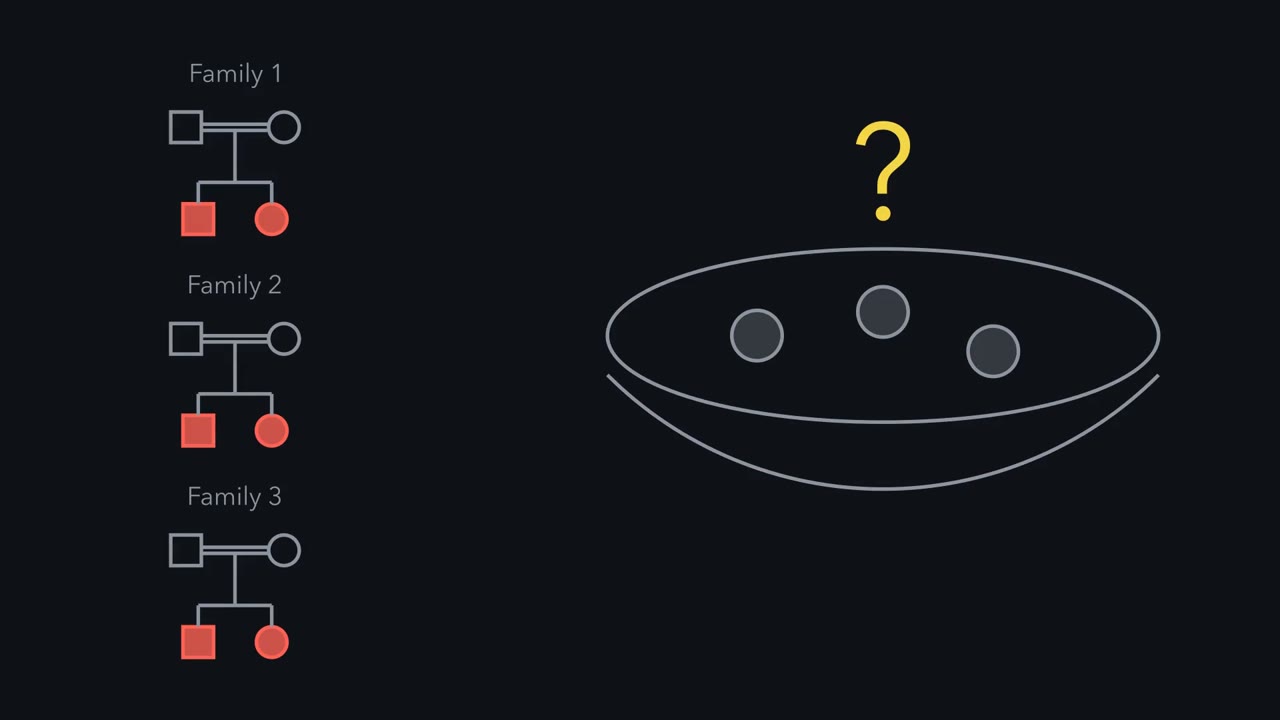
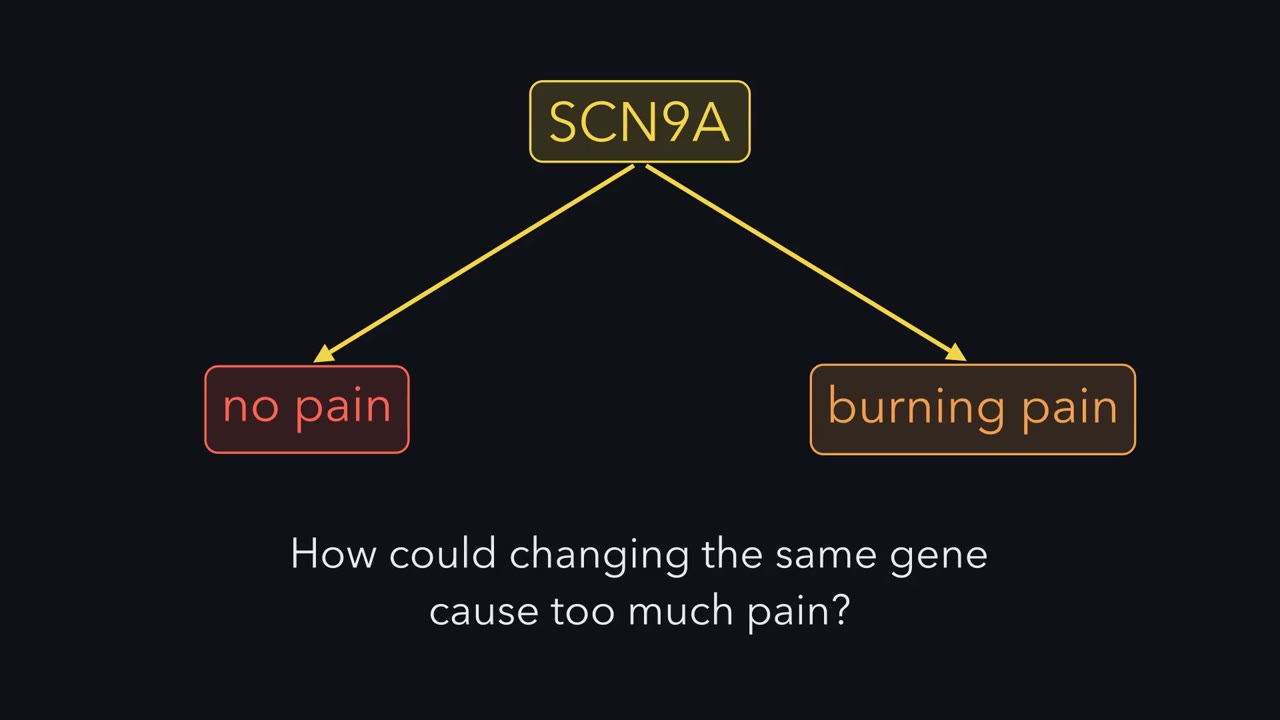
Three families in which nobody could feel pain pointed to one sodium channel. Twenty years later, the drug that reached patients blocks a different one.
Continue in the lesson: Nociceptors and the Sodium Channels of Pain →
3:11 · Free, with captions and a transcript. The lesson has the full text, the questions and the sources.
More films from this lesson
How this film was made. Narration: an AI narrator voice (Kokoro, af_heart) reading narration written from this lesson's text. Animation: AI-generated in code (Manim) by Claude, a schematic with no drawn molecular structures. Captions come from the narration script. See something wrong? Report it.