Films · Developmental Neuroscience
When the Engine Breaks
Read the transcript of “When the Engine Breaks”
Film transcript: When the Engine Breaks
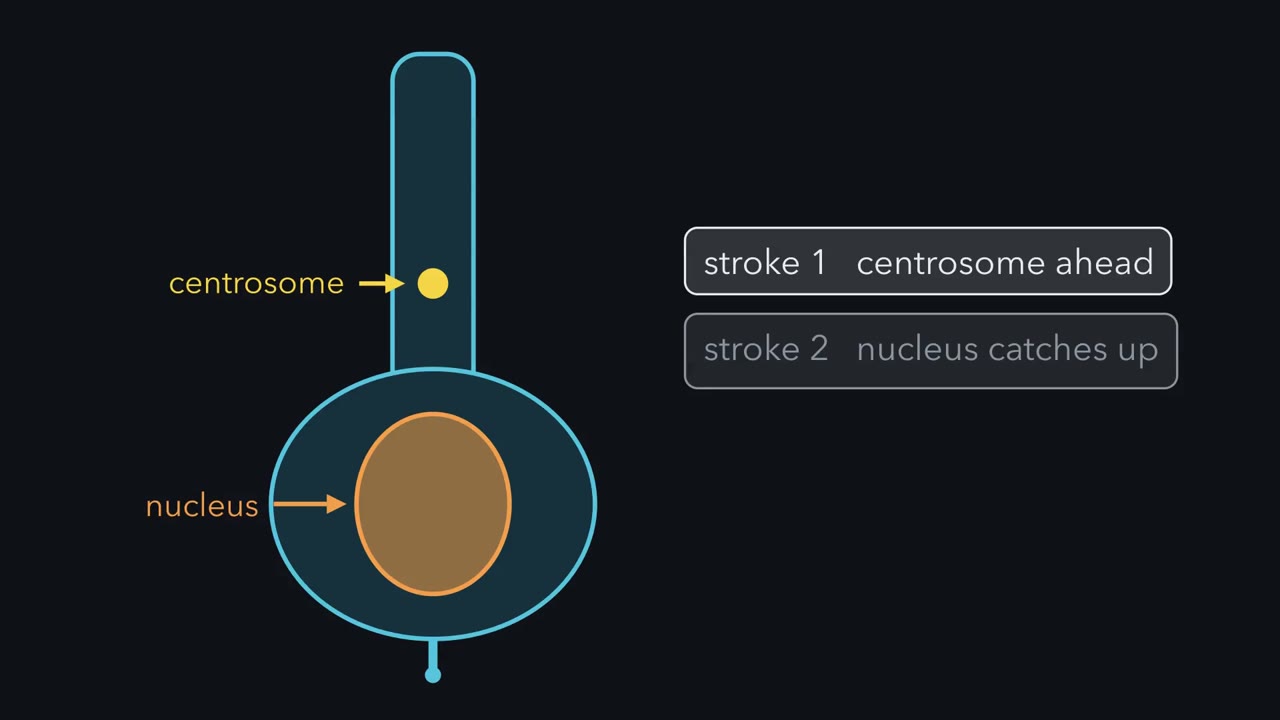
What happens to a brain when the nucleus cannot catch up? Disrupt that machinery, and neurons can stall short of their layers. One result can be lissencephaly. The cortex has reduced or absent folding. In the classic form it is also thick and poorly layered. Losing one copy of LIS1 is enough to cause it. LIS1 is deleted in Miller-Dieker lissencephaly. That deletion also removes neighbouring genes, which contribute to a more severe syndrome. A mouse cortex is smooth to begin with. So in mice you look at migration speed and where neurons end up. A second gene, doublecortin, sits on the X chromosome. Its protein binds and stabilizes microtubules.
Boys with a mutation typically have lissencephaly. Now a girl carries one mutant copy. Each of her cells switches off one X at random. What would her cortex look like? She is a mosaic. Neurons using the normal copy migrate. Some using the mutant copy stall. The stalled neurons form a band of grey matter beneath the cortex. It is called double cortex.
A kinase called Cdk5 sits upstream. Its targets include doublecortin and a dynein regulator. Mice lacking it have disordered layers. The two-stroke climb is not the whole trip. In embryonic rat cortex, newborn neurons first move to the subventricular zone. There they become multipolar, with several short processes. They move slowly, change direction, and make little net progress for about a day or longer. Many then move back toward the ventricle for a time. Why some cells go back is not settled. Then they turn bipolar and begin the sustained climb to the cortical plate. Now the front goes first. LIS1 matters at this turn too. So one defect can stall cells at more than one step.
The two-stroke cycle explains one way migration can fail. When you film a migrating neuron, track the nucleus, not the tip.
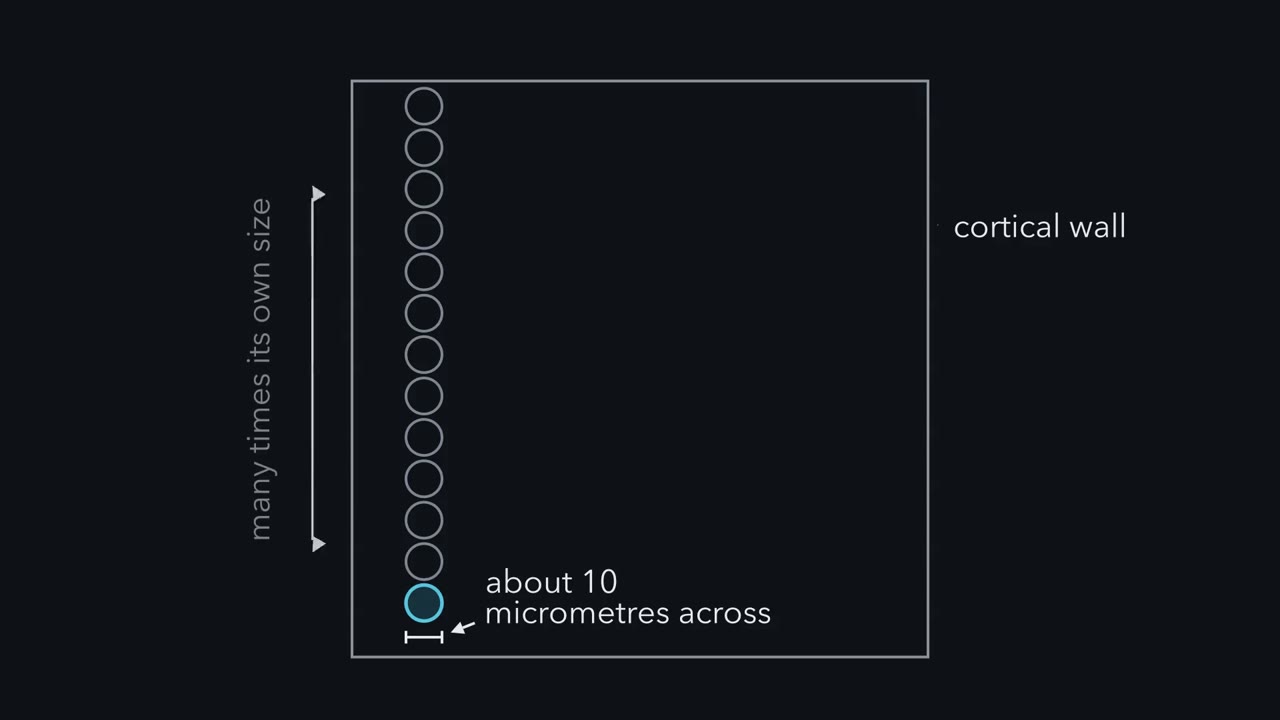
How does a newborn neuron cross a thick, crowded wall to reach its layer, and what brings its nucleus along?
Continue in the lesson: Radial Migration: Climbing the Glial Ladder →
2:36 · Free, with captions and a transcript. The lesson has the full text, the questions and the sources.
More films from this lesson
How this film was made. Narration: an AI narrator voice (Kokoro, af_heart) reading narration written from this lesson's text. Animation: AI-generated in code (Manim) by Claude, a schematic with no drawn molecular structures. Captions come from the narration script. See something wrong? Report it.