Films · Developmental Neuroscience
A Code in Two Classes
Read the transcript of “A Code in Two Classes”
Film transcript: A Code in Two Classes
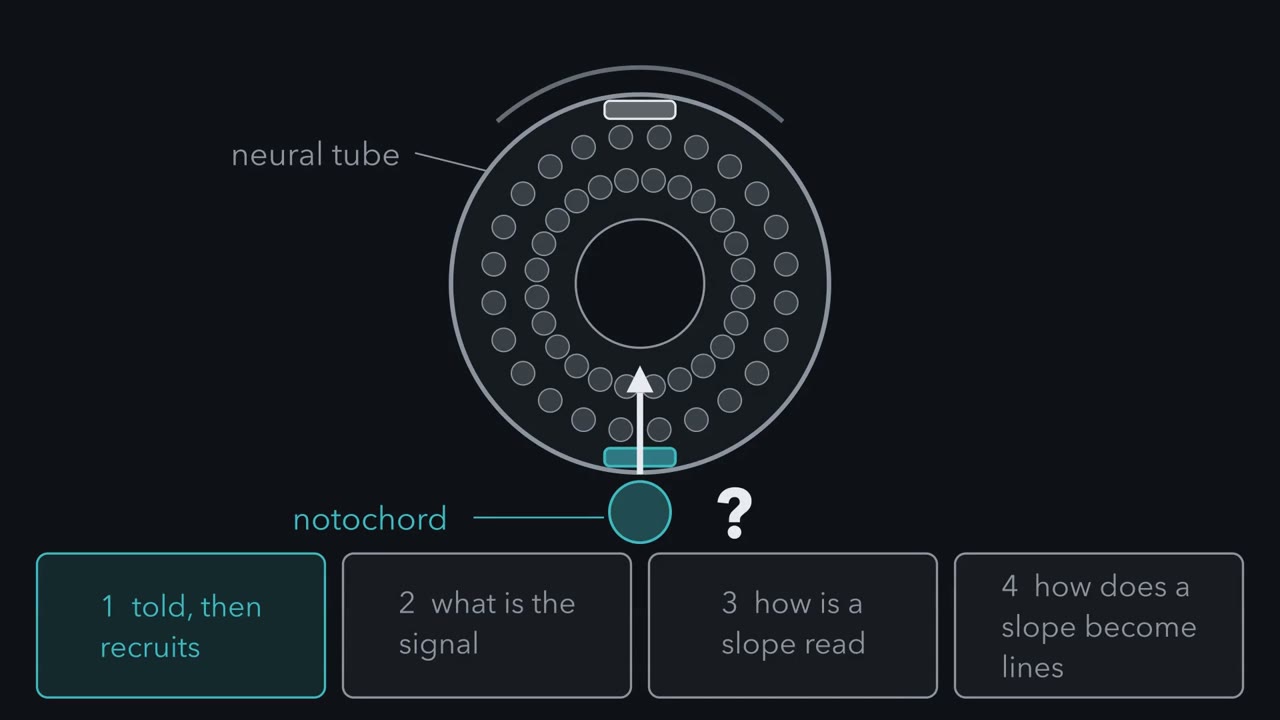
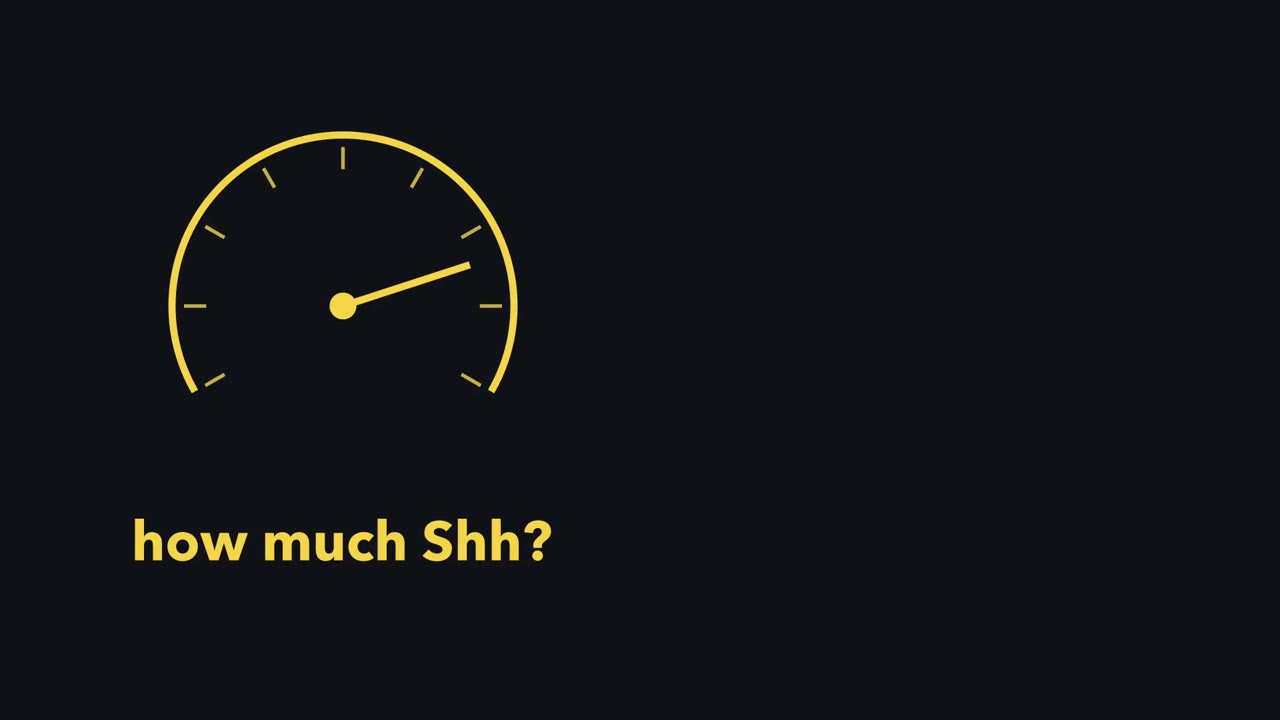
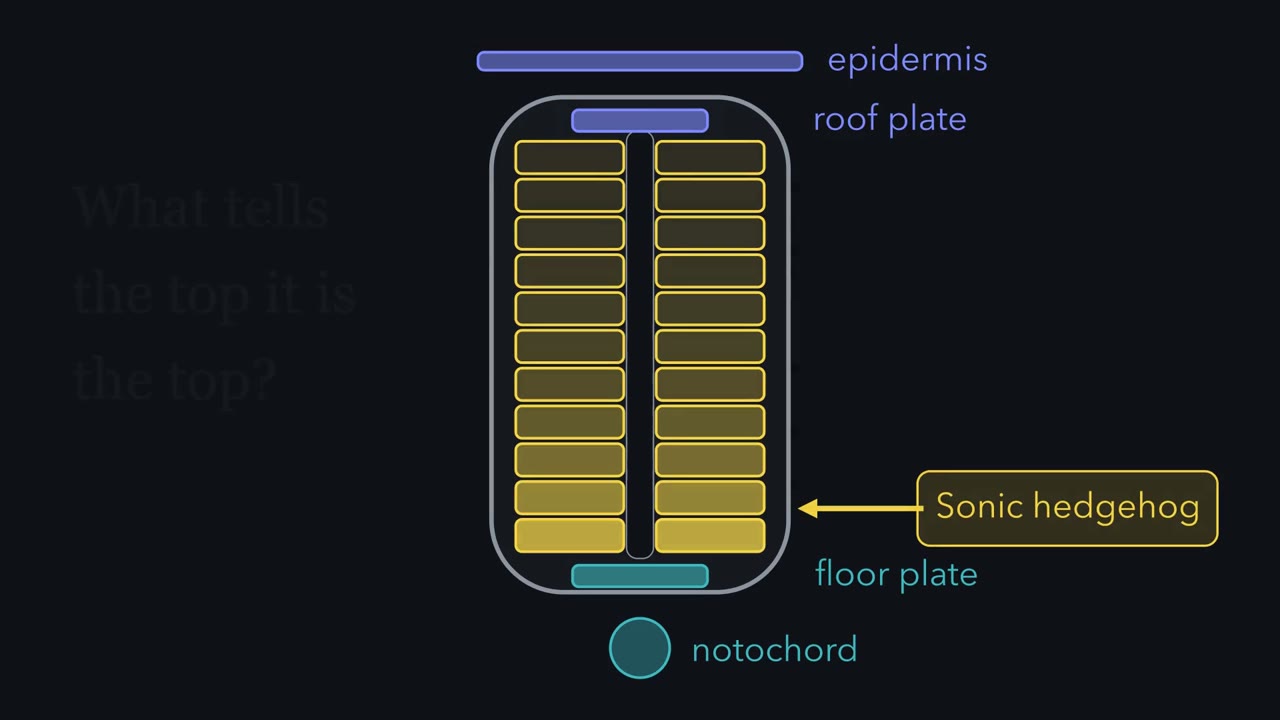
Sonic hedgehog falls off with distance from the floor plate. How does a cell turn how much into which neuron? A signal that spreads from a source and gives different instructions at different concentrations is called a morphogen. The answer is written in transcription factors, mostly homeodomain proteins, which set cell identity across the body. In 2000, James Briscoe, Thomas Jessell and colleagues sorted them in chick. They asked one question. Does Sonic hedgehog switch the factor off, or switch it on? Class I factors are switched off by Sonic hedgehog. Each is expressed above a certain height and lost below it. Examples are Pax7, Dbx1 and Dbx2, Irx3, and Pax6.
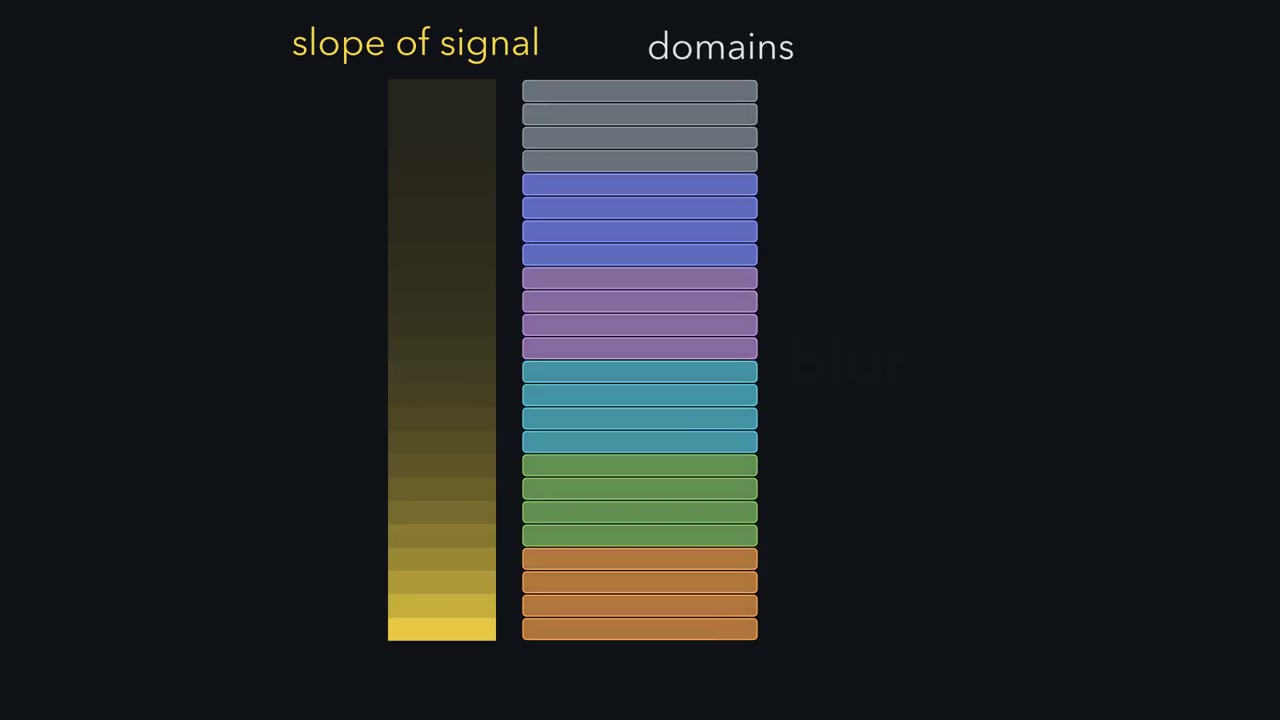
The more sensitive the factor, the higher its border sits. Pax7 is lost at low levels, so it stays in the dorsal half. Class II factors are switched on by Sonic hedgehog. They are expressed only below a certain height. Nkx6.1 is one. Nkx2.2 needs the most signal, so it sits beside the floor plate. The names are easy to mix up. Class I proteins are the ones Sonic hedgehog represses. Each border sits at a different height, Dbx1's among them. So every stretch between two borders carries its own combination of factors: the cell's address. One more factor completes it. Olig2, a different kind of protein that Sonic hedgehog also induces, marks the motor neuron progenitors.
Predict. Compare the p3 row with the pMN row above it. Which markers differ? pMN lacks Nkx2.2, the factor that needs the most signal. It has Olig2, and a little Pax6. That combination marks the motor neuron progenitors, the domain called pMN. Now compare pMN with p2 above it. p2 lacks Olig2, and has Irx3. These rows compare neighbouring domains. They do not show a cell changing as it moves.
Notice the pattern. At each border, a pair of factors trades places. That pairing returns in chapter five. Now fill the five slots. p0, p1 and p2 make V0, V1 and V2 interneurons. pMN makes motor neurons. p3, beside the floor plate, makes V3 interneurons. You do not need every name. Three markers serve as landmarks: Pax7, Olig2, and Nkx2.2. The takeaway: a level of signal becomes an address, written as a combination of factors.
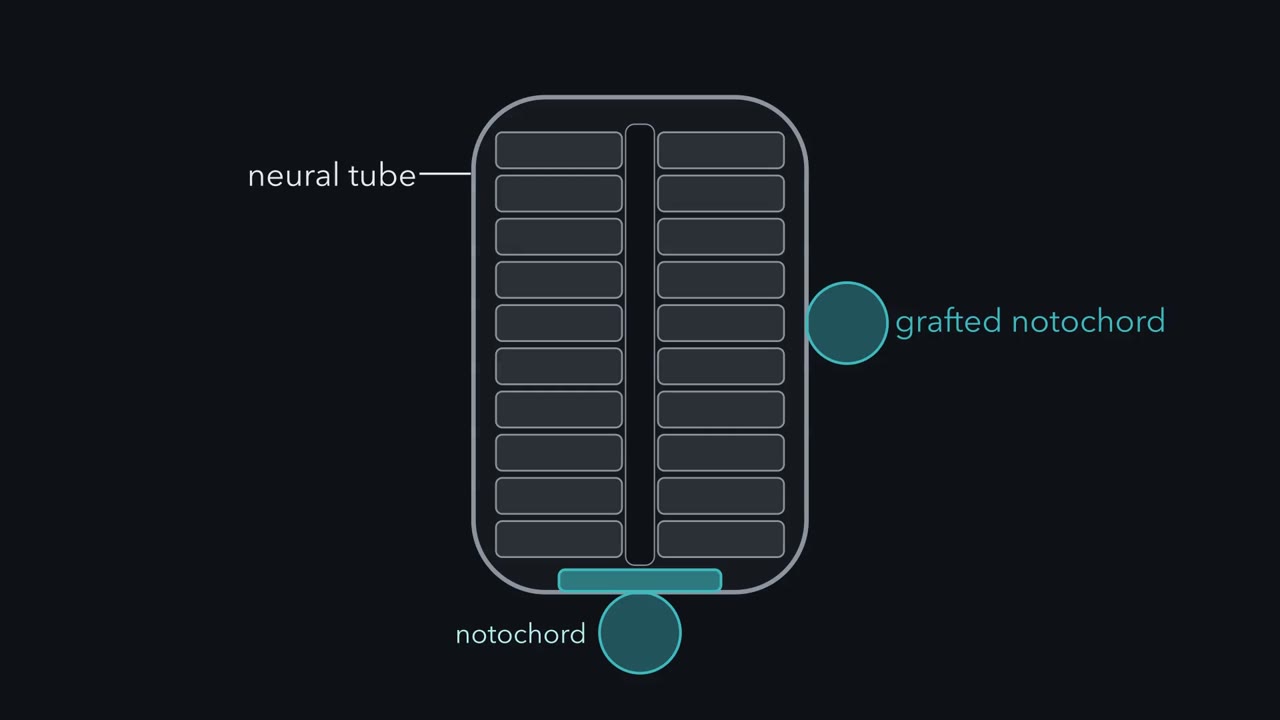
Graft a second notochord beside a chick neural tube, and the tube grows a second floor.
Continue in the lesson: Ventral to Dorsal: Sonic Hedgehog and BMP in the Neural Tube →
3:07 · Free, with captions and a transcript. The lesson has the full text, the questions and the sources.
More films from this lesson
How this film was made. Narration: an AI narrator voice (Kokoro, af_heart) reading narration written from this lesson's text. Animation: AI-generated in code (Manim) by Claude, a schematic with no drawn molecular structures. Captions come from the narration script. See something wrong? Report it.