Films · Developmental Neuroscience
Born Outside
Read the transcript of “Born Outside”
Film transcript: Born Outside
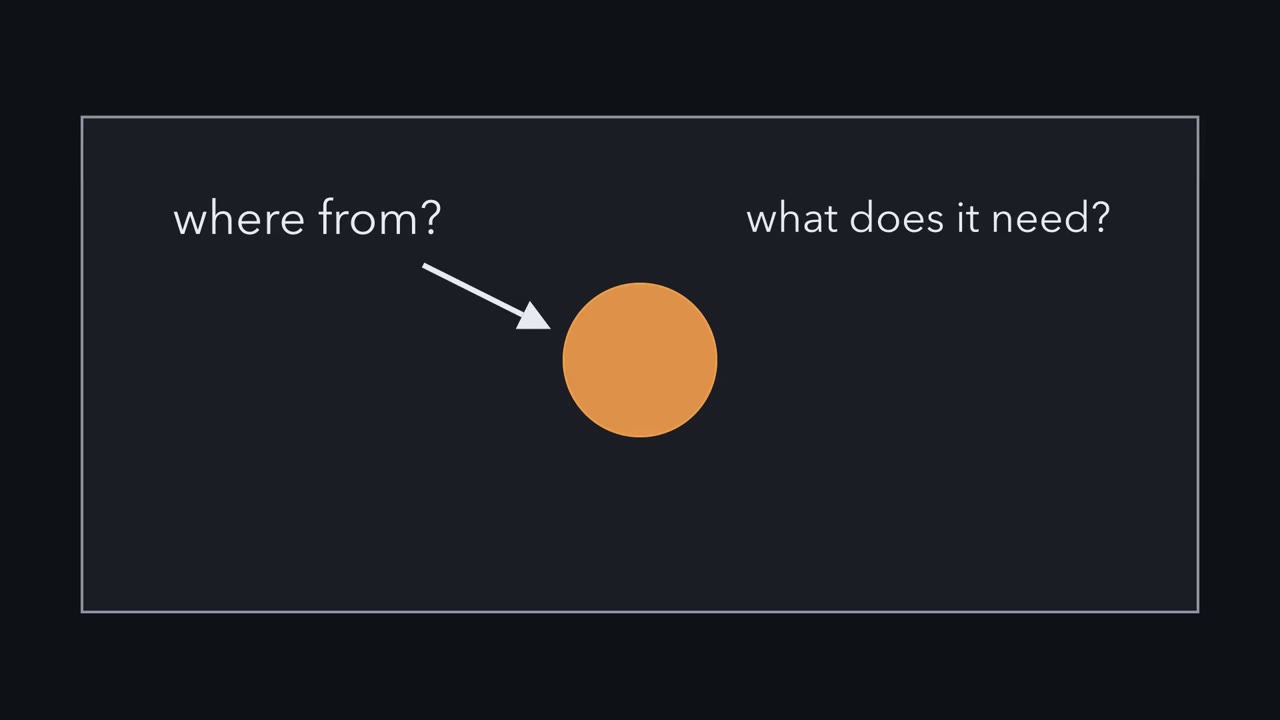
The cerebral cortex needs two kinds of neuron. Some excite their neighbours. Others inhibit them. In rodents, roughly a fifth of cortical neurons are inhibitory interneurons. Yet the cortex's own wall makes the excitatory kind. These pyramidal neurons climb straight out along radial glial fibres, long struts that span the wall. So where do the inhibitory neurons come from?
Start with a map. The dorsal part of the embryonic forebrain, the pallium, forms the cortex. Its ventral part, the subpallium, bulges into the ventricle as three swellings. These are the lateral, medial and caudal ganglionic eminences. Despite the name, they are not ganglia. They are temporary germinal zones, packed with dividing progenitors. Pallial progenitors make neurons that release glutamate. Subpallial progenitors make neurons that release GABA, the main inhibitory transmitter. In rodents, most cortical interneurons are born in the medial and caudal eminences. Then they travel sideways into the cortex. Moving parallel to the brain surface is called tangential migration.
Here is the idea to carry through this lesson. Born outside the cortex, steered by what the cell can read. At the turns studied so far, the road holds a cue. The travelling cell carries what answers it. So a fault can sit in the cell, which cannot answer. Or it can sit in the road, which lacks the cue. Swapping tissue between normal and mutant animals tells you which. And in the cortex, the lane's chemokine signal helps keep a cell in the lane. Hold on to that. The next chapters test it. One limit first. These results come from mice and rats. In humans, the eminences are seen as the main source too. But cortical progenitors also make some inhibitory neurons.
Most cortical interneurons start outside the cortex. What they can read helps decide where they go.
In a mouse embryo, most of the neurons that will inhibit the cortex are born outside it.
Continue in the lesson: Tangential Migration: Interneurons and the Long Way Round →
2:34 · Free, with captions and a transcript. The lesson has the full text, the questions and the sources.
More films from this lesson
How this film was made. Narration: an AI narrator voice (Kokoro, af_heart) reading narration written from this lesson's text. Animation: AI-generated in code (Manim) by Claude, a schematic with no drawn molecular structures. Captions come from the narration script. See something wrong? Report it.