Films · Developmental Neuroscience
Two Jobs, One Division
Read the transcript of “Two Jobs, One Division”
Film transcript: Two Jobs, One Division
A stem cell has two jobs. It must stay a stem cell, and it must make cells that differentiate. How can one division do both? In a symmetric division, the daughters are alike. Two progenitors enlarge the pool. Two differentiating cells spend it. In an asymmetric division, the daughters take different fates. Often one stays a progenitor, and the other moves toward a fate. Asymmetry can be built from inside. The mother gathers a protein on one side of its cortex. That protein is called a determinant. The mother lines its spindle up, so only one daughter inherits it. it can come from outside. Only one daughter stays touching a niche, cells that signal it to remain a stem cell.
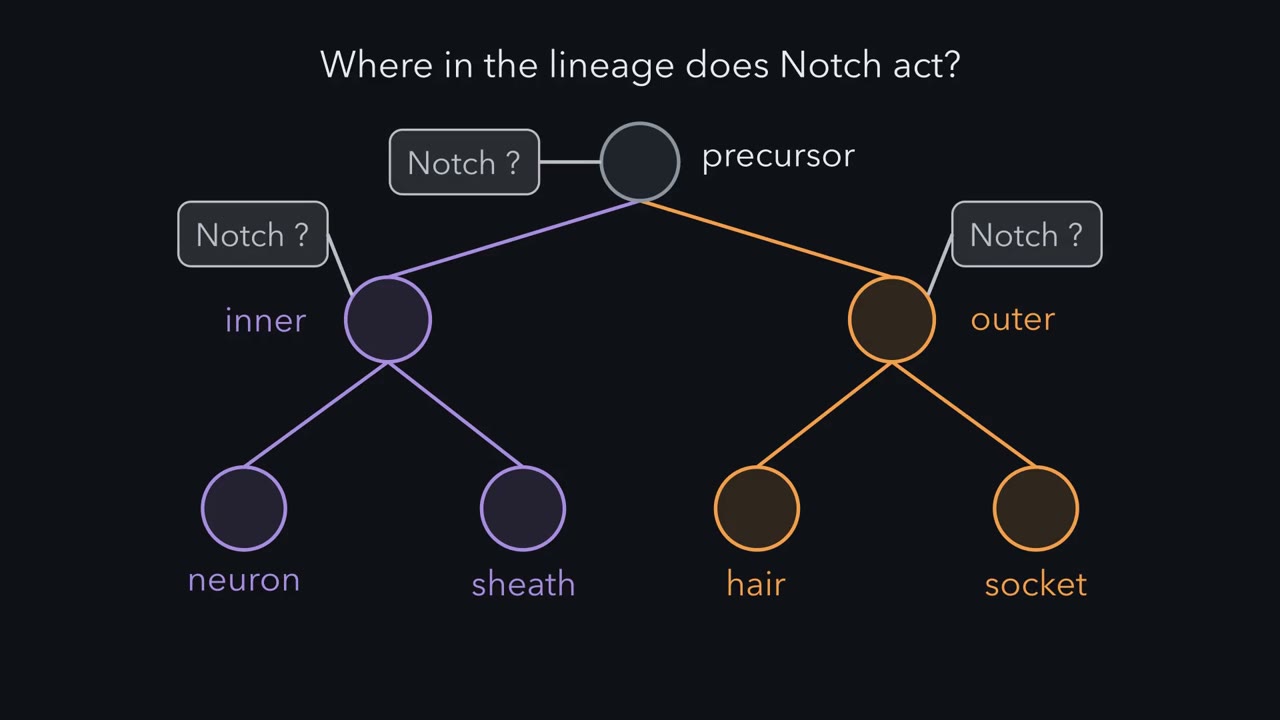
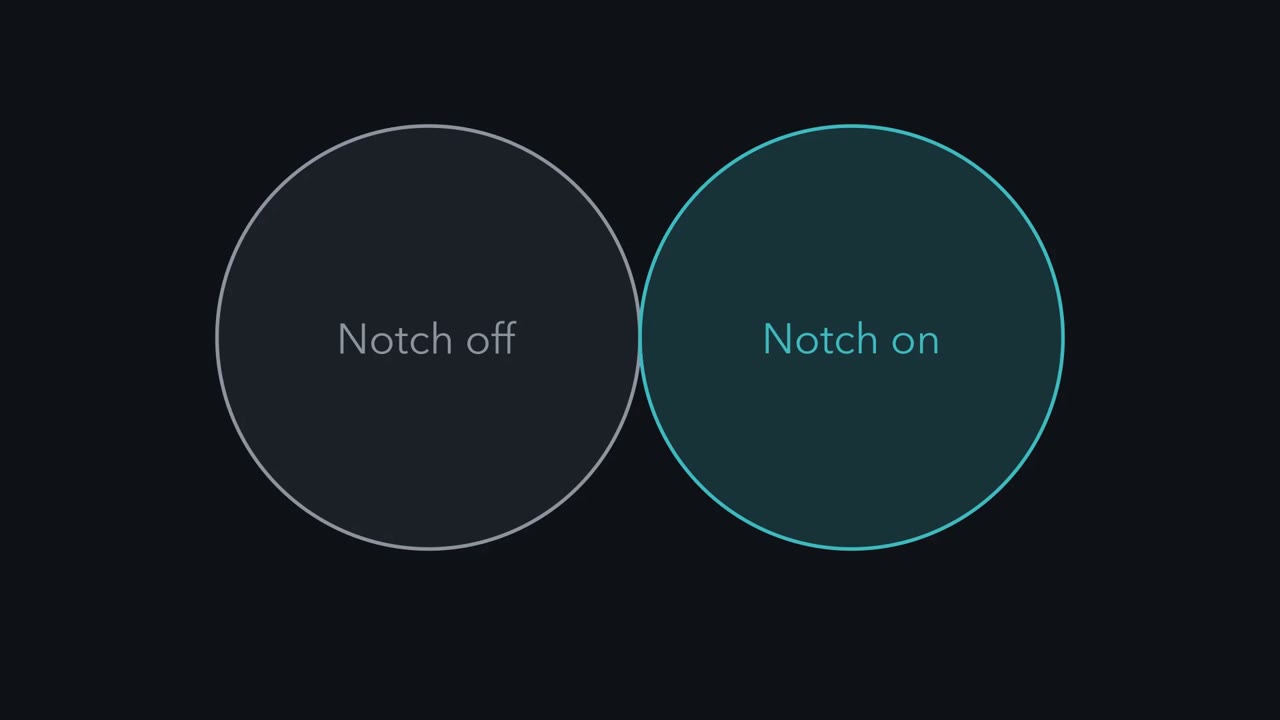
Our first map is a fly bristle, a small sense organ of four cells. neuron, a sheath cell that wraps it, and two outer cells that build the hair and socket. In the classic scheme, all four come from one sensory organ precursor in three divisions. The precursor makes an outer precursor and an inner precursor. The outer one makes the hair cell and the socket cell. The inner one makes the neuron and the sheath cell. At each division, one sister hears a signal called Notch, and the other does not. Which is which? Our second map is a neuroblast, a stem cell of the fly's central nervous system. In most neuroblasts, each division is unequal. The large top daughter stays a neuroblast.
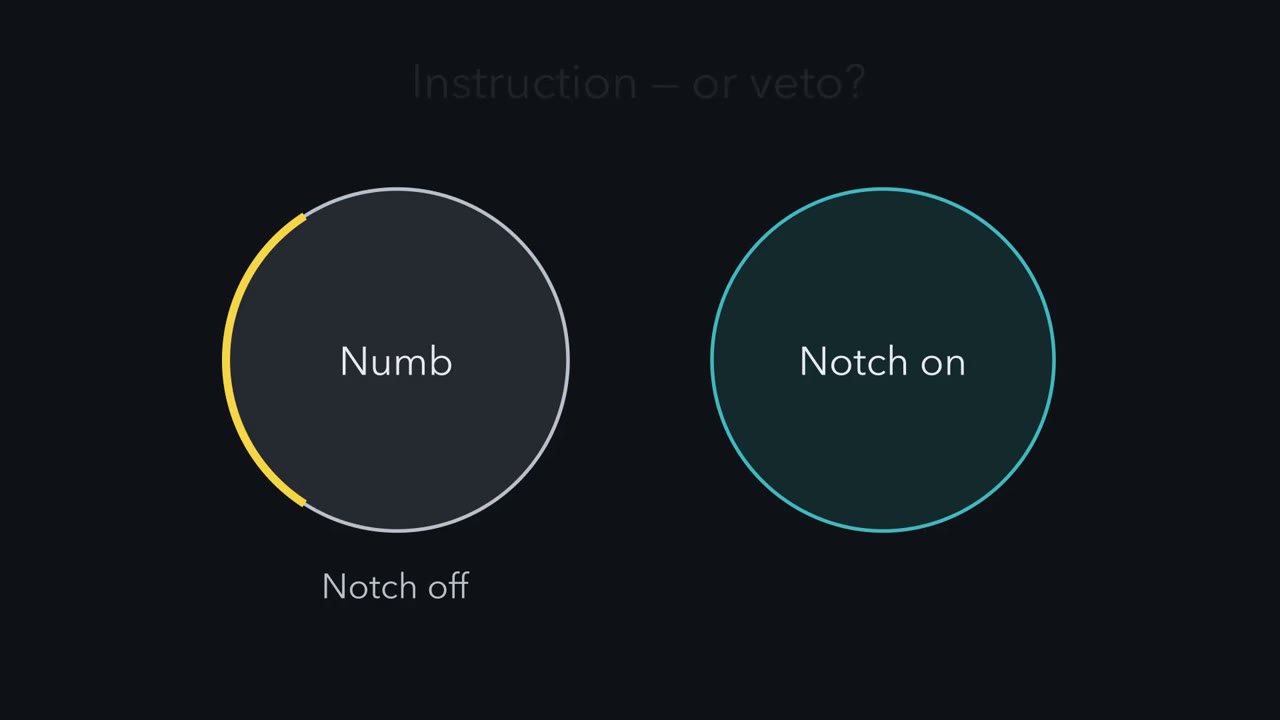
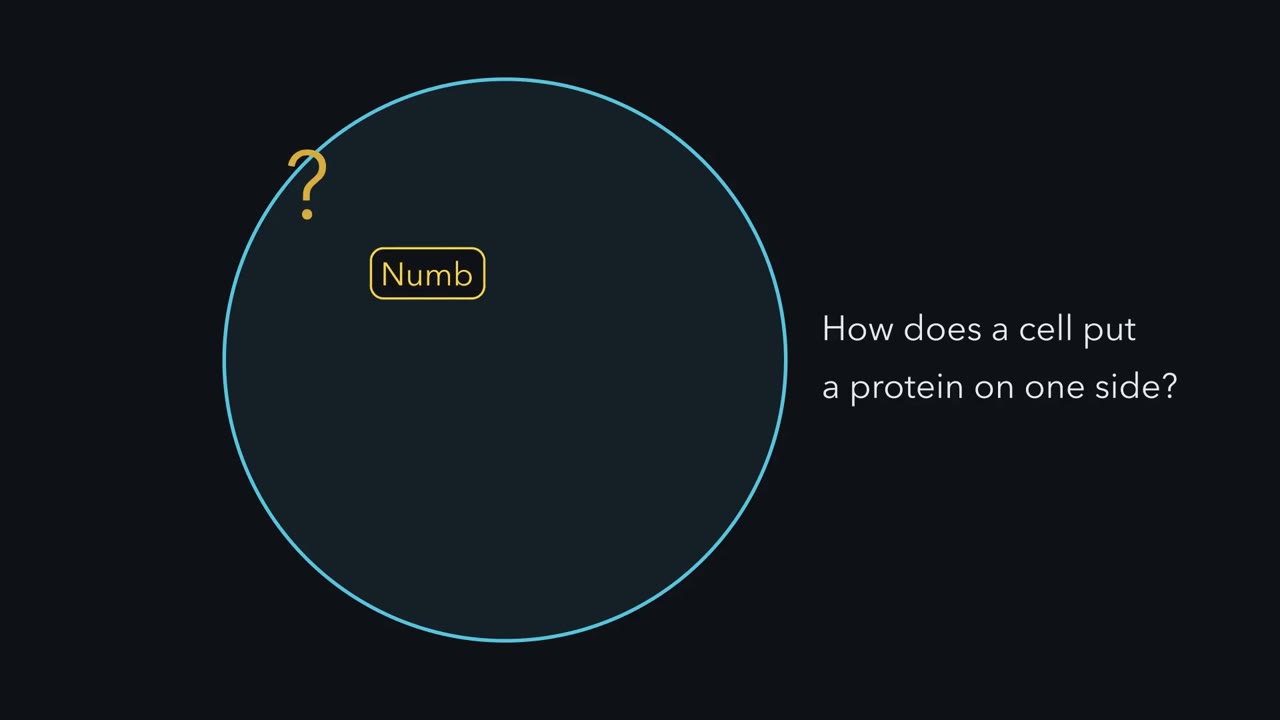
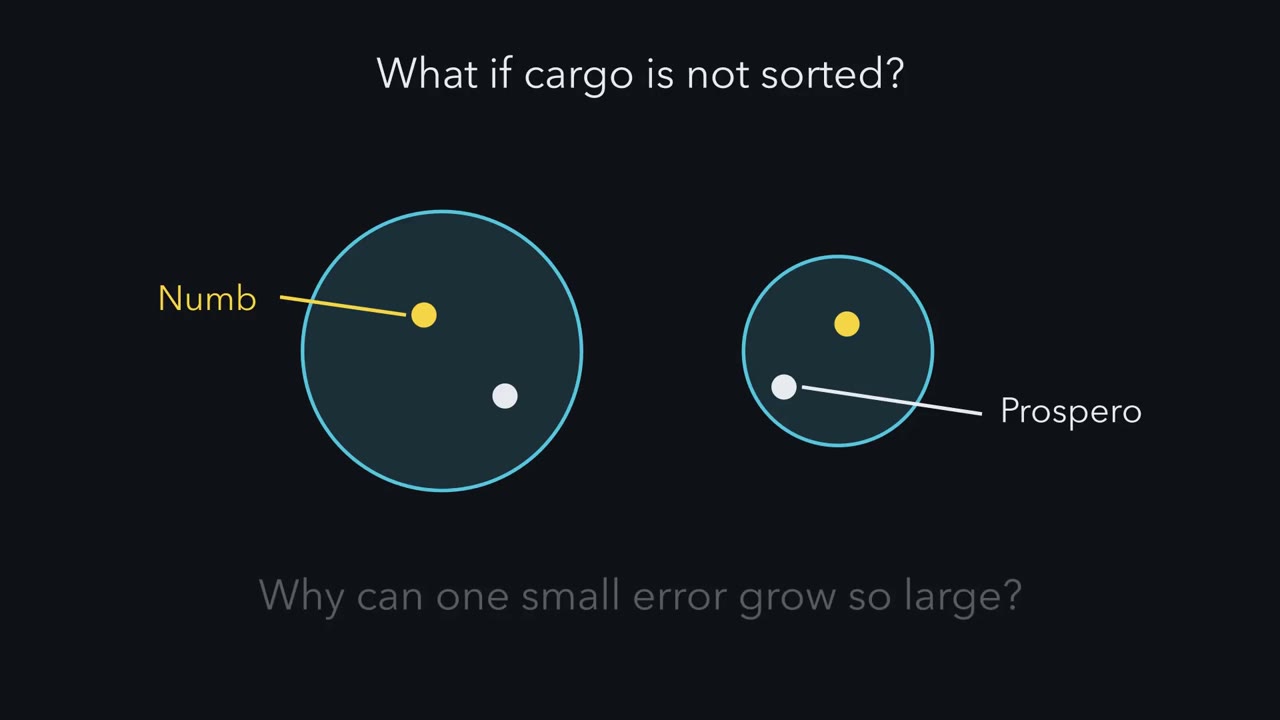
The small bottom daughter is a ganglion mother cell. It divides once more, into two neurons or glia. Division after division, the neuroblast stays one neuroblast. Each division adds one ganglion mother cell, which divides once. These maps raise four puzzles. How can two sisters born side by side differ? What does the inherited protein do? How does the mother put it on one side? And what happens when the sorting fails? Here is the idea to carry. The mother puts a protein called Numb on one side, and aims its spindle at it. The daughter that inherits Numb cannot hear Notch. So it takes the Notch-off fate of that division. This holds where a Notch signal is on offer.
One division can do both jobs, if the mother marks a side and only one daughter inherits it.
A stem cell has to keep making new cells and also keep itself. How does one cell divide into two sisters that are different from the moment they are born?
Continue in the lesson: Asymmetric Division: Numb and the Neuroblast →
2:41 · Free, with captions and a transcript. The lesson has the full text, the questions and the sources.
More films from this lesson
How this film was made. Narration: an AI narrator voice (Kokoro, af_heart) reading narration written from this lesson's text. Animation: AI-generated in code (Manim) by Claude, a schematic with no drawn molecular structures. Captions come from the narration script. See something wrong? Report it.