Lipid, Tether and People
Read the transcript of “Lipid, Tether and People”
Film transcript: Lipid, Tether and People
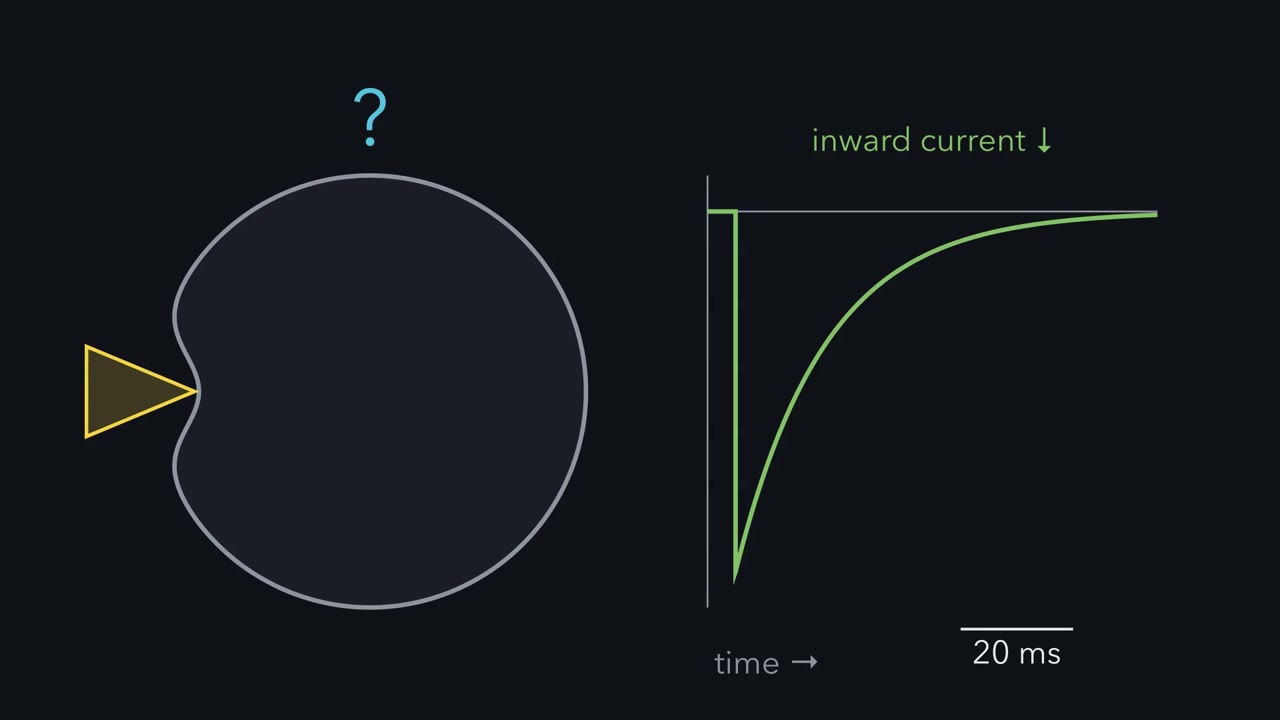
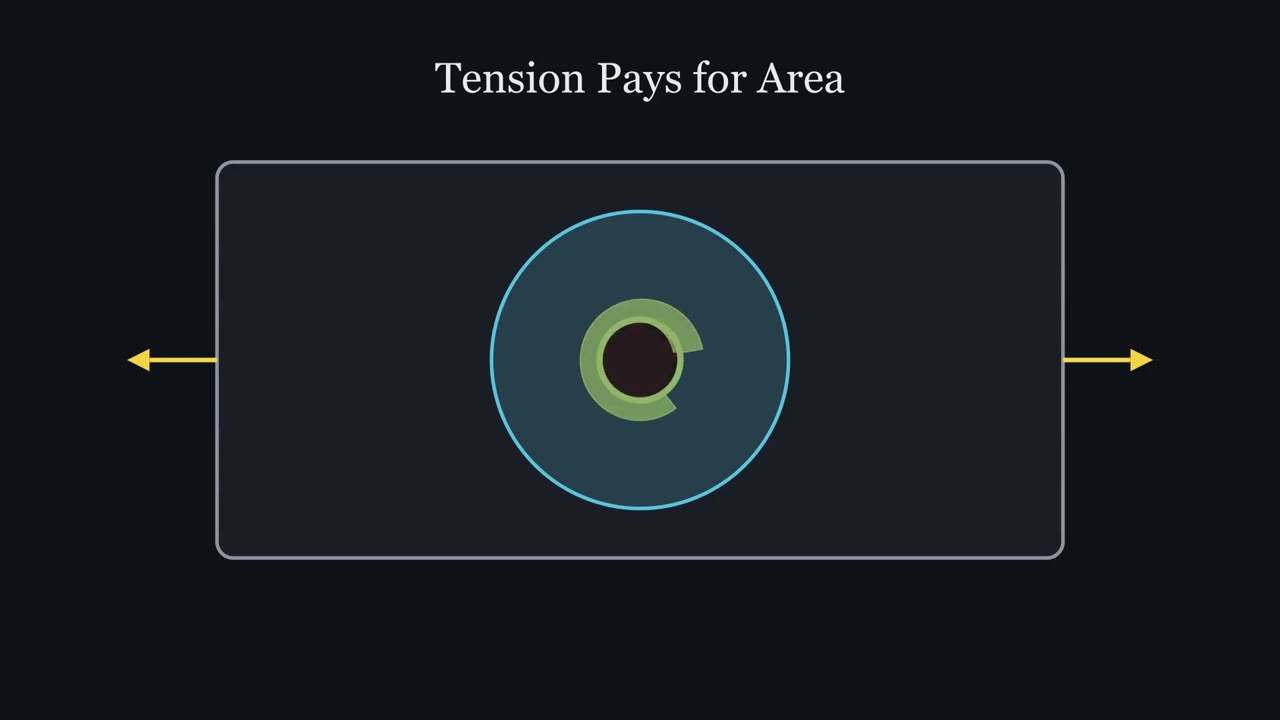
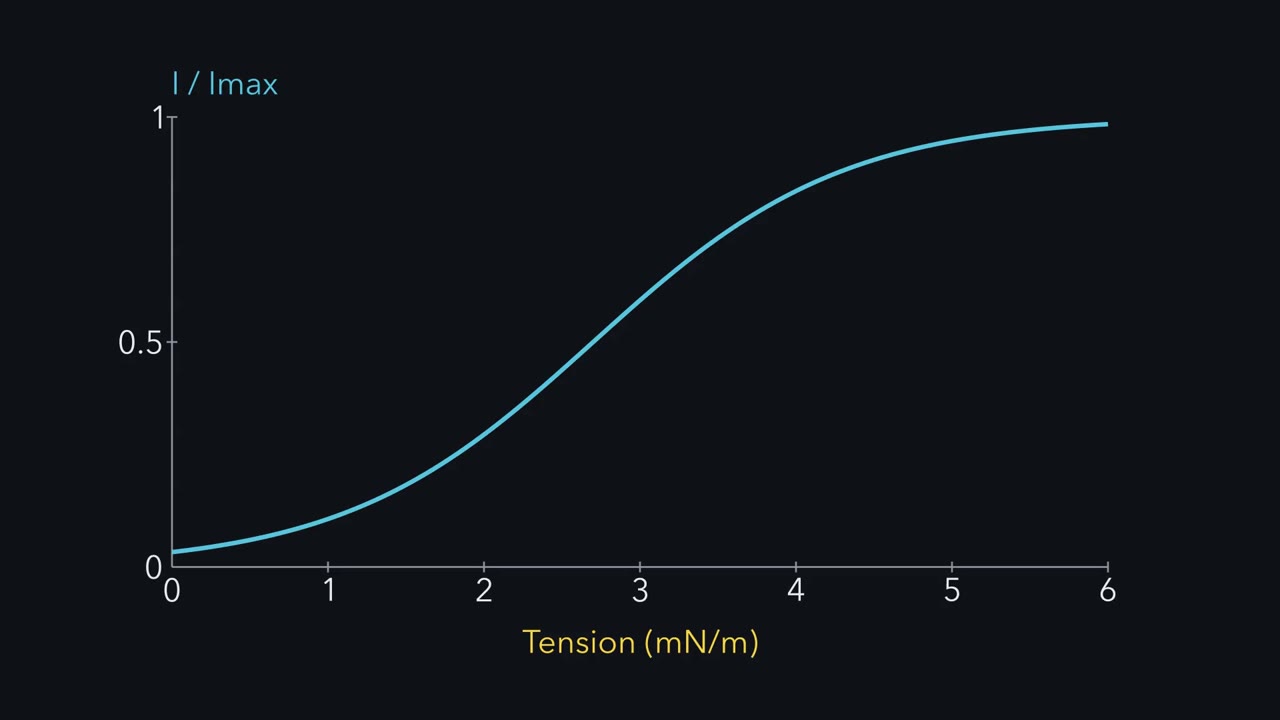
Tension pays for area. But how does force reach the channel? Through lipid, through a protein tether, or both? The idea is the work done by membrane tension. A tether could change that tension, or pull on the channel directly. That would add its own work term. The lipid route has a clean test. Take everything else away. Purified mouse Piezo1 was placed in droplet bilayers, with no other cellular components. A droplet bilayer forms where two lipid-coated droplets touch. Nothing from a cell is present. Suppose a tether were strictly required for opening. What should the purified channel have done? And what would its opening tell you about a cell?
It should have stayed silent. Yet force still activated it, so protein plus lipid is sufficient there. But that says nothing about whether an intact cell also uses a second route. A second route has been proposed. Wang and colleagues described a chain of cadherin, beta-catenin and actin. Disrupting the channel's link to E-cadherin prevented cytoskeleton-dependent gating in their cultured cells. These need not be rivals. Sufficiency in one preparation cannot exclude a route in another. That is why the field has not chosen. There is even a hint that the bilayer misses something. The purified channel lacked the rapid inactivation seen in whole cells.
Inactivation is where human genetics meets this biophysics. Distal arthrogryposis is an inherited condition. Joints of the hands and feet are fixed in bent positions from birth. Two Piezo2 variants from such families were tested in a human cell line. Both sped recovery from inactivation. Only one slowed inactivation during the pulse. So slower inactivation is not a rule for every variant. Read each one. Loss of function looks different in mice and in people. Adult mice lacking Piezo2 in sensory neurons and Merkel cells lose almost all light-touch behaviour. Two people without working Piezo2 had impaired discriminative touch. Their sense of limb position was profoundly impaired, and worse without vision.
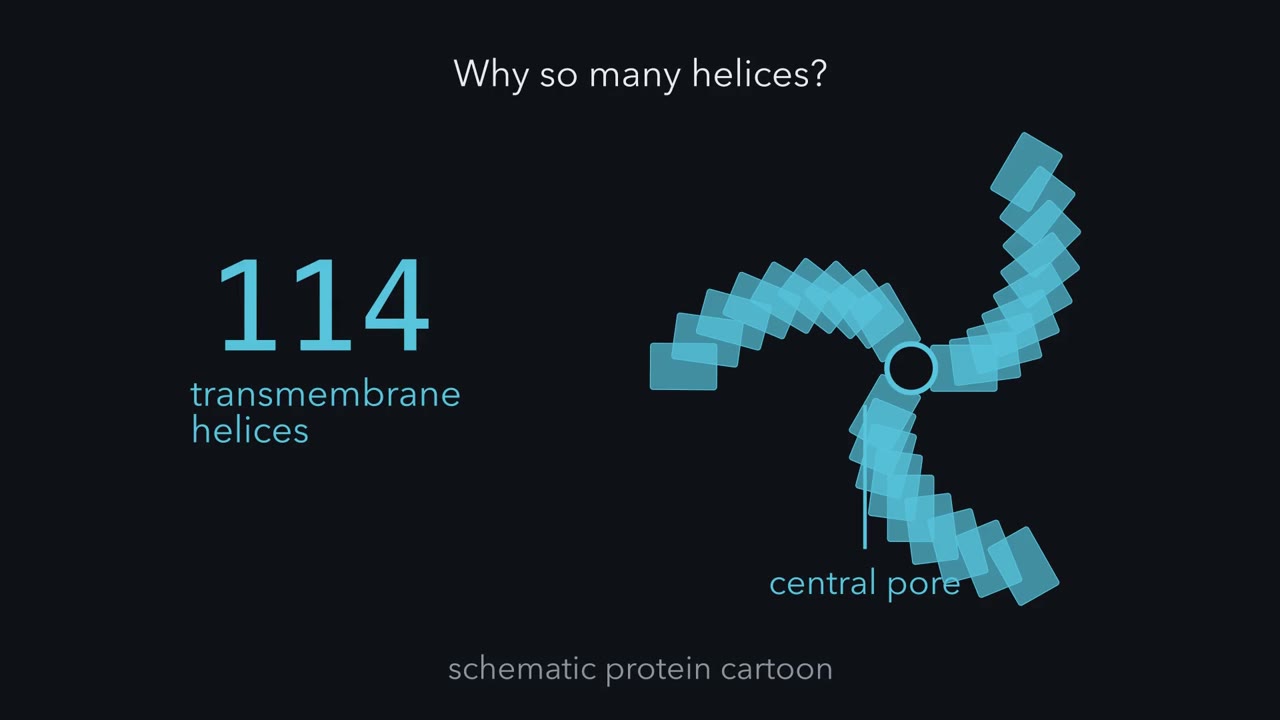
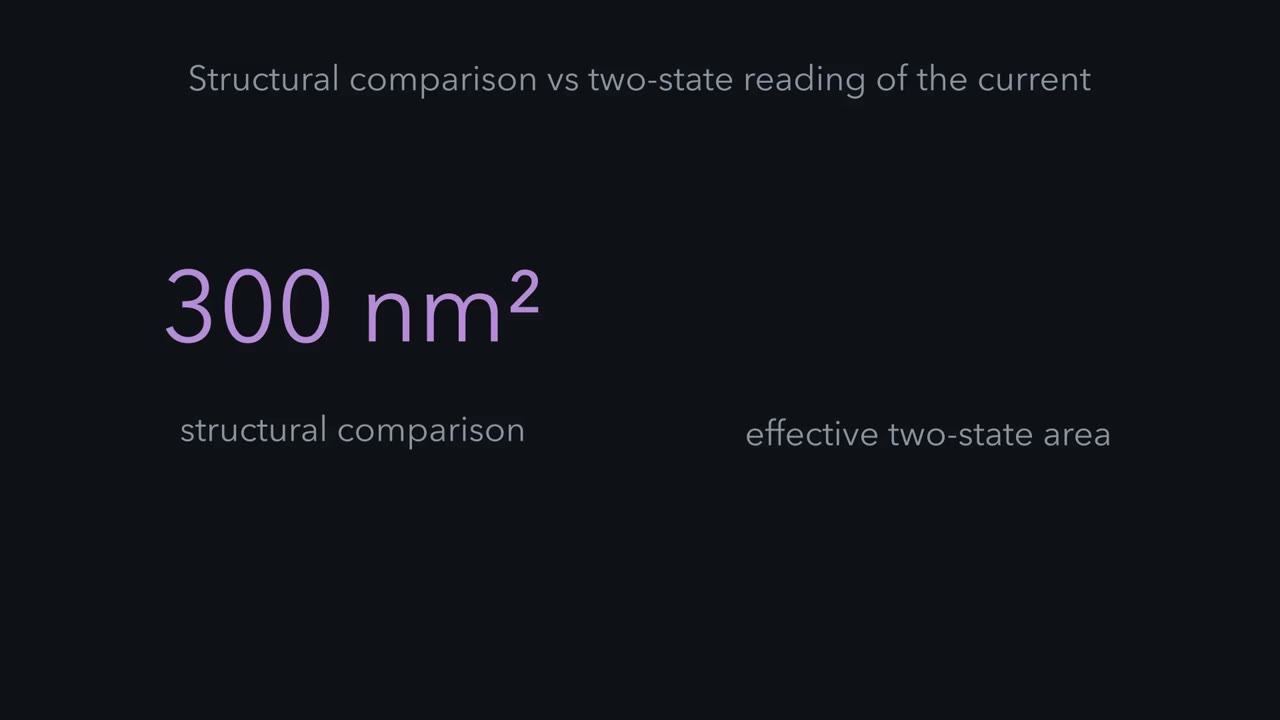
But they kept other abilities. Their deficits were selective. Keep the mouse sentences and the human sentences apart. Now back to the first question. Why does one channel need 114 helices? In the leading model, still debated, to collect area.
Tension pays for area. Whether a tether adds its own force is a separate question.
Mouse PIEZO2 threads 114 transmembrane helices through the membrane to build one ion channel, and its pore sits at the centre. Why would a channel need so much protein around one pore?
Continue in the lesson: Piezo Channels and the Physics of Force →
3:08 · Free, with captions and a transcript. The lesson has the full text, the questions and the sources.
More films from this lesson
How this film was made. Narration: an AI narrator voice (Kokoro, af_heart) reading narration written from this lesson's text. Animation: AI-generated in code (Manim) by Claude, a schematic with no drawn molecular structures. Captions come from the narration script. See something wrong? Report it.