Films · Developmental Neuroscience
One Dial
Read the transcript of “One Dial”
Film transcript: One Dial
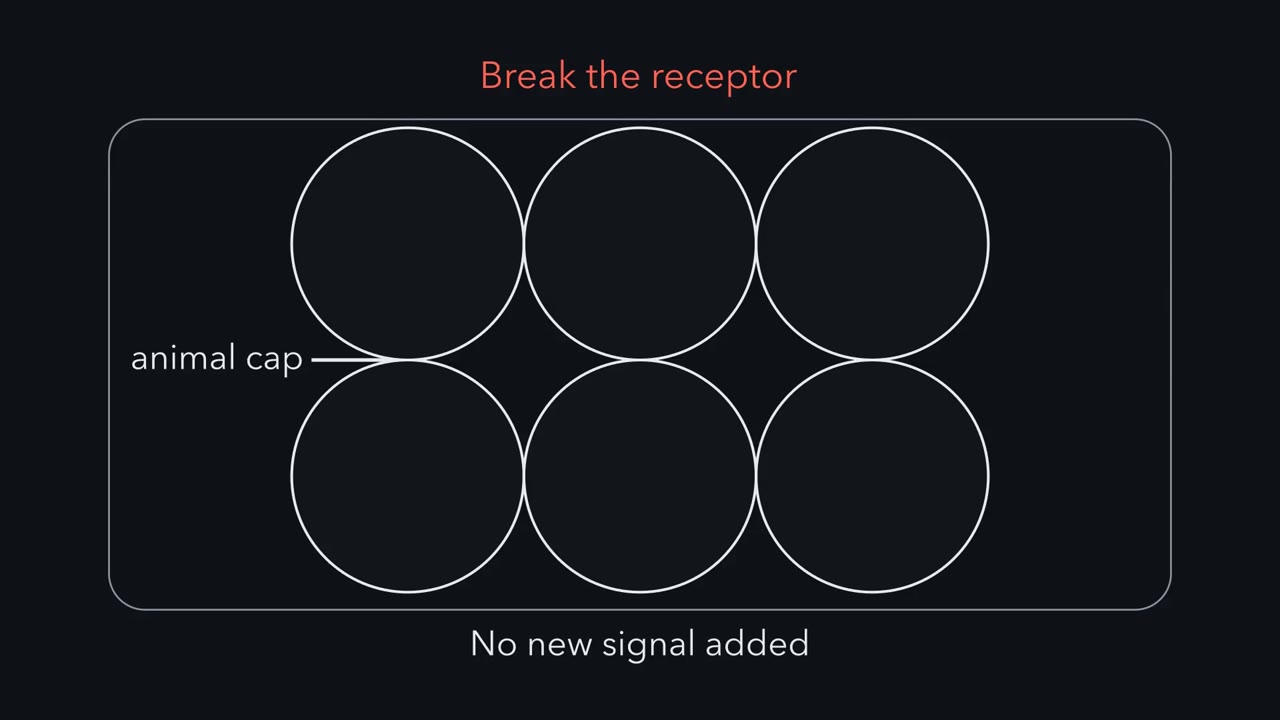
Separated cells turn neural, yet their BMP receptors keep signaling. How can both be true? Start by putting the four results in one table. The intact cap: receptors working, Smad1 output high, epidermis. The dominant negative cap: receptors jammed, output low, neural. Separated cells: neural. Leave their output for a moment. Separated cells with BMP4: output high enough, epidermis. The output column is the model's reading. It was not measured directly in every row. Read down the last two columns. In these four conditions, where the dial was high, the cells made skin. Where it was low, they made neural tissue. In a 1997 review, Hemmati-Brivanlou and Melton called this the default model.
In these early cap cultures, neural is the fate frog ectoderm takes when BMP signaling is kept low, while the cells can still respond and their other inputs, such as FGF, are intact. BMP promotes epidermis. Default is an operational word. It names the outcome in these cultures, with competent cells and their other inputs intact, not a fate reached with no signals. Now the third row. The first explanation was dilution. Separation spreads the cells through a large volume of fluid. The BMP they pass to one another would be diluted away. It was a fair guess. If BMP spreads freely, the physics of diffusion supports it. But later work tested it. BMP receptors keep signaling in separated cells.
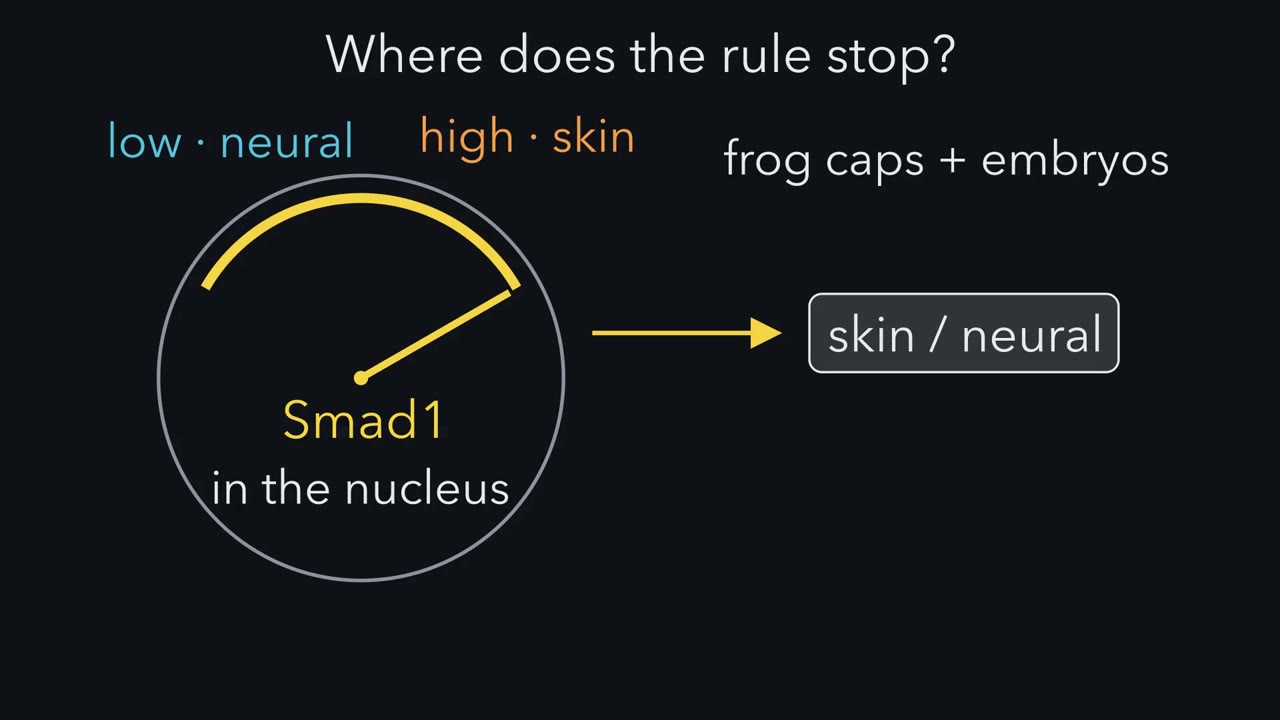
So how could the dial fall? Separation switches on lasting signaling by MAPK. It is a kinase cascade, usually started by growth factors such as FGF. MAPK phosphorylates Smad1 in its middle, or linker, region. That can keep Smad1 out of the nucleus and mark it for destruction. The cells need this activity to turn neural. The dial still goes down, by a different hand. the fourth row? The damping is partial. So enough added BMP4 can push the output back up. That is why the rule names the dial, Smad1 in the nucleus. It does not name BMP in the fluid. The takeaway: three hands can turn the dial down. Outside the cell, at the membrane, or inside it.
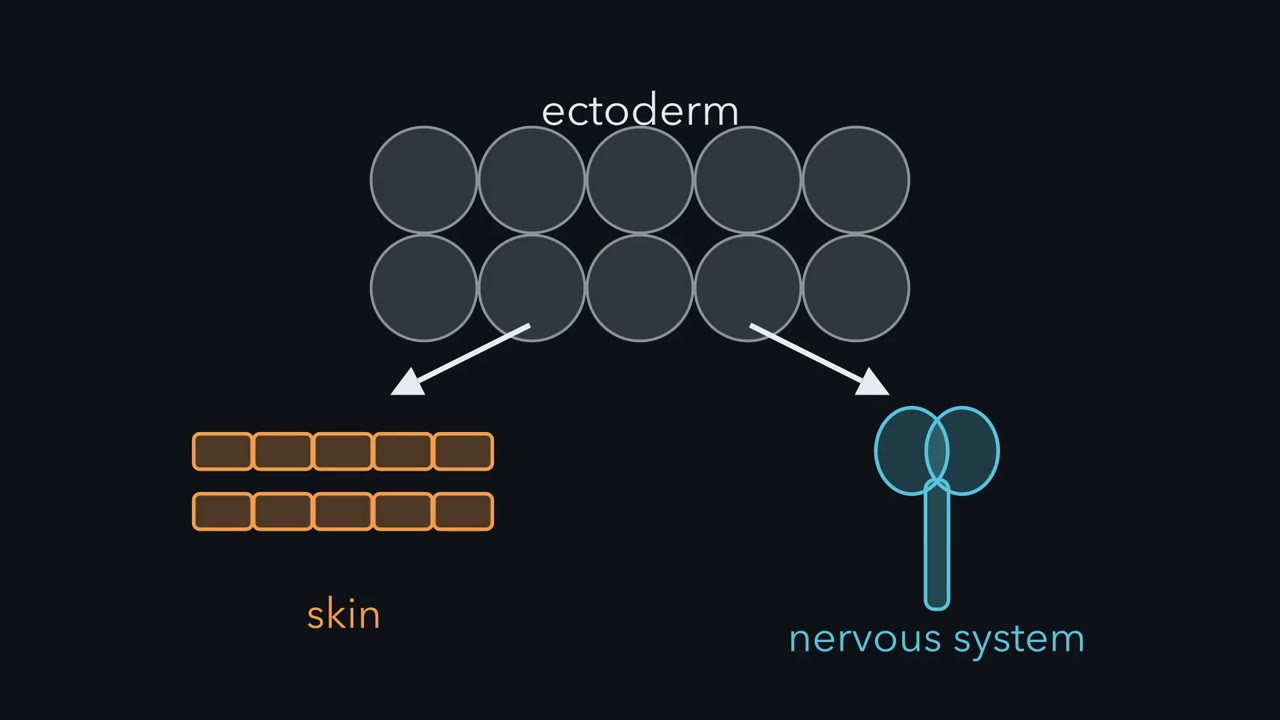
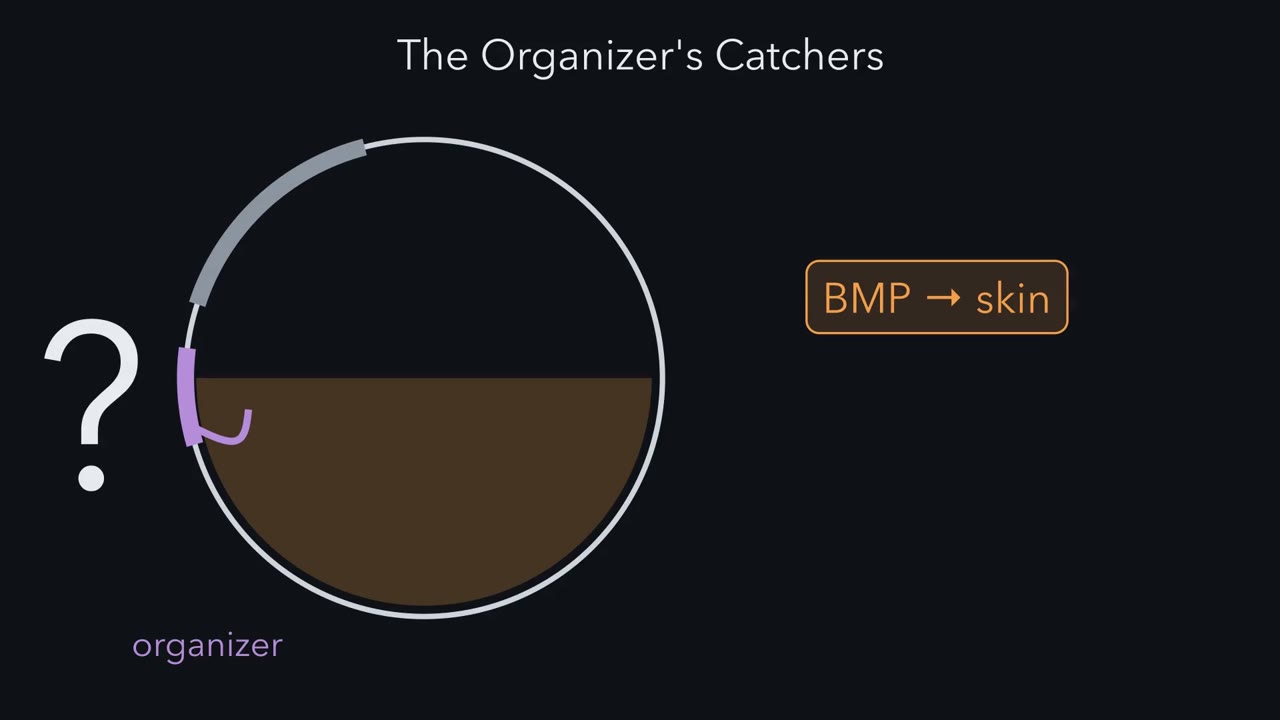
Pull a square of frog skin-to-be apart into single cells, and it becomes neural. Why? Because BMP signaling, which makes skin, falls in those cells. In the embryo, the organizer's secreted proteins make it fall.
Continue in the lesson: Neural Induction: The Default Model →
2:55 · Free, with captions and a transcript. The lesson has the full text, the questions and the sources.
More films from this lesson
How this film was made. Narration: an AI narrator voice (Kokoro, af_heart) reading narration written from this lesson's text. Animation: AI-generated in code (Manim) by Claude, a schematic with no drawn molecular structures. Captions come from the narration script. See something wrong? Report it.