Films · Developmental Neuroscience
Brakes, and Borrowed Cells
Read the transcript of “Brakes, and Borrowed Cells”
Film transcript: Brakes, and Borrowed Cells
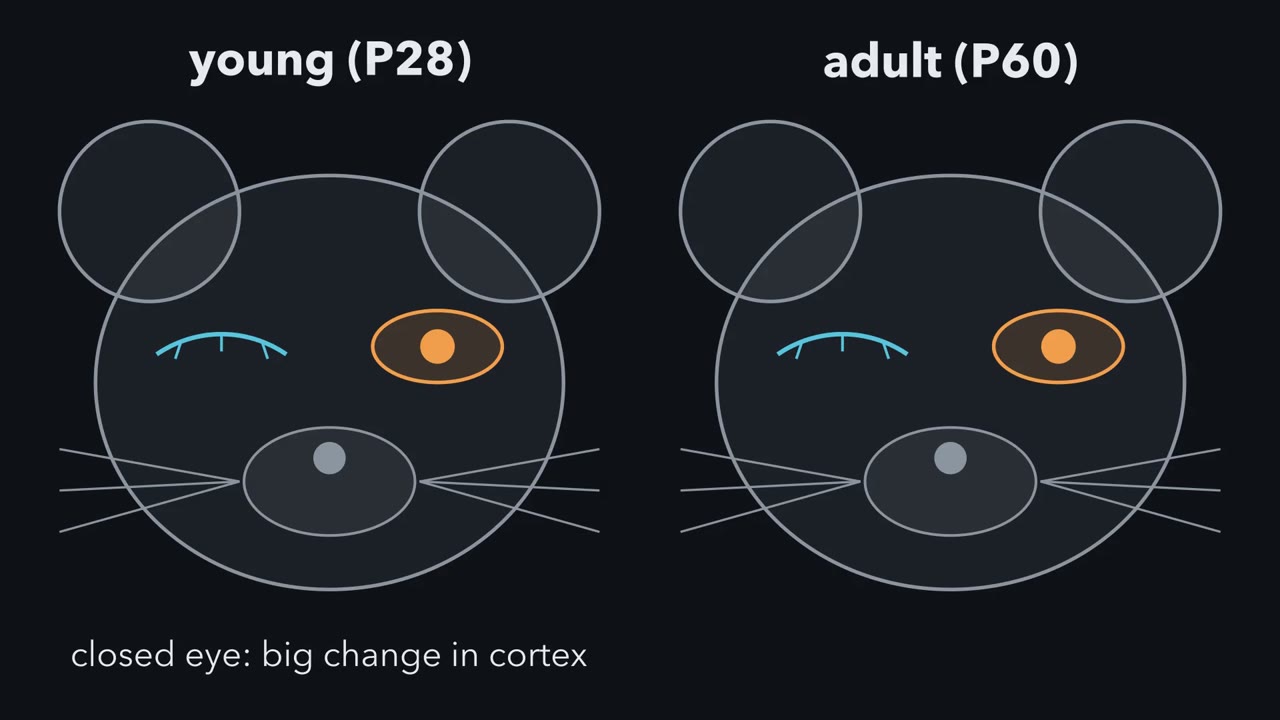
If maturing inhibition opens the window, what closes it? Does the machinery for change simply wear out? If so, removing one molecule in an adult should not bring the window back. As the window ends, a lattice of matrix called a perineuronal net condenses around many parvalbumin cells. Pause and predict. Digest that net in an adult rat, then close one eye. Does the cortex shift?
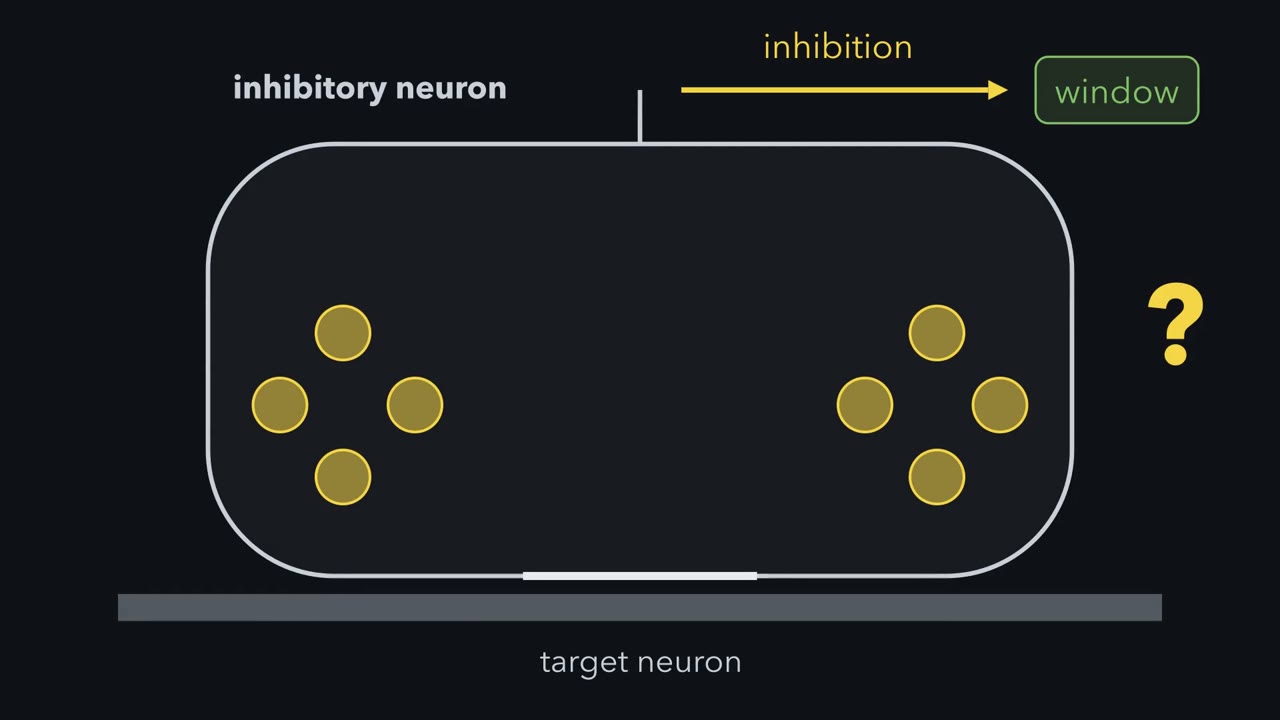
It does. Chondroitinase, an enzyme that cuts the net's sugar chains, let deprivation shift adult rat cortex. Myelin carries proteins such as Nogo. Mice lacking the Nogo receptor kept plasticity past the usual closing age. Lynx1 is a small membrane protein that damps nicotinic receptors. Adult mice without it kept strong plasticity. Blocking nicotinic receptors prevented that plasticity. Inhibition itself has a second job. Past the threshold, it keeps maturing and becomes a brake. In adult rats, reducing GABA transmission partly restored plasticity. In adult rats, weeks of the antidepressant fluoxetine lowered inhibition and restored plasticity.
Diazepam blocked that. In the knockout, diazepam opened the window. In the adult, it put the brake back. Now a direct test of whether the window follows the cells. Transplant embryonic inhibitory neuron precursors into a young mouse's cortex. They mature into interneurons, including parvalbumin cells. The host's own window closes.
Pause and predict. Will a second window come at the host's age, or at the cells' age? The cells' age. When they reached the age of native interneurons in the normal window, the host shifted again. Why does this matter? In amblyopia, one eye sees poorly because its input to the cortex was degraded in childhood. Patching the good eye works best in young children, and much less reliably in adults. These rodent results show mechanism, not treatment. Reopening plasticity can also reopen vulnerability. Takeaway: in rodent visual cortex, this window is set by the state of a circuit, not simply by age. Inhibition opens it, and added brakes, including more mature inhibition, close it.
A mouse that lacks one enzyme for making GABA keeps its critical period waiting for months. One drug starts it.
Continue in the lesson: Opening and Closing a Critical Period →
2:56 · Free, with captions and a transcript. The lesson has the full text, the questions and the sources.
More films from this lesson
How this film was made. Narration: an AI narrator voice (Kokoro, af_heart) reading narration written from this lesson's text. Animation: AI-generated in code (Manim) by Claude, a schematic with no drawn molecular structures. Captions come from the narration script. See something wrong? Report it.