The Link That Must Fire, and How to Put It Back
Read the transcript of “The Link That Must Fire, and How to Put It Back”
Film transcript: The Link That Must Fire, and How to Put It Back
Which molecule turns the calcium signal into release at this synapse? When an inner hair cell depolarizes, calcium enters. Something must turn that signal into vesicle fusion. The ribbon is not that something. It keeps a larger resident pool of vesicles. Mutations in the OTOF gene cause deafness, and otoferlin carries calcium-binding C2 domains. Roux and colleagues recorded from inner hair cells of mice lacking otoferlin. A rise in membrane capacitance tracks how much vesicle membrane fused. So it measures release. If otoferlin acts after calcium enters, at fusion itself, what should the recording show?
Calcium current and ribbon morphogenesis were preserved at the age recorded. Release was almost abolished. They proposed that otoferlin may be the major calcium sensor for fusion. The word may mattered. A knockout shows a protein is needed. It does not show the protein is the sensor. Michalski and colleagues made a sharper test. A change in the C2C domain reduced calcium binding. The calcium sensitivity of release fell, which fits a sensing role, without making otoferlin the only sensor. Now the repair. In severe otoferlin deafness, the inner hair cells are there to treat, but their synapses release almost nothing. The outer hair cells still amplify, at least early in life.
The ear's own faint sounds, otoacoustic emissions, show it. But the gene is too large for its vector. A conventional adeno-associated virus carries about five kilobases. The otoferlin coding sequence is about six kilobases, before a promoter is added. So Al-Moyed and colleagues split it between two vectors. A cell receiving both can rebuild the full gene. If each vector independently reaches seventy percent of hair cells, what fraction can make the protein?
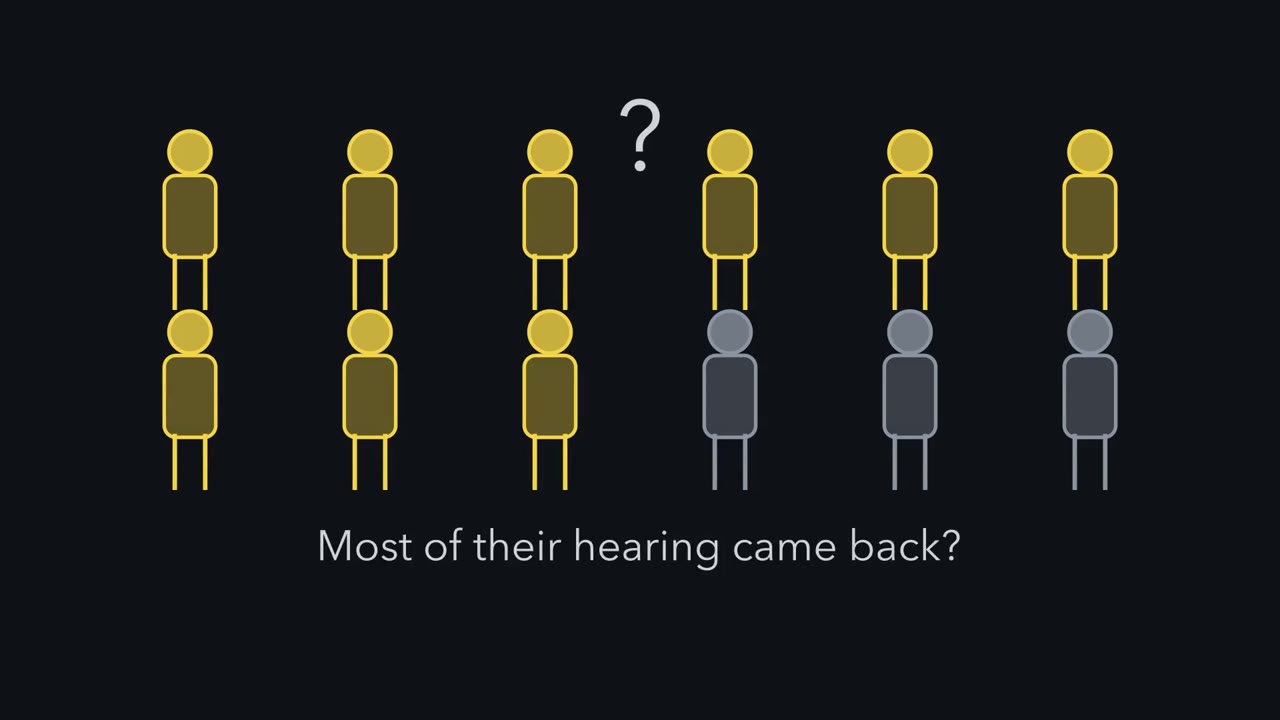
About half, because a cell needs both halves to rebuild the gene. The real mice are a separate question. Full-length otoferlin appeared in up to half their inner hair cells. Fast release came back in those cells. Vesicle replenishment reached only part of wild-type values. Treated mice had click thresholds of 40 to 60 dB SPL. That is partial rescue, not normal hearing. Replacing a missing link can work because the cells that need it are still alive.
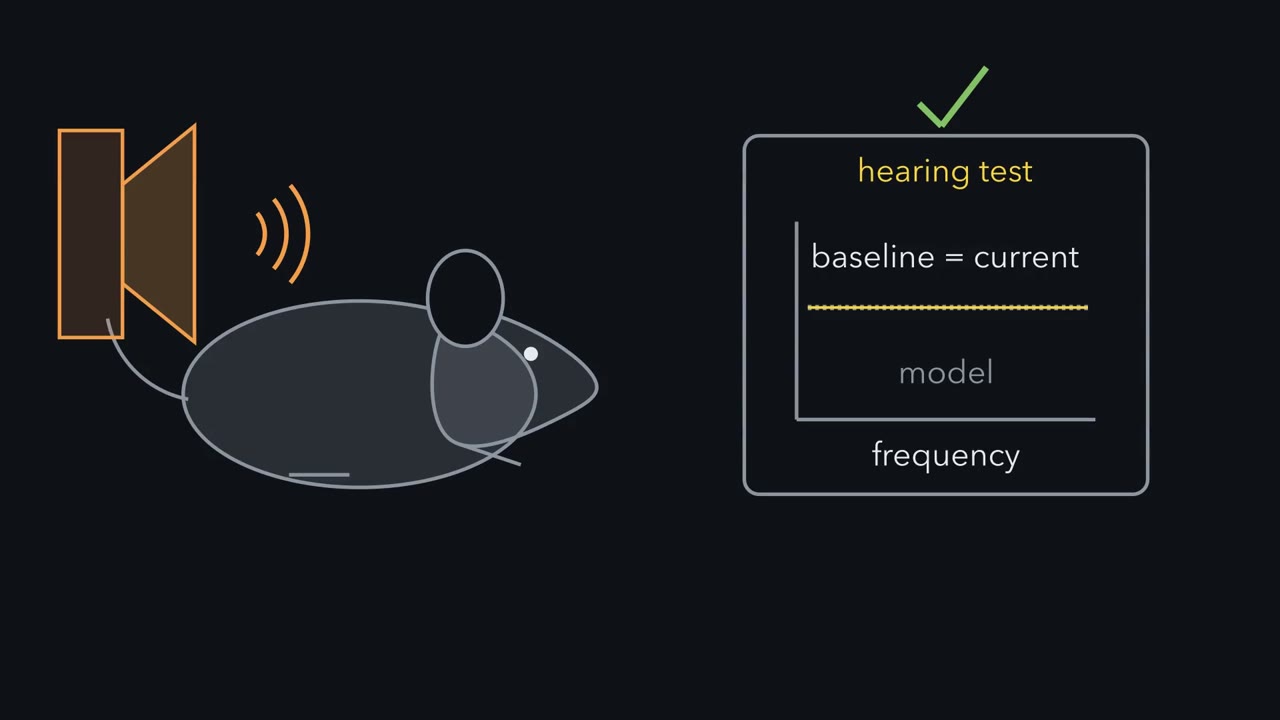
A mouse can pass its hearing test after loud noise and still have lost about half the ribbon synapses at one place in the cochlea. What does a normal threshold actually tell you?
Continue in the lesson: Hidden Hearing Loss, Gene Therapy and Regeneration →
2:48 · Free, with captions and a transcript. The lesson has the full text, the questions and the sources.
More films from this lesson
How this film was made. Narration: an AI narrator voice (Kokoro, af_heart) reading narration written from this lesson's text. Animation: AI-generated in code (Manim) by Claude, a schematic with no drawn molecular structures. Captions come from the narration script. See something wrong? Report it.