Films · Developmental Neuroscience
Same Factor, Second Job
Read the transcript of “Same Factor, Second Job”
Film transcript: Same Factor, Second Job
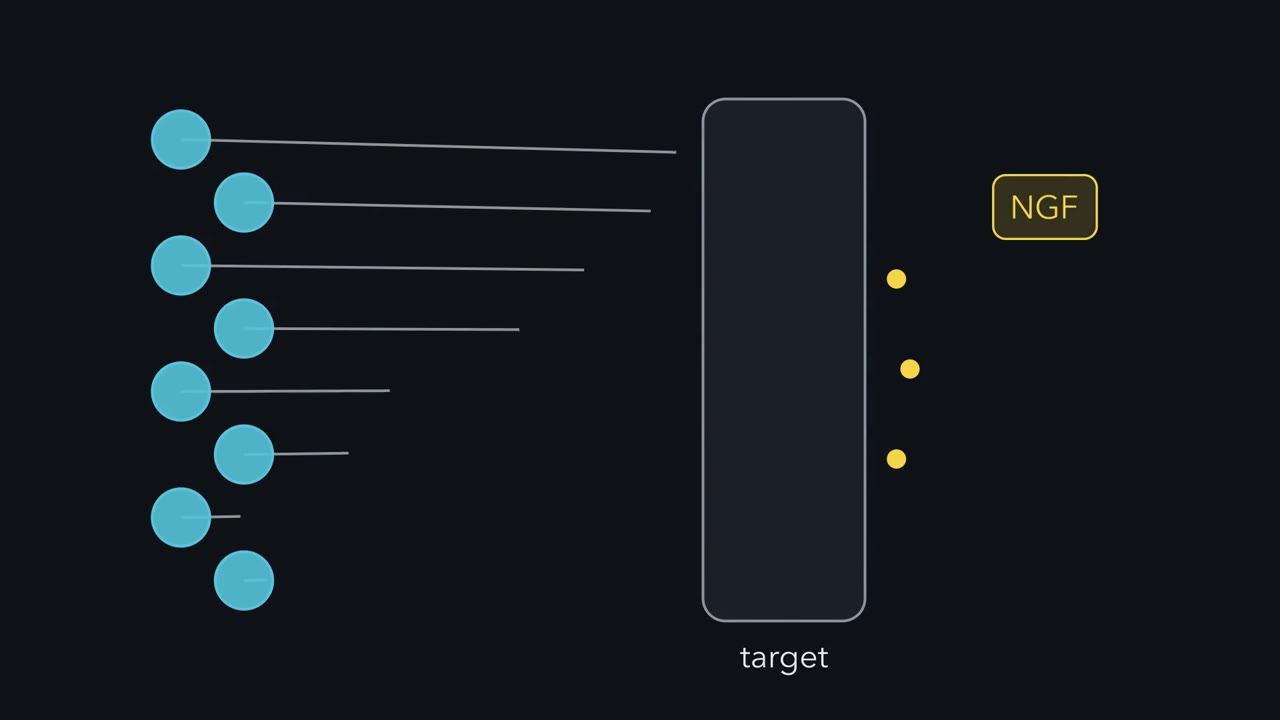
If a neuron survives, does it innervate its target normally? Go back to the mice lacking both Bax and NGF. Their sympathetic neurons survive. Now look at their targets at birth. Innervation is missing from some targets, such as the salivary glands. It is greatly reduced in others, such as the heart. A few, such as the trachea, are near normal. So survival does not mean normal innervation. Within a target, NGF helps axons grow and branch. So the factor that decides who lives also helps decide how much target each survivor covers. The broader task is called systems matching. Each target gets a fitting number of neurons, amount of innervation, synapses and dendrite shapes. NGF acts on several.
Now a different system, and a different variable. Chick motor neurons, and muscle activity. Curare blocks the acetylcholine receptors of muscle. The muscle stops responding to its nerve. Robert Pittman and Ronald Oppenheim gave curare to chick embryos during the period of motor neuron death. If active connections help an axon win, what should paralysis do to motor neuron death?
You might expect more death. Instead, fewer motor neurons died. That looked like a contradiction. Silencing the connection saved neurons. The usual explanations are interpretations, so hold them loosely. The most common reading is that paralysed muscle may allow more nerve branching and more synapses. That would give each motor neuron more access to trophic support. Note that chick motor neurons do not depend on NGF. They draw on several factors at once. In other systems, activity helps a winner. Active synapses can release more BDNF. Activity in the muscle and activity in the competing neurons are different variables. The results need not conflict.
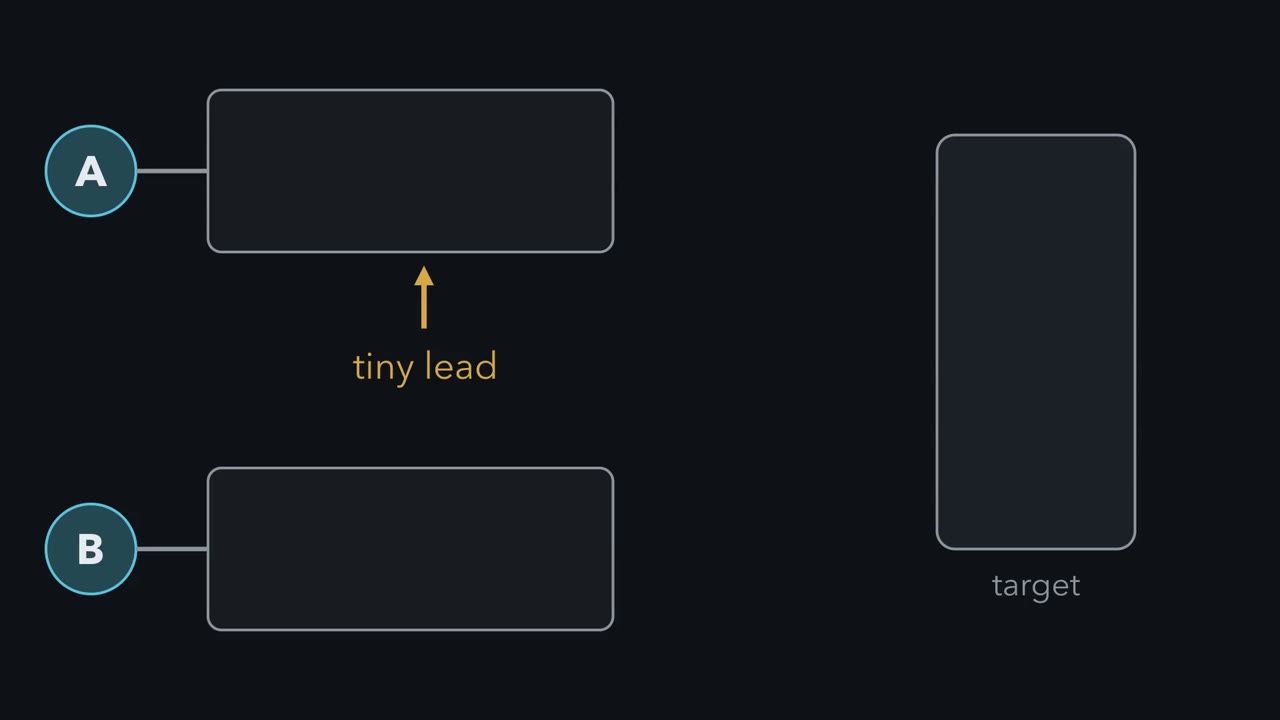
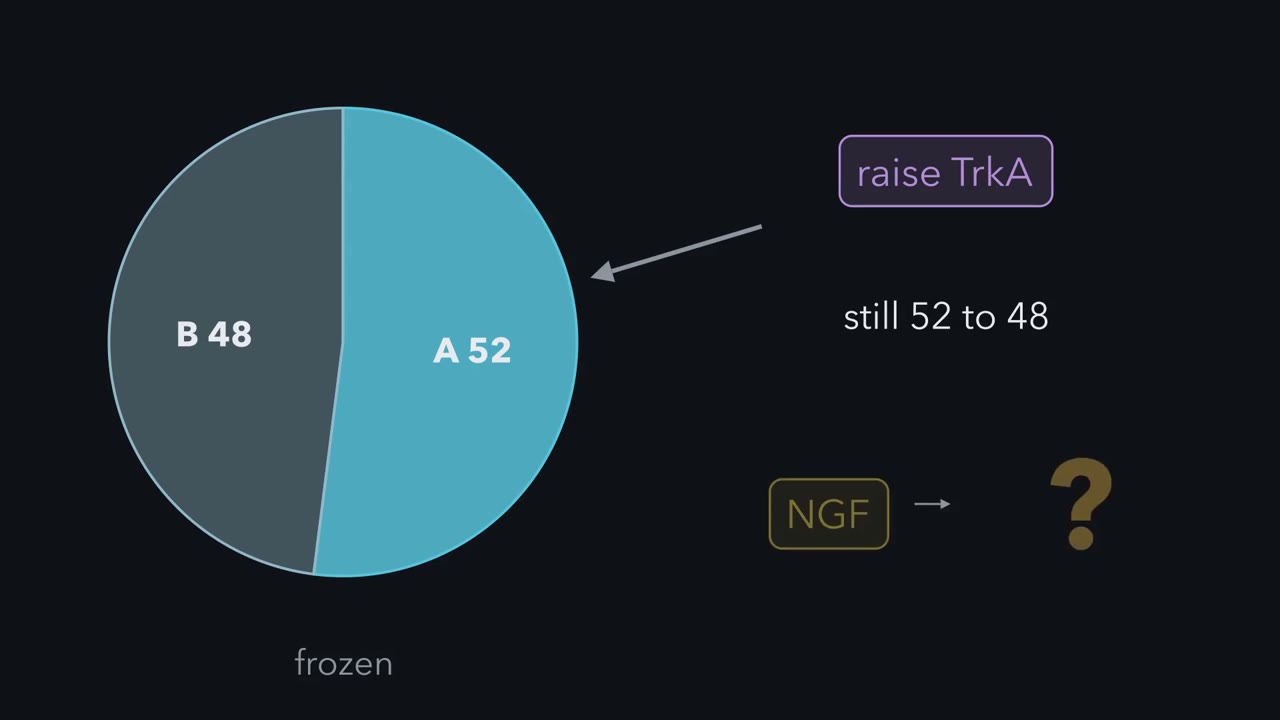
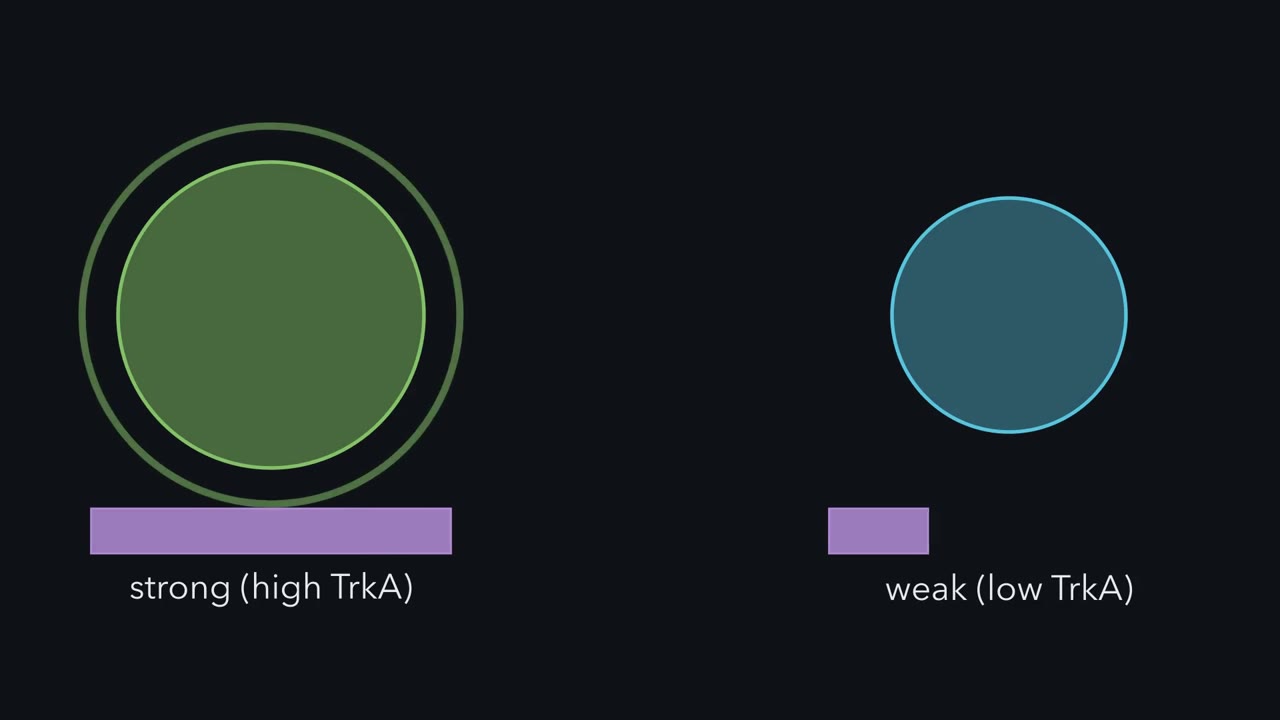
So here is the rule once more. The target sets how many. The neurons decide which. In the published model, a lead grows because NGF raises TrkA and lengthens its signal. Punishment through p75 makes the losers die sooner. The rule is scoped to mouse sympathetic neurons. Chick motor neurons need their own account. Takeaway. NGF supply sets how many sympathetic neurons survive, the neurons' own feedback decides which, and NGF also shapes how much of many targets they cover. Muscle activity is a different variable, in a different system.
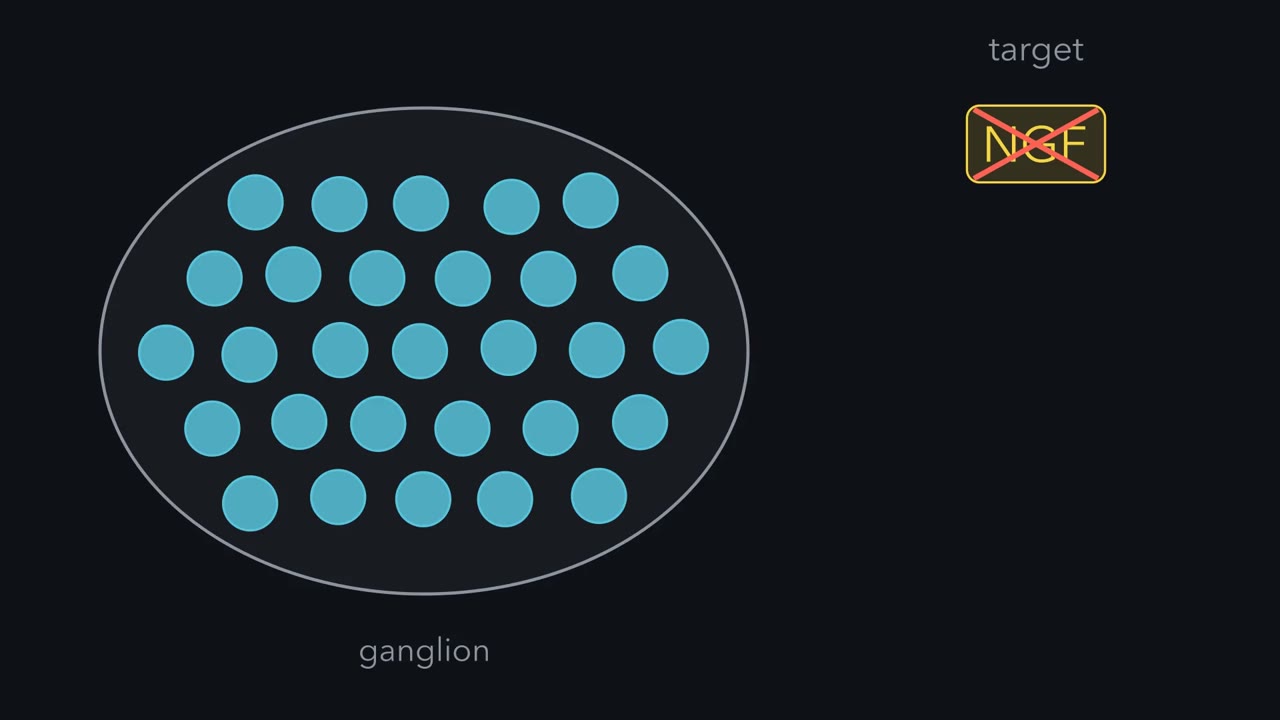
If the target makes too little NGF for every neuron, which neurons get to live?
Continue in the lesson: Competition: How Neurons Win a Target →
3:04 · Free, with captions and a transcript. The lesson has the full text, the questions and the sources.
More films from this lesson
How this film was made. Narration: an AI narrator voice (Kokoro, af_heart) reading narration written from this lesson's text. Animation: AI-generated in code (Manim) by Claude, a schematic with no drawn molecular structures. Captions come from the narration script. See something wrong? Report it.