Take One Route Away
Read the transcript of “Take One Route Away”
Film transcript: Take One Route Away
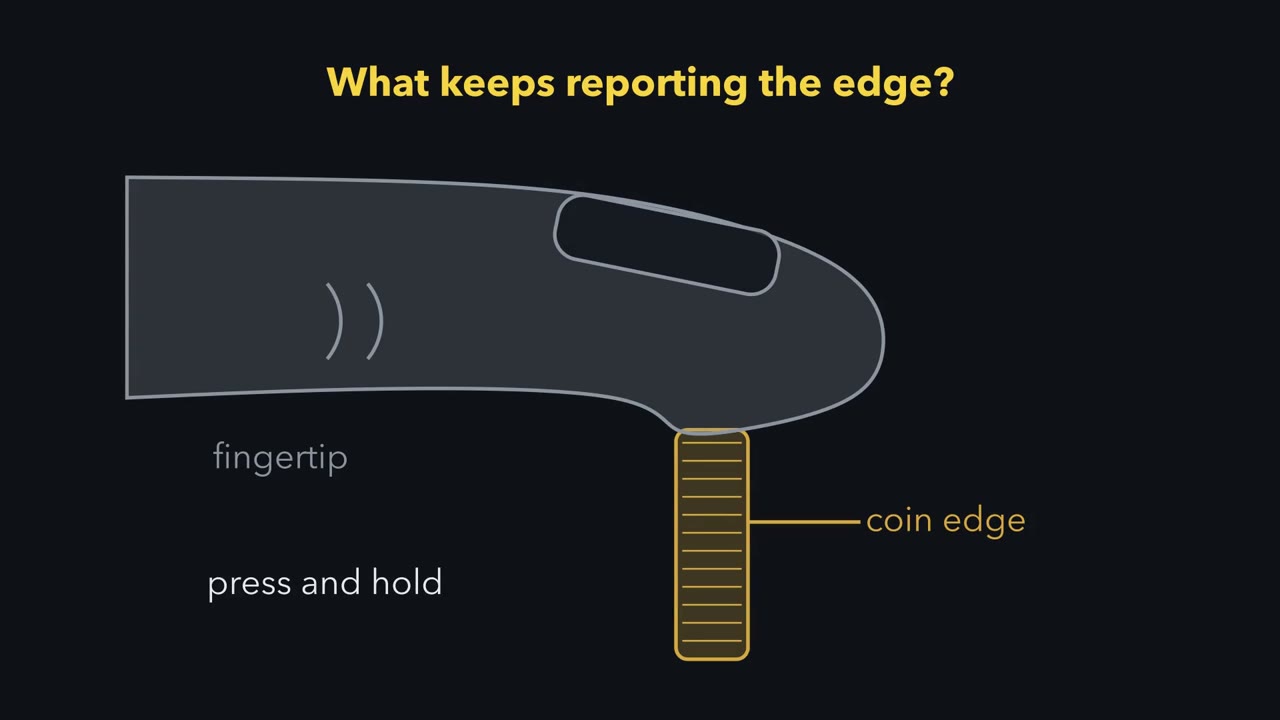
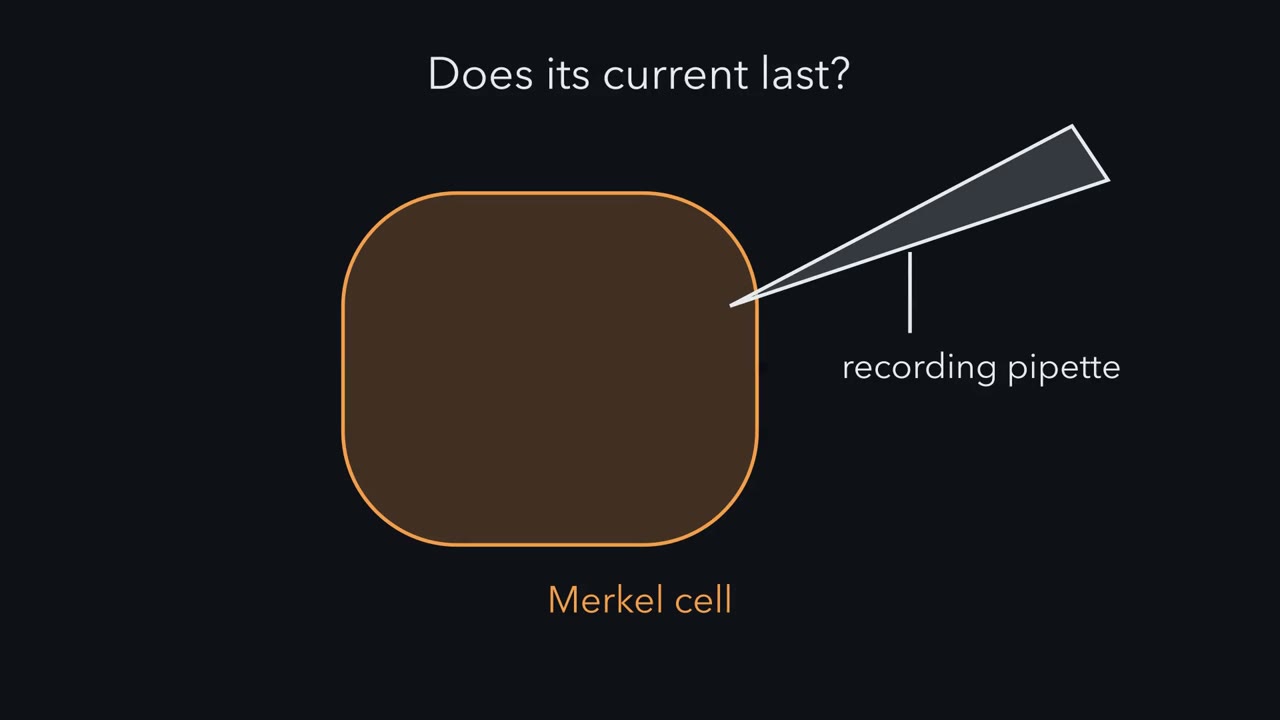
Two routes feed one axon. How can you tell which route makes which part of the firing? Take one route away, and watch which phase is left. Here, the route taken away is always the Merkel cell's. The recordings come from mouse skin, kept alive in a bath with its nerve attached. An electrode records one afferent while a probe presses the skin. The recorded afferent lacks the light-activated proteins. Light aimed at the touch dome, plus controls, ties the effects to Merkel cells. First test. Light aimed at the Merkel cells depolarizes them, with no touch at all. The afferent fires. The Merkel cell is enough to drive it. Second test. Light silences the Merkel cells during a held press.
What do you expect to lose? The sustained firing is suppressed. The hold needs the Merkel cell in the moment. Third test. Delete Piezo2 from the skin's epithelium, but not from the nerve. In culture, Merkel cells without epithelial Piezo2 lose their touch-evoked current. The ending keeps its channel. Predict what is left.
The onset stays similar to controls. The hold loses its normal sustained firing. That is the cleanest split. One limit. This deletion covers all of the skin's epithelium, not only the Merkel cells. Fourth test. Remove the Merkel cells altogether, by deleting the gene Atoh1 during development. The afferents still respond to touch. But the hold is cut short, before the press ends. That is called intermediately adapting. And the onset falls too. Peak firing drops to about a third of normal. That row only partly fits. A developmental loss cannot say whether the cell's own signal, or a changed skin, caused it. Blocking vesicle release in the epidermis, with tetanus toxin, also reduced both phases.
So release, probably from Merkel cells, may help with the onset too. That is why the idea says mainly. In mouse touch domes, the ending mainly feels the change, and the Merkel cell mainly holds the press. Neither acts alone.
A skin cell that is not a neuron helps a nerve keep firing for as long as you press. How does it hold the press, and what does it tell the nerve?
Continue in the lesson: Merkel Cells: Touch Receptors That Are Not Neurons →
2:45 · Free, with captions and a transcript. The lesson has the full text, the questions and the sources.
More films from this lesson
How this film was made. Narration: an AI narrator voice (Kokoro, af_heart) reading narration written from this lesson's text. Animation: AI-generated in code (Manim) by Claude, a schematic with no drawn molecular structures. Captions come from the narration script. See something wrong? Report it.