Built by Strengthening, and Where the Idea Stops
Read the transcript of “Built by Strengthening, and Where the Idea Stops”
Film transcript: Built by Strengthening, and Where the Idea Stops
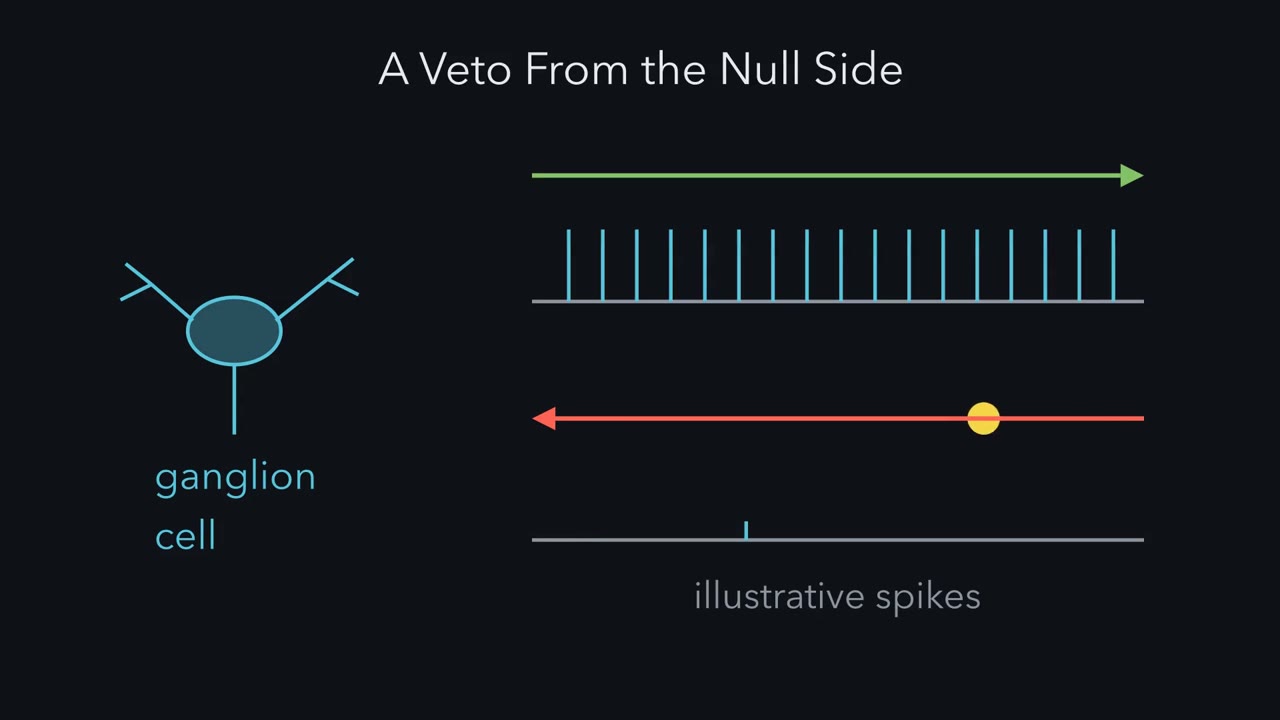
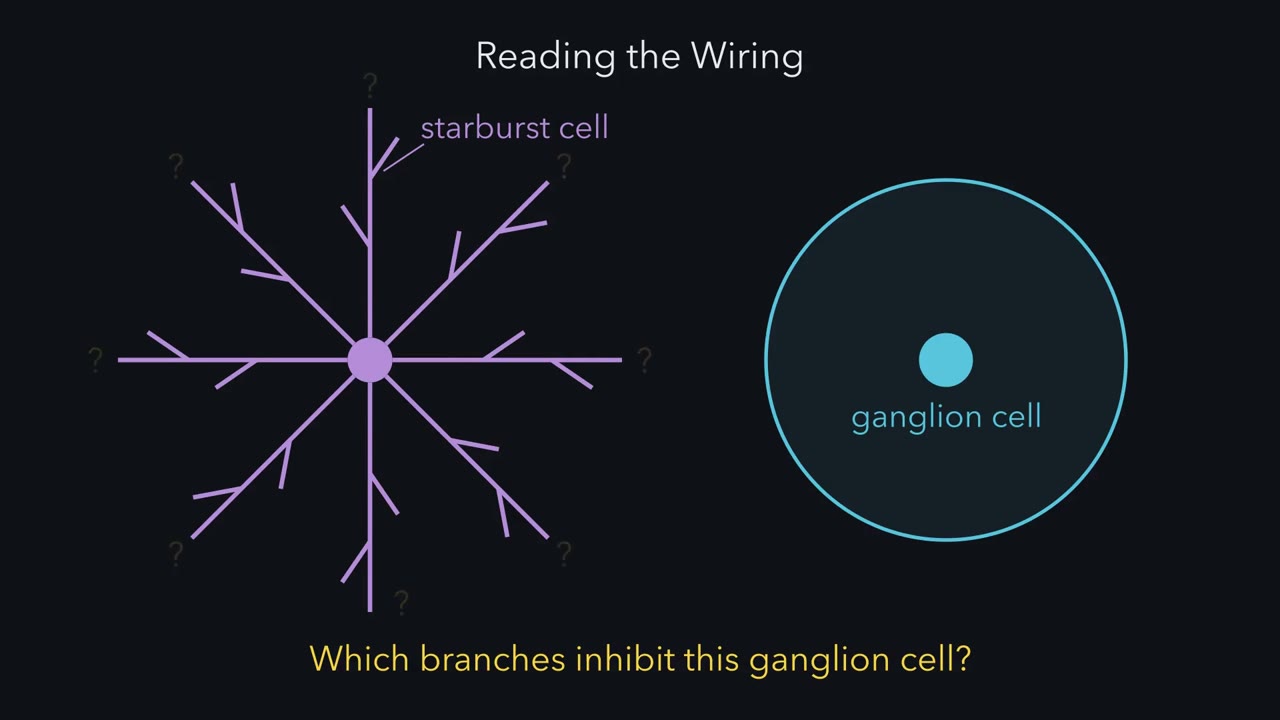
The adult wiring is lopsided. Was it built by cutting connections, or by strengthening them? Pruning would start symmetric and delete the preferred-side connections. Strengthening would keep both sides and grow the null side. Remember, the null side is the side a null-direction stimulus comes from. Wei, Hamby, Zhou and Feller recorded pairs in mouse retina. Each pair was one starburst cell and one ganglion cell. They stimulated one starburst cell at a time, and measured the inhibition the ganglion cell received. At postnatal days 4 and 7, inhibition was similar from the two sides. Predict. What should later recordings show under pruning? And what under strengthening?
Null-side inhibition grew. Preferred-side inhibition stayed about the same, and was still there in adult retina. So development strengthened one side. It did not delete the other. Later paired recordings from the same laboratory asked why. Null-side pairs had more synapses, not stronger ones. One more test. Delete the starburst cells' vesicular GABA transporter. Their GABA release drops, but their acetylcholine stays. Predict. If the veto were the whole mechanism, what would happen to direction selectivity?
Inhibition lost its direction tuning. But direction selectivity survived in a subset of ON-OFF cells. There, tuned excitation and the timing of residual inhibition supported selectivity. Direction tuning of inhibition is important, but some cells can remain selective without it.
Keep the sign. The strongest inhibition prefers roughly the direction the ganglion cell ignores. It is best established in adult mouse and rabbit. The primate circuit is less studied, and the fly uses different cells.
A cell in the eye fires to a spot moving left and stays quiet for the same spot moving right. Which neuron makes the difference?
Continue in the lesson: Computing Motion in the Retina →
2:26 · Free, with captions and a transcript. The lesson has the full text, the questions and the sources.
More films from this lesson
How this film was made. Narration: an AI narrator voice (Kokoro, af_heart) reading narration written from this lesson's text. Animation: AI-generated in code (Manim) by Claude, a schematic with no drawn molecular structures. Captions come from the narration script. See something wrong? Report it.