Which Direction Did You Remove?
Read the transcript of “Which Direction Did You Remove?”
Film transcript: Which Direction Did You Remove?
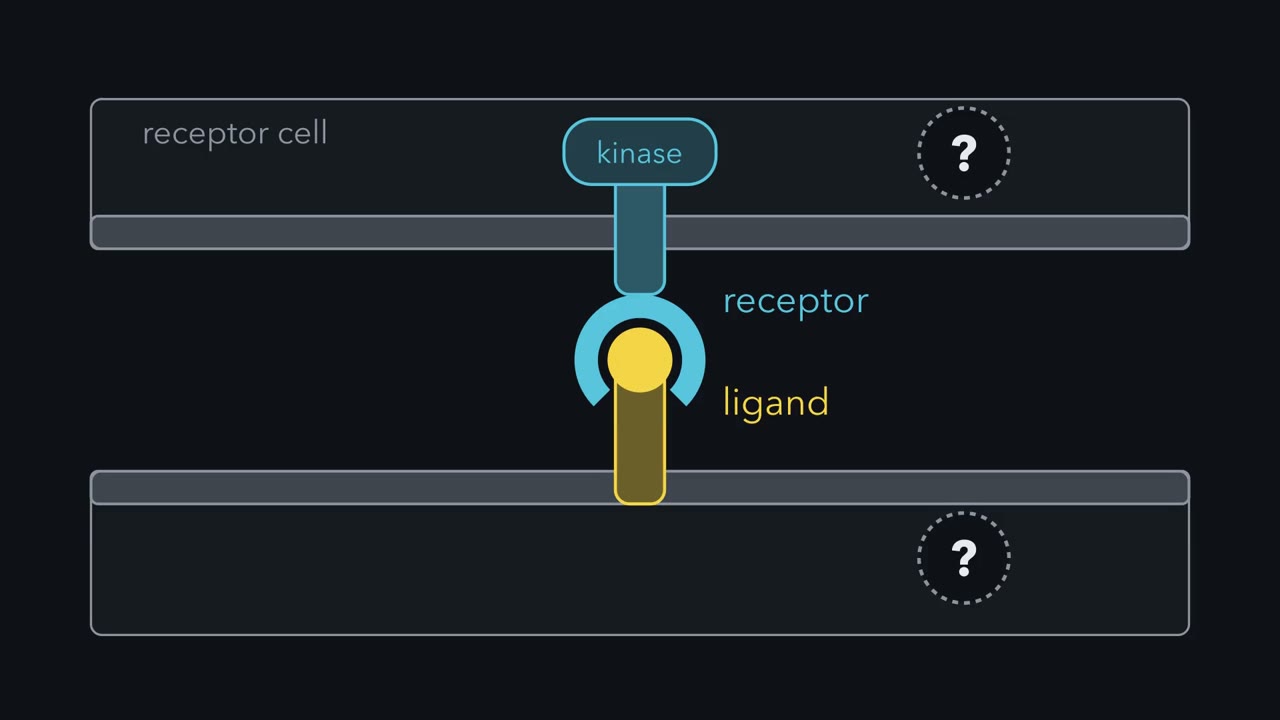
Picture two cells that touch. One carries a B-type ephrin, held in its membrane. The other carries its receptor. When the two proteins bind, the receptor signals into its own cell. That is the forward signal. A second message passes into the ephrin's cell. That is reverse signaling. Now suppose you delete the gene for the ephrin, and an organ fails to form. What did you take away? You have removed the forward signal into the receptor's cell. You have also removed the reverse signal into the ephrin's cell. And you have removed the plain grip that held the two cells together.
Deleting the receptor has the same problem. Its outer part was a ligand for the other cell. So here too, one deletion cannot say which loss mattered. The knockout cannot tell you which loss caused the defect. The failed organ does not say which. So here is a design problem for you. How could we disrupt reverse signaling while leaving forward signaling intact? Design the mouse, or the reagent, for an ephrin of the B class.
When a receptor grips a ligand that is stuck to another cell, which cell gets the message? Often both.
Continue in the lesson: Reverse Signaling: When the Ligand Is Also a Receptor →
1:26 · Free, with captions and a transcript. The lesson has the full text, the questions and the sources.
More films from this lesson
How this film was made. Narration: an AI narrator voice (ElevenLabs, Sarah) reading narration written from this lesson's text. Animation: AI-generated in code (Manim) by Claude, a schematic with no drawn molecular structures. Captions come from the narration script. See something wrong? Report it.