Films · Developmental Neuroscience
The Ceiling, and the Sharing Puzzle
Read the transcript of “The Ceiling, and the Sharing Puzzle”
Film transcript: The Ceiling, and the Sharing Puzzle
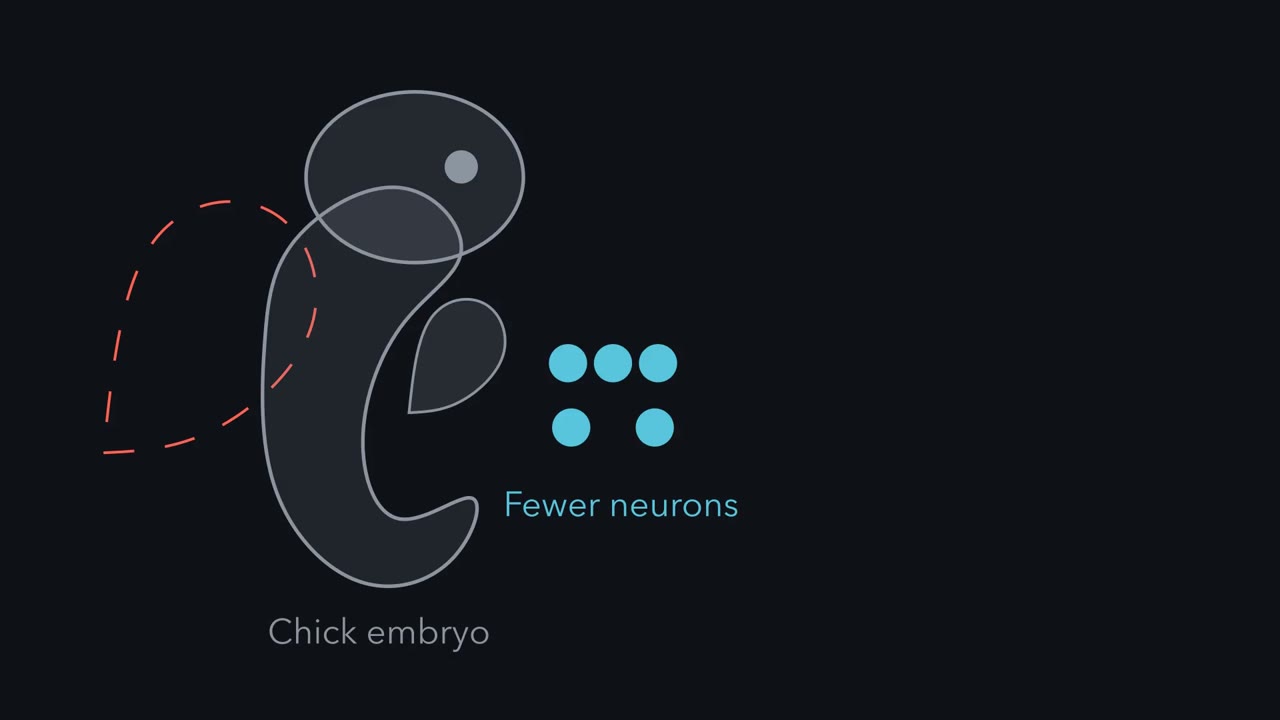
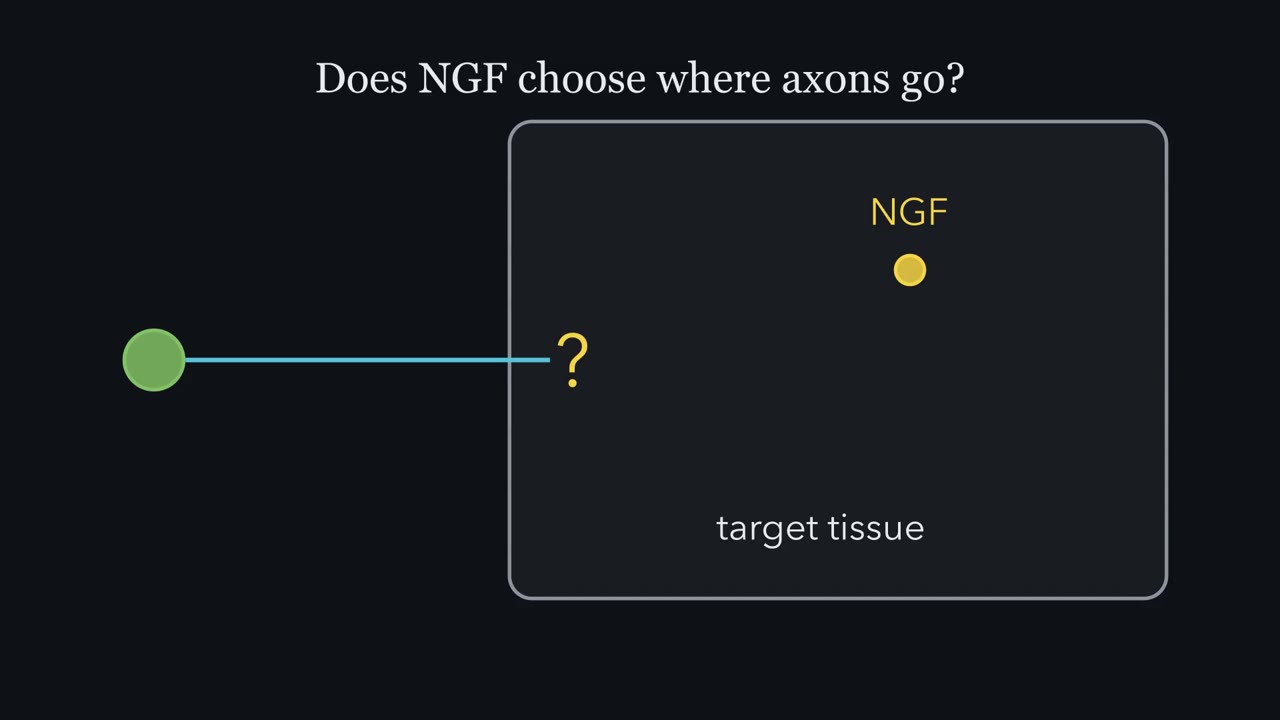
If NGF keeps neurons alive, can extra NGF make a ganglion bigger without limit? Give a chick embryo extra NGF every day, through the period when its neurons normally die. Predict. No change? More survivors? New ganglia in the wrong places? Fibres invading every tissue?
More of the neurons survive than normal. Survivors also grow larger and sprout more fibres. But no neuron changes its type. In 1981, Hamburger, Brunso-Bechtold and Yip counted chick dorsal root ganglia across the death period. NGF reduced the normal death.
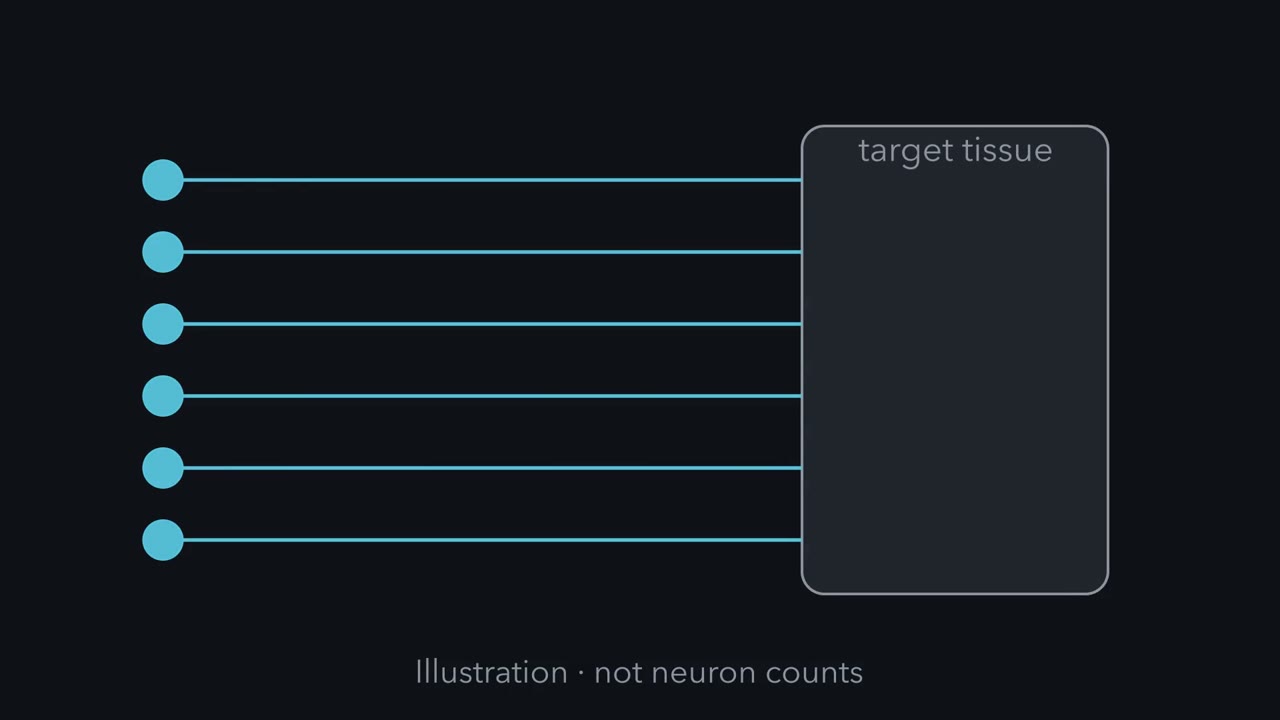
How do you know they were saved, not born? Count neurons and dying nuclei at several stages. Mark dividing cells. Then check that the neurons carry markers of their usual type. Very early in the chick, extra NGF can also increase division in the primary sympathetic ganglia. That happens before sympathetic axons reach their targets. The extra division is NGF acting as something other than a survival factor. Now the limit. A survival factor cannot save a neuron that was never made. Take a ganglion that has made 1,000 neurons, with none added. Each needs one unit a day from a shared supply. With 500 units a day, the target limits survivors. With 3,000, the number made limits them.
In this ideal model, survivors are at most the smaller of the neurons made and how many the supply can support. It is a budget bound, not a dose law. Extra factor raises the second term. Acting as a survival factor, nothing raises the first. Now a puzzle. Spread those 500 units evenly over all 1,000 neurons. Predict. Every neuron gets half of what it needs. How many survive?
It depends. Every neuron is equally short, so all are at risk at once. Each death frees factor for the rest. But a neuron already committed to dying cannot use it. So the count depends on timing. Slow commitment and quick sharing leave close to 500. Fast commitment leaves far fewer, perhaps none. Equal sharing alone does not say how many survive.
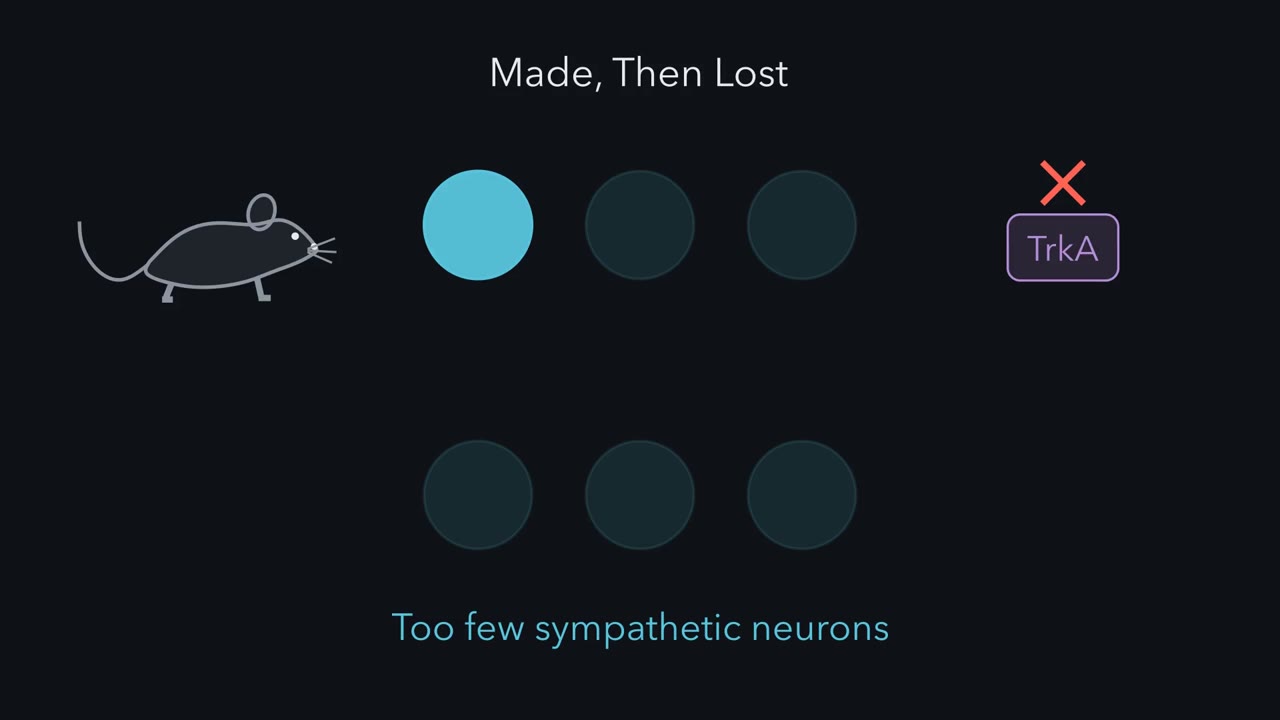
When supply is short, matching it means the factor ends up with some neurons, not spread over all. Slow, random loss can get there. Competition that picks winners early is another route. In mouse sympathetic neurons, evidence supports a model of active competition. NGF raises its own receptor, TrkA, in the neurons that receive it. A neuron that gets a little more can take up still more. Strong signallers release two related factors, BDNF and NT-4. They act through another receptor, p75. They push neighbours with weak NGF signalling toward death. Winners are amplified, and losers are punished. One caution. The ceiling holds only for the population measured.
Limb motor neurons do not depend on NGF. Takeaway: extra NGF saves neurons, but never more than were made. How many survive depends on how the factor is shared.
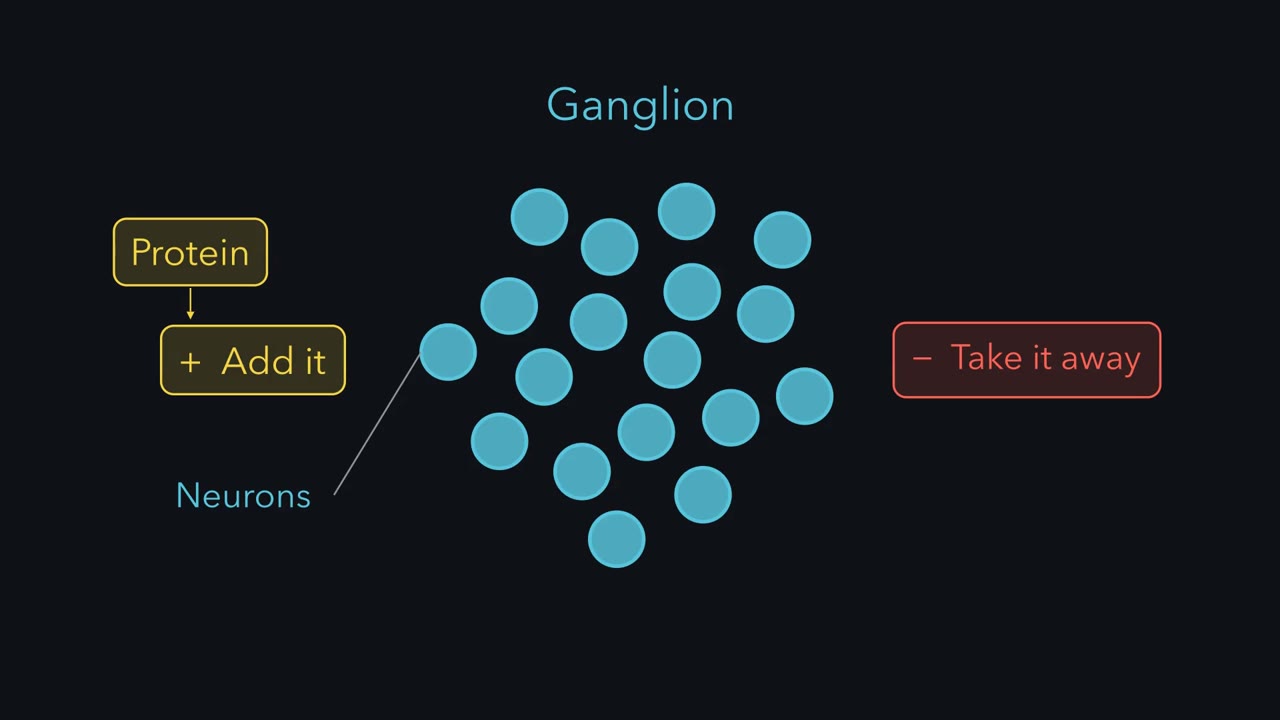
Neutralize one protein in a newborn mouse and its sympathetic ganglia waste away. Neurons compete for a limiting amount of target-derived factor, and the amount limits how many live. Does NGF decide how many neurons there are?
Continue in the lesson: The Neurotrophic Hypothesis Tested →
4:01 · Free, with captions and a transcript. The lesson has the full text, the questions and the sources.
More films from this lesson
How this film was made. Narration: an AI narrator voice (Kokoro, af_heart) reading narration written from this lesson's text. Animation: AI-generated in code (Manim) by Claude, a schematic with no drawn molecular structures. Captions come from the narration script. See something wrong? Report it.