Films · Developmental Neuroscience
What a Dish Can Show
Read the transcript of “What a Dish Can Show”
Film transcript: What a Dish Can Show
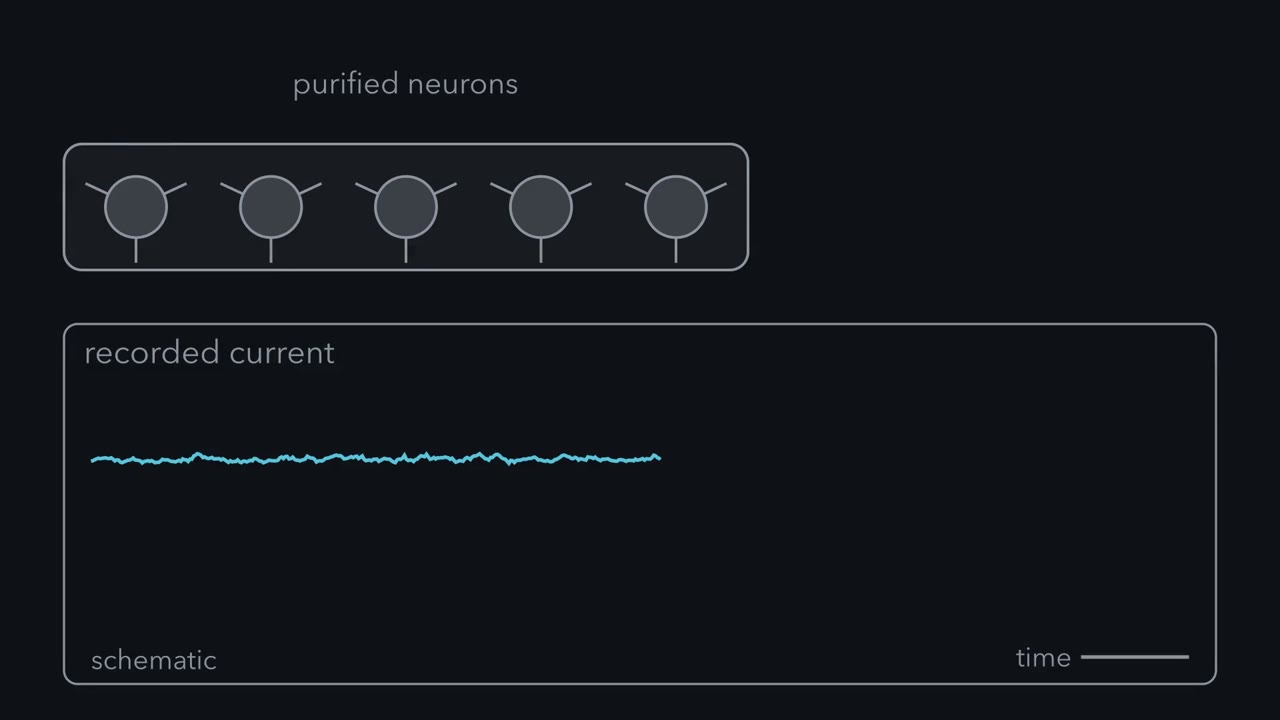
A kidney cell does not make synapses. Can one neuronal protein persuade an axon to build a terminal on it? Neurexin sits on the axon. Neuroligin is its partner on the dendrite. In 2000, Peter Scheiffele and Tito Serafini's laboratory made kidney cells produce neuroligin. They grew these cells under axons from the pons. Where an axon crossed a neuroligin cell, synaptic vesicle proteins gathered into clusters. When the axons were depolarized, the clusters took up antibodies to the inside face of a vesicle protein. So vesicles were being released and retrieved. Control cells did not do this. Soluble beta-neurexin, which binds neuroligin, blocked the effect.
The signal also runs the other way. Neurexin on a bare cell clusters postsynaptic proteins in dendrites. So neuroligin is sufficient, under these conditions, to start a terminal on a bare cell. But is it necessary? Predict. Mice lack the alpha-neurexins, or neuroligins 1, 2 and 3. Fewer synapses, normal ones, or synapses that are there but fail?
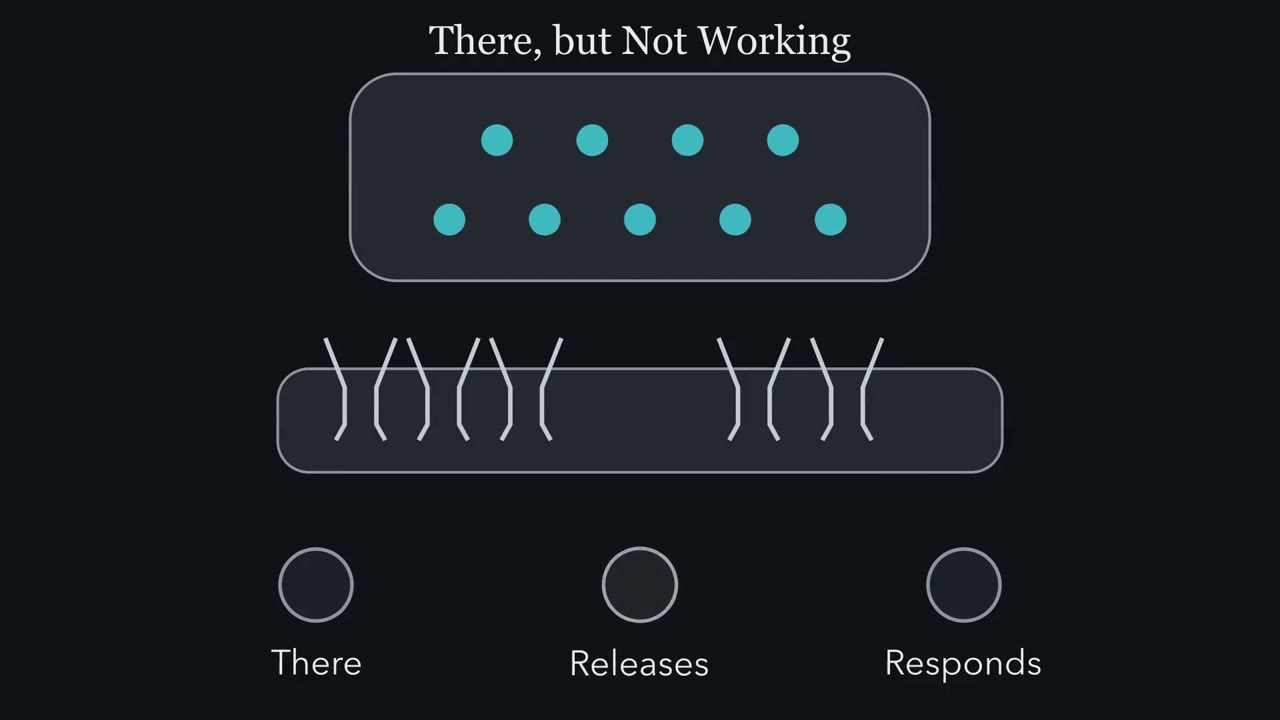
You need two measurements. Count the synapses, and record what they do. In 2003, Markus Missler, Thomas Südhof and colleagues reported mice lacking all three alpha-neurexins. Excitatory synapses were near normal in density. Inhibitory synapses were moderately fewer. And the synapses released transmitter poorly.
In 2006, mice lacking neuroligins 1, 2 and 3 were reported. Brainstem synapses were normal in number. But transmission was impaired, more so at inhibitory synapses. Add stargazer, from the first film. Counting found most synapses in place in every mouse. Recording found something wrong in every one. This does not mean deletions never change number. Deleting every neurexin from some interneurons does lower synapse number. Why would the brain manage without it? One likely reason is overlap. Several organizers can start contacts, so removing one family leaves others. Another is that some organizers specify or check contacts, rather than start them.
Takeaway: a dish tests what one protein can start. A mouse tests what the brain cannot do without. Measure function, as well as count.
A kidney cell that makes one neuronal protein, neuroligin, can persuade an axon to build a nerve terminal on it. So what happens to the synapses of a mouse that lacks neuroligins 1, 2 and 3?
Continue in the lesson: Synapses in the Brain: Adhesion, Scaffolds and Astrocytes →
3:04 · Free, with captions and a transcript. The lesson has the full text, the questions and the sources.
More films from this lesson
How this film was made. Narration: an AI narrator voice (Kokoro, af_heart) reading narration written from this lesson's text. Animation: AI-generated in code (Manim) by Claude, a schematic with no drawn molecular structures. Captions come from the narration script. See something wrong? Report it.