Films · Developmental Neuroscience
Vertebrates: a Brake, a Clock and Identity
Read the transcript of “Vertebrates: a Brake, a Clock and Identity”
Film transcript: Vertebrates: a Brake, a Clock and Identity
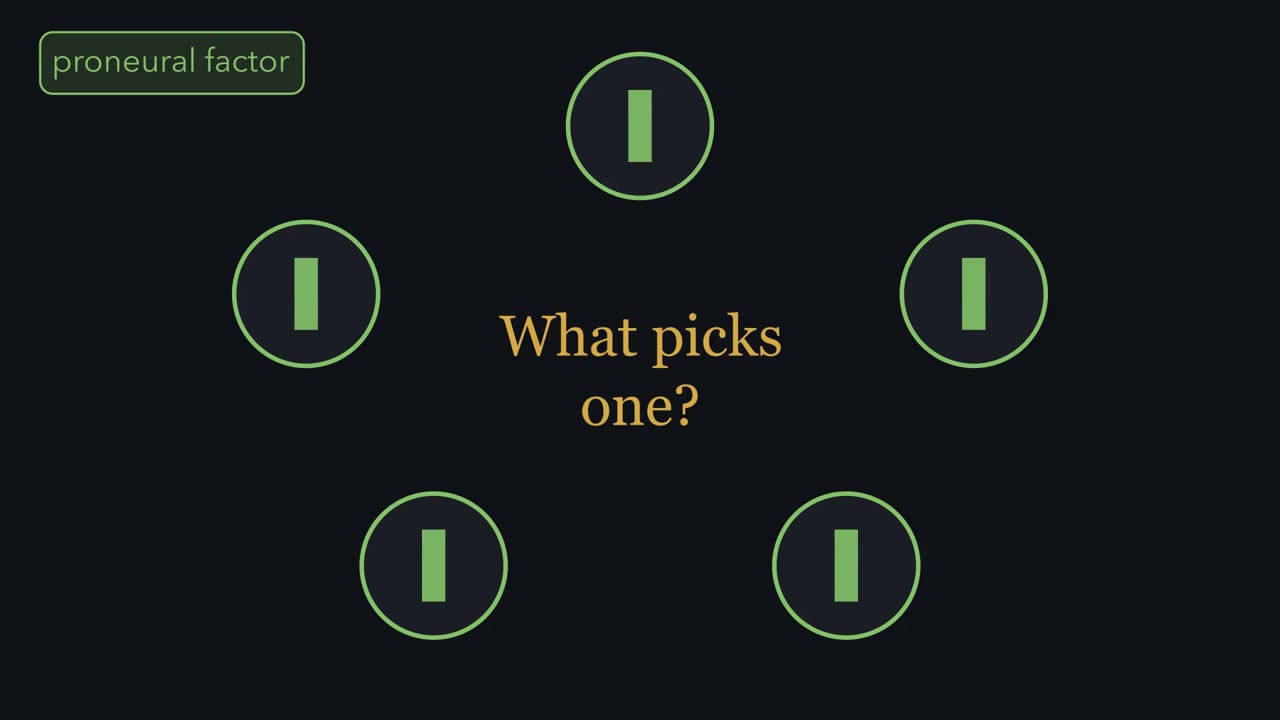
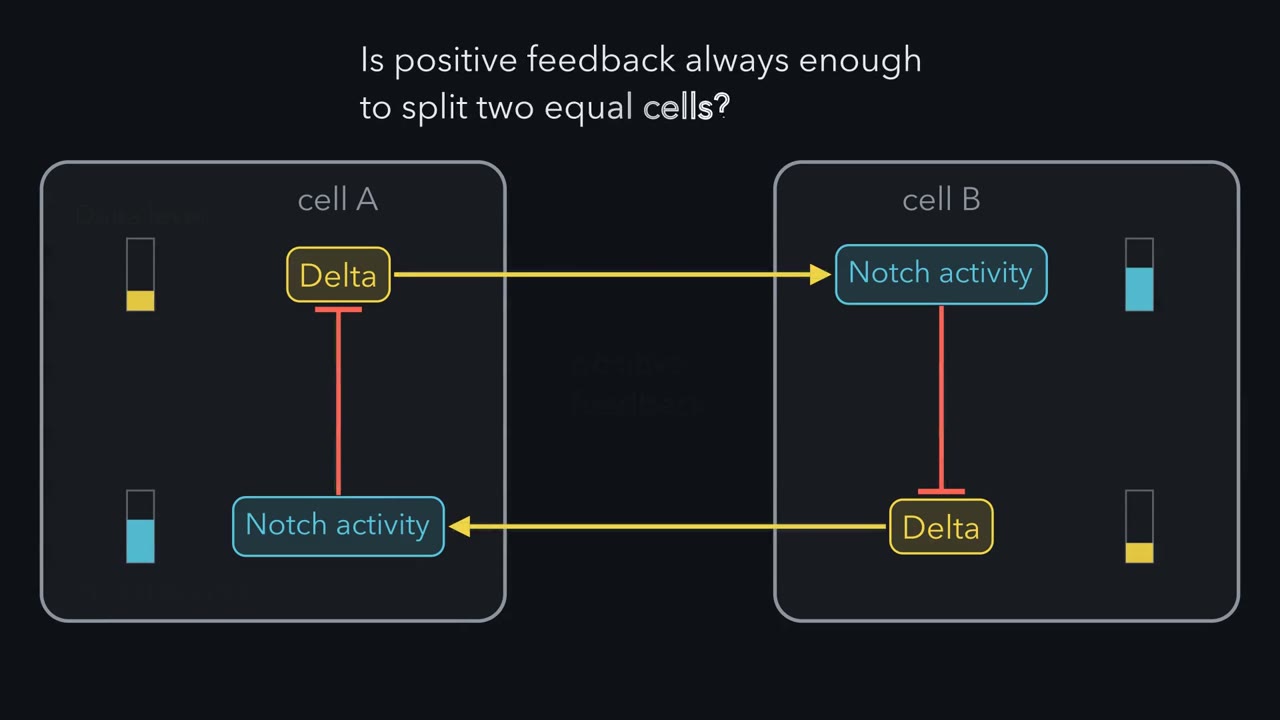
In the vertebrate neural tube, the cells are already neural. So what do the same parts do there? Here, proneural factors push a progenitor to become a neuron. Notch holds its neighbours back as progenitors. The vertebrate relatives of Enhancer of split are the Hes genes. Hes inhibits proneural genes. Progenitors make Notch, its ligand Dll1, the repressors Hes1 and Hes5, and proneural factors. A cell that starts to differentiate raises Dll1. That keeps the progenitors around it as progenitors. Neurons first appear spaced apart. New ones arise in the gaps, and cells leave the pool over days. So lateral inhibition here is a brake on how fast progenitors are used up.
A cell held back stays a dividing progenitor, and can compete again later. Is Notch in the stem cell or the non-stem cell? Both cells have the receptor. The cell whose Notch is more strongly activated stays a progenitor. The cell that keeps sending more Delta differentiates. Mice lacking Hes1 make neurons too early, and have severe neural tube defects. Remove Hes5 as well, and progenitors are lost still faster. a surprise about timing. In cultured cells, Hes1 rises and falls about every two hours. Hes1 represses its own gene. Its RNA and protein are short-lived, and making new protein takes time. In mouse neural progenitors, Hes1 oscillates too.
Neurog2 and Dll1 cycle in the opposite phase. In cells becoming neurons, Hes1 falls, and Neurog2 stays high. So a brief pulse of Delta is not a commitment. Predict. In cultured progenitors, use light to hold Ascl1 steady, or make it oscillate. Which become neurons?
Steady Ascl1 pushed cells to become neurons. Oscillating Ascl1 kept them dividing as progenitors. Last question. Does a proneural factor also decide what kind of neuron forms? In the mouse forebrain, Neurog2 is high in dorsal progenitors. Ascl1 is high in ventral ones. Researchers swapped them, each into the other's place.
Does the factor carry the identity, or the territory? Neither, fully. Ascl1 pushed dorsal cells partly ventral. In the ventral forebrain, Neurog2 restored neurons, but did not push them dorsal. The swaps were not mirror images. In vertebrates, the loop is a brake and a clock. The factor carries part of the identity; the tissue and the cell's history shape the rest.
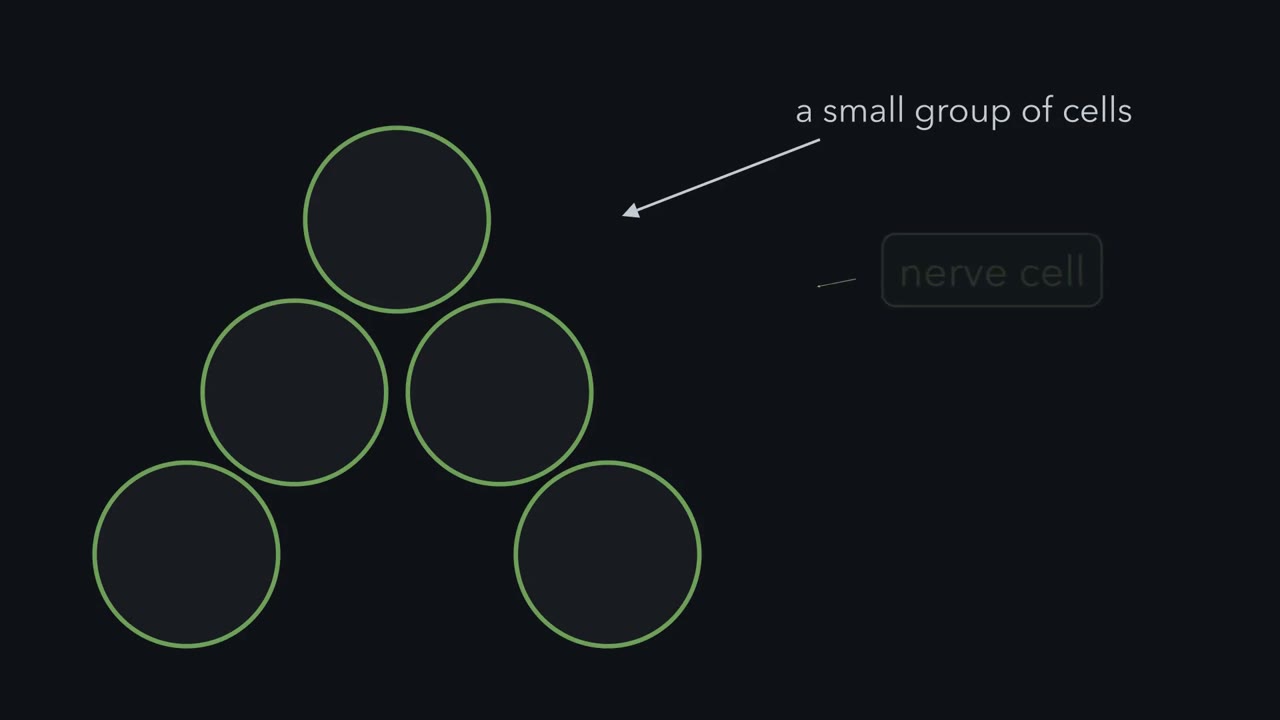
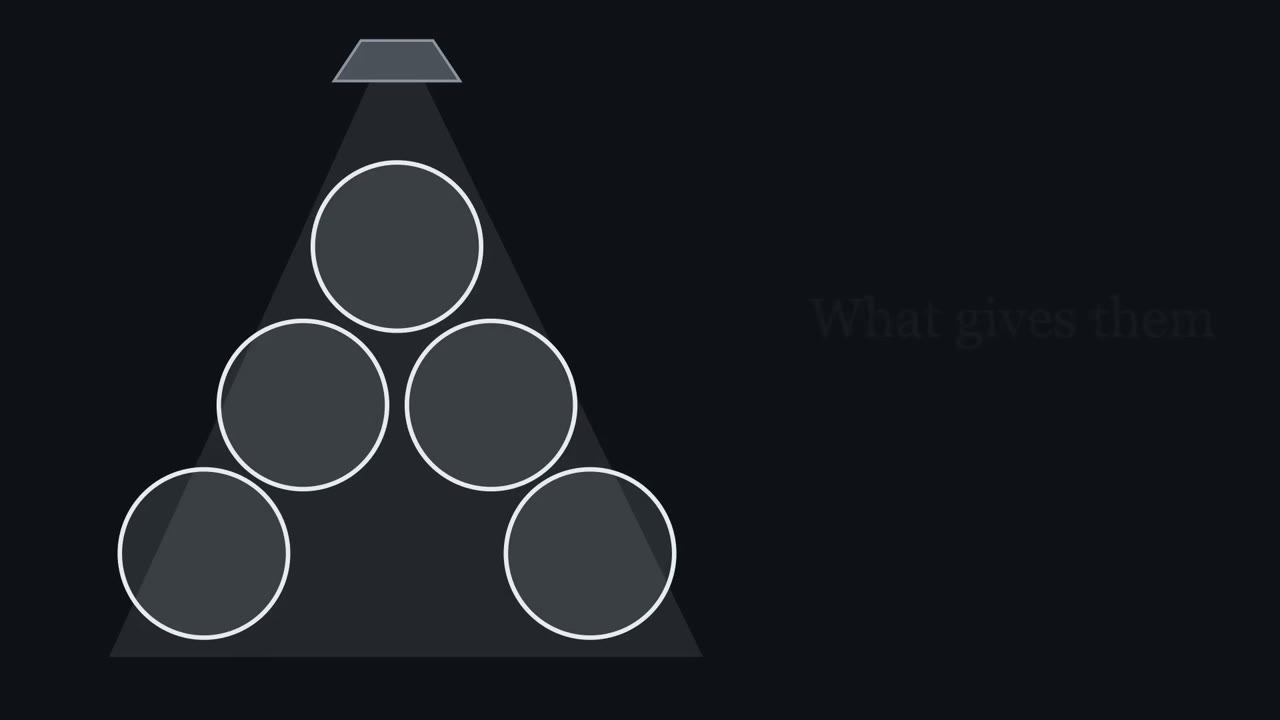
Every cell in the cluster could become the neuron. Why does only one?
Continue in the lesson: Proneural Genes and Lateral Inhibition →
3:17 · Free, with captions and a transcript. The lesson has the full text, the questions and the sources.
More films from this lesson
How this film was made. Narration: an AI narrator voice (Kokoro, af_heart) reading narration written from this lesson's text. Animation: AI-generated in code (Manim) by Claude, a schematic with no drawn molecular structures. Captions come from the narration script. See something wrong? Report it.