Films · Developmental Neuroscience
A Clock in the Fly
Read the transcript of “A Clock in the Fly”
Film transcript: A Clock in the Fly
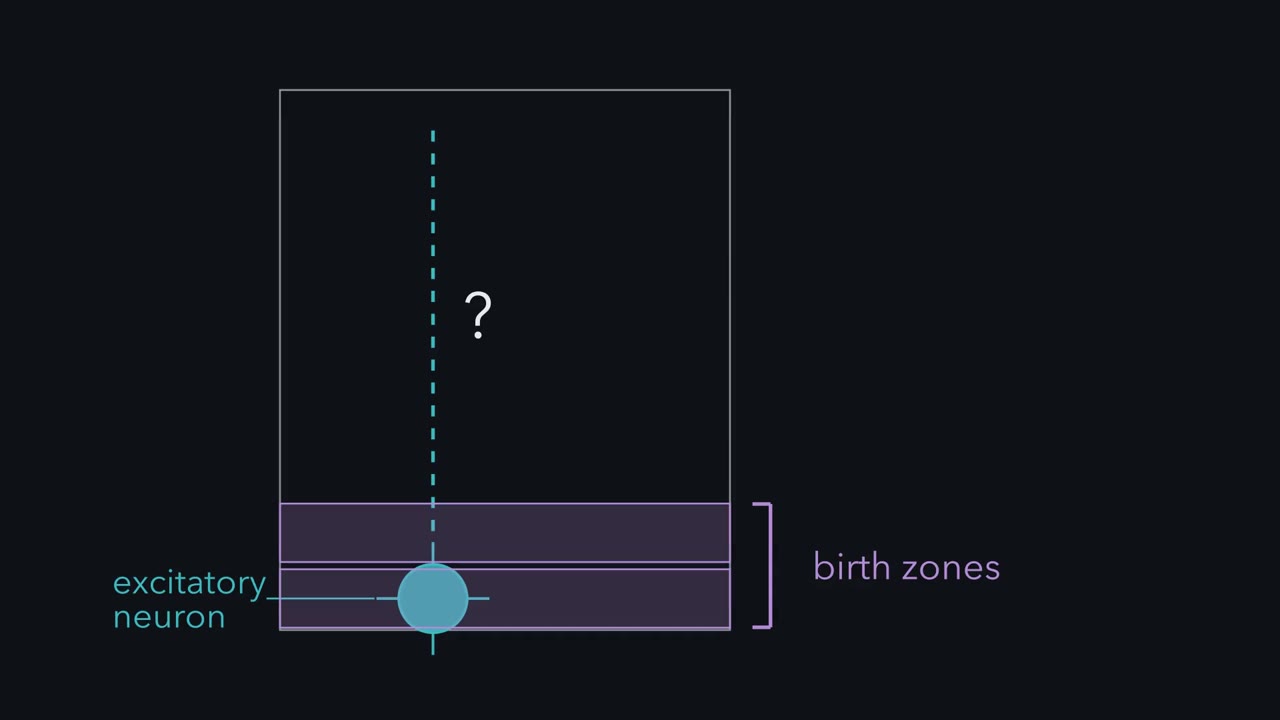
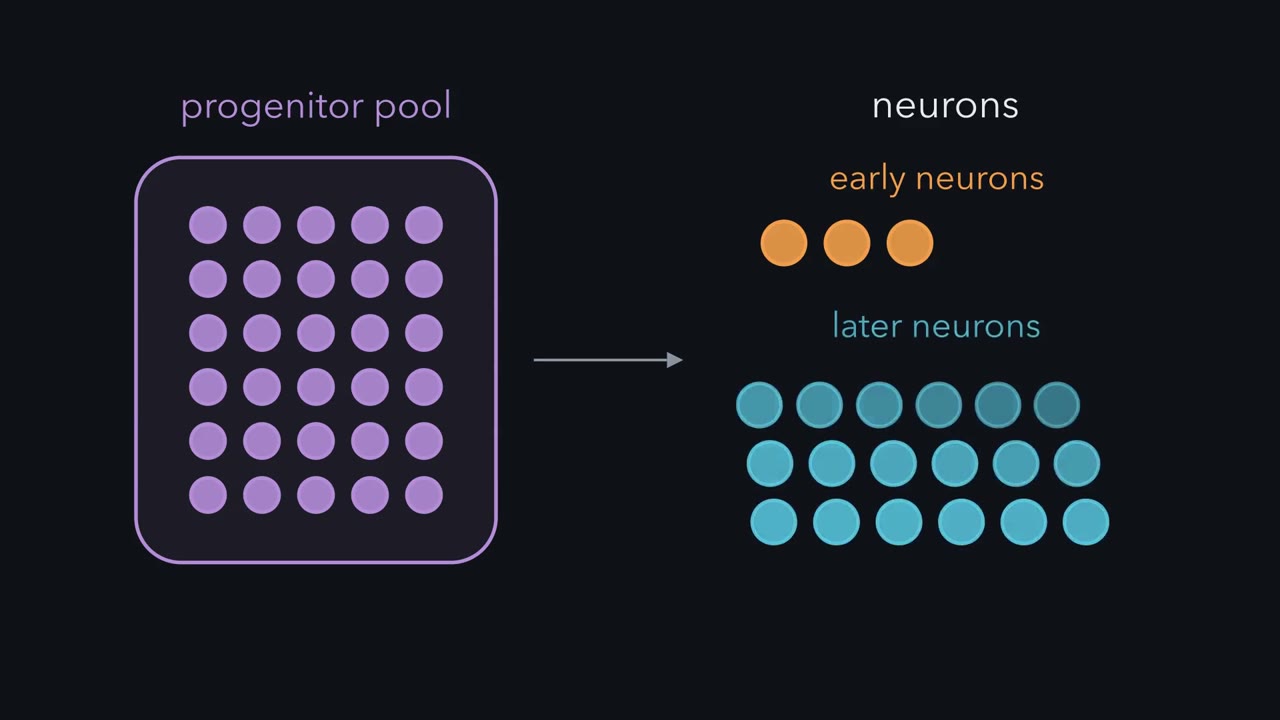
The ferret shows that a progenitor's menu changes with time. But what actually changes inside the cell? The fly asks it in the cleanest form. Each half-segment of its nerve cord has about 30 neuroblasts. Each neuroblast buds off ganglion mother cells, one after another. Each of those divides into neurons or glia. In 2001, Takako Isshiki, Bret Pearson, Scott Holbrook and Chris Doe found a clock of transcription factors. Most neuroblasts switch on four factors in turn. Hunchback, then Krüppel, then Pdm, then Castor. A ganglion mother cell keeps the factor that was on when it budded off. So do its neurons.
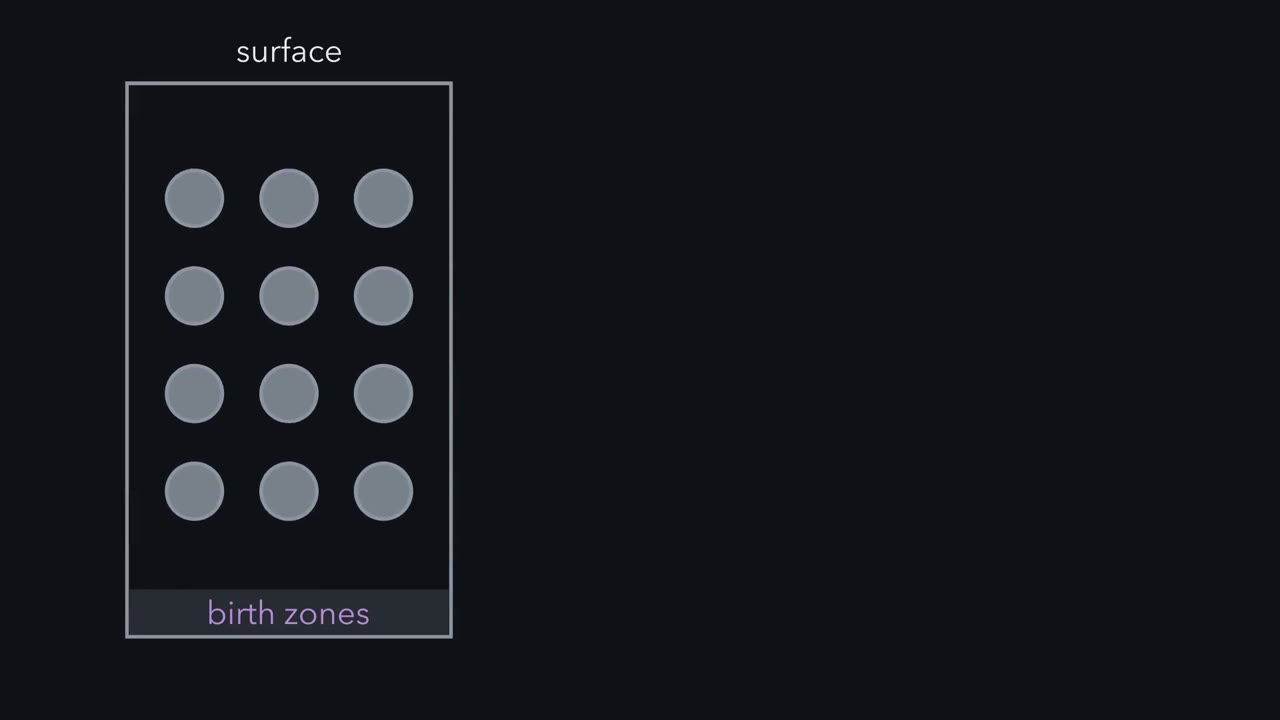
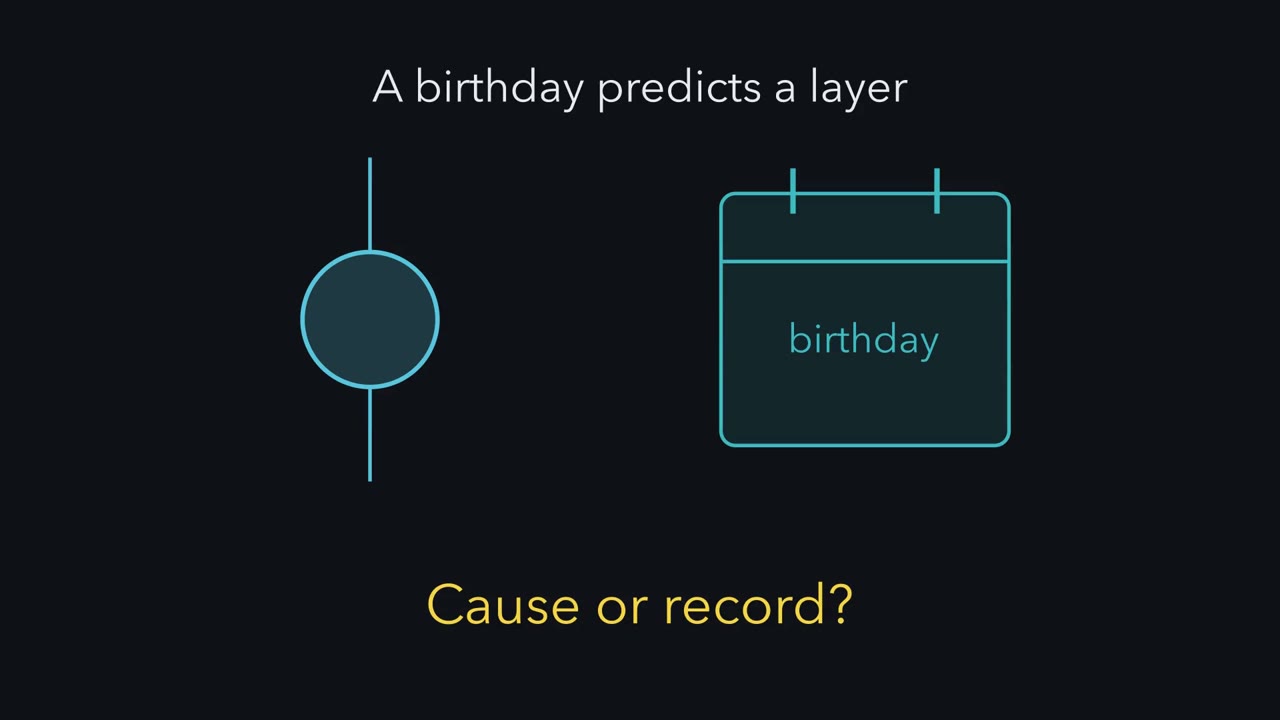
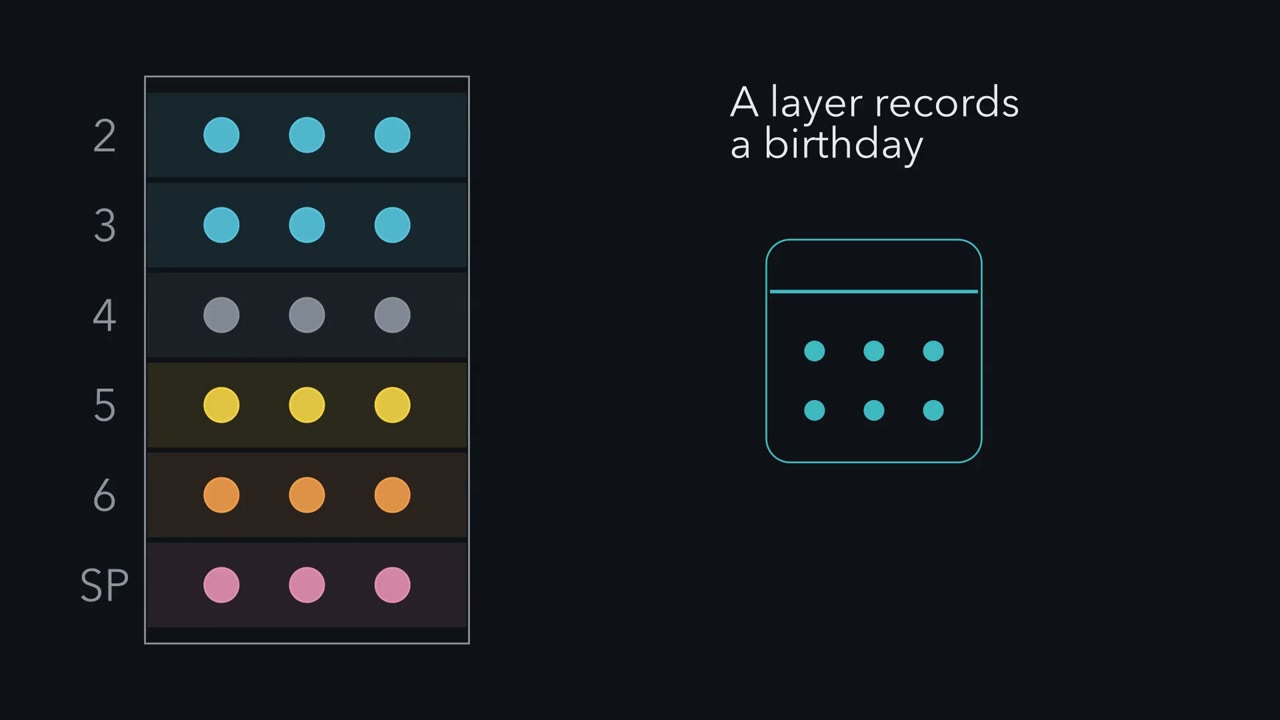
The windows overlap, so the sequence is an outline, not a set of sharp steps. One lineage makes this concrete. The neuroblast NB7-1 makes its first five motor neurons, U1 to U5, in that order. In this idealized picture, U1 and U2 come in the Hunchback window, and U3 with Krüppel. U4 comes with Pdm alone. U5 needs Pdm and Castor together. Now read a grid. Rows are place, which neuroblast. Columns are time, which window. The same factor gives a different neuron in a different row. But expression in sequence is only a correlation. To show the factors set identity, take one away, or keep it on too long. Hunchback and Krüppel also pattern the early embryo.
So the tests changed them in the nervous system itself. Without Hunchback in the nervous system, first-born identities were lost in the lineages examined. Predict. Keep Hunchback on long after it would switch off. Do the extra cells look early-born or late-born? And of which lineage?
The lineages made extra cells with first-born features. In NB7-1, extra cells resembled U1 or U2. Each lineage made its own first-born type. Hunchback did not make every first-born cell the same. Prolonged Krüppel made extra second-born cells.
In two thousand six, the same laboratory showed that P D M and Castor specify U four and U five. Birth order had become a genetic program that could be broken and rewired. The takeaway: place picks the class of neuron. Time, read as a cascade of factors, picks the member within it.
In the mouse cortex, the first cortical-plate neurons born end up deepest. Why do the latecomers climb past them?
Continue in the lesson: Birth Order and Fate: Temporal Identity and the Inside-Out Cortex →
2:56 · Free, with captions and a transcript. The lesson has the full text, the questions and the sources.
More films from this lesson
How this film was made. Narration: an AI narrator voice (Kokoro, af_heart) reading narration written from this lesson's text. Animation: AI-generated in code (Manim) by Claude, a schematic with no drawn molecular structures. Captions come from the narration script. See something wrong? Report it.