Films · Developmental Neuroscience
Dating a Birthday
Read the transcript of “Dating a Birthday”
Film transcript: Dating a Birthday
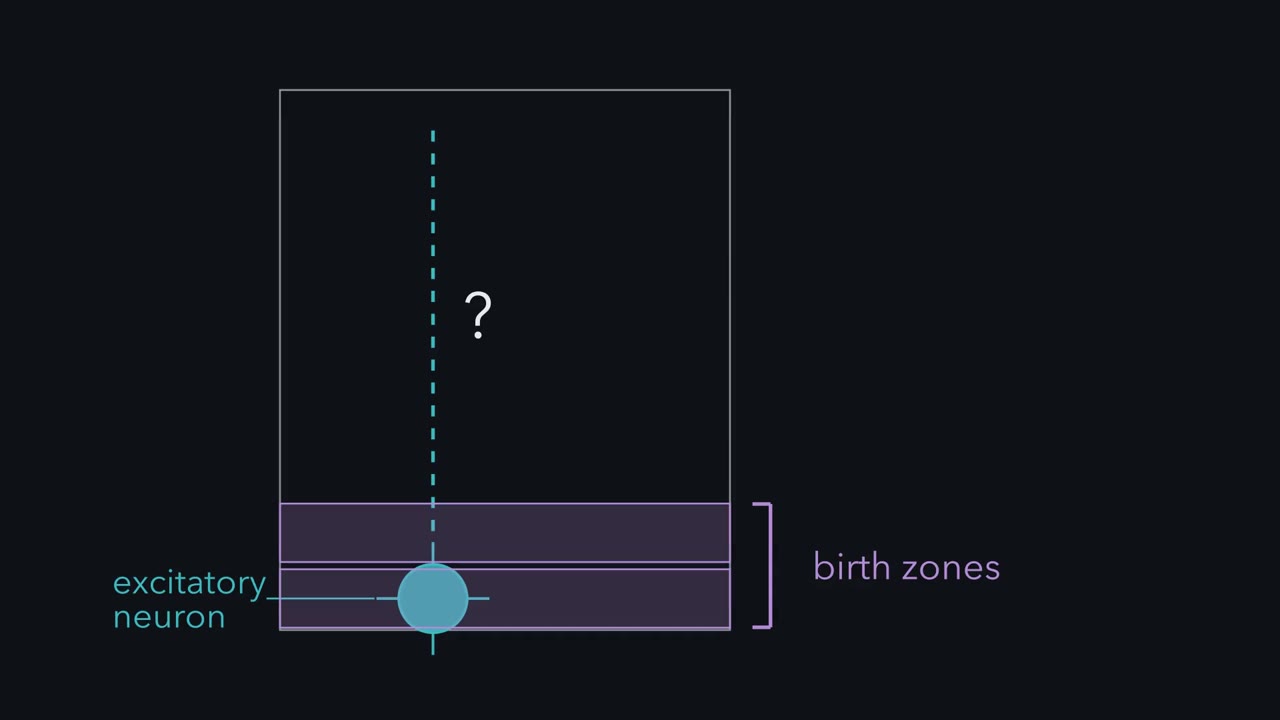
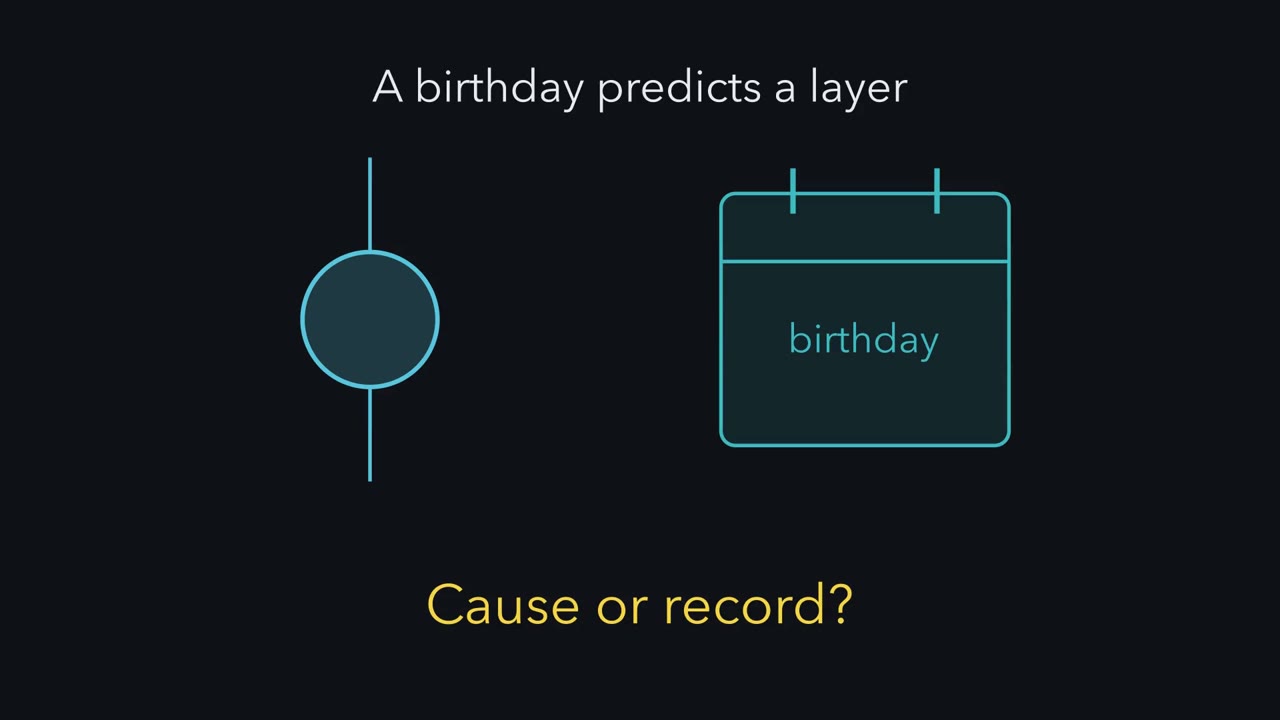
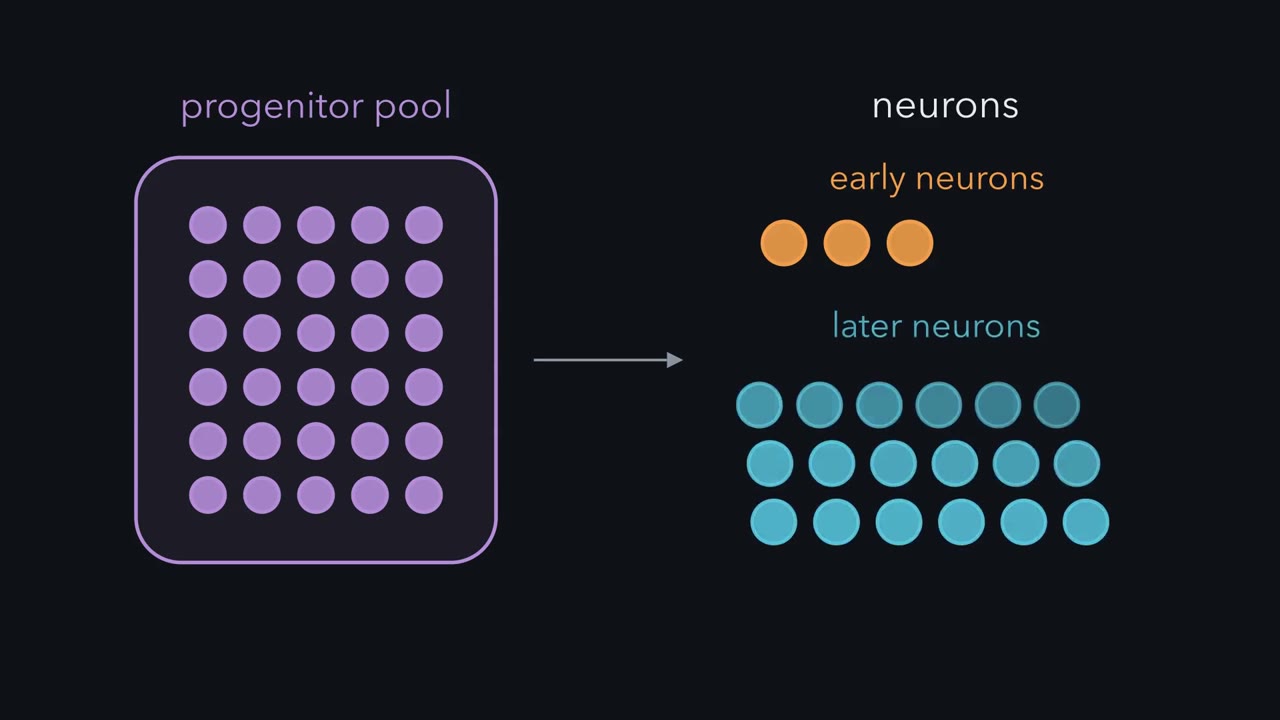
Excitatory cortical neurons are born in zones at the bottom of the wall, then climb. So how can you tell, weeks later, when one was born? You date its last S phase, when DNA is copied. That is the final S phase of the cell that divides to make it. Give a pregnant mouse one dose of thymidine carrying tritium, a radioactive form of hydrogen. Only DNA uses thymidine. So only cells copying DNA in the next hour or so are marked. The labeled cell still divides once to make a neuron. Each extra division after that halves the label.
A neuron still heavily labeled weeks later made its last DNA copy while the label was there. The pulse dates its birth. The label marks that S phase. It does not tell the cell anything. Now two models. In model one, each new neuron is added at the bottom and shoves the older ones outward. In model two, each new neuron climbs past the older ones and settles above them. Predict. Pulse on embryonic day 12 then look at postnatal day 21 Where does each model put the heavily labeled cells?
Model one puts them nearest the surface, shoved up by everything added beneath them. Model two puts them deepest. In 1961, Jay Angevine and Richard Sidman gave pulses on different embryonic days. Cells labeled earliest lay deepest, beside the white matter. Cells labeled later lay progressively nearer the surface. Later cells had passed earlier ones. It is a strong tendency, with overlap between days.
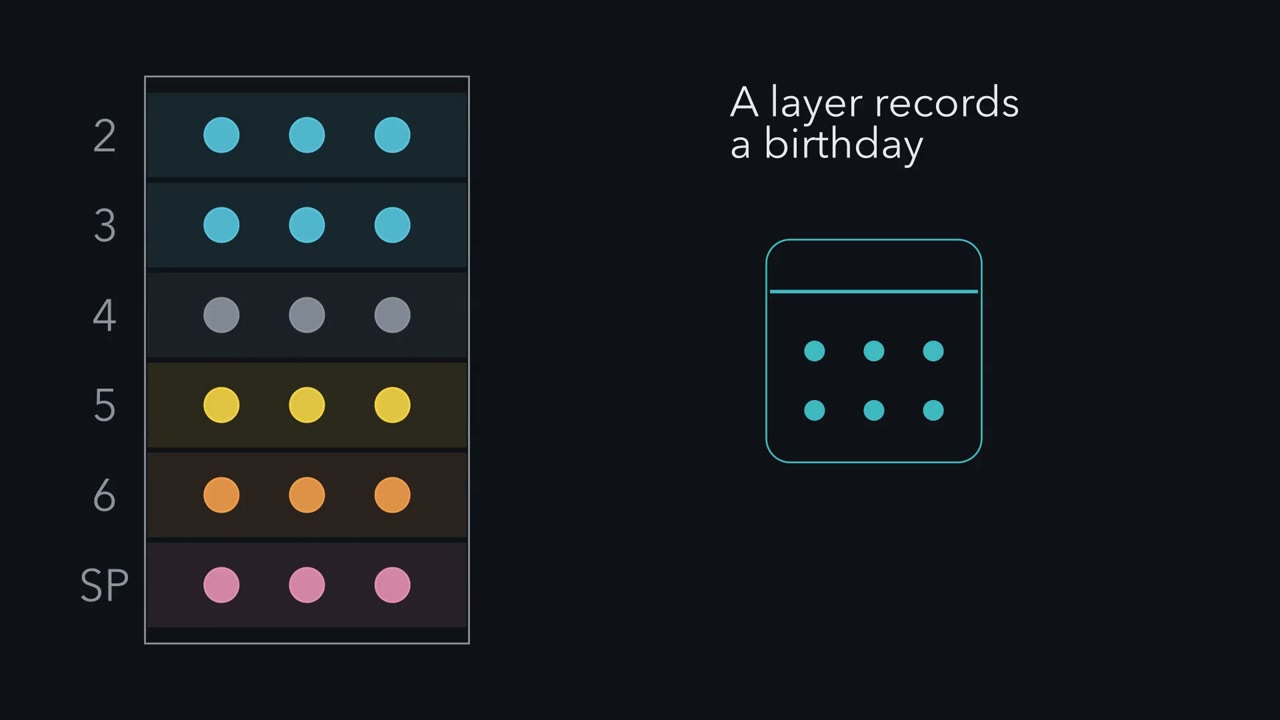
Here is the signature evidence, idealized. Heavily labeled cells from an E12 pulse sit mostly in layers 5 and 6. From an E16 pulse, they sit mostly in layers 2 and 3. Lightly labeled cells divided again after the pulse. Born later, at many times, they scatter through many layers. In 1974, Pasko Rakic found the same order in the visual cortex of rhesus monkeys. In the mouse, layers 2 to 6 are made over about six embryonic days. Subplate and layer 6 come first, upper layers last. Then each later wave passes the neurons already in the cortical plate and settles above them.
Notice the exception. The preplate cells are born first, yet they end up both at the top and at the bottom. Earlier means deeper only inside the cortical plate. This is a rule of the neocortex. The retina uses birth order too, but builds its layers another way.
The takeaway: a thymidine pulse dates a birthday, and later-born neurons pass earlier ones to settle above them.
In the mouse cortex, the first cortical-plate neurons born end up deepest. Why do the latecomers climb past them?
Continue in the lesson: Birth Order and Fate: Temporal Identity and the Inside-Out Cortex →
3:20 · Free, with captions and a transcript. The lesson has the full text, the questions and the sources.
More films from this lesson
How this film was made. Narration: an AI narrator voice (Kokoro, af_heart) reading narration written from this lesson's text. Animation: AI-generated in code (Manim) by Claude, a schematic with no drawn molecular structures. Captions come from the narration script. See something wrong? Report it.