Films · Developmental Neuroscience
What Lasts Is Not What Can Be Learned
Read the transcript of “What Lasts Is Not What Can Be Learned”
Film transcript: What Lasts Is Not What Can Be Learned
Do people have windows like a songbird's? And what does an age curve tell us? In 1967, Eric Lenneberg proposed a critical period for language, from early childhood to puberty. The main natural test is deaf children of hearing parents who first meet a signed language late. Delayed access to sign does affect later proficiency. Mayberry compared adults who learned sign at the same age. Some already had English before losing their hearing. Those with no accessible language before sign did worse. The groups also differed in when they lost hearing, so it is not a perfect control. But it suggests missing early language, not only age, leaves a lasting mark.
Johnson and Newport tested English grammar in adults who arrived in the United States at ages 3 to 39. Predict. Plot adult grammar scores against age of arrival. Do scores hold until puberty, then drop? Or fall earlier? Early arrivals scored like native speakers. Then scores fell steadily with later arrival, up to about puberty. Later arrivals scored lower, and varied widely. The outcome curve was graded, falling from childhood.
But a huge online grammar quiz suggested that grammar-learning ability stays high until about seventeen. So how can a twelve-year-old arrive with full learning ability, yet end below native level? Grammar takes years to learn. A later starter gets fewer full-speed years before the slowdown. Suppose, as a toy, native-like grammar takes 7 full-speed years. A 12-year-old gets only 5. If later learning is slow enough, that shortfall lasts. So what lasts can start to fall before the ability to learn does. A curve of what lasts is not a curve of learning ability. Why learning slows is still debated. In sight, infants treated for dense cataracts showed some improvement in acuity after as little as an hour.
Yet processing of the spacing between facial features stayed impaired years later. Separate abilities have separate windows. So ask what input arrives, at what age, and what lasts.
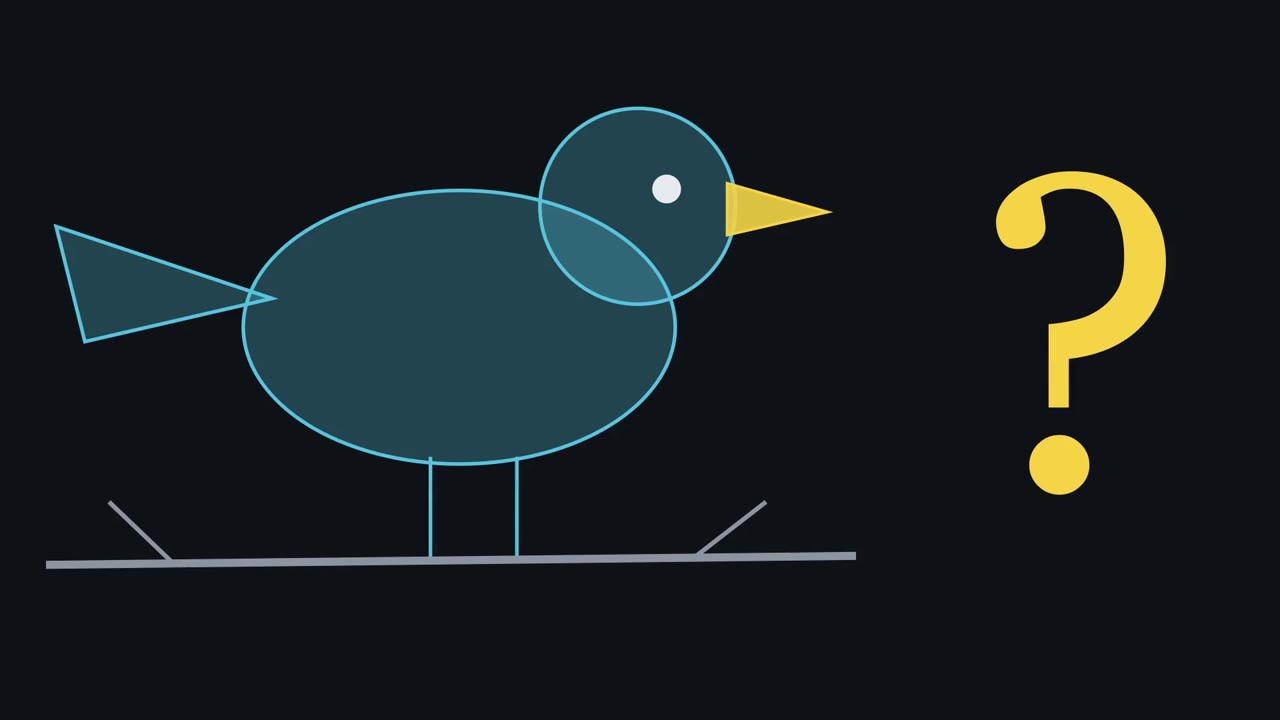
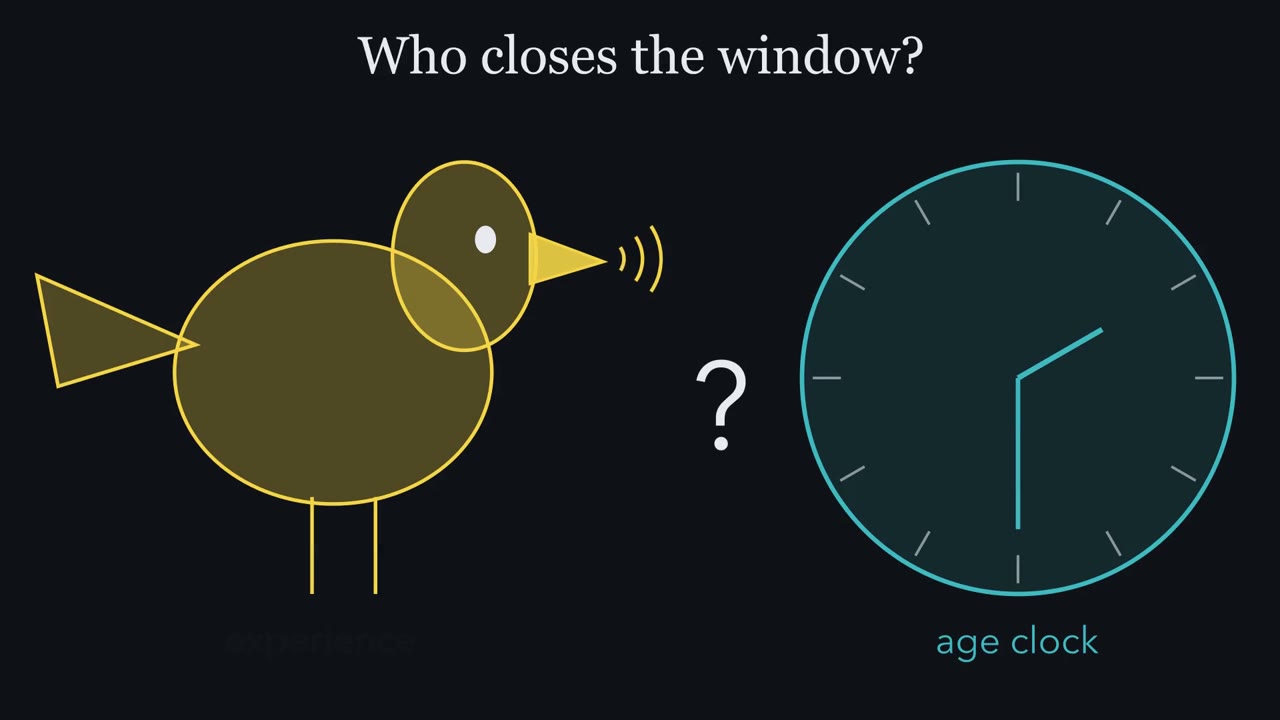
A young songbird that never hears an adult sing grows up singing a simple, abnormal song. Why can't it catch up later?
Continue in the lesson: Sensitive Periods in Behavior: Song, Language and Sight →
2:47 · Free, with captions and a transcript. The lesson has the full text, the questions and the sources.
More films from this lesson
How this film was made. Narration: an AI narrator voice (Kokoro, af_heart) reading narration written from this lesson's text. Animation: AI-generated in code (Manim) by Claude, a schematic with no drawn molecular structures. Captions come from the narration script. See something wrong? Report it.