Hubs That Compete
Read the transcript of “Hubs That Compete”
Film transcript: Hubs That Compete
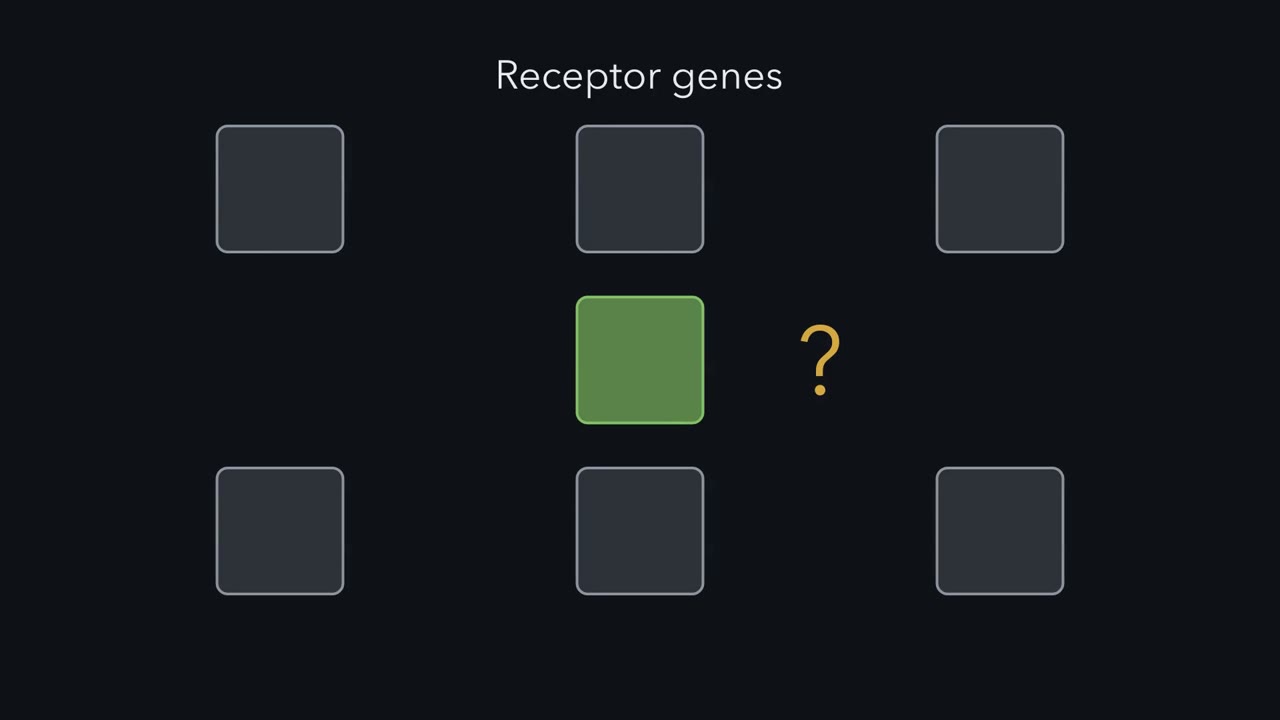
Once a few genes slip out of the silence, how does just one of them win? An enhancer is a stretch of DNA that raises transcription of a gene it contacts. The receptor genes have candidate enhancers, which the field calls the Greek Islands. Contacts in trans are contacts between different chromosomes. A hub is a cluster of enhancers, often from different chromosomes. An active hub sits around the gene it drives. Markenscoff-Papadimitriou and colleagues linked receptor transcription to contacts between enhancers on different chromosomes. A chromatin remodeler, Bptf, helped make those contacts. Disrupting the contacts was linked to weak expression of several receptors at once.
What builds the hubs? Two transcription factors, Lhx2 and Ebf, bind cooperatively at enhancer motifs with a set spacing. Nearly every Ebf site in the receptor clusters was also bound by Lhx2. An inserted array of enhancer elements raised how often linked receptors were chosen. That is a sufficiency-style test. Monahan, Horta and Lomvardas then extended the contact maps across the whole genome. Receptor clusters on 18 chromosomes contacted one another. The factors LHX2 and LDB1 regulated how these hubs assemble and are maintained. But a contact map from many cells is an average. It cannot show that each cell has a single hub. So look inside one developing neuron.
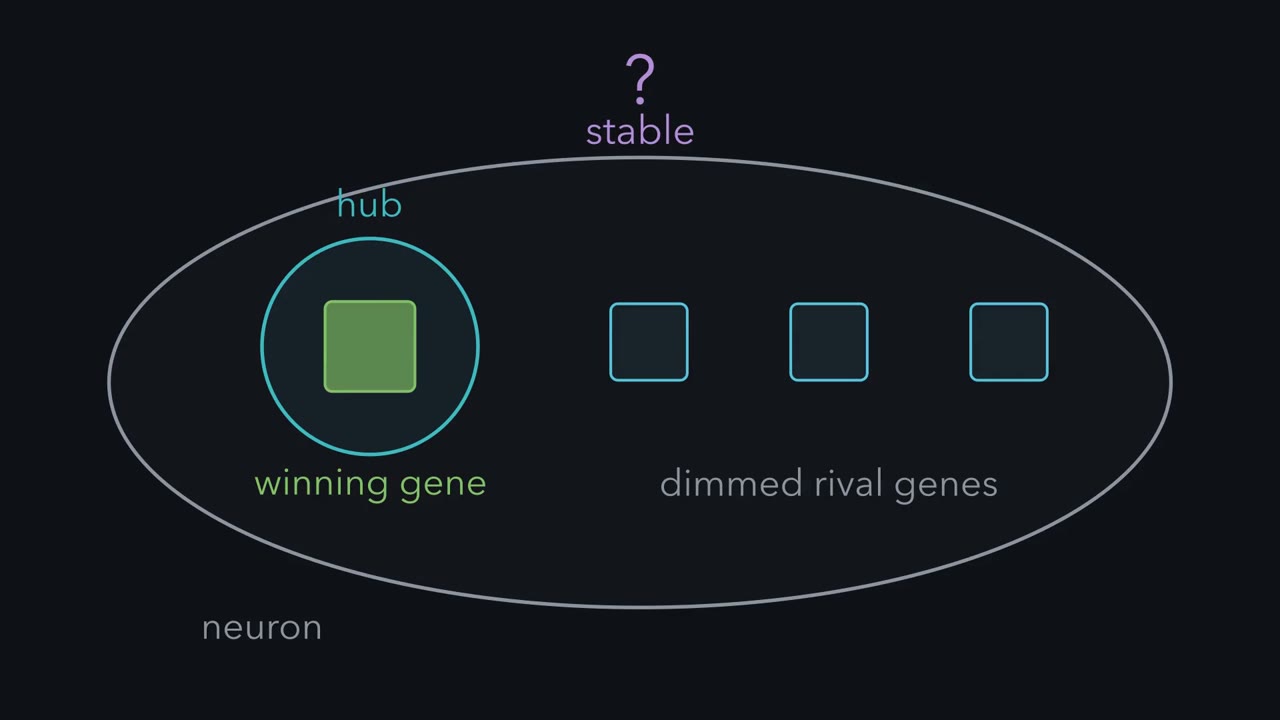
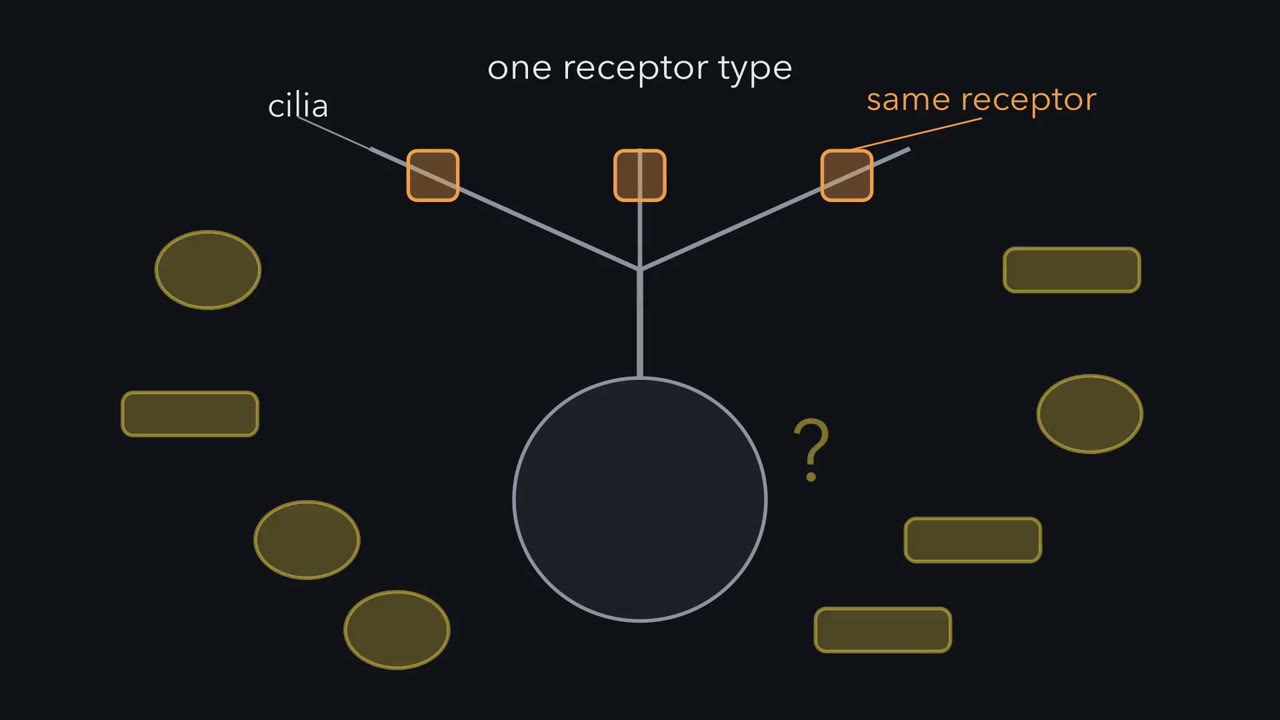
Is there one hub, or several? Several, before one gene wins. Pourmorady and colleagues inferred competing hubs in single developing neurons. They combined single-cell readouts of RNA and open chromatin with single-cell contact maps.
Their evidence supported two further steps. First, receptor RNA suppressed transcription of competing receptors at a distance. The machinery behind that long-range suppression is still unidentified. Second, translation of the receptor then stabilized transcription at the winning hub. So competition can work without receptor protein, and protein then helps stabilize the winner. One receptor per neuron is the endpoint.
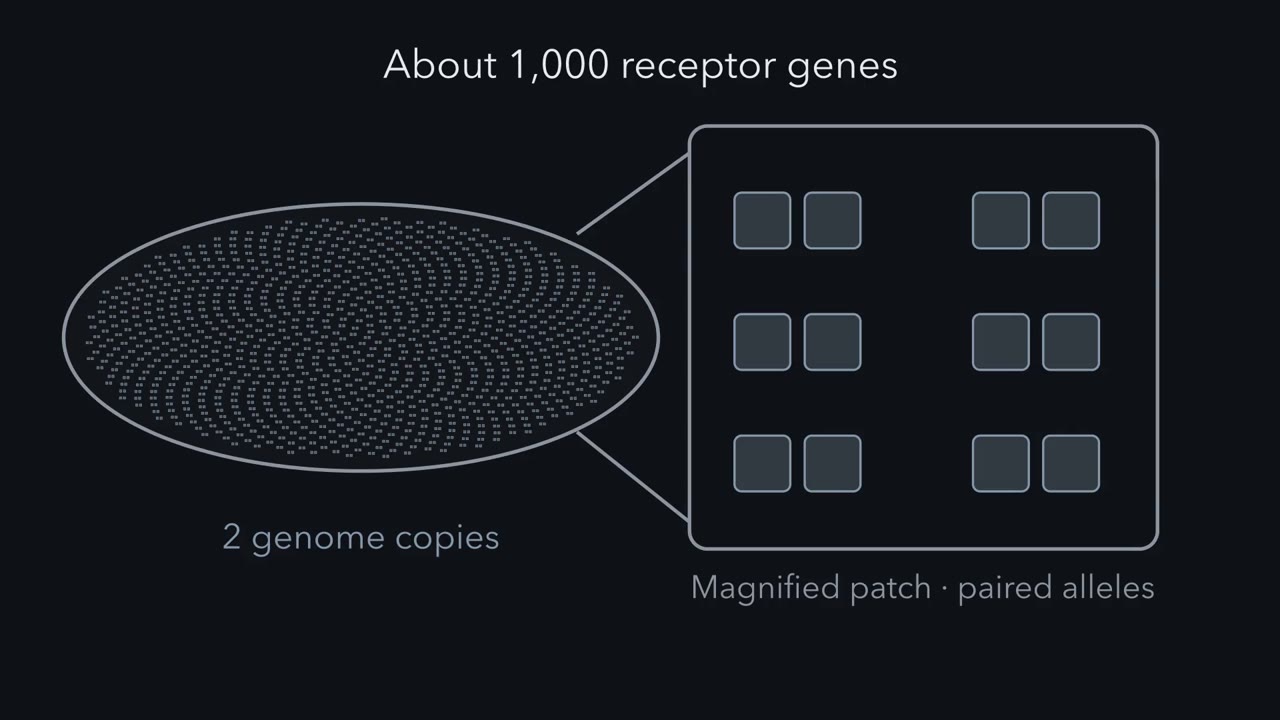
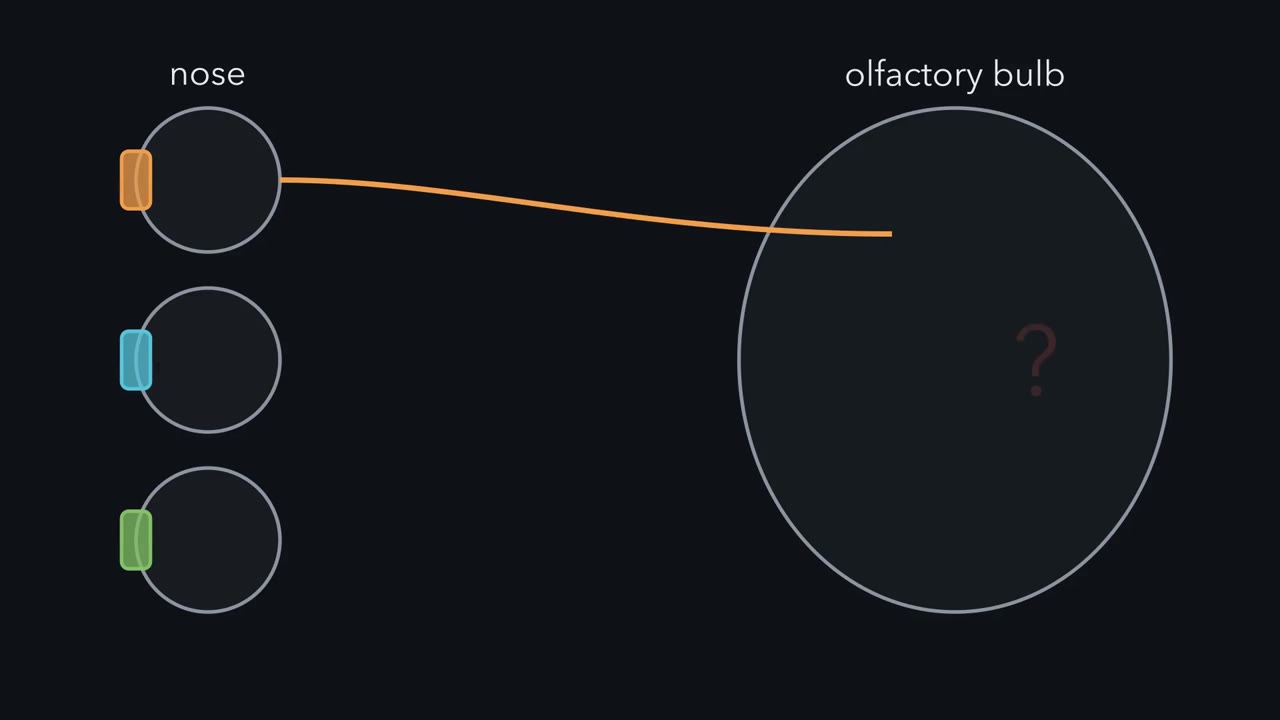
A mouse olfactory neuron holds about a thousand receptor genes and uses one copy of one. How does it choose, and what keeps it from changing its mind?
Continue in the lesson: One Receptor per Neuron: How Olfactory Neurons Choose →
2:46 · Free, with captions and a transcript. The lesson has the full text, the questions and the sources.
More films from this lesson
How this film was made. Narration: an AI narrator voice (Kokoro, af_heart) reading narration written from this lesson's text. Animation: AI-generated in code (Manim) by Claude, a schematic with no drawn molecular structures. Captions come from the narration script. See something wrong? Report it.