Beyond the Clock: Mood, Learning, Seeing and People
Read the transcript of “Beyond the Clock: Mood, Learning, Seeing and People”
Film transcript: Beyond the Clock: Mood, Learning, Seeing and People
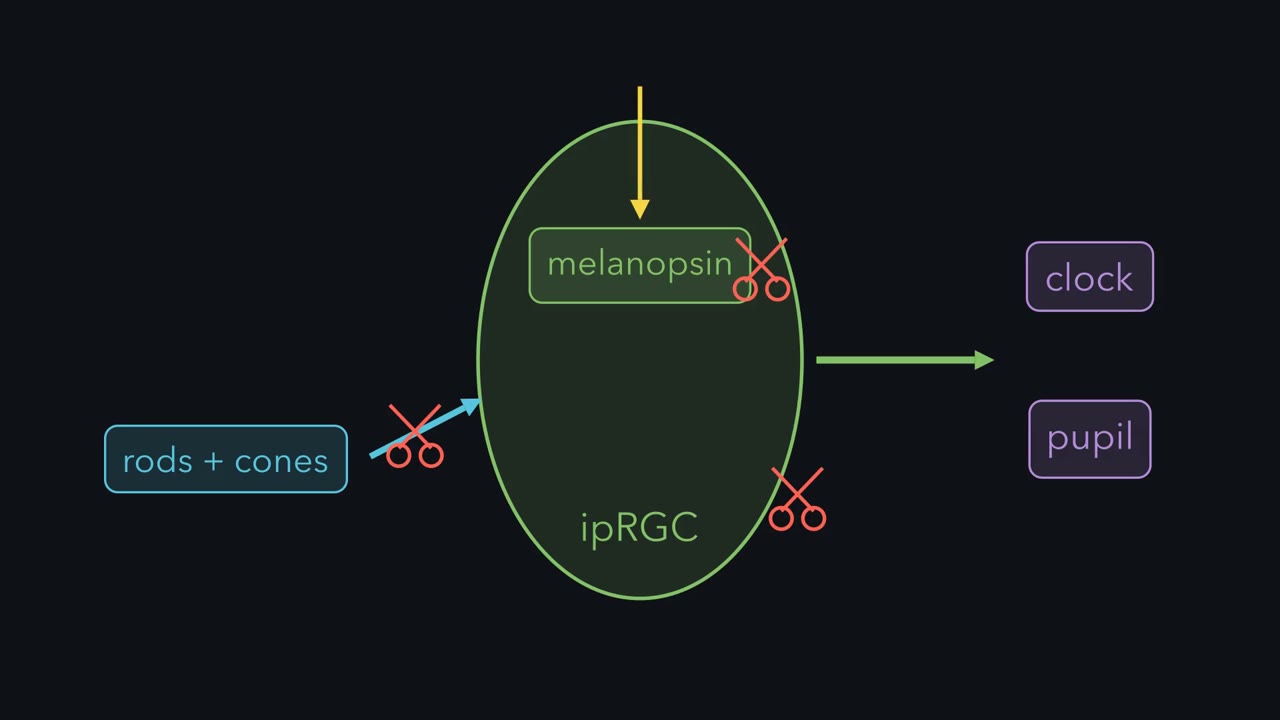
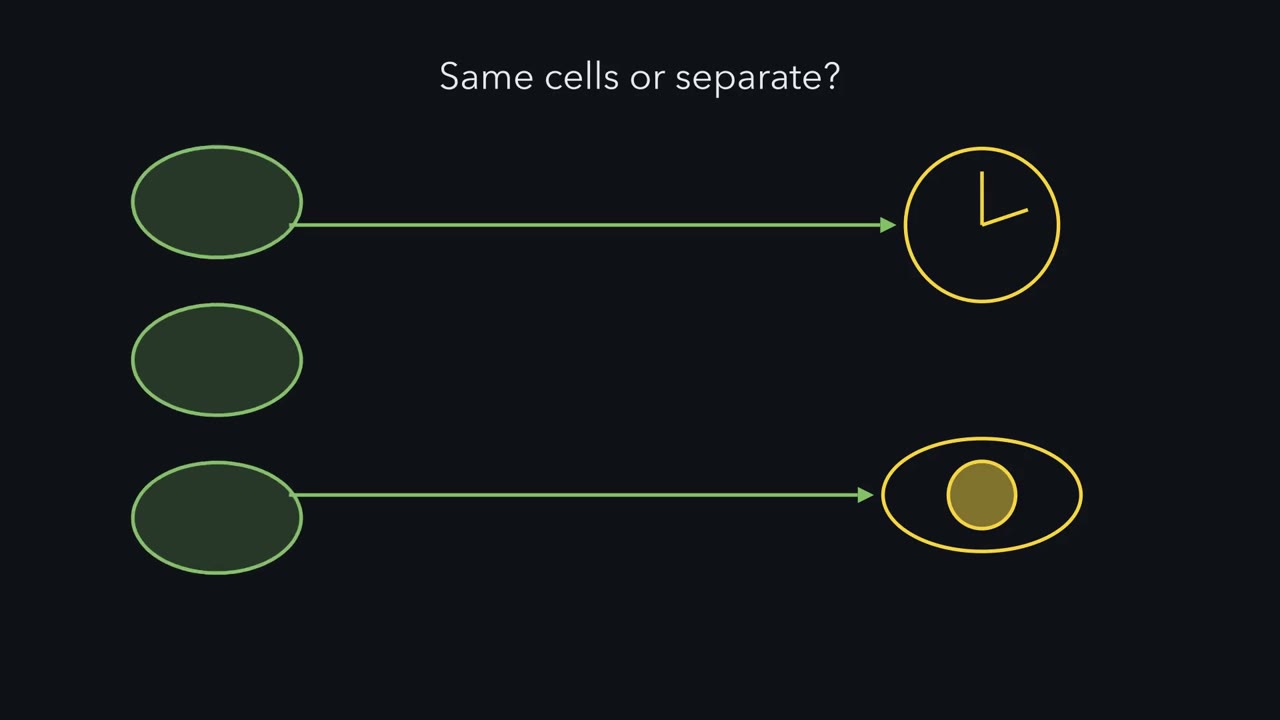
Light sets the clock and the pupil. Can it also change mood and learning, apart from sleep? LeGates and colleagues tested this in mice, with a T7 cycle. That is three and a half hours of light, then three and a half hours of dark, again and again. T7 mice showed depression-like behaviour. Long-term potentiation in hippocampal slices was impaired. Mice lacking ipRGCs did not show these changes. Two controls matter. Earlier work found total sleep preserved under T7. And the clock stayed rhythmic, although its circadian period lengthened. As with any ablation, this implicates the cells, not the pigment. And a mouse assay is not a diagnosis. Predict. Do the mood and learning effects run through the same output, or through different ones?
Fernandez and colleagues found two routes. Cells projecting mainly to the SCN were sufficient for the learning deficits. A separate path, to the perihabenular region next to the habenula, carried the mood effects. In the tested paradigms, silencing this region prevented the mood-like change. Activating it was enough to produce one. Whether a matching circuit exists in humans was not tested. A smaller story asks whether these cells help with seeing patterns. Some of them send axons to the thalamic visual relay. Mice without rod and cone signalling could tell a striped grating from grey. But only very coarse stripes. Mice lacking melanopsin showed deficits in contrast sensitivity.
Still, this is a secondary role. What about people? Zaidi and colleagues studied two blind adults without functional rods or cones. In one woman, the pupil was most sensitive near 480 nanometres, after correcting for the lens. She also detected a light above chance in a forced-choice test. In one man, light of 460 nanometres suppressed melatonin. Two results, from two different people. Together they are an existence proof, not a population result. Evening screens are a separate question. In one study, people read a bright device for about four hours, on five evenings. Melatonin was lower than in a dim-light test, and its evening rise came later than after a printed book.
But the study did not separate spectrum from brightness. The link to these cells is an inference. The same picture helps across these mouse results. Each cell pools two light signals, and different cells reach different targets. It does not explain the image-forming subtypes, and it cannot test necessity in people.
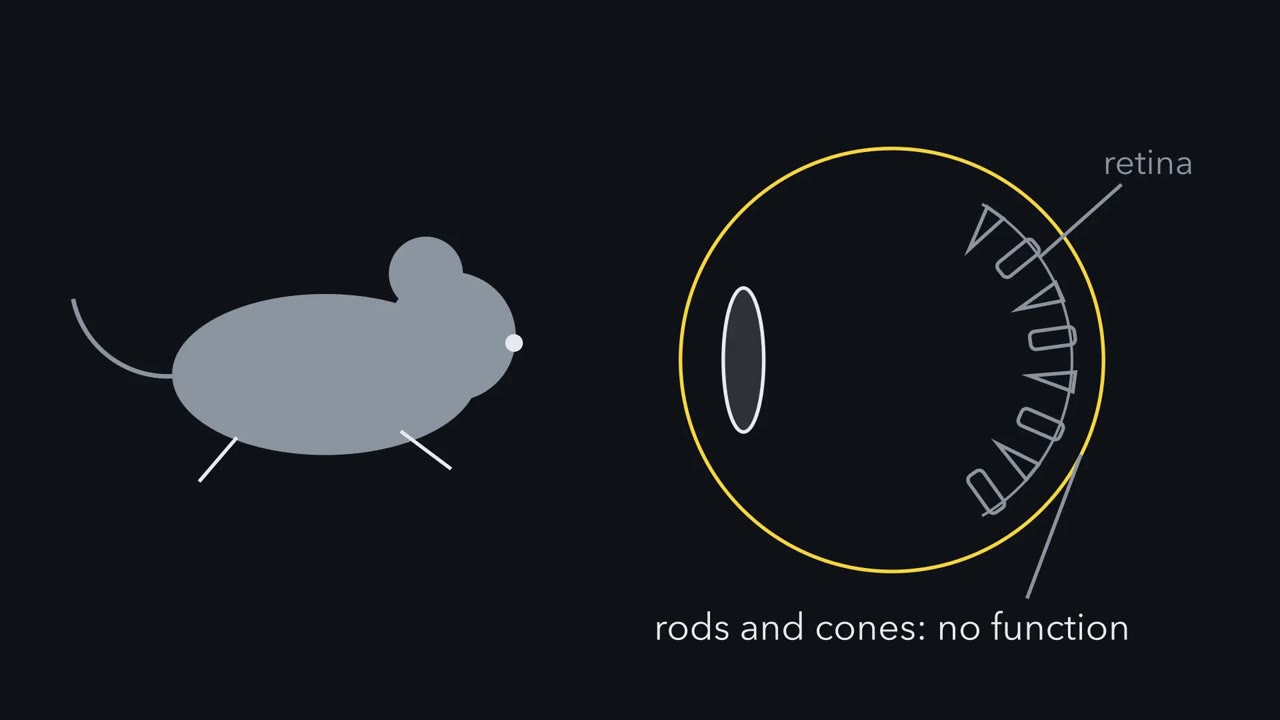
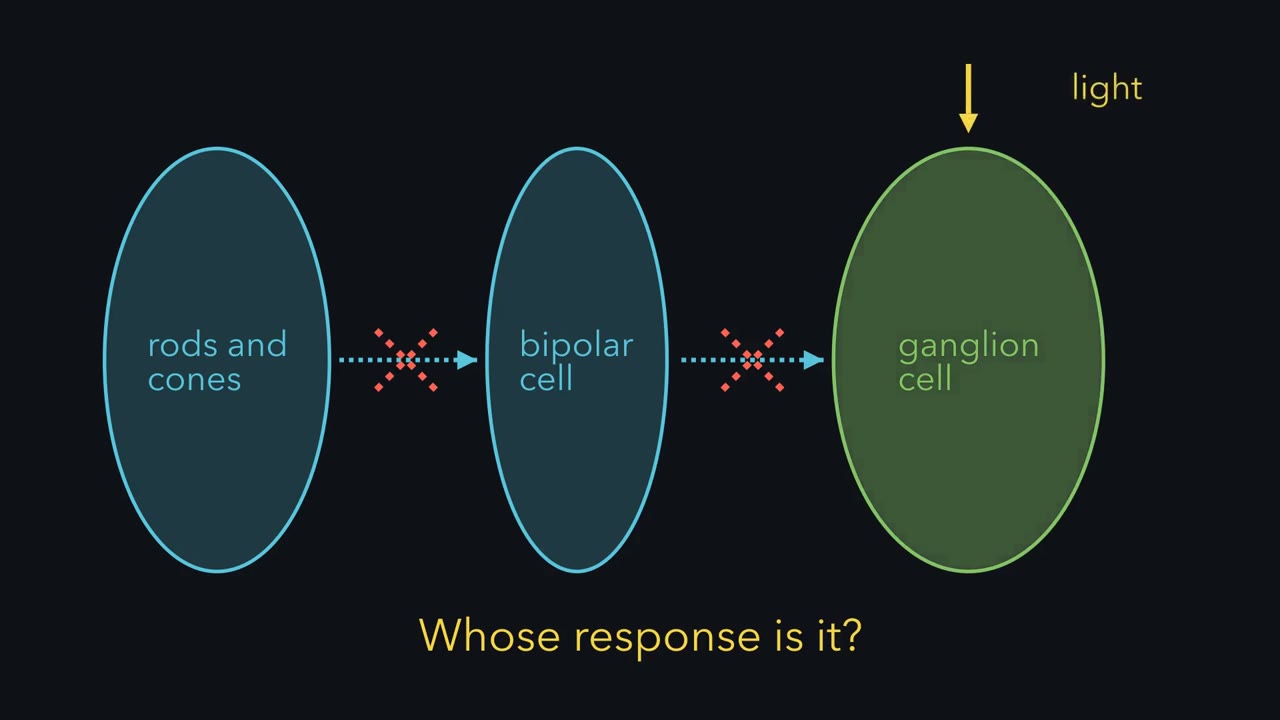
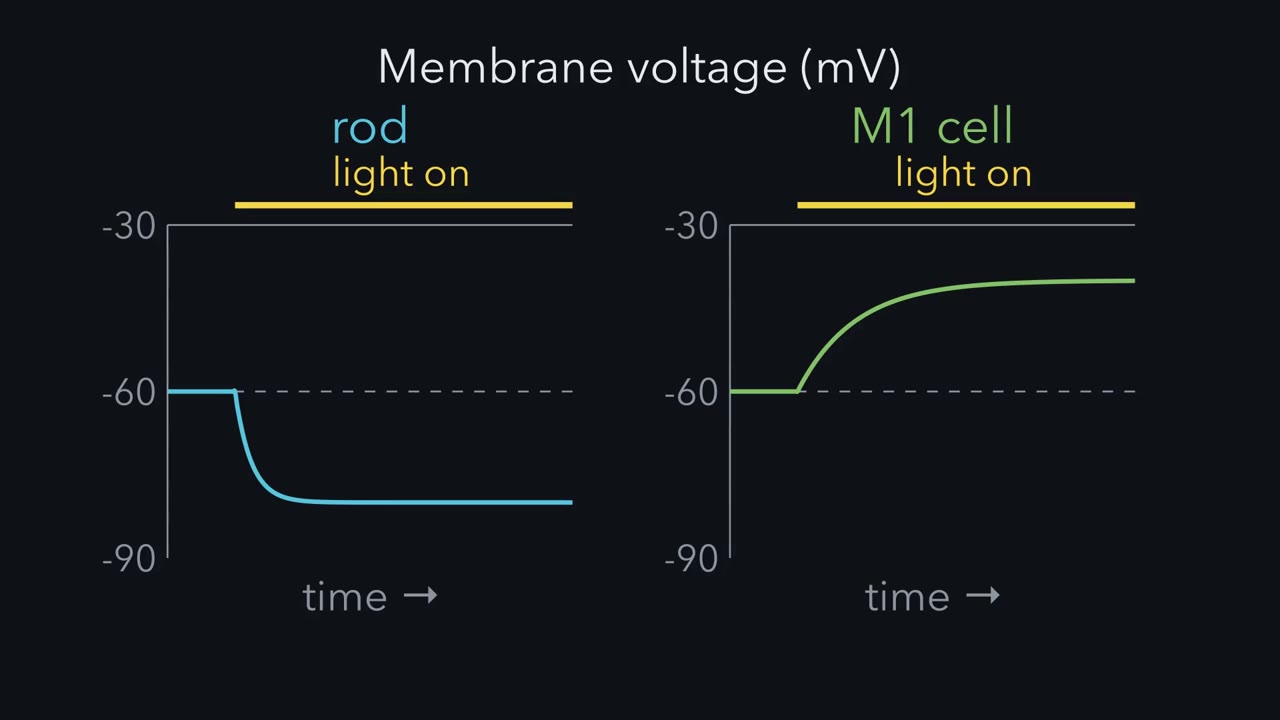
A mouse with no working rods or cones still sets its body clock to the day and still narrows its pupils in bright light. Which cells are measuring the light?
Continue in the lesson: Melanopsin Cells: Light for the Clock and the Pupil →
3:08 · Free, with captions and a transcript. The lesson has the full text, the questions and the sources.
More films from this lesson
How this film was made. Narration: an AI narrator voice (Kokoro, af_heart) reading narration written from this lesson's text. Animation: AI-generated in code (Manim) by Claude, a schematic with no drawn molecular structures. Captions come from the narration script. See something wrong? Report it.